


UNDER 12
Why today’s sub-gauge shotguns are growing in popularity
Advertisement
It’s the old chicken- and-egg conundrum. Are we seeing more sub-gauge shotguns in the field because more of our favourite shotguns are now chambered in smaller gauges? Or is it because shotgun manufacturers are responding to a growing hunter demand for sub-gauges? It’s probably a bit of both, but there’s no denying the rising popularity of 20-, 16- and 28-gauge shotguns. Sub-gauges were once considered elitist, in that they were somehow more sporting than 12-gauges. That’s no longer the case, however, with hunters now choosing sub-gauges because they perform well, not because they’re more sporting.
If we believe more pellets translate to more downed birds, there’s no arguing a 12-gauge is best. But sub-gauges have their own benefits, and a growing number of hunters are willing to accept the trade-offs. When built on true sub-gauge frames, the reduced weight is a definite plus, especially for long days walking the uplands. Lighter also means your shotgun is quicker to mount and swing, another clear advantage in some scenarios.
Advertisement
As for reduced recoil, that’s not always the case with sub-gauges—it depends on the load. Also remember that lighter guns make for greater felt recoil. But when shooting the lighter loads typical of sub-gauges, recoil is definitely reduced, leading to quicker second shots. And it’s worth noting sub-gauge loads don’t have less velocity or downrange energy; it’s just a matter of them having fewer pellets in each shell, making for thinner patterns. Here are the advantages of today’s sub-gauges.
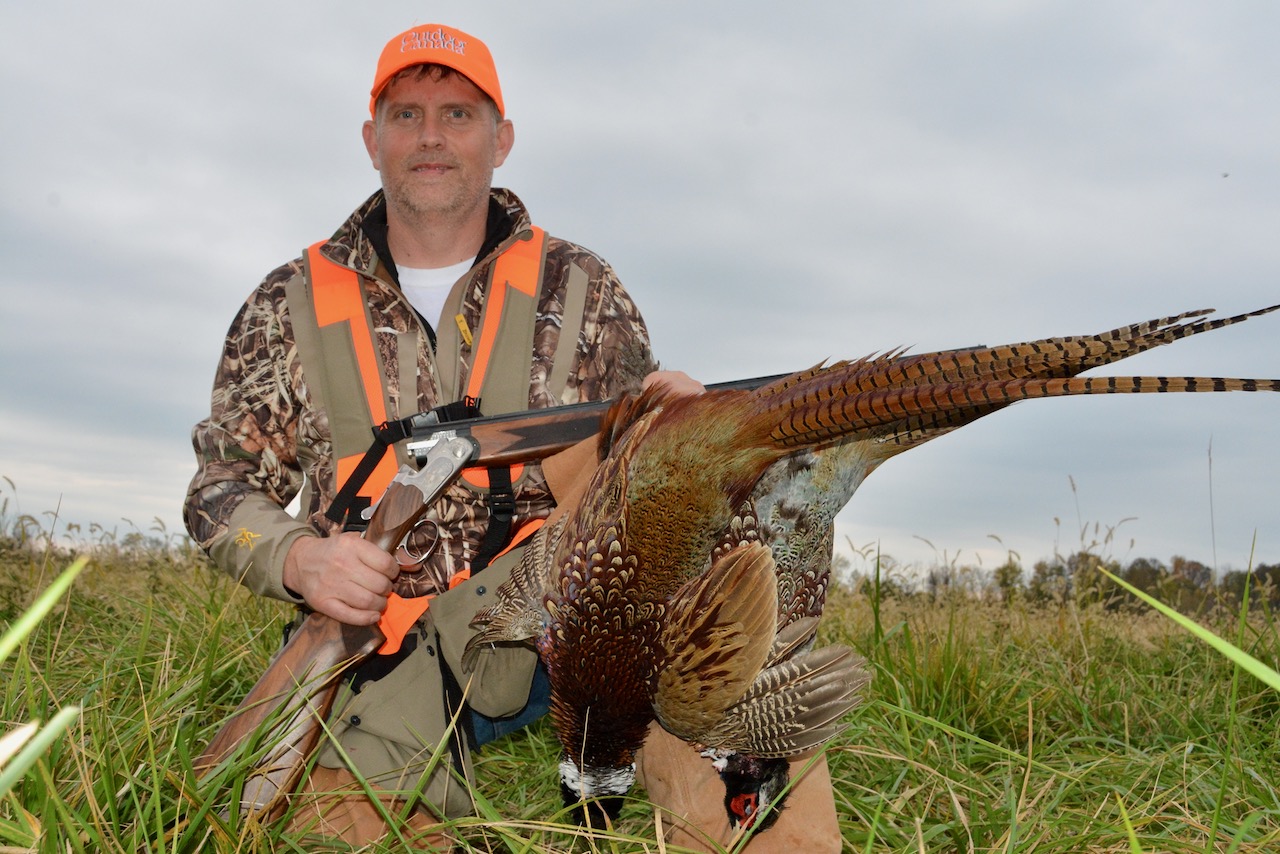 Both birds and bears can fall to the 20-guage
20-GAUGE
This is the underappreciated middle child of the shotgun world, stuck between the omnipresent 12-gauge big brother and the lovable, attention-gathering baby, the 28-gauge. But make no mistake, a 20 will do everything a 12 can, just with less dense patterns. I’ve shot a 20 on everything from snipe to black bears, and I’ve never come away disappointed. The emergence and availability of better shotshells is transforming the 20-gauge into a dependable do-everything option. A true 20, built on a smaller frame, is lively and well-balanced, and it can be carried effortlessly on long days afield.
Advertisement
Today’s 20s are also not out of place waterfowling. With three-inch, one-ounce loads—particularly of TSS or Bismuth—they are ideal for decoyed mallard hunts, easily carrying enough energy to cleanly fold birds out to 40 metres. The 20 shouldn’t be ignored as a slug gun, either, for confidently hunting deer or bear.
16-GAUGE
In the early- to mid-1900s, the 16 was considered the do-it-all gauge, the perfect bridge between a 20-gauge upland shotgun and a 12-gauge waterfowling piece. Shotshells were widely available, and one of North America’s most iconic smoothbores was Browning’s Sweet Sixteen Auto-5.
After the Second World War, however, the 16 began to disappear. The reasons were many, including growing demand for 12-gauges, manufacturing trends, and the skeet and sporting clays worlds choosing not to include a 16-gauge category. The fact it’s never been chambered for three-inch loads also reduced demand.
Today, however, we’re seeing a resurgence in 16-gauge popularity. Browning has reintroduced the 16 to its A5 lineup, for example, while Franchi, Stevens and CZ, among others, now offer over-under or side-by-side models. Shotshell manufacturers have responded in kind. There are still no three-inch offerings, but there are options in high-density materials such as Bismuth and TSS.
28-GAUGE
Aficionados of 28-gauges have long recognized they punch above their weight, and it appears many hunters are catching on. Fast-handling and light, they have mild recoil and tend to pattern well. A Beretta Silver Pigeon in 28-gauge is my favourite shotgun for Hungarian partridge, ruffed grouse and snipe, and more than a few sharptails and pheasant have also fallen to it.
Ammunition manufacturers have responded to the 28’s increasing popularity by now offering lead, steel, TSS and bismuth loads. There are even three-inch shells available for hunting waterfowl. I’ve yet to shoot ducks with my 28, but with today’s shells, I wouldn’t hesitate to tackle any decoying bird.
.410-BORE
I’ve never considered a .410 to be a true hunting option, though many squirrels and ruffed grouse at my camp would disagree. Steel, lead and TSS loads are now available and, where legal, the .410 is even getting some love as a turkey-hunting option. Still, a .410 should be considered a gun for experts, not novices.