


GOBBLER GETTERS
A pair of expert springtime tactics for hunting wild turkeys with a bow
Advertisement
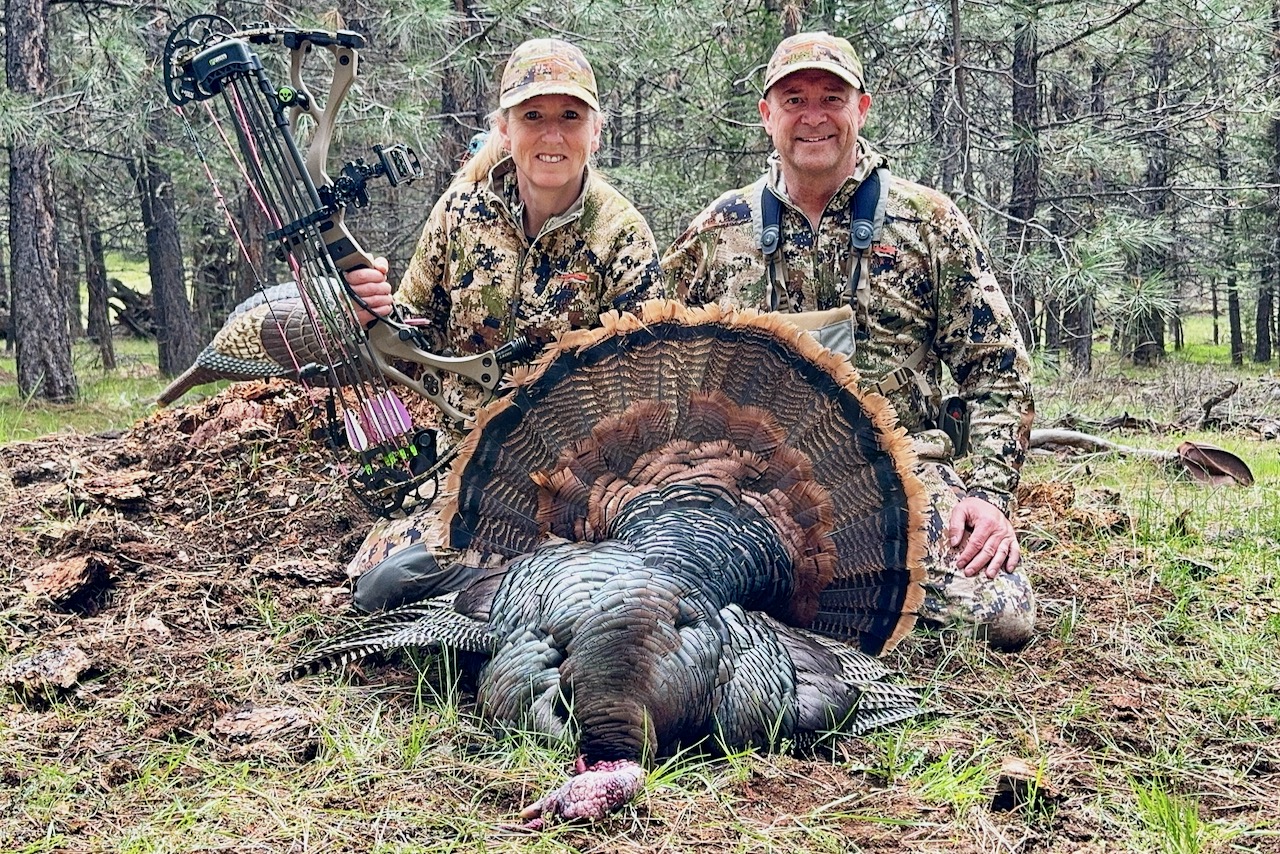
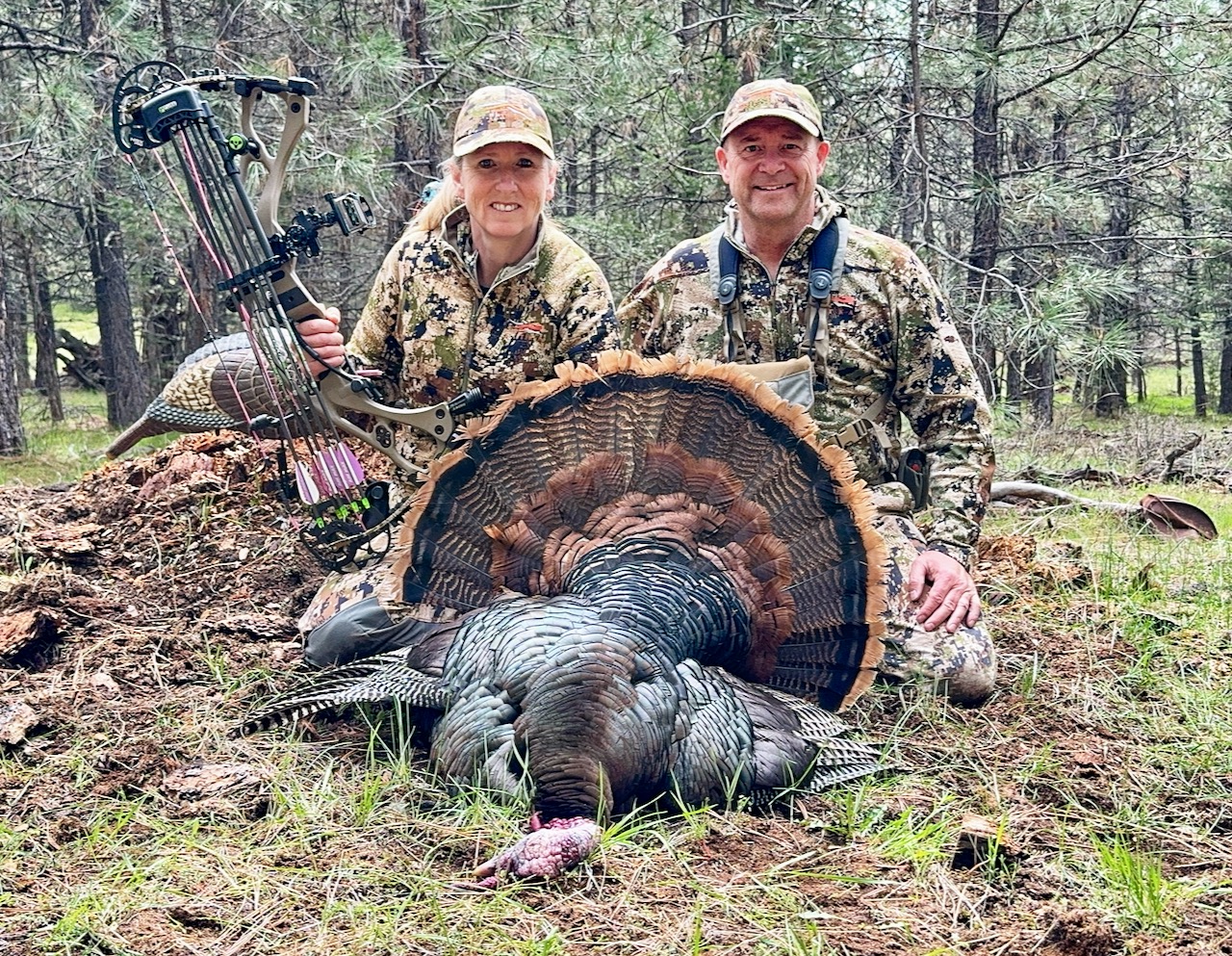
Just as I started probing the spring woods with soft yelps, my calls were abruptly cut off by an eager gobbler. Guessing he was 150 metres out, my wife, Heather, and I scrambled to set up decoys and hide behind two fir trees. I called a second time, and again I was immediately cut off. A hefty tom was closing in fast, and we soon spotted him strutting his way toward us.
To seal the deal, I made some excited yelps and clucks, and the giant gobbler raced up to our decoys. As soon as he turned and couldn’t see us, Heather went to full draw, waited until he was broadside, and released. The big bird toppled, flapped his wings a few times, then lay motionless.
Advertisement
Bowhunting wild turkeys can be both frustrating and exhilarating, but when it all comes together, there’s no feeling like taking a gobbler with a bow. Want to put together a successful spring turkey hunt of your own? Here are two effective strategies.
 Covering ground and calling can pay off
#1 BLIND AMBITION
Bowhunting from a portable pop-up blind—or a natural blind—is the most common tactic. Why? Turkeys have incredible eyesight, so even the slightest movement can send them running. But a blind allows you to move around and draw without being seen. Also, turkeys typically don’t mind an inanimate object such as a blind. I’ve placed pop-ups then called in birds right away, for example.
The most important thing with a blind is to make sure you have room inside to draw your bow and pivot for various shooting angles, all from a sitting position; I find a swivel chair works best. Also, ensure the windows are positioned for shooting from a sitting position.
Advertisement
Where regulations allow, set up your blind within a few hundred metres of a roosting tree. At least an hour before sun-up, sneak in quietly, place your decoys within shooting distance, and get settled. When a gobbler approaches, wait until he’s distracted. Ideally, you want to draw when he’s fanning or turned in the opposite direction.
#2 SNEAK ATTACK
My favourite strategy is to cautiously cover ground while probing with a call. Turkeys will often see you before you see them, and if they do, it’s game over. So, when you do find birds, use trees, ditches, hedgerows or other available cover to conceal your approach. If possible, try to get within 150 metres—the closer you get, the better your chances of pulling in a gobbler. The best scenario is to find a single tom that isn’t distracted by hens.
Once you feel you’re close enough, look for natural cover to hide behind, such as a big tree, stump, tall grass or low-lying shrub. Next, pick a decent spot to place your decoys within bow range, and with clear shooting lanes. Your biggest challenge will be finding an area that’s open enough for incoming turkeys to see the decoys, but with enough cover to keep you hidden.
Before you start calling, closely gauge the mood of the birds. If they’re vocal, louder yelps might work fine, but if they’re quiet, soft purrs and clucks could be enough to capture their attention. And while big old toms can be vocal, occasionally announcing their presence with a gobble, keep in mind they’re also notorious for sneaking in quietly. Remain as still as possible, and always be ready.
Growing in popularity, meanwhile, is the use of either a real or fake turkey fan to attract curious toms and jakes. Stealth is the name of this game. Stay low, and use the fan to hide behind as you carefully and meticulously move in on preoccupied birds. The biggest challenge with this tactic? Being able to crawl along with the fan in one hand, and your bow in the other. As with the other tactics, though, a successful result makes everything well worth the effort.
Bonus tip: Kill zone
Before heading out, first study the proper shot placement for wild turkeys. Most of the bird is feathers, after all, so you’ll need to put your arrow either at the base of the fanned tail feathers, or find the sweet spot near the final wing joint to hit the vitals. A turkey broadhead isn’t entirely necessary, but it can be helpful. Again, though, your best bet is to first focus on learning turkey anatomy.