

LESSON PLAN
When teaching a beginner how to fly fish, stick to the basics
Advertisement
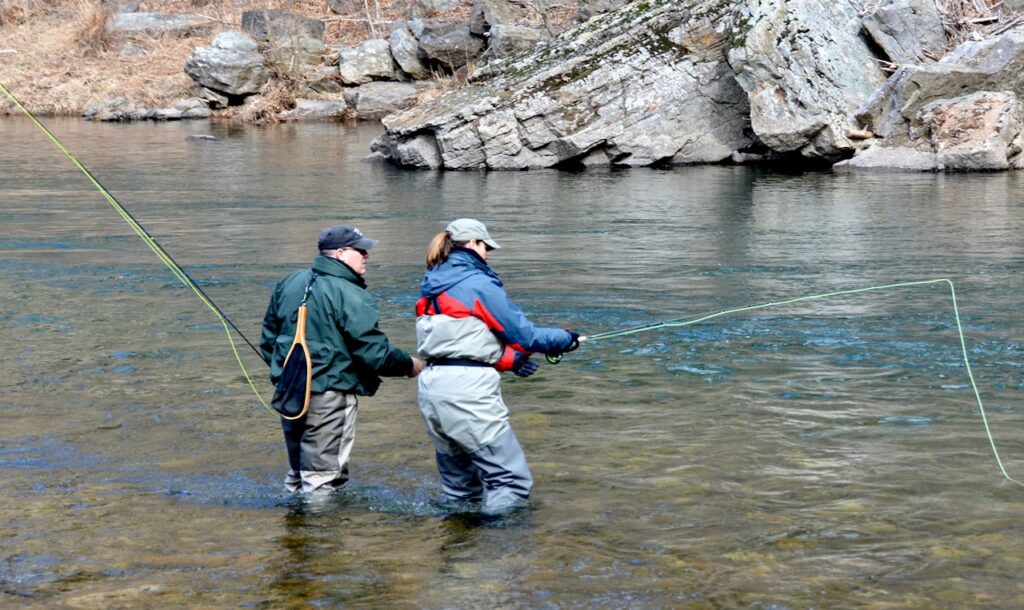 Photo: Flickr/Project Healing Waters Fly Fishing Northern VA
#4 REMEMBER THE “FISHING” PART
Once he or she can reliably get the line out, show your student how to retrieve a fly by keeping the rod tip low (an unnatural position for conventional anglers) and stripping in line a few inches at a time. Then plan for success, and demonstrate how to land a fish by stripping in line. You can even play the part of the fish by grabbing the end of the line and letting the student “land” you. That may sound (and feel) a little silly, but it really is a good way to show how all the elements fit together.
#5 FISH EASY WATER
During initial outings, stay away from boats and large, deep or swift-flowing rivers. The best place is a creek or pond with hungry panfish or juvenile bass, where a 25-foot cast with a Woolly Bugger or small popper will almost guarantee success. The next best destination is a straightforward section of river, free of casting obstructions and snags, and likely to hold some fish. Since wading adds another layer of difficulty, don’t take a beginner beyond shin-deep water. Set your student up to cast quartering downstream with a wet fly or small streamer, letting the fly swing across the current. This is the easiest and most forgiving of all river approaches; fish tend to hit at the end of the swing, usually hooking themselves. Stick close by as your student casts, retrieves and gradually moves downstream—and hopefully catches a few fish.
Advertisement
#6 DON’T FORCE IT
When teaching children to fish, the guiding principles are to make it fun, and let them go at their own pace. Honestly, the same thing applies when introducing adults to fly fishing. Be prepared to take a break or knock off for the day if your student gets stressed or frustrated. I find that sharing my own early mishaps, which were impressive in both scope and content, also puts freshmen at ease. After all, we were all beginners once, and helping a new angler is the best way to pay it forward.