


ICE ’EYES
This winter, tackle more walleye wherever they swim with these 12 time-tested tactical tips
Advertisement
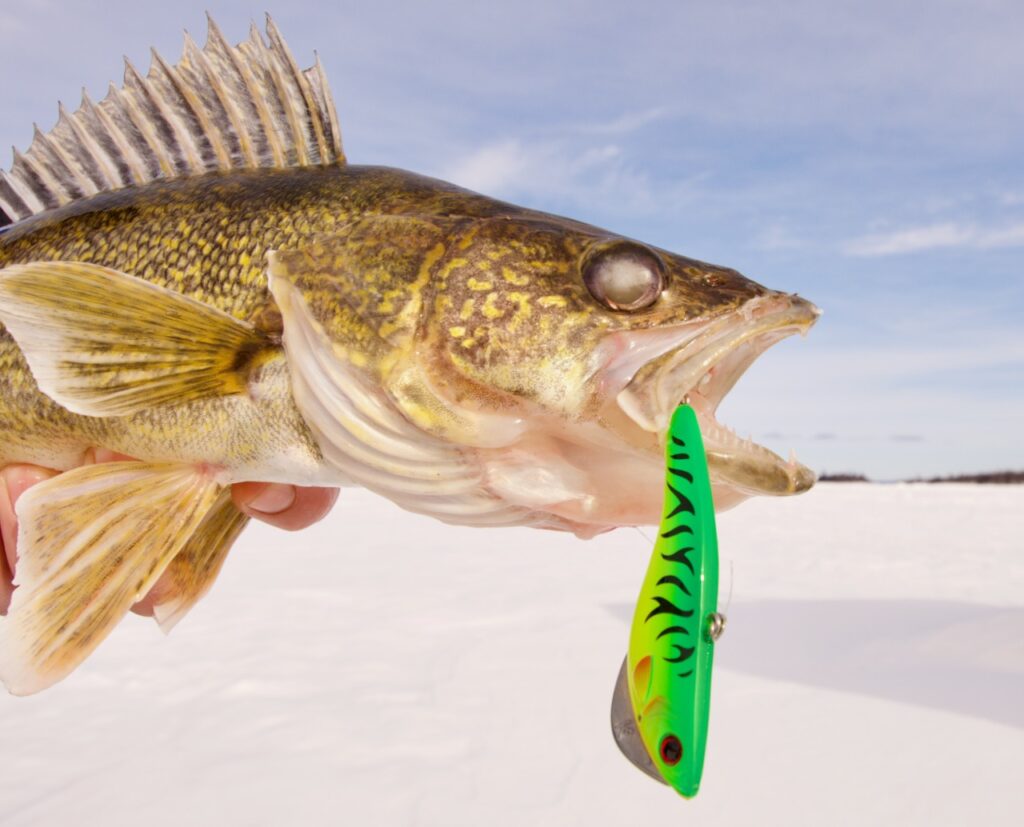 Lipless cranks are great at luring walleye to your set-up
#7 WORK LIPLESS CRANKS
Ninety per cent of the double-digit winter walleye I’ve iced have had a lipless crankbait stuck in their mouth. Livetarget’s Golden Shiner is the lure that broke the lipless game open, and it’s still one of my top three choices. The Kamooki Smartfish (above) and Rapala Rippin’ Rap round out my dance card. Lipless crankbaits work wonders on all walleye lakes, but they excel on the largest bodies of water that lack an abundance of structure. Here I’m referring to places such as Saskatchewan’s Last Mountain Lake, Manitoba’s Lake Winnipeg and southern Ontario’s Bay of Quinte. The walleye in these lakes roam far and wide, and no lure style attracts them to your hole faster than a noisy, fluttering, vibrating, flashing lipless crankbait.
Even when winter walleye endure heavy fishing pressure, lipless crankbaits will still deliver fish to your hole. To seal the deal, however, you may have to wrap a salted emerald shiner around the belly treblehook—a deadly dressing—or skewer a minnow head onto each hook point. An even more effective presentation, however, is to jig a lipless crank as the attraction lure in a three-hole set-up, as outlined in the next tactic.
Advertisement
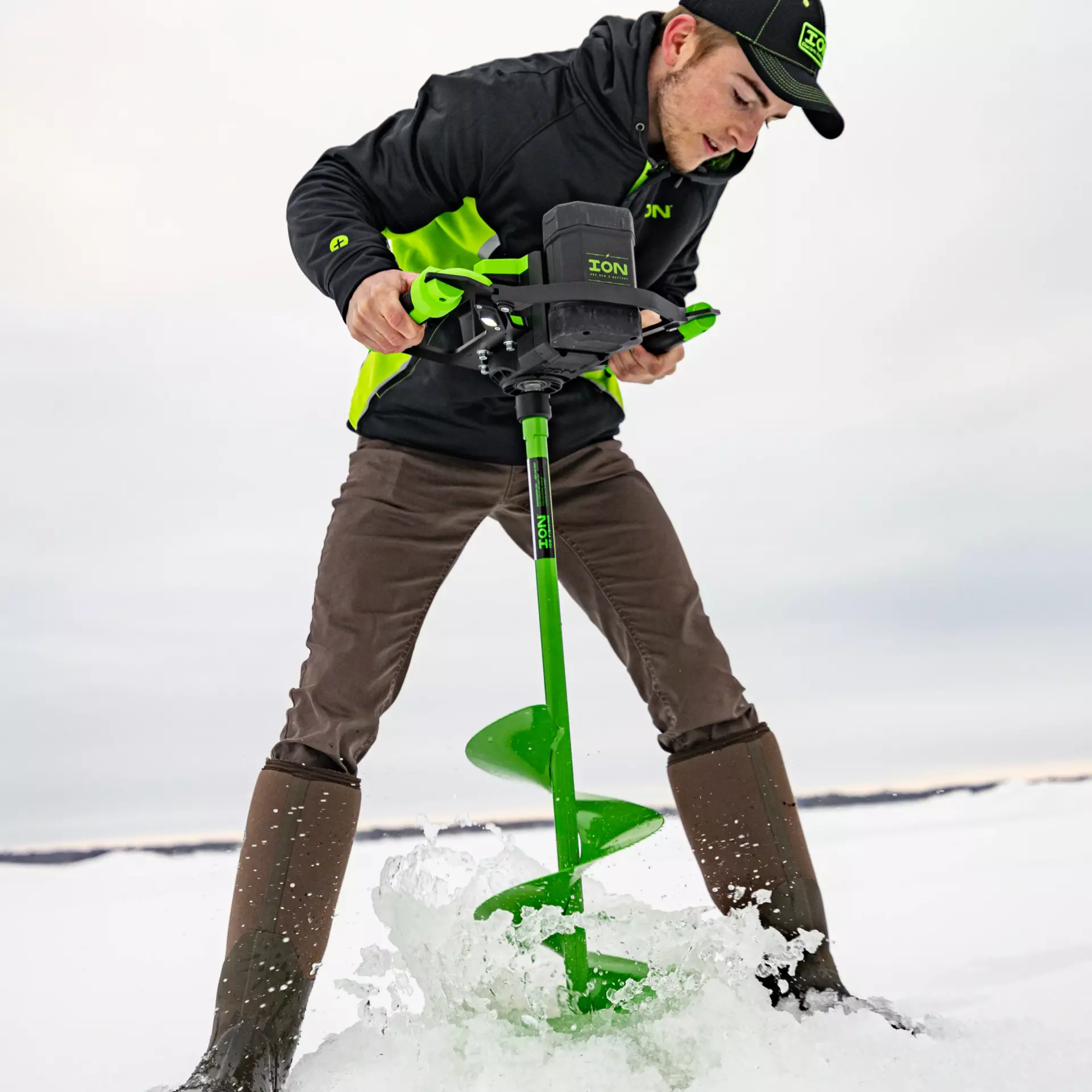 Drill one hole for jigging, one for a minnow and one for your flasher
#8 PUNCH THREE HOLES
Most provinces allow ice anglers to fish with two lines, so take advantage of the opportunity if it’s available. Sometimes, that means actively jigging in one hole, while you watch a tip-up or set line in a distant one (see tactic #9) This lets you spread out, cover different water depths and use a variety of baits.
Once you’ve located fish, however, the best option is to drill three holes together, only a foot or two apart. Place your transducer in the middle hole, and your attracting and triggering baits down the other two. That way, you can actively watch your lures—and the fish. I like to jig a lipless crankbait or spoon in one hole, while suspending a lively minnow in the other (see tactic #10).
With this set-up, I rarely tip the lipless crankbait or spoon with a minnow, as that dampens my aggressive jigging to call in the walleye. If a fish strikes, it’s a bonus, but the second line with the suspended minnow usually catches the fish. Many days, I’ll even use a bigger, brighter, noisier spoon or crankbait as the attractor bait, letting it fall into the mud and disappear when the fish show up. That way, the only thing they’ll see is the easy minnow meal.
Advertisement
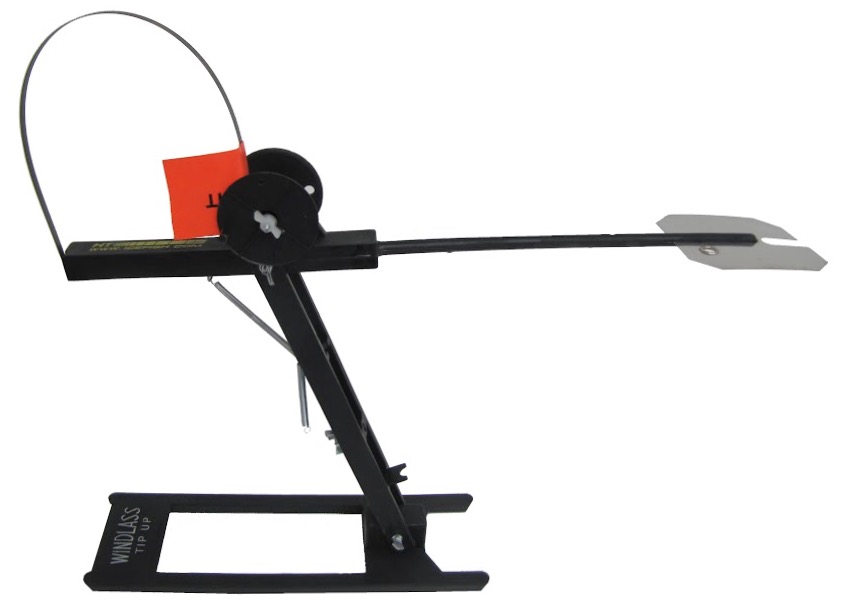 Harness the wind to gently rock your bait under a tip-up
#9 CATCH THE WIND
My primary winter walleye tip-up is an HT Windlass model that sits on top of the ice, instead of a T-shaped tip-up with an underwater reel. I prefer the Windlass because I can bend the metal blade on the end of the arm to catch as little, or as much, of the wind as I want to rock the bait the same way I would jig it. The only downside during our cold Canadian winters, of course, is that your line will freeze in the hole if you don’t constantly clean out the slush.
Fortunately, there are two ingenious ways to prevent that from happening. The first is to buy or make a simple foam hole cover with a tight-fitting plastic tube in the centre. Run your line through the tube, place the cover over the hole, then pour two tablespoons of heavy mineral oil into the tube. It’ll never freeze, and it won’t contaminate the water. Alternatively, you can use a Lucky Duck Quiver Magnet, a puck-like device that waterfowlers float on the surface of a pond to impart ripples to keep ice from forming.
Advertisement