


ICE ’EYES
This winter, tackle more walleye wherever they swim with these 12 time-tested tactical tips
Advertisement
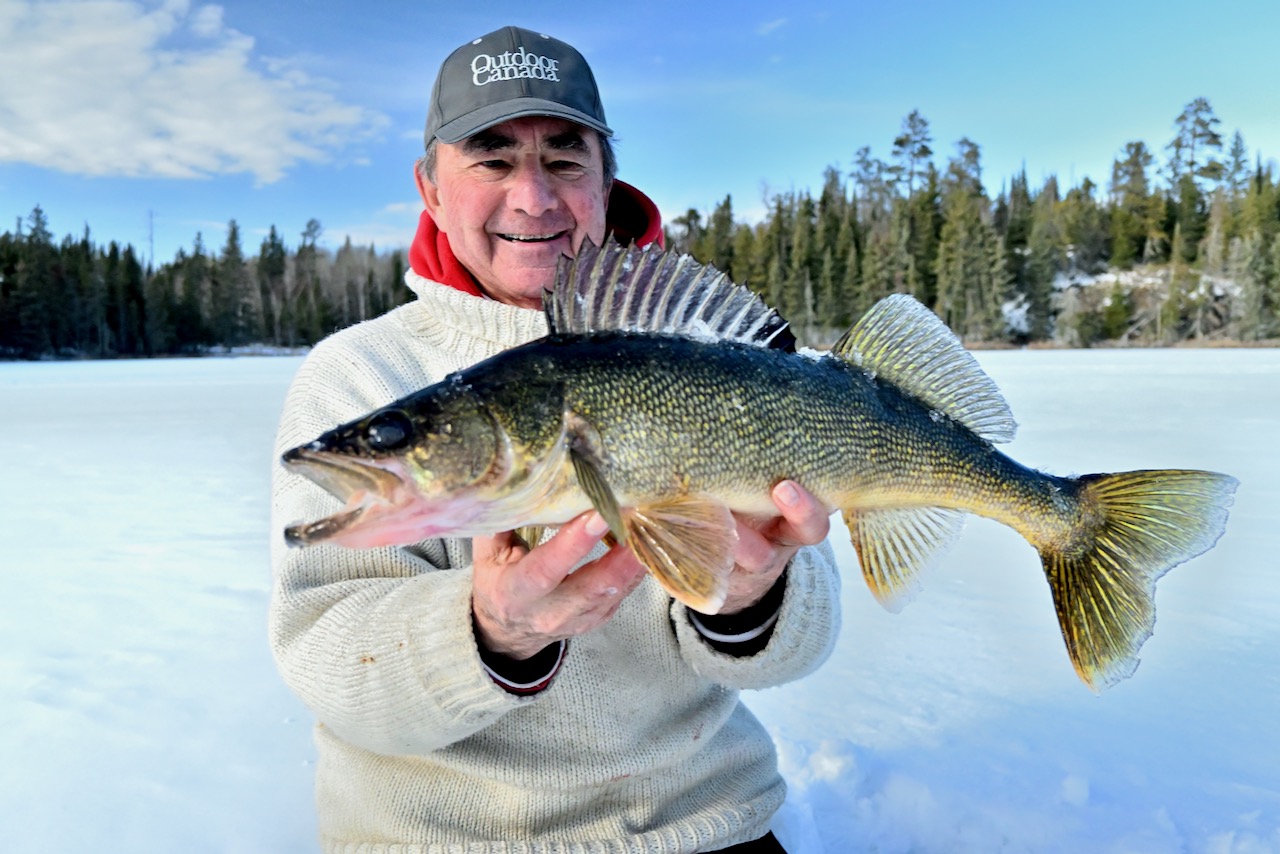
According to the most recent Survey of Recreational Fishing in Canada, walleye are the fish species caught most across the country, accounting for more than one out of every four fish landed by anglers. These big-eyed, sharp-toothed perch are found in countless Canadian waterbodies, from shallow, featureless prairie reservoirs to deep Canadian Shield lakes to the mighty Great Lakes themselves. They grow large and bite readily, and if you keep a few smaller fish for the table, they make a meal fit for royalty.
Advertisement
The fact they inhabit such diverse habitats, however, means you have to be knowledgeable, versatile and adaptable to catch them, changing your tactics as needed from one type of waterbody to another. That’s where my top 12 tactics come into play, guaranteeing to help you put more—and bigger—walleye on the ice this hardwater season…
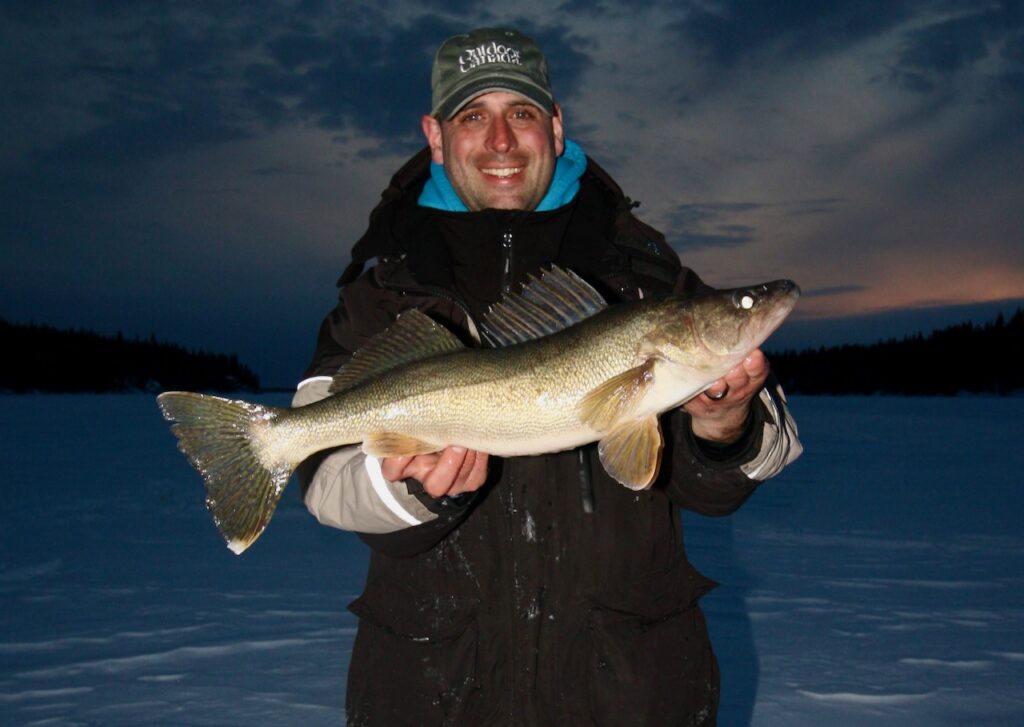 The peak walleye bite comes during the shoulder hours
#1 FISH THE GLOOM
Always remember that walleye are negatively phototactic and crepuscular, meaning they see and feed better in the dark than they do in bright light. It’s not just the darkness, however, that goads them into feeding actively. It’s also the two periods of the day when the light level changes the most dramatically over the shortest span of time—dawn and dusk.
Even during winter, when it’s snowy, cloudy and gloomy, and the bottom of the lake is under several feet of light-blocking ice and snow, walleye will still react positively to the rapid changes in light. So, mind your watch and remember that walleye activity peaks 90 minutes before sunrise and 30 minutes before sunset.
Advertisement
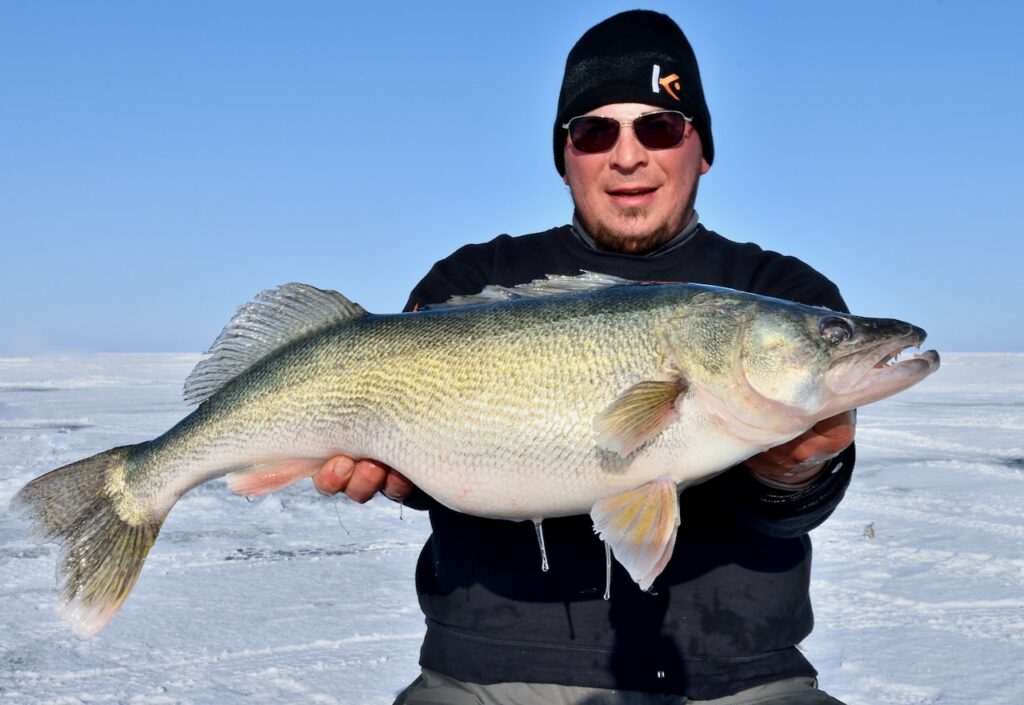 Target shadowy structure if you’re fishing in the middle of the day
#2 FIND THE SHADE
Unfortunately, you can’t always get out on the ice for the dawn and dusk peak bites, but that shouldn’t stop you from incorporating light levels into your game plan. If you’re forced to fish for walleye at noon on a bright winter day, choose a lake with stained water, which will be much darker than a lake that’s crystal clear.
As well, select a lake that’s at least moderately deep, with as many underwater points, saddles, shoals and other hard-bottomed structures as possible. In whichever direction you cast a shadow, concentrate your fishing on that side of the structure, where it will be shady. As the sun advances across the horizon and shades different sections of the structure, the walleye will follow, so be sure to auger fresh holes accordingly.
Advertisement
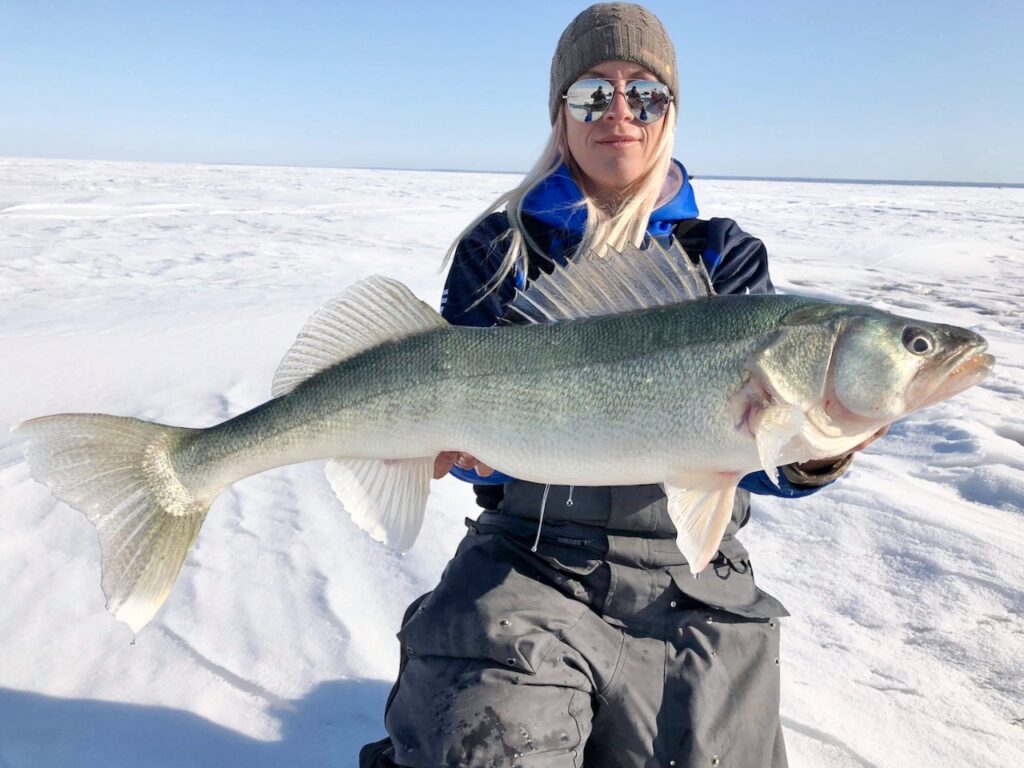 On flat, shallow lakes, fish the shadowy side of weedlines
#3 TARGET THE WEEDS
Winter walleye anglers will often tell you the most difficult lakes to fish are shallow, flat and featureless. Don’t believe them. Those are actually my favourite types of lakes because the fish will bunch up like plump grapes ready to be picked in two often overlooked locations—weedlines and isolated pockets of slightly deeper water (see tactic #4). Just remember to focus on the weedlines that cast the longest shadows away from the vegetation. Simply look at which way the trees on shore are casting shadows, and the shoreline weeds in front of them will be doing the same thing. That is where you want to fish.
On the sunny side of the weeds, on the other hand, the lane the fish typically use to cruise the vegetated edge will be brightly lit and exposed. Under that scenario, the walleye will stay hunkered down under the canopy, waiting for darkness to descend. Fish at midday on the shadowy side, however, and you’ll be shocked at how shallow you will catch the fish—six feet would be considered deep. On my most treasured weedy walleye lake, in fact, I’ll typically watch a fish appear on the sonar screen, feel it bite, set the hook and lift it flopping onto the ice in one motion.