

TYING THREE VERSATILE DRY FLIES
Step-by-step instructions for the CDC & Elk, Klinkhåmer Special and Stimulator
Advertisement
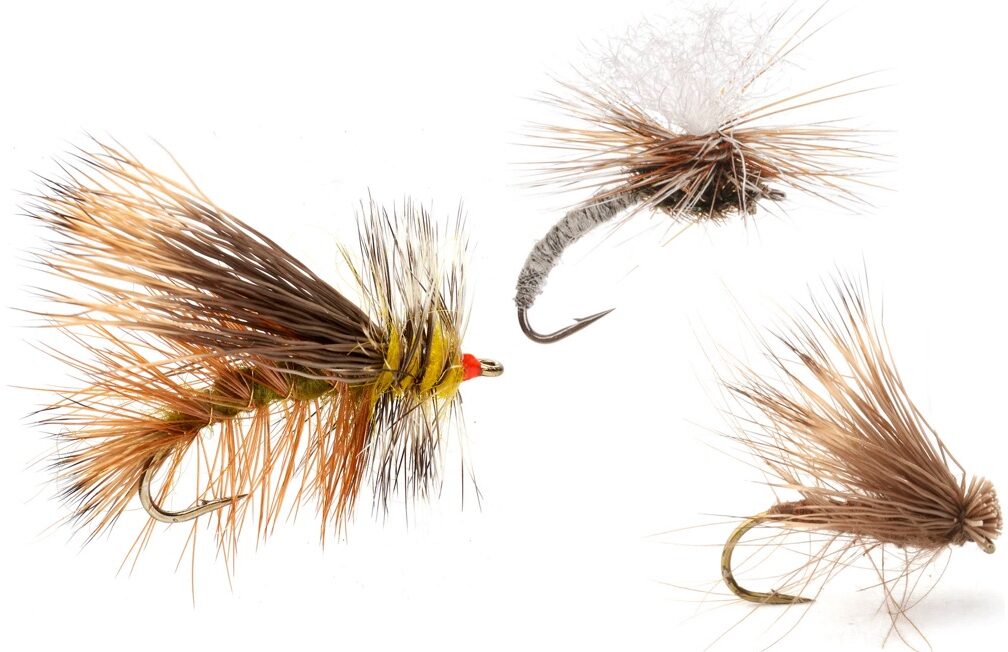 Left to right: Stimulator, Klinkhåmer Special, CDC & Elk
These three dry fly patterns work in rivers and streams across Canada and beyond. Whether you’re fishing freestone rivers, spring creeks or tailwaters, each of these proven flies will earn a permanent spot in your box. Below are complete tying instructions for the CDC & Elk, Klinkhåmer Special and Stimulator—three versatile patterns that let you fish with confidence no matter where the season takes you.
To learn why these three flies are great to have no matter where your adventures take you, see “DO-IT-ALL DRIES.”
Advertisement
Looking for more even new fly patterns? Check out our running list of the all-time best flies for Canadian anglers at www.outdoorcanada.ca/musthaveflies. And you can see all of Outdoor Canada’s expert fly tying tips at www.outdoorcanada.ca/flytyingtips.
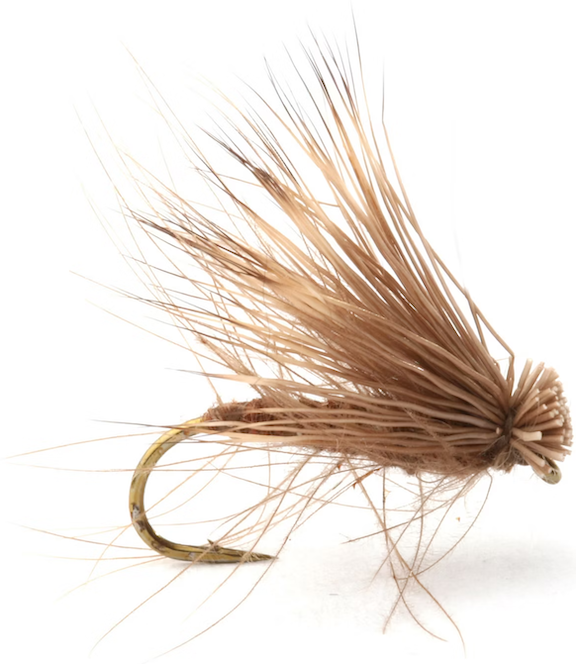
CDC &Elk
HOOK: Dry fly, size 12-16
ABDOMEN: CDC feather
Advertisement
WING: Natural colored elk or deer hair
An update to the classic Elk Hair Caddis, the CDC & Elk is especially effective on spring creeks and technical water. The fly’s signature CDC body creates a lifelike profile that rides low in the film, making it deadly during caddis hatches and equally effective as a general searching pattern when nothing is visibly rising.
Advertisement
The video below suggest size 16, but I keep them in sizes 12 and 14 as well. And if you’re out of practice on small flies, try the larger sizes first to tune up. A few more tips for working with CDC feathers:
- Look for CDC feathers with long, webby fibers that have a natural sheen.
- Two to three wraps of the CDC rope are usually sufficient. Over-wrapping creates bulk and ruins the delicate, translucent appearance that makes this fly so effective.
- Treat CDC gently, since it loses its effectiveness when crushed or coated with floatant
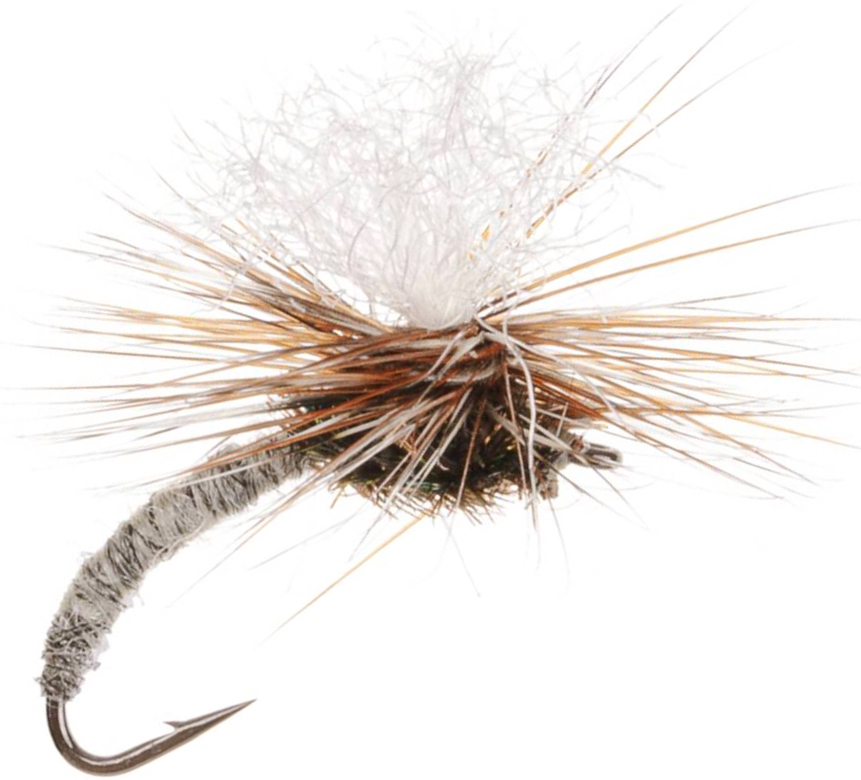
Klinkhåmer Special
HOOK: Curved nymph or grub hook (e.g., TMC 2457, Tiemco 2488, or similar), sizes 10-16
ABDOMEN: Tan, olive or brown dubbing (tapered)
THORAX: Peacock herl
WING POST: White (or bright-colored) poly yarn
HACKLE: Tan, brown or grizzly, wrapped parachute-style around the wing post
The Klinkhåmer is devastatingly effective across North America, particularly in fast, broken water. Its unique curved-hook design suspends the body below the surface like an emerging insect struggling to hatch, while the parachute hackle provides both flotation and easy visibility for the angler. Until you’re done a few, they can be tricky to tie so a few things to bear in mind:
- Get the geometry right: The wing post should be positioned at the hook’s highest point (the bend), not at the traditional parachute location. This allows the abdomen to hang naturally below the surface while the hackle floats above.
- Secure that post: The wing post takes significant stress from the parachute hackle. Make extra wraps at the base and use a small drop of head cement or UV resin to reinforce it before wrapping the hackle.
- Wind hackle carefully: Parachute hackles can be tricky. Use hackle pliers to maintain tension, and wind from top to bottom in tight, even turns. Three to four wraps usually suffice.
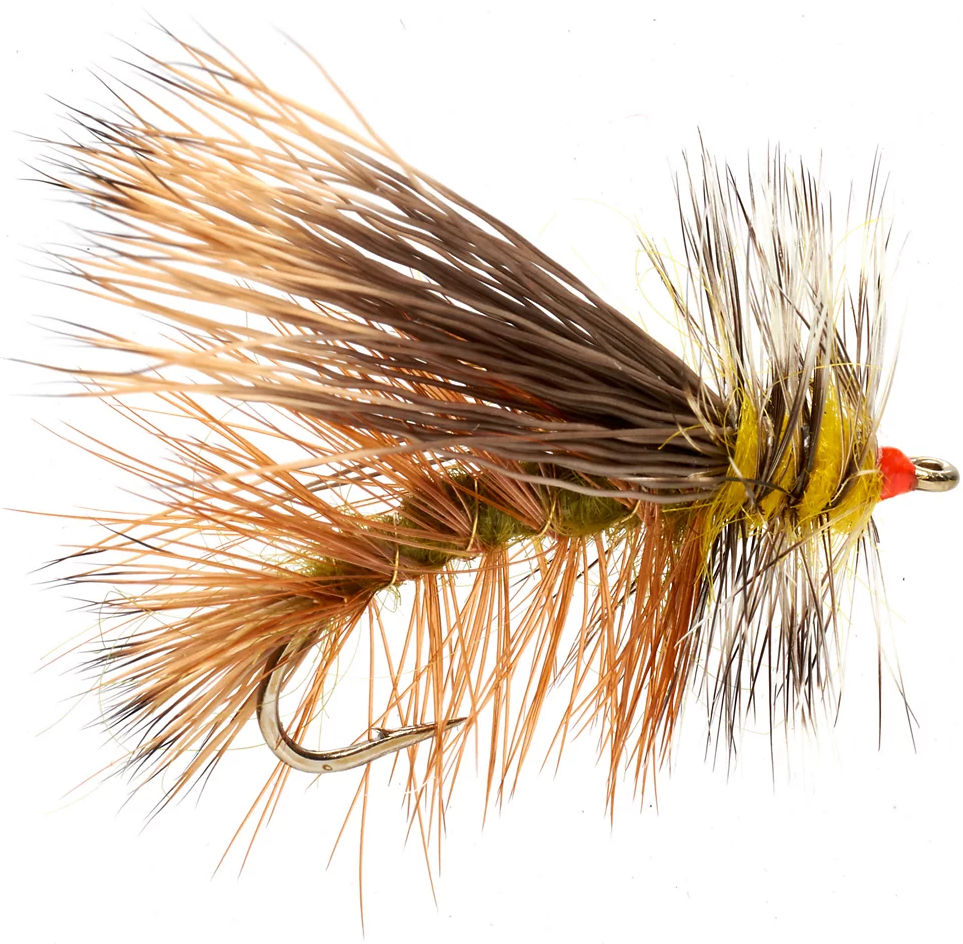
Stimulator
HOOK: Extra-long, slightly curved shank with straight eye (such as Tiemco 2312, Tiemco 200R or similar), sizes 6 to 10
THREAD: Orange 6/0
RIB: Extra-small copper wire
TAIL: Deer Hair
BODY: Olive dubbing, natural or synthetic
BODY Hackle: Brown
WING: Deer Hair
HEAD: Yellow dubbing, natural or synthetic
HACKLE: Grizzly
Originally designed to imitate large stoneflies, this bushy, high-floating pattern is equally convincing as a caddis, grasshopper, or attractor fly, and its exceptional buoyancy makes it ideal for fishing pocket water or as an indicator in dry-dropper rigs.
A few tying tips:
- Both the tail and wing require neatly stacked deer hair for a clean silhouette.
- Don’t crowd the eye: With six materials and heavy hackle, the Stimulator gets bulky fast. Leave plenty of room at the hook eye for a clean thread head
- When wrapping the body hackle forward, use your thread or fine wire to secure it as you go. This creates durability and prevents the hackle from unwinding after a few aggressive takes.
- Many tiers trim the hackle fibers flat on the bottom of the fly. This helps it ride upright and creates a better footprint on the water’s surface.
- Don’t be afraid to tie Stimulators in bright orange, chartreuse, or hot pink. These attractor colors can be deadly, especially in off-color water or low-light conditions.