

DO-IT-ALL DRIES
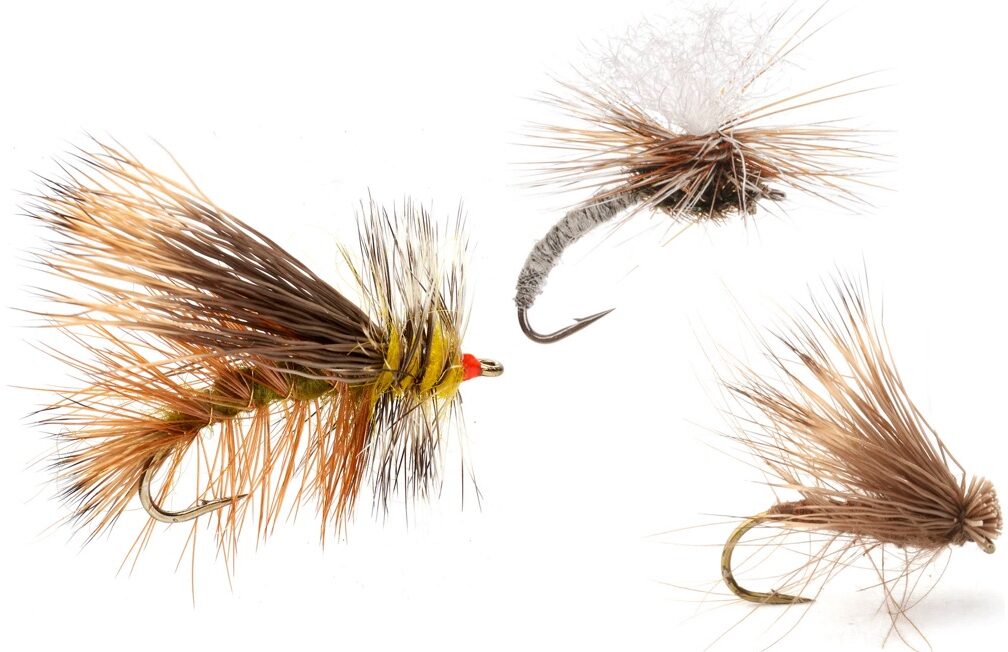
Three fly patterns that promise results from coast to coast to coast
Advertisement
During our long Canadian winters, fly-fishing season is mostly closed, but fly-tying season is wide open. It’s deeply satisfying to while away dark winter evenings by tying flies, but there’s also a dilemma: in January, you often have no idea where you’ll be fishing come spring. So, what do you tie? You could fill boxes with the same old favourites, or you could wait and sit at the vise the night before the spring opener, racing the clock while wondering if you’ve packed enough socks.
A better plan is to tie patterns over the winter that will catch fish almost anywhere once open-water season arrives. These three dry flies fit that bill—they’re proven and versatile, yet surprisingly absent in many Canadian fly boxes. Each has earned a solid reputation abroad or in regional pockets, and all will work in freestones, spring creeks and tailwaters across the country…
Advertisement
For full patterns, tying notes and videos, go to www.outdoorcanada.ca/3dries.
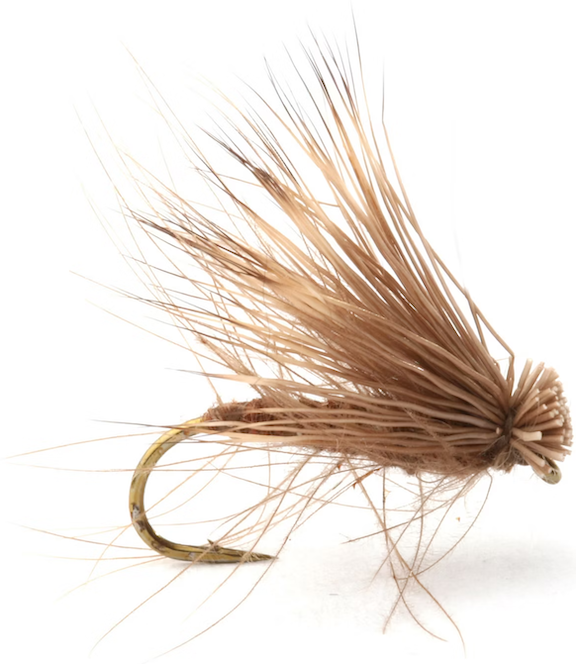 Image: Guideline
CDC & ELK
Developed in Europe during the 1990s, the CDC & Elk is an update of the classic Elk Hair Caddis that’s deceptively simple, more effective and easier to tie. It drops the original fly’s body of dubbed fur and palmered hackle in favour of a cul de canard (CDC) feather twisted into a fuzzy rope and wrapped along the hook shank. Cul de canard means “duck’s bottom” in French, referring to the small, soft feathers around the bird’s preen gland, which are coated with naturally waterproof oils.
The filaments of the CDC make a kind of wispy halo that looks like the subtle movement of insect legs or a trailing shuck. Combined with the buoyant elk-hair wing of the original, the result is a sleek surface fly that floats well, but rides low in the water, exactly like an emerging insect. Skated or twitched, it draws splashy takes—although fish will also gently sip it in at the end of the drift, just after it slips under the surface.
Advertisement