

OUTPOST INSIGHT
Remote fly-in cabins offer great value for anglers on a budget—if you’re willing to do a little work
Advertisement
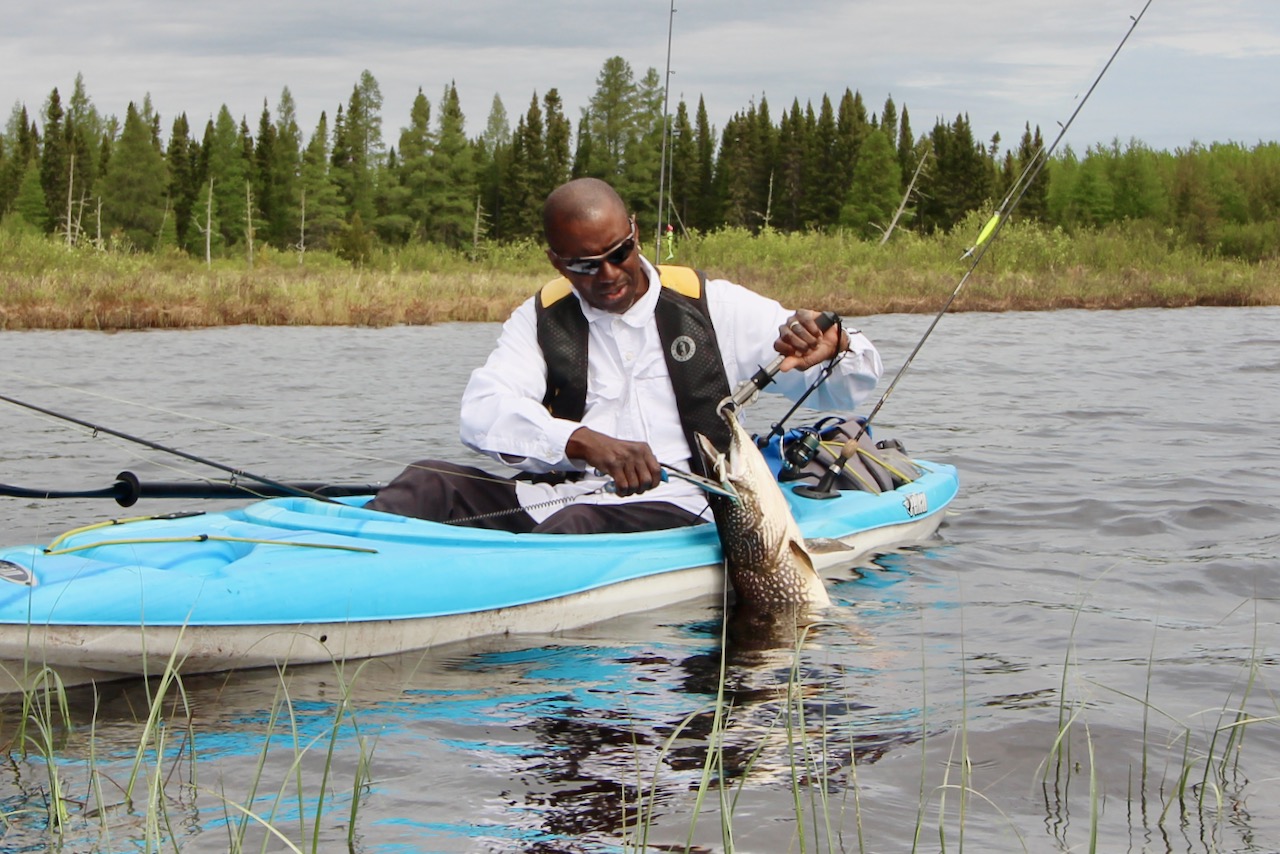
“Wow, this bay looks perfect,” said my pal Wes Nelson, smiling. “And it only took us two days to find it.” That made me laugh, because it was the closest bay to our outpost cabin, yet we’d passed by it numerous times without making a single cast. Exactly 48 hours earlier, we’d been dropped off at remote Whittle Lake, about 70 kilometres north of Nakina, Ontario, by Leuenberger Air Service, a northern institution that’s been flying anglers to its lodge and outpost camps since the 1960s (see below for more info). Along with the third member of our group, Don Willoughby, we’d been racing all over the lake, using our contour maps and sonar to target fishy-looking spots.
Advertisement
As with other outfitters, Leuenberger supplies boats and motors, but we’d chosen to bring our own customized fishing kayaks. They’re terrific vessels, but not really suited to running and gunning. Yet in our excitement at basically owning the lake for an entire week last June, that’s just what we’d been doing. While we were catching pike and walleye, they were smaller and scarcer than we’d expected.
Finally, it dawned on us that we were fishing in the wrong places. Regrouping during an evening strategy session, we decided to eschew structure, and instead look for fish cruising the wide, shallow, sandy-bottomed bays, especially the ones fed by creeks.
Entering that nearby bay the next morning, our hunch was proven correct. On our first, second and third casts at the mouth of an inflowing creek, we landed some decent pike and walleye. Then we drifted across the bay in about two feet of water, casting among the sparse emerging weeds. Minutes later, Wes called out that something had inhaled his beloved Johnson Silver Minnow.
Advertisement
“Need a hand?” I called back.
“Not sure,” he replied. Then he saw the fish. “Oh man, it’s a pike, and the dorsal and the tail are, like, two feet apart.”
Advertisement
Don and I converged on Wes to watch the excitement and—as anglers often do—enthusiastically offer pointless and conflicting advice. Although he hasn’t been fishing that long, Wes knew enough to mostly ignore us, and focus on the fight. Big northern pike are always exciting, but handling one by yourself in a small boat is bare-knuckle stuff, somewhere between a bull ride and a roller derby.
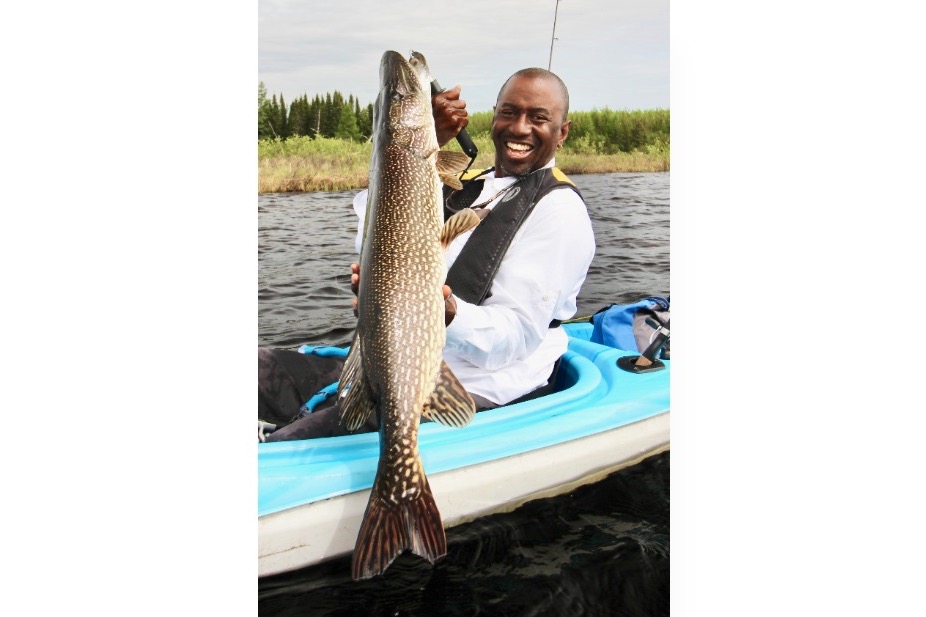
Finally, Wes laid his hands on the beast and hoisted it up for a quick photo (above). His paddle was floating away, and his rod and reel were dragging behind in the water, but he had the fish—43 inches of thick, well-fed northern Ontario pike. It was the biggest fish he’d ever seen, let alone caught. Outpost trips demand planning and work, but moments like this make it all worthwhile
There’s also no more affordable way to experience fly-in fishing. On these trips, the outfitter supplies the cabin, boats and floatplane flight to the lake, but the cost is kept down because you bring your own food and do your own cooking, cleaning and guiding. If you’re up for trying this uniquely Canadian angling adventure, check out the following pages for some tips to make it a success…
 Based in Nakina, Ontario, Leuenberger Air Service offers 14 outposts and a full-service lodge on Kagianagami Lake (a.k.a. Kag), as well as charter flights for anglers and hunters organizing their own trips. All of the outposts feature walleye and pike fishing, with some also providing opportunities for lakers and brook trout. For more info, visit www.leuenberger.ca.
 Based in Nakina, Ontario, Leuenberger Air Service offers 14 outposts and a full-service lodge on Kagianagami Lake (a.k.a. Kag), as well as charter flights for anglers and hunters organizing their own trips. All of the outposts feature walleye and pike fishing, with some also providing opportunities for lakers and brook trout. For more info, visit
 #1 GETTING THE DETAILS
It’s easy to focus on the fishing ahead of all else, but once you’ve booked an outpost, learn everything you can about your cabin and its amenities. This is crucial for planning what to bring, and potential participants may want to know about any creature comforts before signing up.
Conveniences vary widely, but most cabins are equipped with a propane fridge, cooktop and barbecue; many also have an oven, running water and some electrical outlets. Our palatial spot on Whittle Lake had all of that, plus the ultimate luxury—an indoor shower with hot water. The number and type of bedrooms are also important, especially if your group includes couples who might want a little more privacy. When it comes to your cabin, knowledge is comfort.
#2 ASSEMBLING THE GROUP
When recruiting anglers, consider the personalities involved, bearing in mind you’ll be together for a week, often in close quarters. Make sure everyone knows they’ll be helping with chores (if possible, bring a sport like Wes who’s enthusiastic and mildly obsessive about cleaning). Attitudes about fishing are also important—some anglers like to go hard all day, while others prefer to take it easy. You don’t all have to be on the same page, as long as there are comfortable parings, and a willingness to compromise.
Finally, be firm and transparent about the costs. Decide early on how you’ll split the expenses, and make sure everyone knows. And if you’re the trip organizer, make it a condition of joining the group for members to immediately pay their share of the deposit. People can often sound serious, only to ghost when it comes time to pony up.
3 PLANNING THE MENU
Floatplanes have strict guidelines on the weight and amount of gear you can bring, and operators charge extra (sometimes a lot extra) for exceeding them. Carefully consider what you plan to bring, particularly food and drink, which can add up quickly. To get the amounts right, plan a full menu in advance. The redoubtable Don handles this for our groups, and shares his menu beforehand so everyone can comment. Our grub leans heavily on barbecue proteins, with a few easy, one-pot meals for rainy days or when the blackflies around the grill become intolerable. We also plan on a few fresh fish dinners, but throw in an extra pack of hot dogs in case the fish don’t cooperate.
I often see groups toting cases of bottled water, which is a huge waste of space and weight. Instead, filter lake water using a modern lightweight system. I have a gravity filter that purifies four litres of water in five minutes; it weighs mere ounces and packs very small. One way to handle other beverages is a quota system, with group members using up their share with whatever drinks—hard or soft—they deem essential.
Dry goods are easy to pack in boxes or lightweight bins, but perishables are trickier, especially when there’s a lengthy drive to the floatplane base, or a night in a motel. First of all, freeze anything that can be frozen, especially meat. When packed tight in a lightweight cooler, it will easily survive a day or two without ice. If you’re really worried about perishables, try dry ice. It melts from a solid directly to a gas, reducing the overall weight without soaking your food.
Also, when loading the floatplane, two small boxes or duffels are always easier to pack than a single larger one; this holds true for all your gear. And since you have to fly your garbage back out, remember to bring some sturdy bags and avoid single-use containers, especially glass ones. For example, you can save on weight and garbage by transferring canned food into plastic containers or sealable bags. And even if it feels a little déclassé, this may also be the time for boxed wine, and decanting liquor into plastic bottles.