

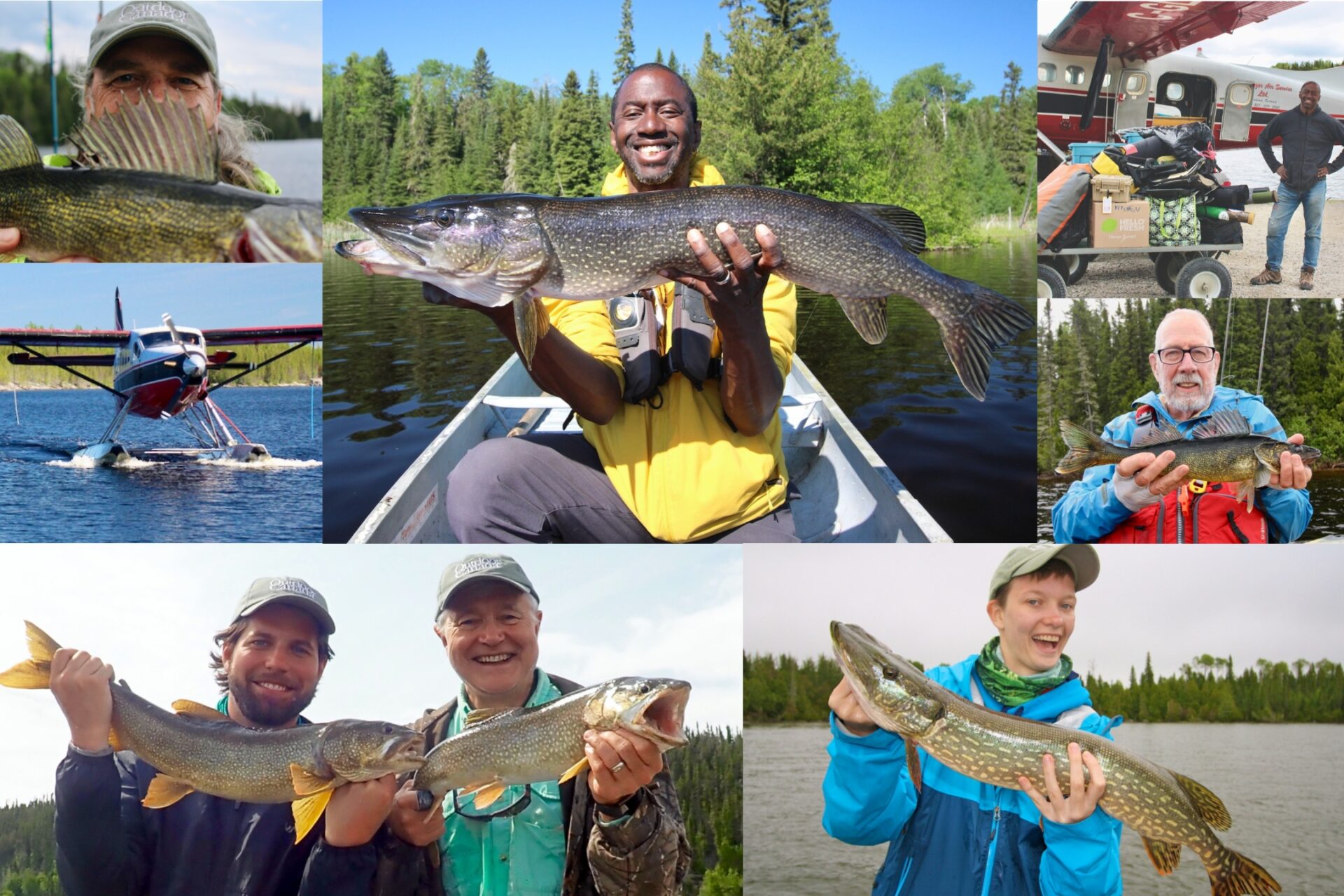
OUTPOST INSIGHT
Remote fly-in cabins offer great value for anglers on a budget—if you’re willing to do a little work
Advertisement
 Pack what you’ll probably need—not everything you could ever need
#4 SELECTING THE GEAR
If you’re a one-tacklebox-does-it-all angler, packing is easy. For those of us who love tackle, however, paring down can be tough. To make it easier, I follow two guiding principles. First, I only pack what I’ll probably need, not everything I could ever need. And second, I only bring tackle I enjoy using. If you don’t like baitcasting outfits or bottom bouncers, for example, don’t waste the space—something else will work just as well. In two decades of backcountry trips, I’ve yet to encounter fish I’d consider fussy. And it takes fewer baits than you think to cover the various scenarios. For example, spoons and spinners in a variety of colours and sizes can be fished quickly or slowly in shallow or deep water for a wide range of species.
No matter where or how you plan to fish, do not scrimp on terminal tackle. As Wes learned vividly last summer, any cast could be the fish of a lifetime. Over the years, I’ve heard many stories of lost trophies due to mangled wire leaders that obviously came from the bargain bin. Take only premium snaps, swivels and leaders, and swap out any suspect lure hooks for sturdier ones.
Advertisement
Every angler should also bring at least two rods and reels, if only because accidents happen. On that count, spare tip-top guides, super glue and duct tape can save your trip, as well. And you’re tempting fate if your rods aren’t packed in cases, which don’t have to be fancy—you can make your own for $10 using materials from a hardware store.
Sonar units and batteries are heavy, but they’re immensely helpful. If I had to, I’d leave behind half my tackle (and all my beverages) for one. Since I always plan to catch—and release—a lot of fish, I also like to bring my own net sporting conservation-friendly mesh. As well, walkie-talkies are handy for keeping in touch with your group out on the water. Finally, it’s essential to bring a comfortable PFD you’ll actually wear, rather than rely on one supplied at the cabin.
#5 RESEARCHING THE WATERBODY
The whole reason we spend time and money getting to an outpost is because the fishing is so much better than at home. That said, the more you prepare, the more successful you’ll be on the water. Obviously, there’s no substitute for actually being there, but find out as much as possible before arriving. Tips from past visitors are helpful, but just one piece of the puzzle.
Advertisement
For me, nothing beats a good map. Backcountry lakes rarely appear on mapping chips, but there are a surprising number of old-school contour maps available. Google Earth is also helpful, revealing the surrounding landscape, plus weedbeds, sandy beaches, reefs and even drop-offs. It’s not impossible for anglers to get a lost on strange water, so I always print maps for everyone in the group.
#6 FOLLOWING THE GAME PLAN
No matter the season, region or fish species, there are some strategies you can follow to ensure fishing success. Most importantly, know what you want. Do you want to fish every corner of the lake, or just find a couple of honey holes? I’m afflicted with wanderlust, for example, always compelled to see what’s around the next point. Similarly, do you want numbers or trophies? These goals demand different tactics, and you usually can’t do both, so make an informed decision. You don’t want to wake up on the last morning and feel as though you’ve missed out.
Advertisement
Also, stay mobile. There are lots of fish in these remote lakes, but the old axiom about 80 per cent of the fish being in 20 per cent of the water still holds true. If you’re not catching anything, there’s nothing there. After 15 or 20 minutes without a hit, I change spots, often heading to the next one highlighted on my map.
Along the same line, question your assumptions, and beware of falling into a rut. Don, Wes and I mostly fish rocky Canadian Shield lakes, plus we do a lot of bass fishing. As a result, we tend to focus on structure and shorelines. Despite all our experience, it took us a couple of days to grasp that boggy, soft-bottomed Whittle wasn’t that kind of lake, and we needed a new plan. Sure, it was a setback, but that’s part of the adventure. When things do come together, there are few angling experiences more satisfying than convincing a new lake or river to share its secrets.