


BOSS BAITS
Why versatile crankbaits deserve a prime spot in your tacklebox
Advertisement
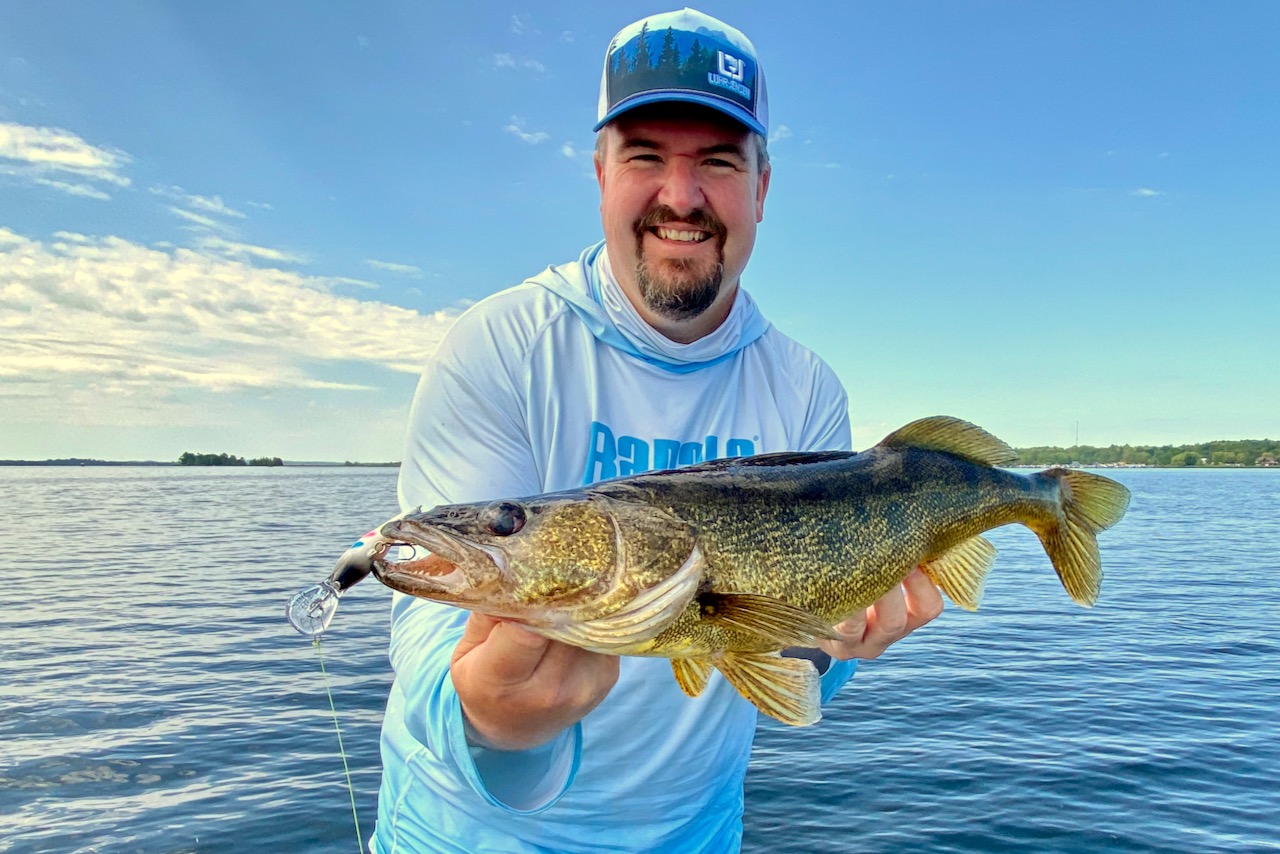 Cranks are effective multispecies lures
My first eye-opening experience with crankbaits came decades ago during a windy and cold bass tournament. The fishing was tough, so I did what I knew best and pushed into shallow, heavy cover, punching mats with finesse plastics. The fish had lockjaw, however, but not for my partner. He was firing casts along the shallow weed edges, and bass that had ignored my baits were swimming 20 feet to crush his cranks. That day forever changed how I look at those lures—and how I fish.
Simple, efficient, versatile and deadly, crankbaits are true multispecies lures that shine throughout the open-water season, but get even more effective as summer slides into fall. When fish are on the move, a crankbait lets you cover water quickly and target everything from the subsurface down to 25 feet. For whatever reason, however, Canadian anglers lean heavily on minnowbaits and jerkbaits instead. But if you want to catch more fish, it’s time to give these lures a proper place in your line-up.
Advertisement
CRANK CHARACTERISTICS
In broad terms, a crankbait is any hard bait that dives on the retrieve and creates its own action. There are thousands of styles, each with its own purpose, so there are several factors to consider.
- Size and action: The target fish species, forage and season dictate whether I tie on a subtle, tight-shimmying baitfish imitator or a wide-wobbling crayfish pattern, for example. Experimentation is half the fun.
- Depth control: Always match a crankbait’s advertised running depth to where the fish are holding. Having a variety of baits with different running depths opens up your options, increasing the odds in your favour.
- Bill design: Most crankbaits have either round or square bills, which come in various lengths and sizes. Round bills get the lure to depth, while square bills excel at deflecting off cover such as wood, docks, rock and even sparse pads with surprisingly few hang-ups. Just know that square bills rarely swim deeper than eight feet.
- Rattle or no rattle: At one time, I used noisy crankbaits for stained water, and quiet ones for clear conditions. Now, I base my decision on fishing pressure. Remember, you’re casting into the fish’s dining room—they know the bait is there. Often, a silent presentation will out fish a loud one on pressured water.
- Colour. Crankbaits throw off vibrations that cut through both dingy and clear water, so colour is less important than you may think. Still, it pays to match the forage if the fish are chasing specific prey such as shiners, bluegills and crayfish. I start with bright colours in stained water and natural in clear, but rotate frequently until I dial in the fish.
- Snaps or direct tie: I use a snap on nearly every crankbait, except for models with one already attached. For those, I tie directly. Otherwise, having two snaps changes the pull point and messes with the lure’s action and depth.
CRANK GEAR
Advertisement
Being tall, I favour longer crankbait rods for extra casting distance and line pick-up for better hooksetting leverage. I always keep three rods rigged: one seven- to 7’2″ medium-action rod for shallow baits, and one for mid-divers; and a 7’9″ rod with a parabolic bend to keep hooks pinned and prevent me from yanking baits away on short strikes.
As for line, 12-pound fluorocarbon is my mainstay for consistency in running depth, and for letting recognize when the bait’s steady wobble stops or changes in any way. Sometimes, a strike is nothing more than a momentary absence of vibration, making it time to set the hook.
Advertisement
When targeting fish in weeds, however, I switch to 30-pound braid on a seven- to 7’2″ medium-heavy rod (I loosen my reel’s drag to offset braid’s lack of stretch). With this set-up, snapping the lure to clear the weeds often triggers strikes, especially from walleye.
CRANK RETRIEVES
I bomb casts as far as I can, then reel steadily to reach my desired depth. Once I’m at depth, I mix up my cadence with slight speed changes, and the odd twitch or snap of the rod. Otherwise, I want the bait to wobble naturally as it occasionally deflects off cover and ticks bottom. Such subtle variations often flip the switch for following fish—and reveal yet another excellent reason to make room in your tacklebox for crankbaits.