


REGS REVIEW
Changes are afoot across the land for migratory bird hunters
Advertisement
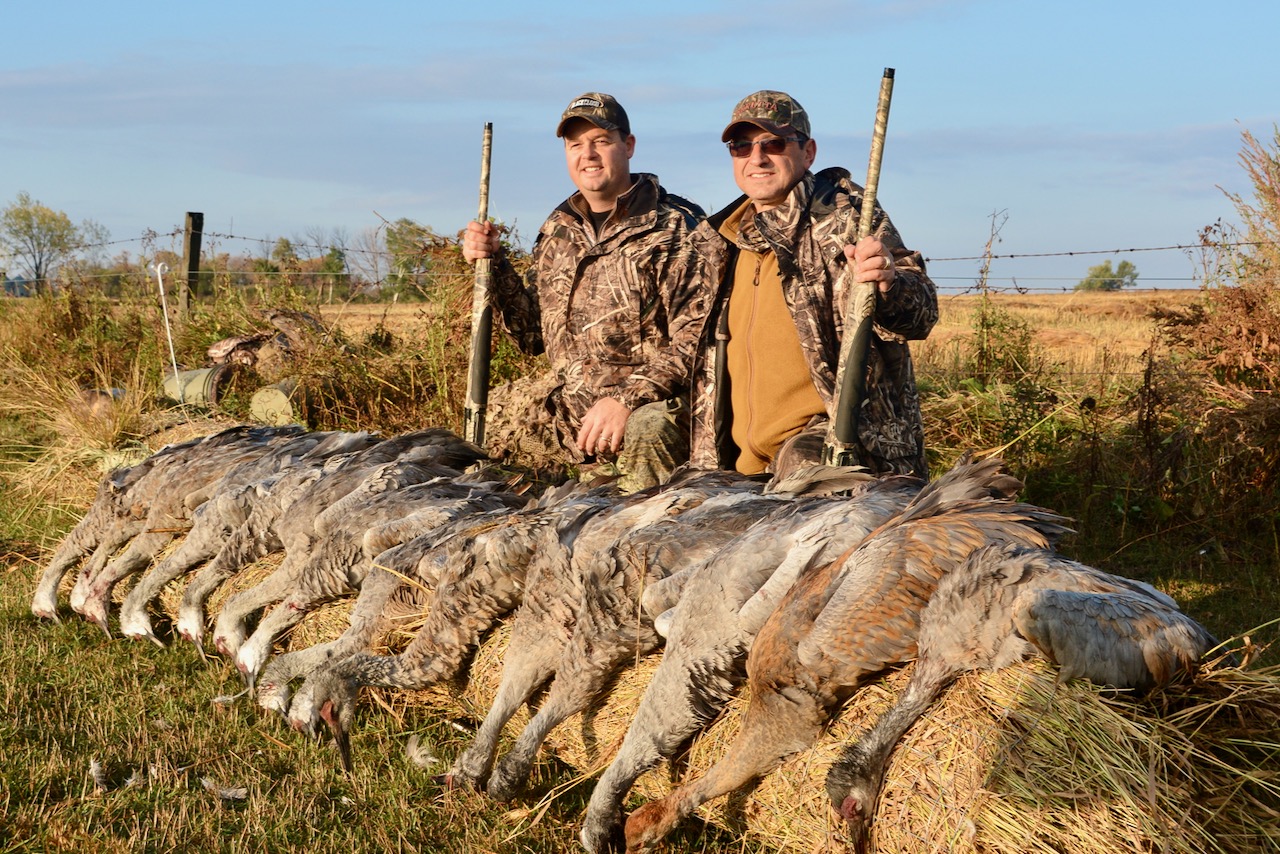 More crane hunts are in the offing
New crane, swan and dove seasons are among the numerous recommendations included in the biennial Proposals to Amend the Canadian Migratory Birds Regulations. The list of potential changes was released in January by Environment and Climate Change Canada (ECCC), which is responsible for the sustainable hunting of migratory game birds across the country. Developed with input from the provinces, territories and various stakeholders, the proposals will come into effect this fall for the 2026 to 2028 seasons, if approved. Public consultation ended in February.
Most of the recommendations are somewhat benign, with season dates and daily limits being adjusted to reflect the evolving status of various bird populations, or to better align with other hunting seasons. The glaring exceptions are proposals to introduce mourning dove and tundra swan seasons in several jurisdictions. Mourning doves are already hunted in B.C., Ontario and Quebec, so expanding the hunt to other provinces is unlikely to meet significant resistance.
Advertisement
The tundra swan proposals, on the other hand, are sure to encounter considerable opposition, despite the fact both the western (Alberta) and eastern (Saskatchewan and Manitoba) populations are above conservation objectives. Namely, some will likely point to the risk of accidentally harvesting trumpeter swans. But data from Montana and North Dakota, where tundra swans are hunted and both species occur, shows the accidental trumpeter harvest there makes up less than five per cent of the total.
You can also be sure any established swan season will be tightly regulated, with limited draw-only tags and mandatory reporting. As someone who would apply for one of those coveted tags, I eagerly await the next steps.
Here’s an overview of the major amendments under consideration across the country, except for Newfoundland and Labrador, New Brunswick, B.C. and the Yukon, where no changes are planned.
Advertisement
P.E.I.
- Change the woodcock season to fixed annual dates (September 26 to December 10) to align with the upland game seasons.
NOVA SCOTIA
- Delay the goose opener by one week in Zone 2 to provide consistency between the duck and goose seasons.
QUEBEC
- Return the daily bag limit of Canada geese to five in hunting districts A, C, D, and F.
- Allow a 14-day sandhill crane season in districts C and D, with both the daily limit and possession limit set at one bird.
- Shorten the spring snow goose season in several districts, with the daily limit reduced from 20 to 12 birds.
ONTARIO
- Shorten the spring season for snow and Ross’s geese to April 1 to April 30, and reduce the combined daily bag limit from 20 to 12 birds in Wildlife Management Units (WMUs) 65, 66, 67 and 69B.
- Establish a seven-day Canada goose season in WMUs 69A, 70 to 73, 77 to 81, and 86 to 93 starting on the fourth Sunday in February, while shortening the fall season by seven days.
- Establish a 14-day sandhill crane season in the Hudson and James Bay District, as well as parts of the Northern and Central Districts; set both the daily limit and possession limit at one bird.
MANITOBA
- Reduce the daily limit for dark geese in Game Hunting Area (GHA) 38 from 12 to eight birds.
- Allow non-Canadian residents to hunt all day for dark geese in southern Manitoba.
- Increase the woodcock limit for non-Canadian residents to eight birds per day with a possession limit of 24 in Game Bird Hunting Zones (GBHZs) 3 and 4; open the season one week earlier, on September 1.
- A mourning dove season in GBHZs 3 and 4 is under consideration, as is a tundra swan season; the earliest possible start for both would be the fall of 2028.
- Simplify the opening and closing dates of migratory game bird seasons in numerous GBHZs.
SASKATCHEWAN
- Mourning dove and tundra swan seasons are under consideration, with the earliest possible start for both being the fall of 2028.
ALBERTA
- Expand sandhill crane hunting opportunities to include 14 new WMUs, selected to avoid areas commonly used by migrating whooping cranes.
- Mourning dove and tundra swan seasons are under consideration, with the earliest possible start for both being the fall of 2028.
N.W.T. & NUNAVUT
- A sandhill crane season is under consideration in both territories, with the earliest possible start being the fall of 2028.