

REMOTE, NOT FAR AWAY
A “True North” fly-in fishing experience just five hours from Toronto
Advertisement
Ask most anglers in Central Canada to picture a fly-in fishing trip and they’ll describe, with some accuracy, a full day—or maybe two—of driving north until the Tim Hortons signs thin out and disappear, followed by another stretch of gravel road and, eventually, a floatplane.
Advertisement
This is a reasonable assumption. I’ve done enough fly-in trips to know that the drive can be almost as much of an undertaking as the fishing itself.
True North Airways offers a pretty different proposition. Its base is in Azilda, just outside Sudbury, Ontario, which means the drive from Toronto or Ottawa is roughly five hours. From there, you’re on the water and heading into the bush. This makes the transition from driveway to backcountry happen remarkably fast. That’s the trick: you can get to a genuine fly-in fishing experience without spending a day and a half just getting to the floatplane (plus a day and a half home, too).
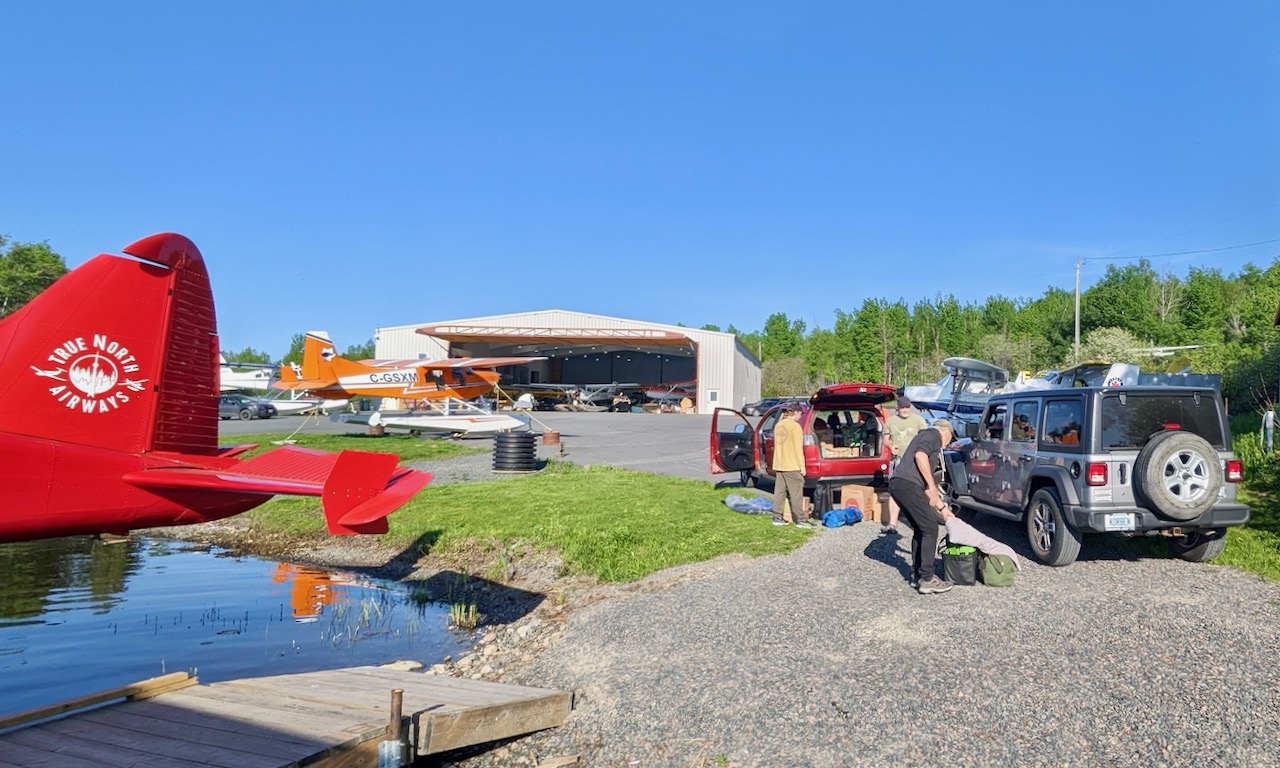 Loading up at True North’s large, modern hangar and dock complex
Five hours to nowhere
We spent the night in Azilda before our flight, which made the morning almost comically easy by fly-in standards. The floatplane dock is right there, so there was no pre-dawn marathon from some distant motel and no wondering whether we’d have enough time to make the flight.
Advertisement
We loaded our gear, climbed aboard and took off.
There were four of us: my son Sam Gardner, on his first outpost trip in a decade after years spent mostly rolling 20-sided dice playing D&D instead of casting lines; my old friend Wes Nelson, a veteran of enough of these trips to know exactly what he’s doing; and Mark Ventresca, a botanist and geographer who’d barely held a rod before last year’s outpost, where he stepped in as a last-minute sub—and got hooked.
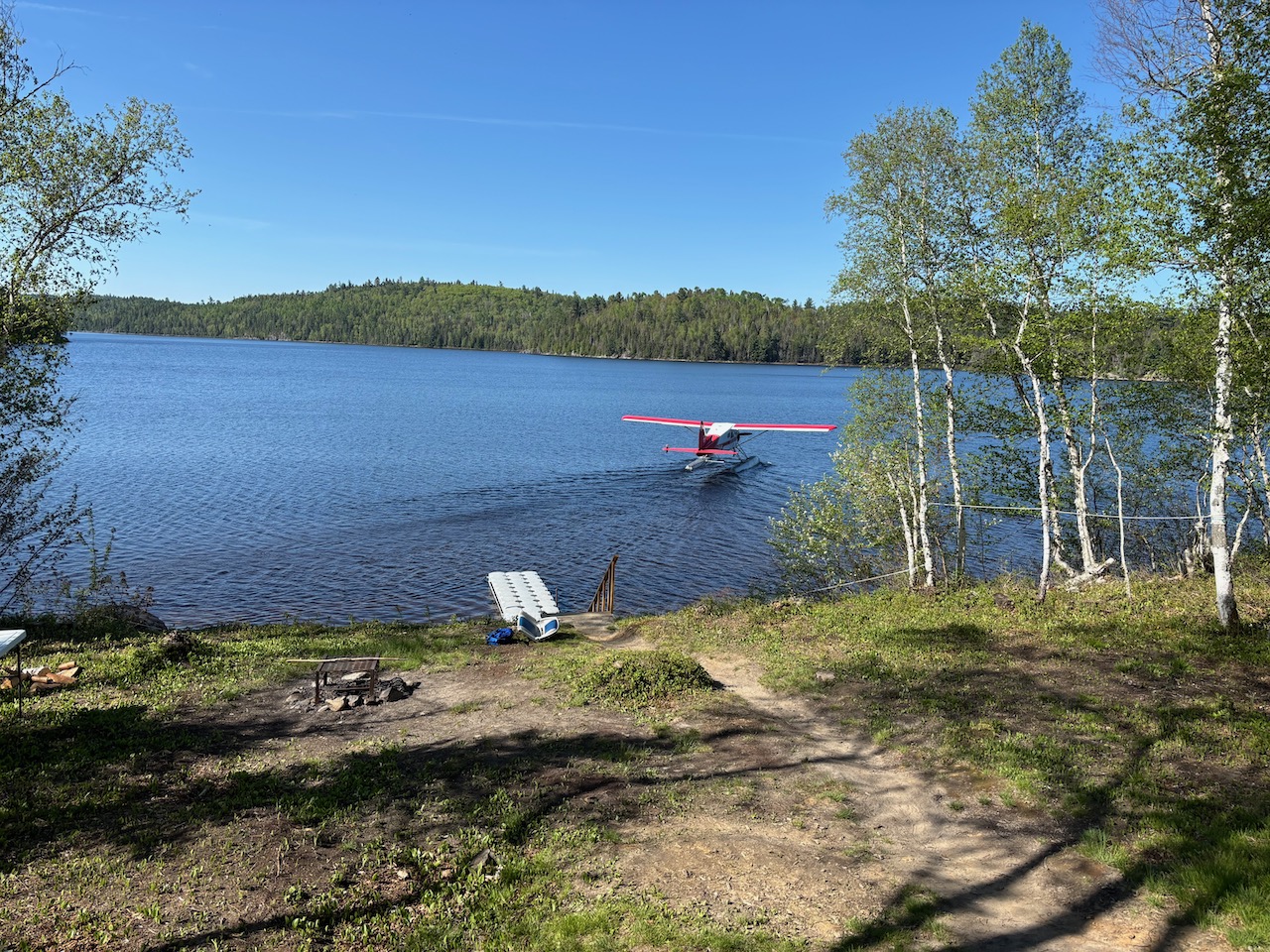 Once the floatplane leaves, the lake is yours
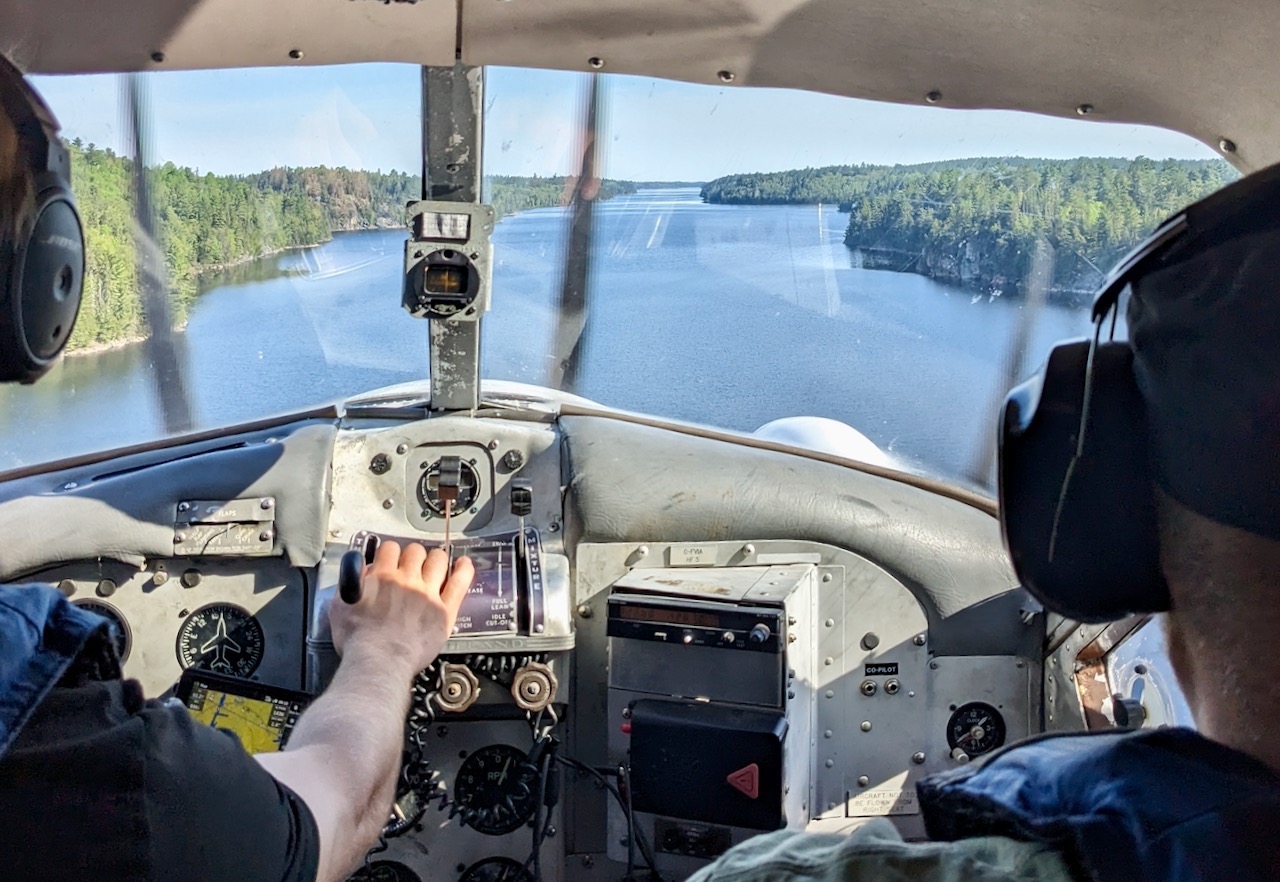
Once we took to the air, the landscape changed quickly, with roads and houses giving way to nothing below us but Canadian Shield and boreal forest. By mid-morning, the four of us were at camp, unloading tackle and getting organized.
I’ve spent plenty of time driving 10, 12 or 18 hours to reach a floatplane base. There is something very satisfying about doing the same transition in a few hours.
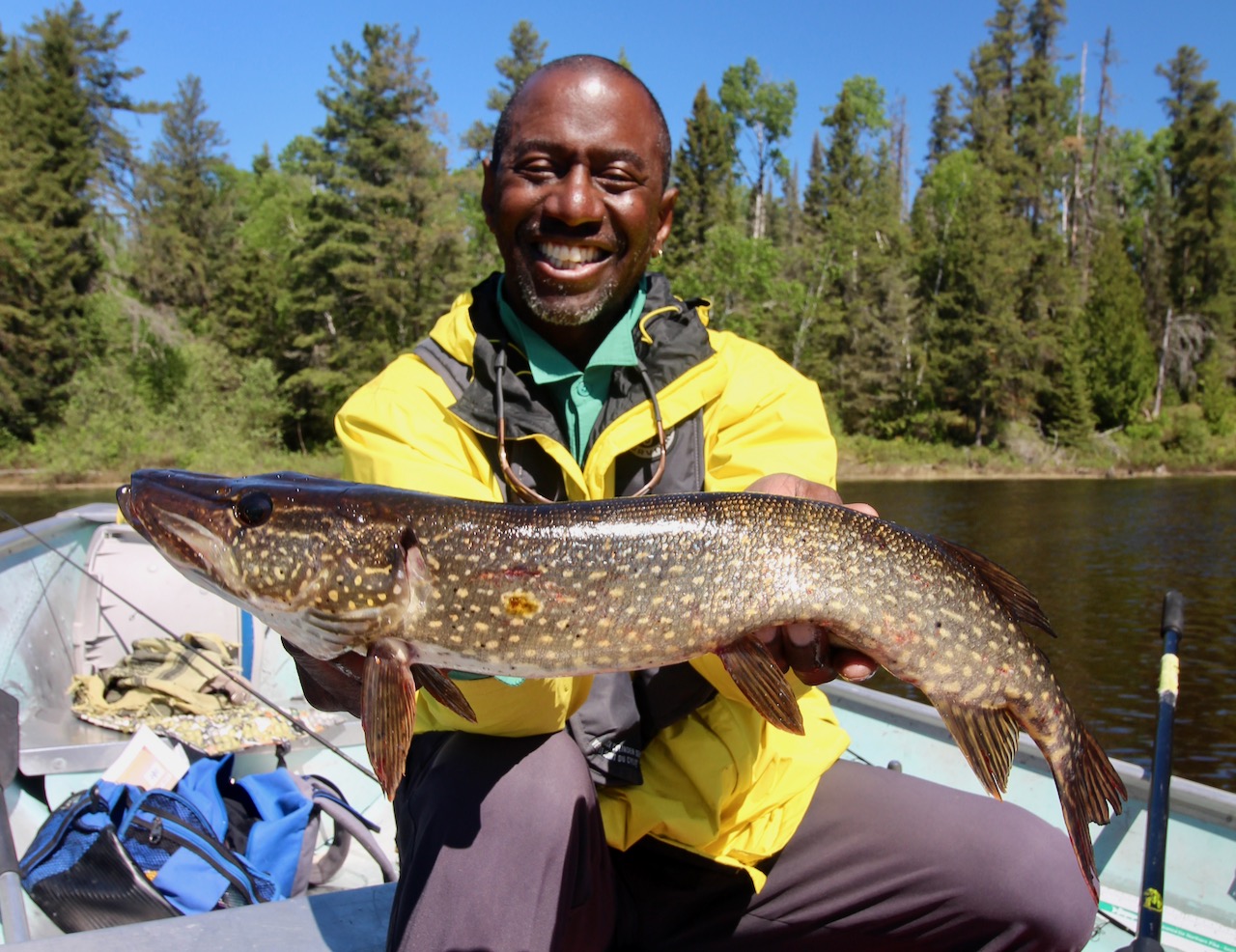 Wes with a typical Scotia pike
A lake to figure out
Scotia Lake is long and narrow, rarely wider than 500 metres, but stretching roughly 18 kilometres from end to end, with a mixture of rocky shorelines, bays, a few beaches and some seriously deep water. On our sonar we saw spots plunge below 100 feet.
It’s the sort of lake that takes some figuring out, particularly when you’ve never seen it before. We worked bays, drop-offs, inflows and other structure, trying to determine where the fish were holding.
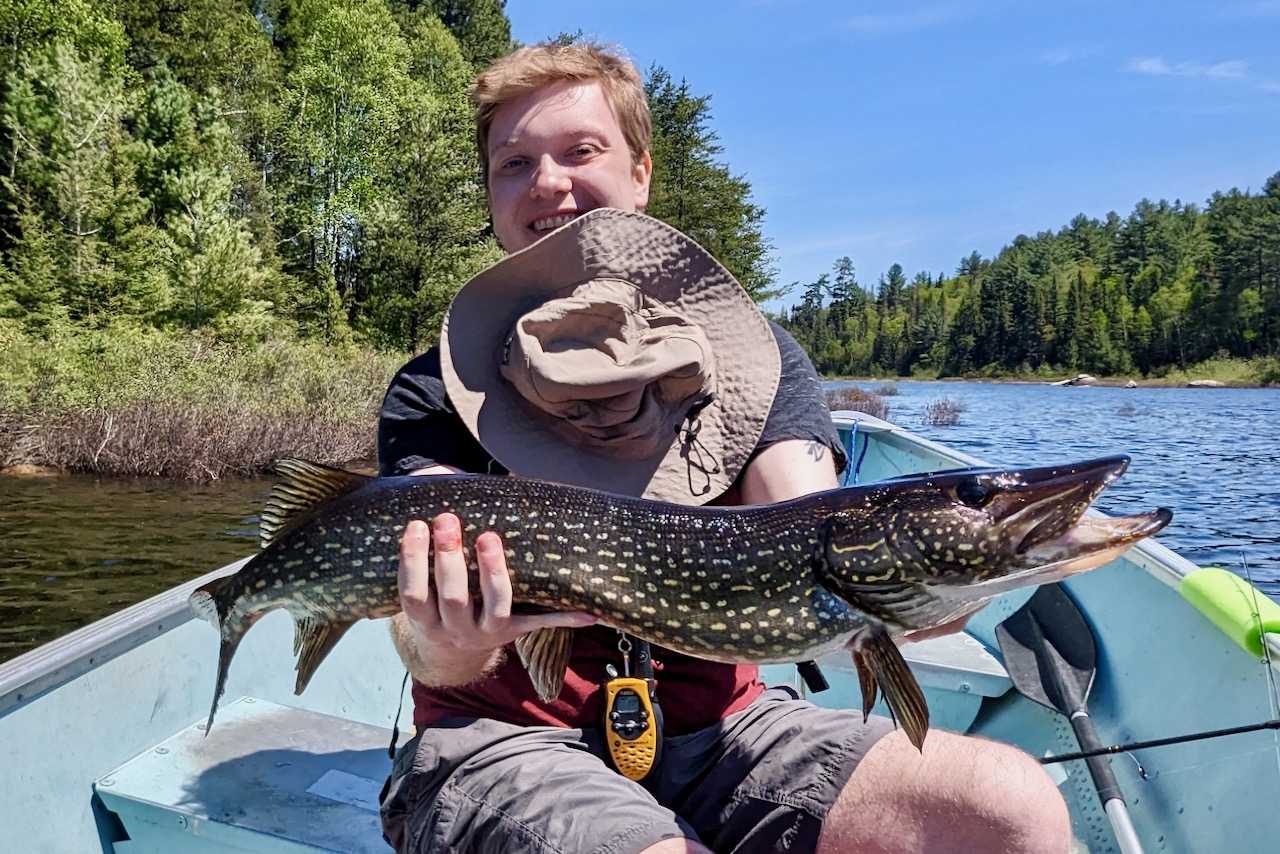
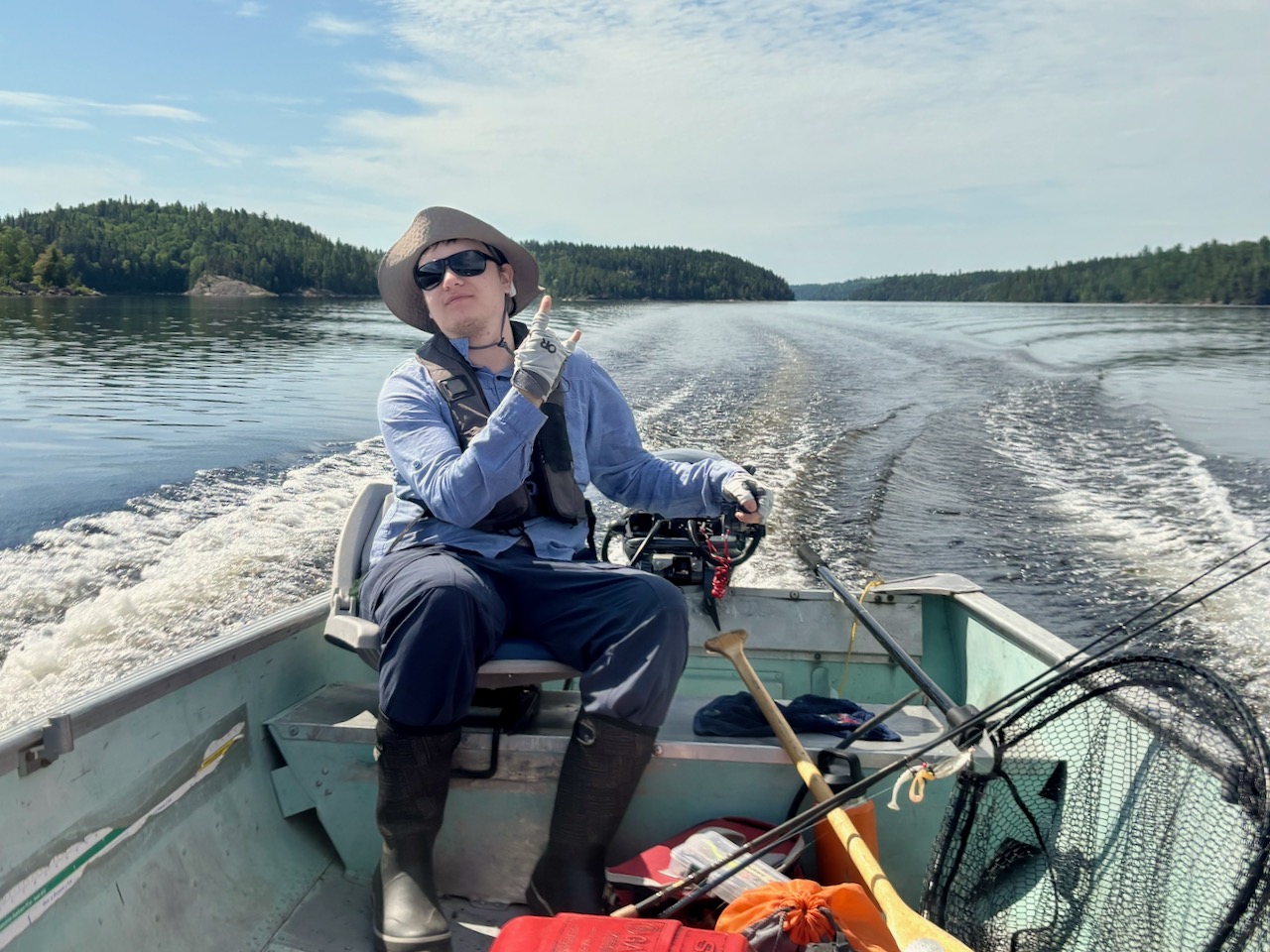 Sam quickly settled back into his outdoor roots
As we tried to crack the lake’s secrets, Mark, our resident botanist-geographer, turned out to be a big asset for reasons beyond his casting. On his second-ever fishing trip, he was already reading a contour map like someone with three decades of practice.
In retrospect, the timing probably wasn’t ideal for the shallow-water pattern we’d hoped for. Much of the weed growth in the bays was only getting started, leaving plenty of open water and some pretty deep places for fish to disappear into.
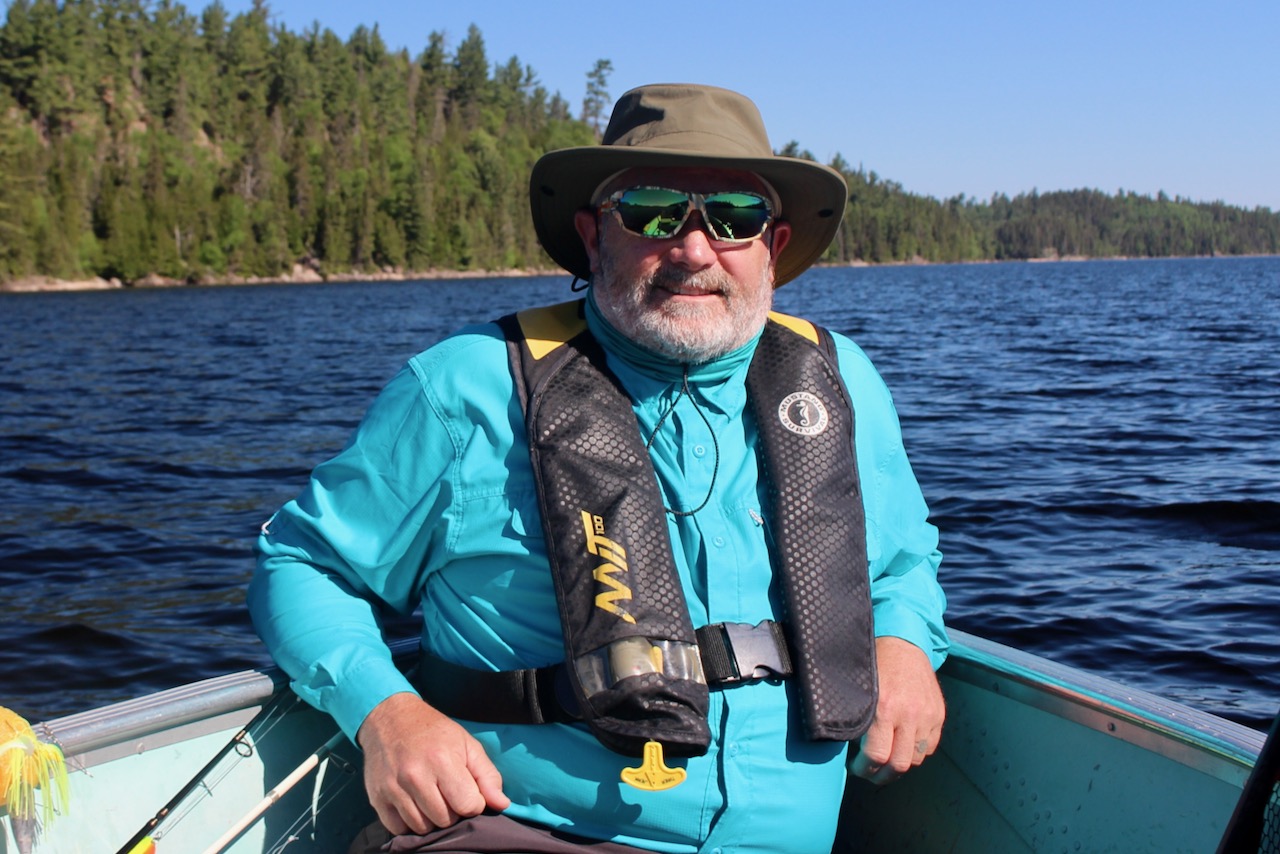 Mark may be a less-experienced angler, but looks like a pro
That gave us a lot of water to explore, and a good reminder that even on a little-fished backcountry lake, you don’t necessarily get to skip the “figuring-it-out” part.