


BULL SESSION
What bowhunters should know before making a play for moose
Advertisement
Moose may be one of North America’s largest big-game animals, but they’re also one of the most approachable species to bowhunt—once you understand their behaviour. Their size, rutting tendencies and ways of communicating create exciting and rewarding opportunities unlike any other big-game hunt.
Success, however, requires much more than simply carrying a bow into moose country. Hunters who understand shot placement, calling strategy, equipment selection and recovery logistics will dramatically increase their chances of tagging a bull and bringing home a freezer full of exceptional wild game. Here are the seven key factors to keep in mind.
Advertisement
#1 ARROW AND BROADHEAD SELECTION MATTER MORE THAN SPEED
Moose are massive animals with heavy ribs and dense muscles, and encounters are typically up close in forested habitat. That makes it wise to prioritize arrow weight, durability and penetration over arrow speed. Heavyweight arrows and broadheads generate more kinetic energy, which is usually required to harvest a moose quickly and ethically.
Fixed-blade and strong mechanical broadheads are a must. Today’s bowhunters are lucky in that most modern broadheads are of high quality, but you should still opt for a 125- or 150-grain broadhead to maximize penetration. A pass-through shoot is always ideal, as it creates an easy-to-follow blood trail.
Advertisement
#2 MOOSE ARE BIG, BUT SHOT PLACEMENT IS STILL CRITICAL
A common misconception is that you can’t miss a moose. Sure, they are big animals with a large body cavity, but that can also fool bowhunters about where exactly to find the kill zone. With moose, the heart and lungs sit low in the chest, directly above the brisket and slightly behind the front leg. The lungs extend upward and towards the rear from the heart, creating a large but somewhat lower-than-expected vital area. The moose’s hump can also be deceptive, leading some hunters to shoot high.
Broadside or quartering-away shots are ideal. Avoid head-on and steeply angled shots that require precision and a keen understanding of the anatomy. Waiting for just the right angle before releasing your arrow is often the most important part of a successful bowhunt.
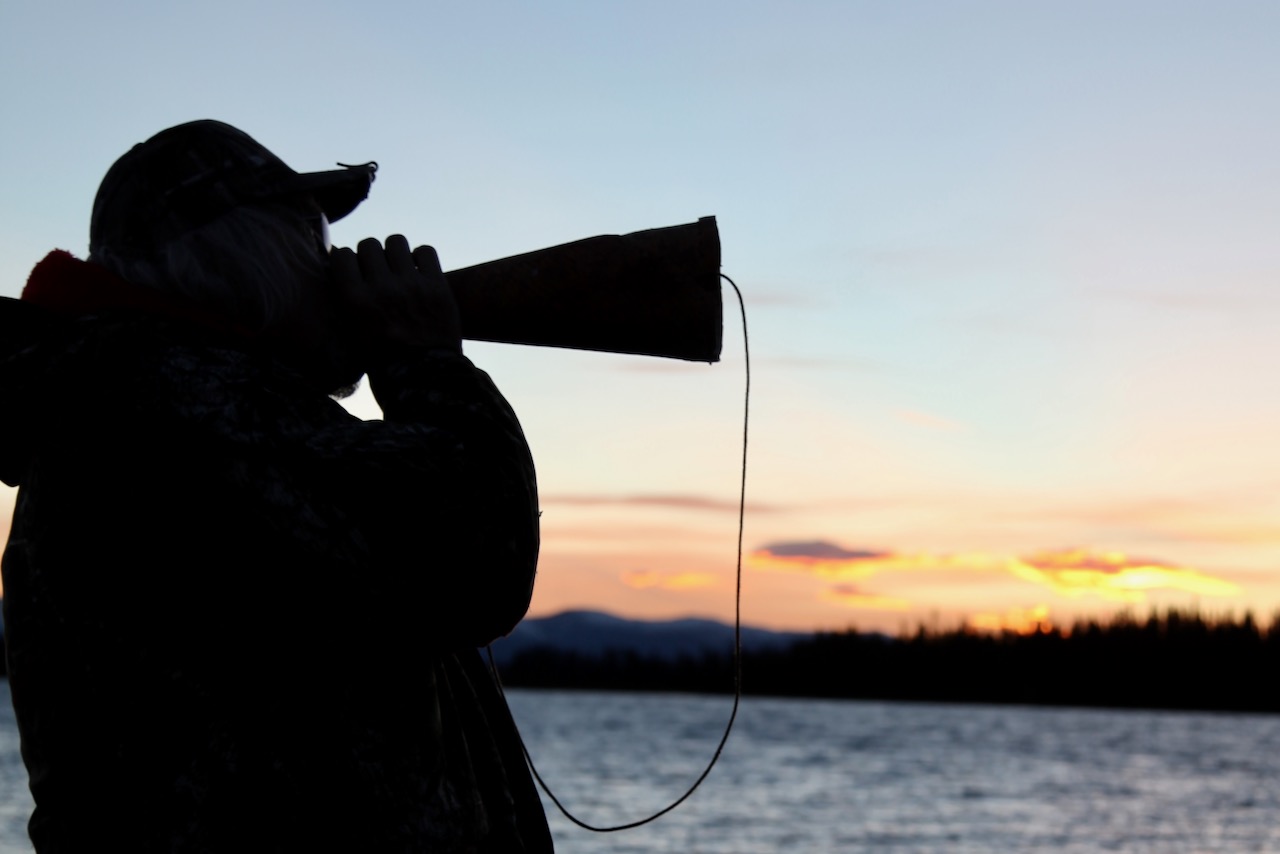 Learn to master cow calls and bull grunts
#3 CALLING IS KEY TO SUCCESS
Moose live in low densities in large, forested areas, so they regularly call to communicate and pinpoint each other’s location. That’s why calling is so effective during the rut. Learning to use cow calls and bull grunts sparingly and with conviction is part of the game—especially a lovesick cow call to bring bulls into bow range, often closer than expected.
It’s important to set up before you start to call. The optimal situation is to have a lake or open area directly downwind from your position to force a bull to come into range without his nose giving you away. Just don’t expect immediate success—I like to describe calling moose as days of boredom, followed by minutes of excitement, then hours of hard work.