

BONEFISH ON A BUDGET
Think only the well-heeled can afford a Bahamas bonefish adventure? Think again. Here’s how to get in on the action with breaking the bank
Advertisement
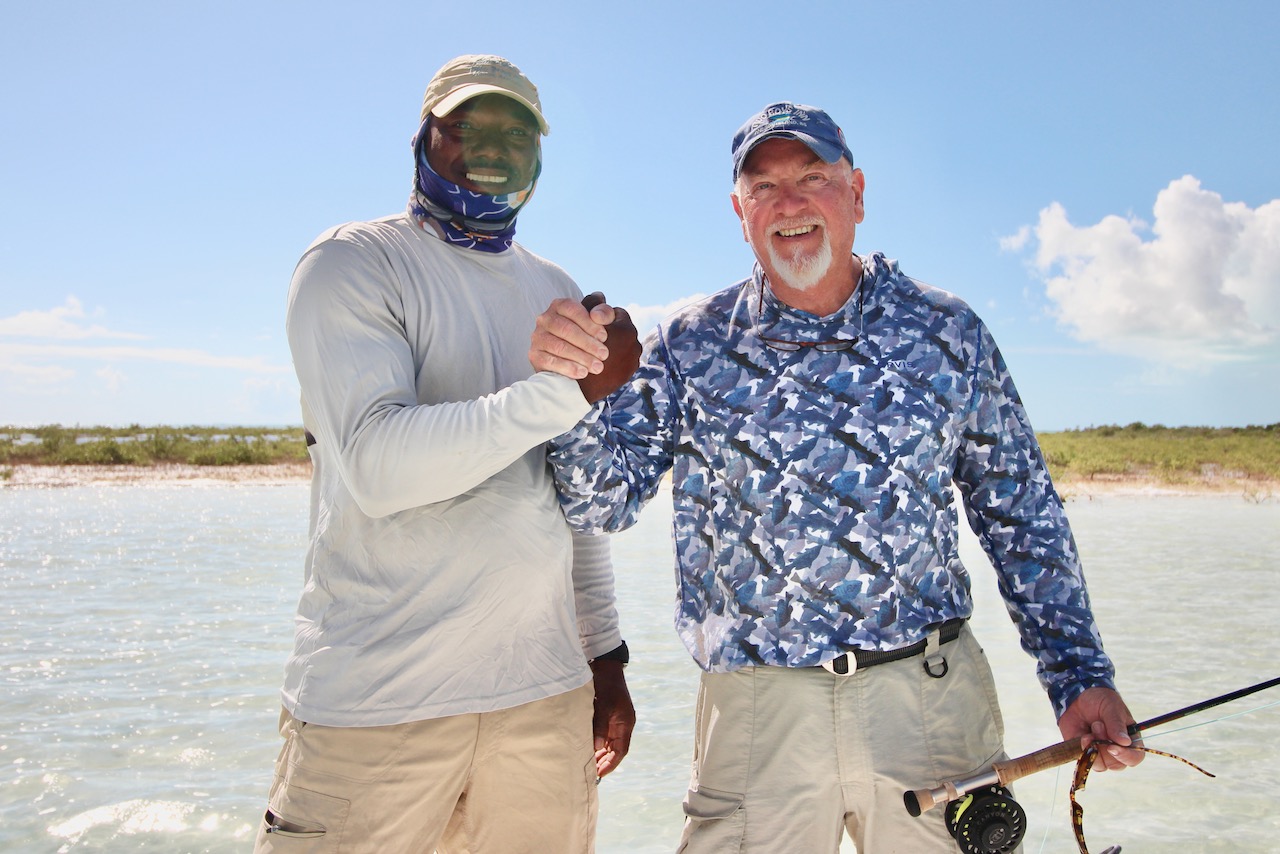
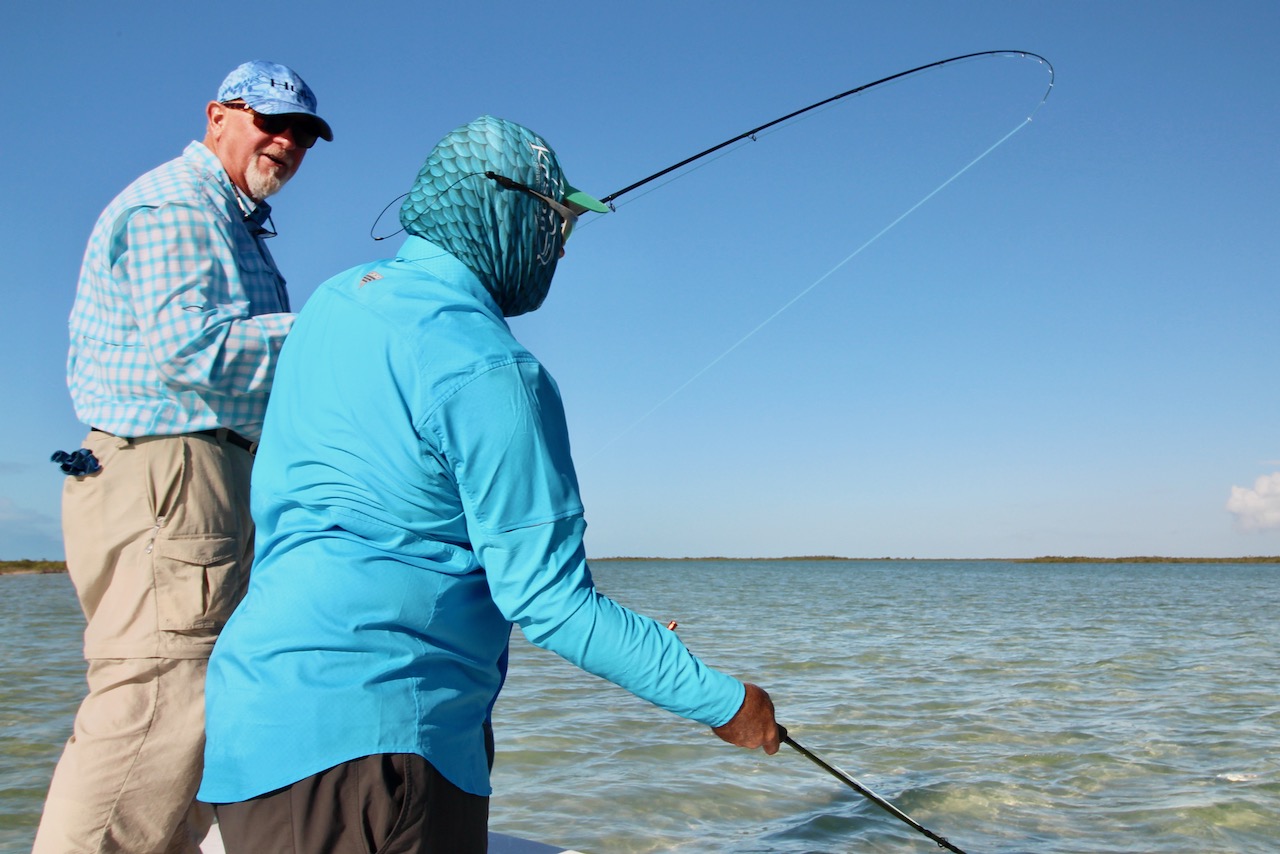
Local guides like Calvin Bowe (left) are excellent teachers and can get novice anglers up to speed
Advertisement
#3 YOU DON’T HAVE TO BE A MASTER ANGLER
There’s an old joke that bonefish will eat any fly that lands near them, as long as you don’t get close enough to cast it. That contains a grain of truth, but flats fishing isn’t as difficult as the lore implies. It’s just different, requiring mental and physical adjustments, so there’s a learning curve for novices. Luckily, there are so many fish in the Out Islands that, on an average day, you get a lot of chances to develop your skills. During my first day on North Andros, for example, I saw more fish than I saw in a dozen full days of bonefishing on the mainland side of the Caribbean, in Mexico and Belize.
Even total newbies almost always catch fish. Most guides are excellent teachers and coaches. They’ll quickly assess your skill level—with no judgment—and do everything possible to put you on fish. Some days it’s hard, but that’s true of fishing anywhere. And on other days you can do everything wrong and still hook fish.
Since bonefish are so mobile, casting to them is much more about delivering the fly quickly, than going for distance. A modest degree of accuracy is also helpful, as is adjusting for the ever-present wind, which rarely drops below 20 kilometres an hour. For fly anglers, if you can hit a dinner table-sized target at 30 feet, you’re right in the game. If you can do it with one false cast, you’ll do really well. It’s similar for spin anglers, though accurately landing light spinning lures in the wind is often harder than delivering a fly. If you doubt your skills are up to the challenge, a little practice at home goes a long way.
Advertisement
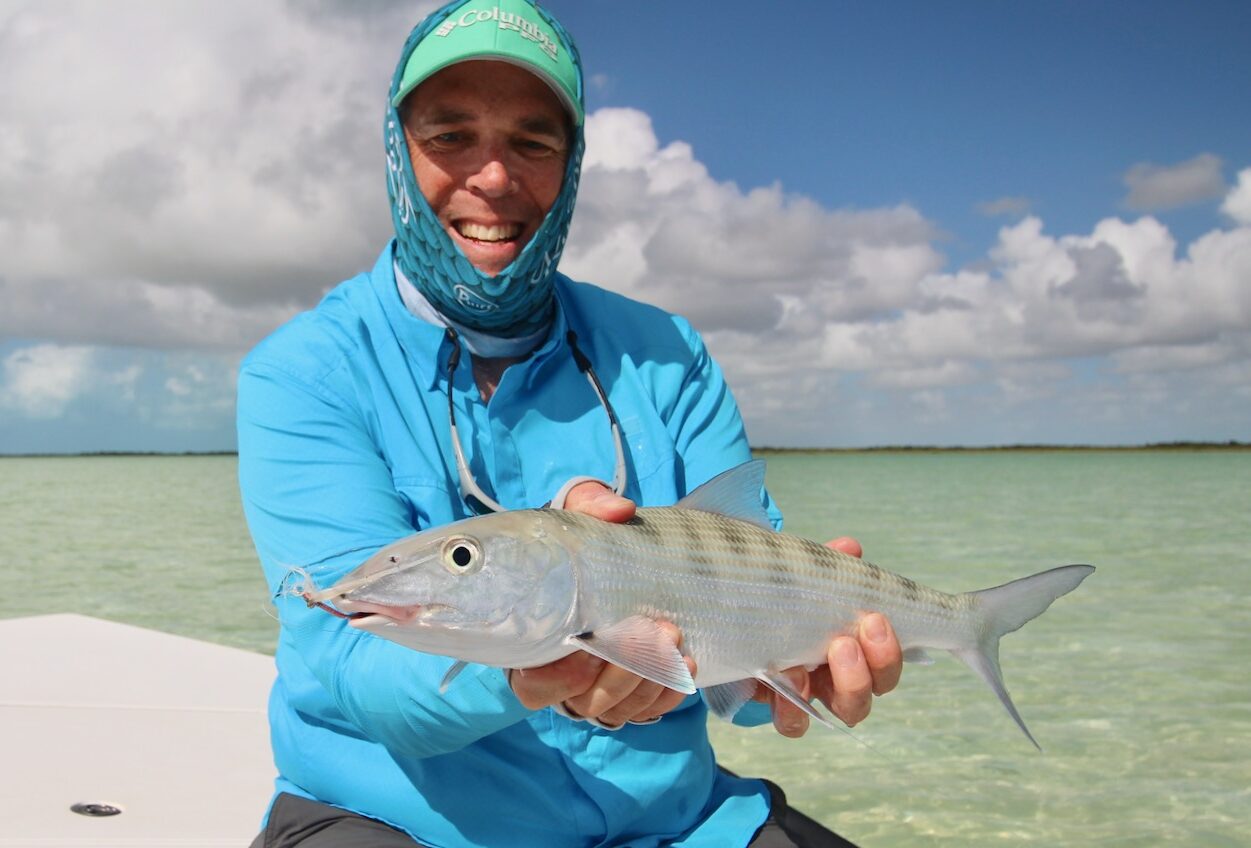 Sight-fishing for bonefish is challenging and thrilling
#4 THE FISHING IS UNIQUELY EXHILARATING
When stalking bonefish, you stand on the casting deck of a skiff, ready to cast, as the guide slowly poles the boat along from an elevated platform, watching for fish. There’s a reason bonefish are called “grey ghosts.” They’re perfectly camouflaged, and very hard to spot. With their higher vantage point and lifetime of experience, the guides almost always spot the fish first. They’ll tell you where to look, saying, for example, “Two o’clock, 60 feet way, moving left to right, school of 20.” Then it’s a matter of the guide anticipating the movement of the fish, and positioning the boat so you can make a cast. If you are unable to see the fish—and for at least your first day or two, you probably won’t spot many of them—trust the guide to tell you when and where to cast. I caught several fish without ever seeing them until they ran. It wasn’t the most elegant way to hook up, but still a cool experience.
Generally, you want to lead the fish by some distance, so the fly or lure has settled to bottom as the bonefish approaches. Then you need to move the fly enough to get the fish’s attention, but not spook it. The guide will continue to help with a series of instructions such as, “Long strip, long strip. Stop. Short strip. Wait.” If the fish don’t get fooled, the guide will issue more instructions—“Pick it up and go again. More left”—until finally it’s time to set the hook: “Hit it!” Such coaching is essential for rookies learning how bonefish move and feed, not to mention for anglers like me who are prone to first-day buck fever.
Advertisement
Once hooked, bonefish don’t leap or headshake or tail-walk like some of our favourite Canadian gamefish. Instead, they’ve only got one trick, but it’s a good one—tearing off at a stunning speed. If you manage to keep the fish hooked during that first blistering run, there’s a good chance that, after a few more runs, you’ll land it.
 Chris Clackner (left) and the author with a bonefish double-header
Adding a little extra flavour, it’s not unusual for struggling bonefish to attract four-foot-long sharks or barracudas, which seem to appear out of nowhere. If they can get a bead on your fish, they won’t hesitate to hit it. Big predators also blow out the flat, meaning it’s time to find a new spot. But if you have a rod rigged and ready with a 40-pound wire leader and a big popper or baitfish imitation, you can take a parting shot at them first. Cudas, in particular, are spectacular gamefish—imagine extra-toothy pike with nitrous-oxide boosters—and much easier to release than sharks.
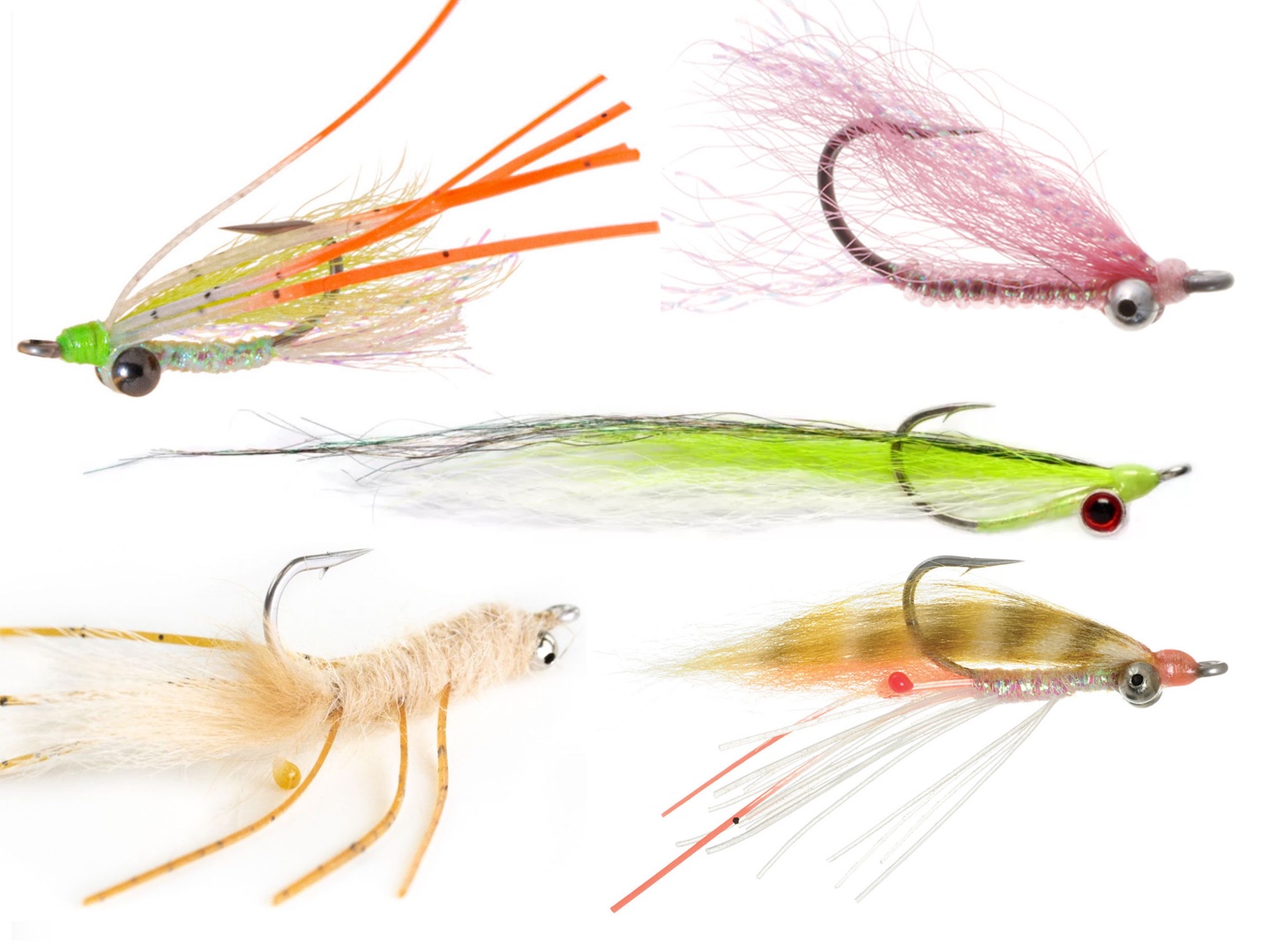 Choice bonefish flies include: (clockwise from top left) Beck’s Sili Legs, Crazy Charlie, Clouser Deep Minnow, Bonefish Junk and Veverka’s Mantis Shrimp
#5 THE RIGHT GEAR IS IMPORTANT
The standard bonefish set-up is an 8-weight rod, with a weight-forward floating line. I typically have two outfits in the boat, one rigged with a lightweight fly, and a second with a heavy fly or an intermediate-sinking line for slightly deeper water. You also need a decent reel. It doesn’t have to be high end, as long as the drag is smooth, and it can take a workout.
Top flies include all the bonefish classics, such as the Crazy Charlie, Gotcha, Veverka Mantis Shrimp, Beck’s Sili Legs and Clouser Minnow in white, pink and tan, and sizes 4 to 1/0. When you look at them in your box, they will seem improbably large, but so are Bahamas bonefish, and they like to eat.
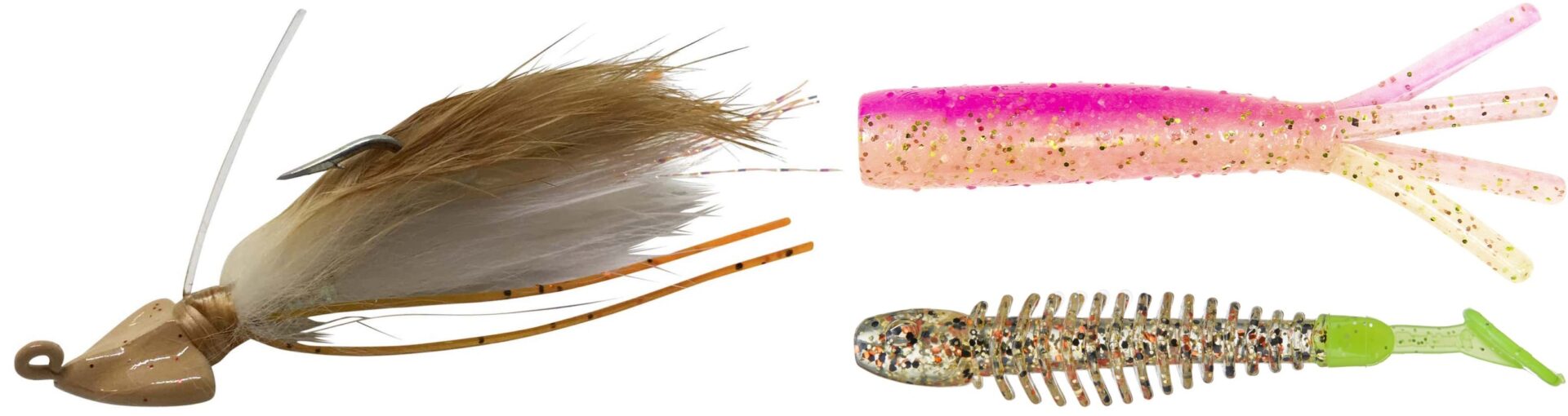 Bonefish lures include a skimmer jig (left) and soft-plastics that imitate small crustaceans
Spin anglers need a seven-foot, fast-action rod, with a quality spinning reel that will hold at least 150 yards of 20-pound braid or 15-pound mono. The most popular bonefish lures are 1/16- to ¼-ounce jigs with a stout, saltwater-quality hook, dressed in crustacean-imitating bucktail, craft fur or soft plastics. Standard shapes will do, but even better is a skimmer jig, which has a flat triangular head that scuttles along the sand, keeping the hook point up.