

Making the cut
How culling your fly boxes can help you become a better angler
Advertisement
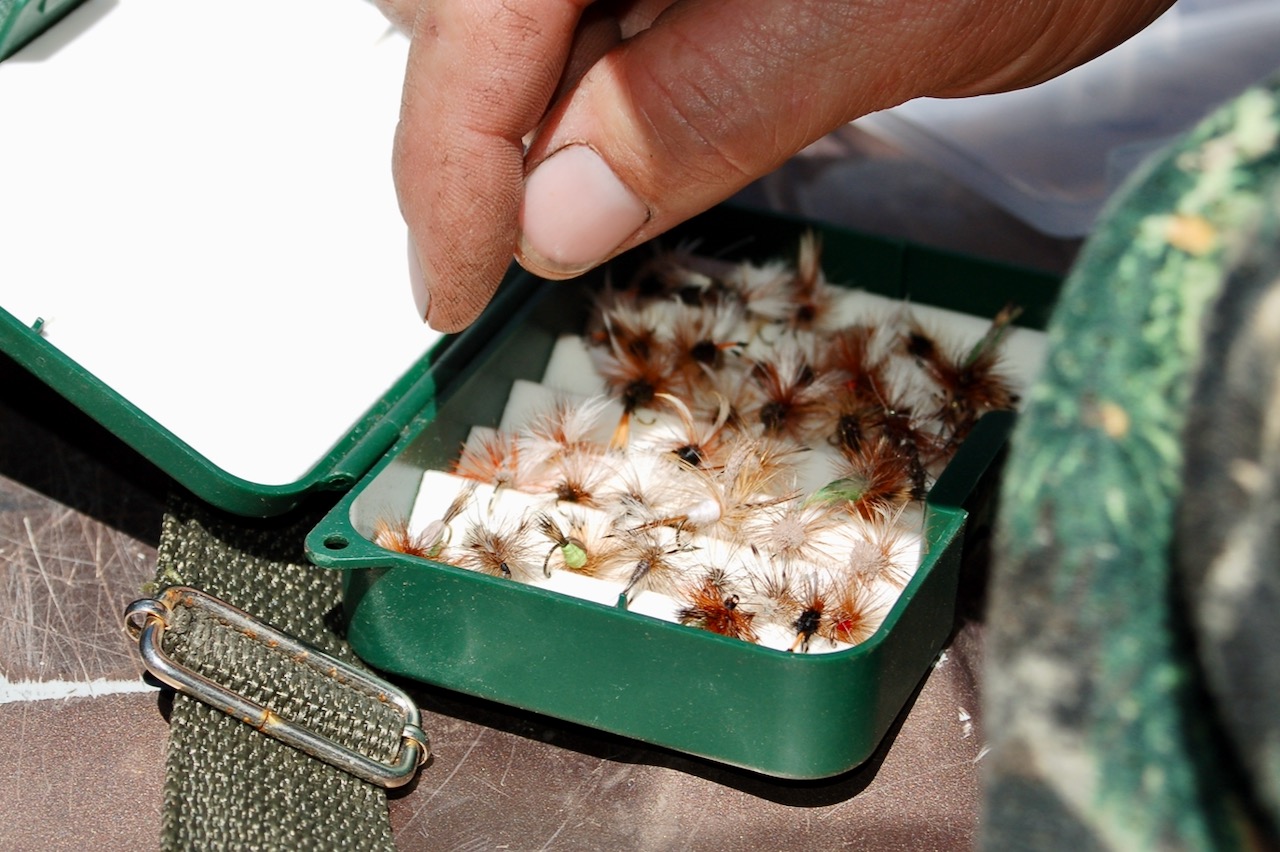
The common fruit fly is a mainstay of scientific research because its eggs hatch and reach maturity within two weeks, so a single fly can produce thousands of offspring in its 50-day lifetime, and millions within a few years. Looking over my fishing flies, I’m pretty sure they’ve been breeding in the same way. It seems like the only way I could have started out with a dozen patterns in a single small box, and now have about 25 boxes, bags and bins jammed full of flies.
Compared with lures, flies are so small and light I could easily cup all the patterns I used this season in two hands. The same goes for most fly anglers, yet many of us still head out with vests and packs uncomfortably bulging with fly boxes. That leads to option overload when picking a pattern, lost fishing time, possible lumbar pain and, ultimately, less enjoyable days on the water. I went through this myself until I got more discipled and realistic about what I actually needed. Here are some ideas for pruning your fly box, and developing a leaner, more focused approach to fly fishing…
Advertisement
STEP#1 MAKING THE CUT
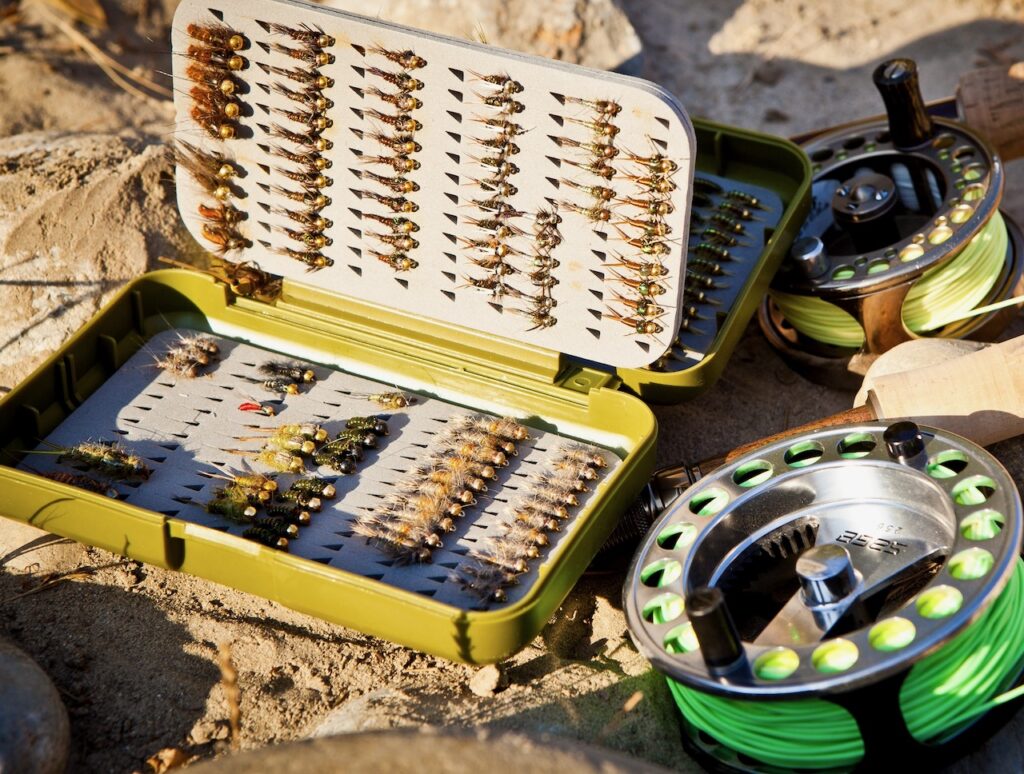
The guiding philosophy when trimming your flies is to only pack what you’re likely to need for a day on the water, not everything you could possibly, maybe, theoretically use. If you’re a multispecies angler, the first step is to organize your flies into different boxes by species. That way, when you’re fishing for brookies, you’re not lugging around pike, salmon or—heaven forbid—bonefish flies.
Next, it’s time to pull flies from the starting line-up. I know this is hard, so start slow. Go through your boxes and remove anything you haven’t used for five years. That’s a long time on the bench, and if a fly hasn’t gotten wet since 2016, it’s dead weight. Now take out everything you didn’t use this season, or the last one. Clearly, those aren’t go-to patterns, either. By this point, I wager you’ll have removed 50 per cent of your flies.
Advertisement
Once you’re down to your mainstays, look at the colours. Do you really need size 12 caddis flies in beige, tan, fawn, cream, biscuit, mushroom and taupe? These days, I only stock my workhorse patterns in a couple of generic colours. Remember, gamefish are hungry, opportunistic predators. When we think fish are being selective and not biting, it’s instead almost always a presentation problem, such as subtle drag on the line or something spooking the fish. If you change your approach before you change flies, you’ll catch more fish, and need fewer flies, too.
Once your flies are thinned out, try combining several boxes into one, or moving the winning flies into smaller boxes. Before I did that, I used to bring four boxes when I went trout fishing. Now I’m down to two that fit in my shirt pockets.
Advertisement