

HIDDEN GEM
Longing for a winter escape? Mexico’s tropical Chetumal Bay offers the best saltwater fly fishing you’ve never heard of—until now
Advertisement
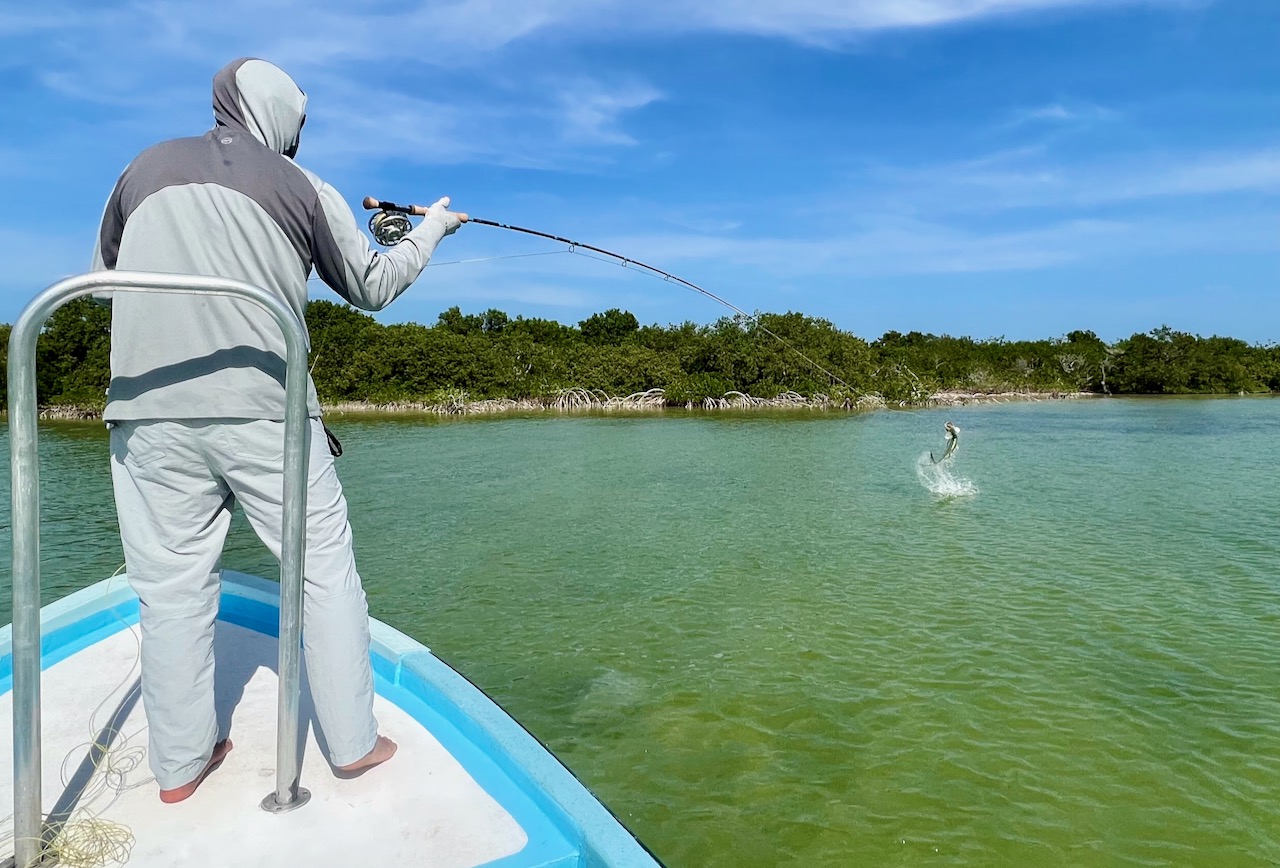 Jumping a juvenile tarpon on Chetumal Bay (photo: Ron Mayfield)
THE ACTION
Unlike fish in more pressured destinations, those in Chetumal Bay haven’t been buzzed over by boats and cast at by thousands of anglers for the last 40 years. However, it doesn’t make them easy marks. The action is almost entirely sight fishing, and flats fish still demand a polished presentation.
A big part of fishing here is the thrill of the hunt—spotting, stalking and casting to wary fish in knee-deep, gin-clear water where every movement counts. Success depends on stealth, precision and nerve, turning each encounter into a test of skill and composure rather than luck, although a little luck doesn’t hurt. And when you hook up, bonefish, cuda and jacks rocket across the shallow flats in blistering sprints, testing your reflexes and stripping line off your reel, while tarpon launch acrobatic, heart-stopping leaps and rolls.
Advertisement
It’s all about variety here, too, since the bay’s vast system of flats, channels and mangrove-lined lagoons means you never know what you’ll spot. One moment you could be scanning for signs of tailing bonefish, and the next, your challenge is threading accurate casts under mangrove branches for snook. On top of that, fish can appear—and disappear—very quickly, so a speedy presentation is essential. The action is so diverse we always had about six rods in our boat, each one pre-rigged for different species and situations.
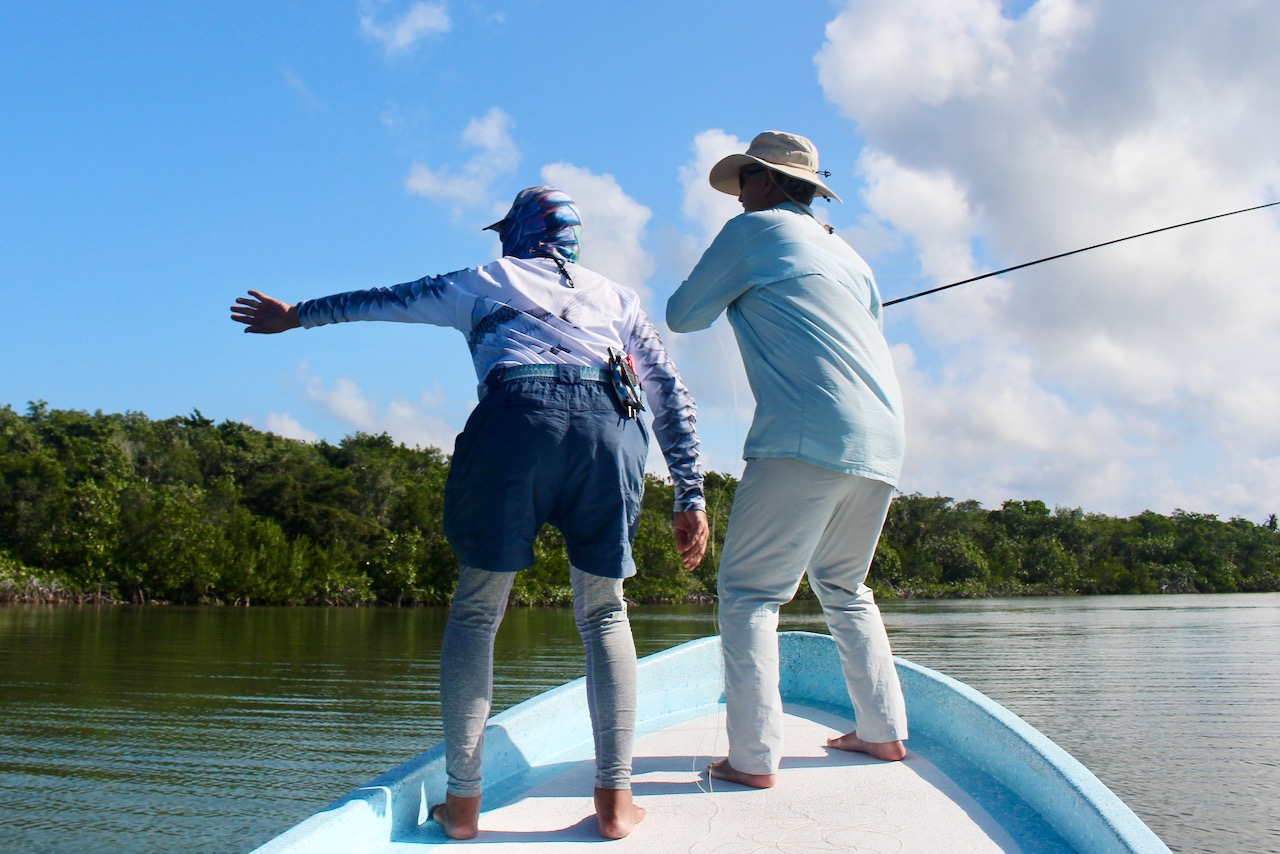 Expert guides help you spot and stalk fish
Saltwater flats fishing poses a more daunting challenge than most Canadian fly anglers have encountered. But if you’re looking for exciting and powerful fish in a gorgeous tropical setting, don’t let the increased level of difficulty stop you. No one is born knowing how to do this, and we were all novices once. And if you hone your skills a little at home before you go, you’ll do fine once you adapt to the unfamiliar conditions.
The first critical thing to learn once you arrive is how to spot fish in shallow water. Bonefish, for example, are so well camouflaged that the best way to find them is by watching for their shadows moving across the sandy bottom. Eventually, you’ll also learn to read subtler signs, including nervous water, tails breaking the surface and the telltale puff of mud from feeding fish.
Advertisement
While the clear water helps reveal the fish, it also makes them extremely spooky, so you’ll need to deliver quick, reasonably accurate casts. You don’t have to be a tournament caster launching 80-foot bombs into the wind, however. If you can hit a poker-table-sized target at 30 feet with a single false cast, you’ll do fine. Do it at 40 feet, and you’ll catch twice as many fish.
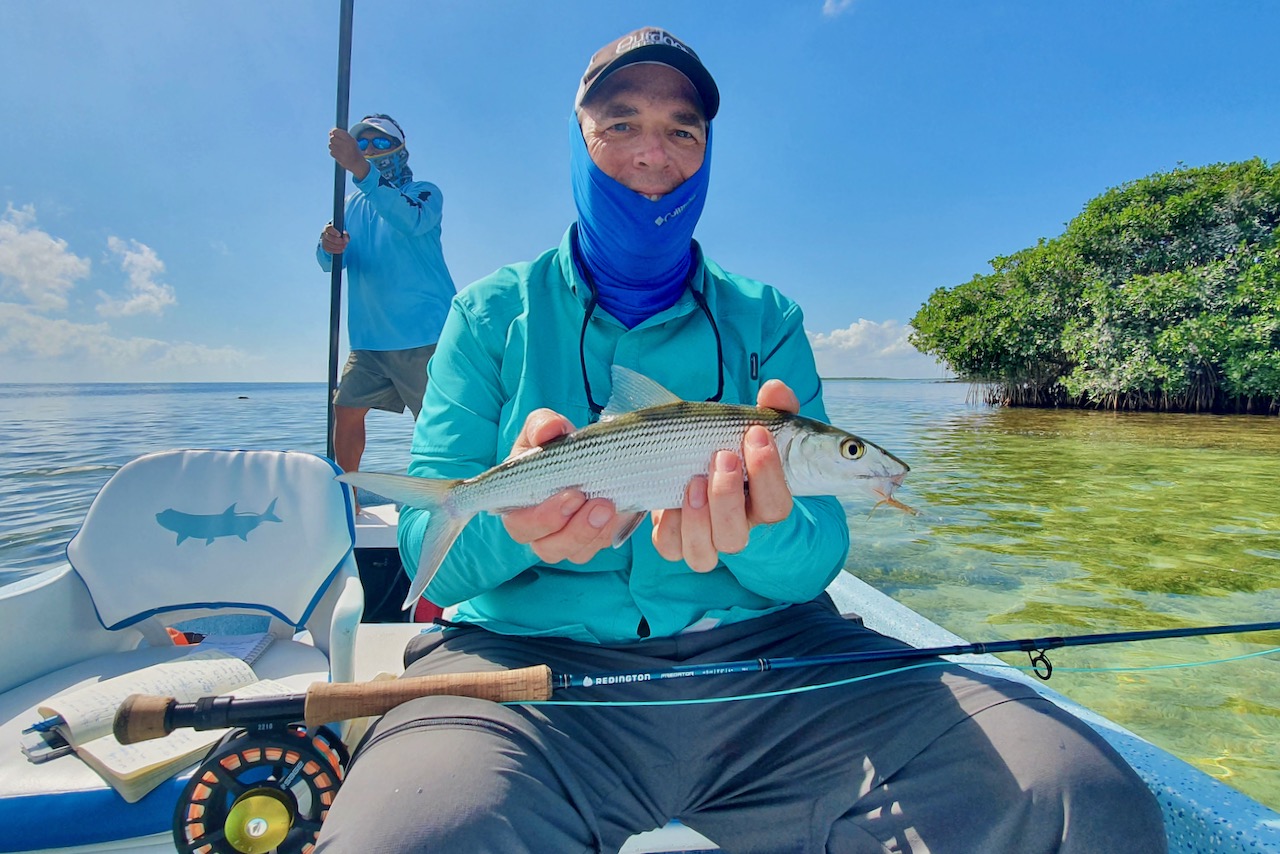 With persistence and modest skills, most anglers can catch flats fish
You will also need basic line management skills to handle the explosive runs these species are famous for, and the discipline to make a smooth strip-set hookset rather than the instinctive rod lift you’d use on trout. Master the fundamentals—sharp eyes, a solid short cast and composure under pressure—and you’ll find that flats fishing is well within reach of any intermediate fly angler willing to learn.
Advertisement
It may sound a little too good to be true, but Chetumal Bay really does deliver what saltwater fly anglers dream about—clear water, pristine flats and exotic, hard-fighting gamefish that will make your reel scream. Whether you’re chasing your first bonefish or your first Grand Slam, this is a place to find what many destinations have lost: room to fish, space to learn, and the feeling that discovery still exists. And once you’ve found that, you’ll want to return, not just to chase bigger fish, but for more of what saltwater fly fishing was always meant to be.
Associate editor Scott Gardner is already planning his next tropical fishing getaway.
 Anglers with Fly Fishing Chetumal stay at the oceanfront Villa Marcela
GETTING THERE
Many anglers fly directly to Chetumal’s modern regional airport via Mexico City. However, the timing of flights from Canada often means spending a night in Mexico City, both before the connection to Chetumal and on the return. Mexico City is a vibrant and welcoming place, so that’s not necessarily a hardship. But if you’re aiming for efficiency, another option for Canadians taking one of the many inexpensive flights to the ever-popular vacation spot of Cancun. From there, you can rent a vehicle and drive about six hours to Chetumal. For a larger group, that can be less expensive and more convenient. Plus, you’ll get better food at roadside cantinas than on any airliner. Another option is the new Tren Maya, a train service that traverses the Yucatán Peninsula. The trip from the Cancun airport to Chetumal takes roughly five hours, with the fares running from $40 to $70. One last travel tip: When you finally head out fishing on Chetumal Bay, adjust the settings on your phone so it doesn’t automatically connect to a network in Belize and rack up extra roaming fees.
Learn more about Fly Fishing Chetumal at www.flyfishingchetumal.com. You can also contact Carlos Godoy and his team via phone (556) 035-8621 or via Whatsapp: 5560358621.