

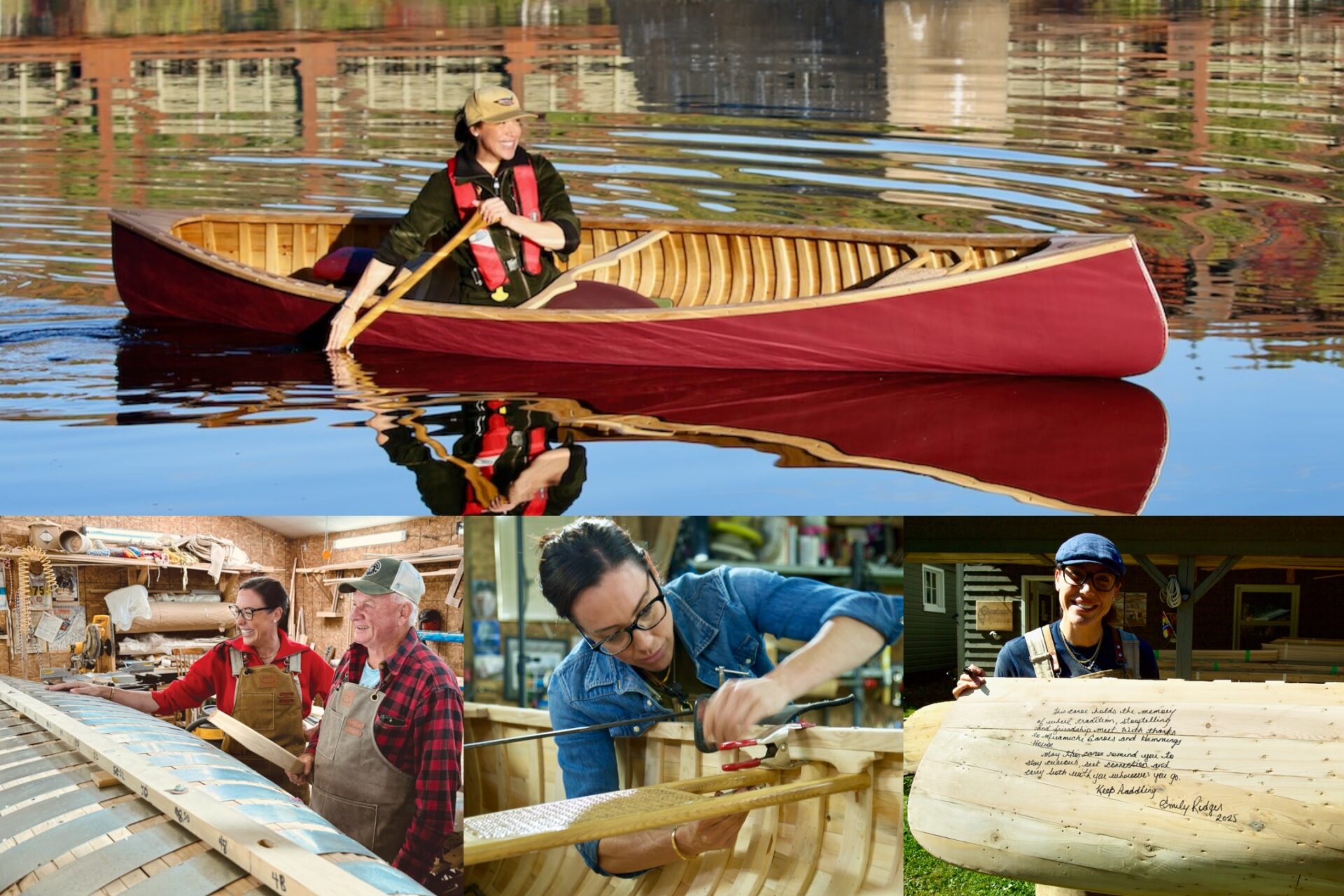

DIP, DIP AND SWING
How building a wood-and-canvas canoe linked this New Brunswick fly angler to the outdoors of her youth—and adventures yet to come
Advertisement
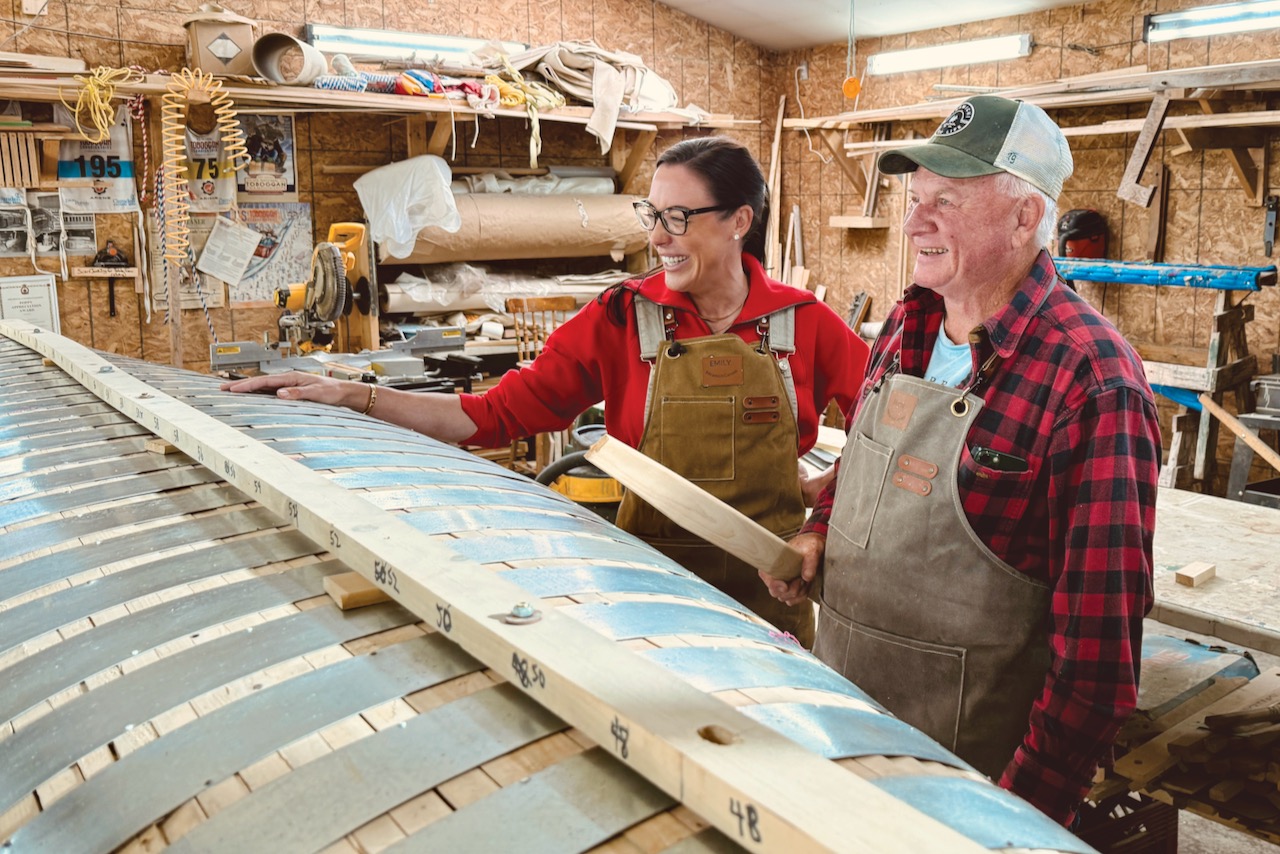 Norman Betts of Miramichi Canoes guided Emily Rodger through the canoe-building process
That opportunity came through a friend, Norman Betts, who owns Miramichi Canoes, a small workshop on the banks of the famed like-named river in my home province of New Brunswick. Norman has spent years breathing new life into heritage designs, restoring and building traditional cedar canoes that once defined life in the Maritimes. His shop smells of cedar and river air, a place where stories, history and craftsmanship meet.
I first met Norman and his wife, Laura, years ago, and over time they’ve become dear friends. Most recently, they joined me on a fishing trip in Argentina. It was their first time fly fishing in South America, stepping away from the familiarity of salmon rivers at home to try something new. Between long days on the water and evenings spent sharing stories, our conversations often turned to what drew each of us to fly fishing in the first place. We spoke about experiences, about the pull of the outdoors, and before long our talk drifted toward canoes and the history of wooden boats in Canada.
Advertisement
I’d always admired the heritage of New Brunswick’s Chestnut Canoe Company, and told Norman that building my own canoe had long been a dream of mine. Curious and generous as ever, he began sharing stories of his own work at Miramichi Canoes, where he restores and builds the traditional cedar vessels. I found myself asking endless questions about the process—where he gets the wood, how he selects it, the patience behind bending each rib, and what keeps him inspired after building and restoring so many canoes. Listening to him speak, I could hear the passion in his voice: part craftsman, part historian and every bit the teacher. Norman, with the ease that defines him, simply said, “Well, why don’t you come and build one?”
 The tradition of building Chestnut canoes lives on at Miramichi Canoes
The invitation came with such warmth and generosity that I couldn’t help but tuck it away. Much like navigating a river, I began to plot my own schedule, carving out time to be home long enough in New Brunswick to make it happen. A few months later, under Norman’s guidance, I found myself in his workshop standing before the mould of a 15-foot Chestnut canoe, a design born from New Brunswick ingenuity and now ready to take form once again.
The Chestnut Canoe Company holds a foundational place in Canada’s paddling heritage. From its beginnings in Fredericton, New Brunswick, in the 1890s, the company helped define what a classic wood-and-canvas canoe would become. The boats were built from cedar planking and ash trim, with their canvas hulls coated for strength and waterproofing. They carried explorers, guides, anglers and families across Canada’s countless lakes and rivers—craft that were strong, repairable and built for wilderness travel.
Advertisement
Founded by brothers William and Henry Chestnut, the company took its name from their family. The brothers recognized a growing demand for durable, lightweight canoes suited to Canada’s waterways and began producing models inspired by earlier birchbark and Maine designs, refined through local craftsmanship. From their first shop on York Street in Fredericton, their reputation quickly spread. By 1914, the company was turning out 1,200 canoes a year.
Their designs helped shape an era of Canadian exploration. Guides relied on them to reach remote waters, and anglers trusted them to access hidden trout streams and salmon pools. Over time, the Chestnut name became synonymous with adventure, representing resilience, craftsmanship and connection to the land.
Advertisement
By 1979, the original Chestnut Canoe Company had closed its doors after nearly a century of shaping Canadian canoe culture. For a time, it seemed the heritage might fade. The knowledge and the moulds lived on, however, carried forward by dedicated builders and restorers—craftsmen such as Norman—who refused to let the tradition disappear.