

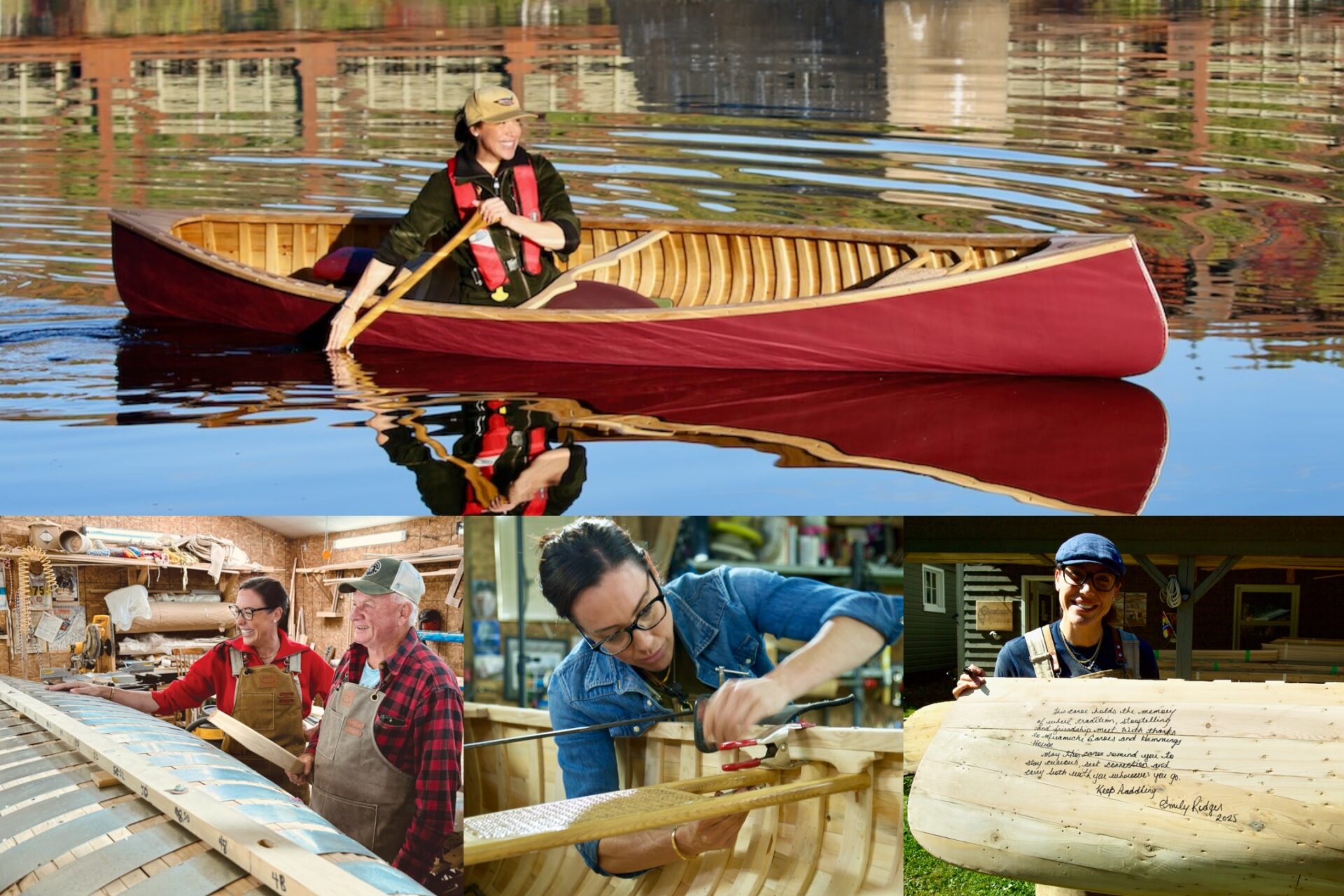

DIP, DIP AND SWING
How building a wood-and-canvas canoe linked this New Brunswick fly angler to the outdoors of her youth—and adventures yet to come
Advertisement
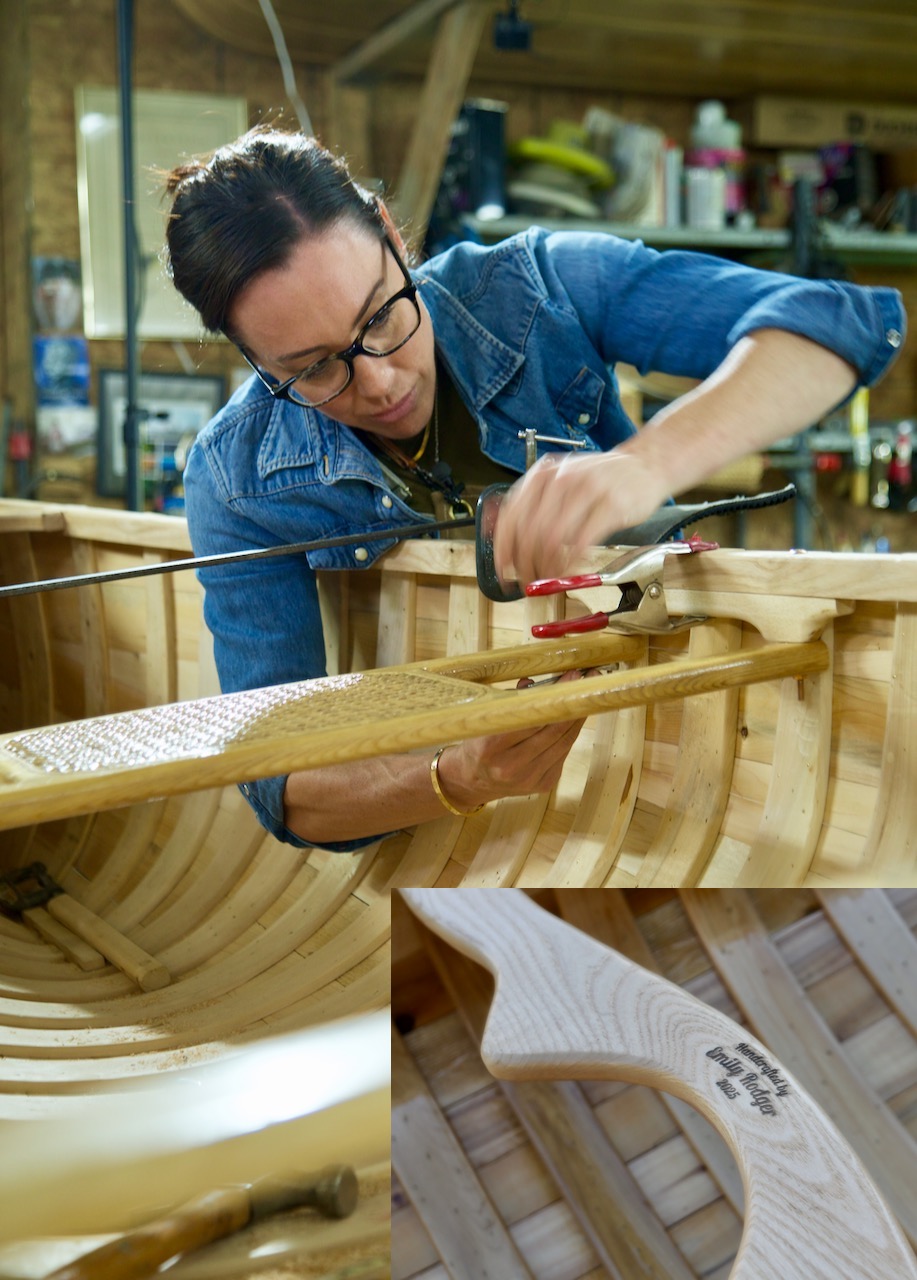 Fitting the boat’s seats and yoke (inset) are among the final steps
Standing in the Miramichi Canoes workshop, surrounded by the scent of cedar, I realized I wasn’t just building a canoe—I was taking part in something much larger, a living tradition. I wanted to understand every step and every decision that shaped these vessels for generations, not simply as someone who paddled one, but as someone who could feel, first-hand, the labour, the learning and the quiet joy of creation.
The smell of cedar and the act of woodworking have always carried a special meaning for me. They take me back to when I was a little girl, spending days with my dad at his mill in New Brunswick, where I first learned the basics of working with wood. He taught me to respect the tools, to pay attention to detail and to appreciate the care that goes into shaping something by hand. In many ways, the project felt like a continuation of that, of the family tradition passed down from my dad, my uncles and my grandfather. It became an opportunity to bring together what I learned from them with what I’ve learned from the water.
Advertisement
There’s a clarity that comes from hands-on work, a focus that narrows your world to what’s right in front of you. Woodworking, much like fly fishing, demands humility. The grain doesn’t always follow your plan—just as a fish can turn away at the last moment—reminding you that patience and attention matter more than control. It teaches you to slow down, to observe and to adapt. Each step revealed something new: steaming and bending the cedar ribs over the form; watching the hull begin to take shape; then fastening slender planks one by one with rows of tiny brass tacks, each one set by hand.
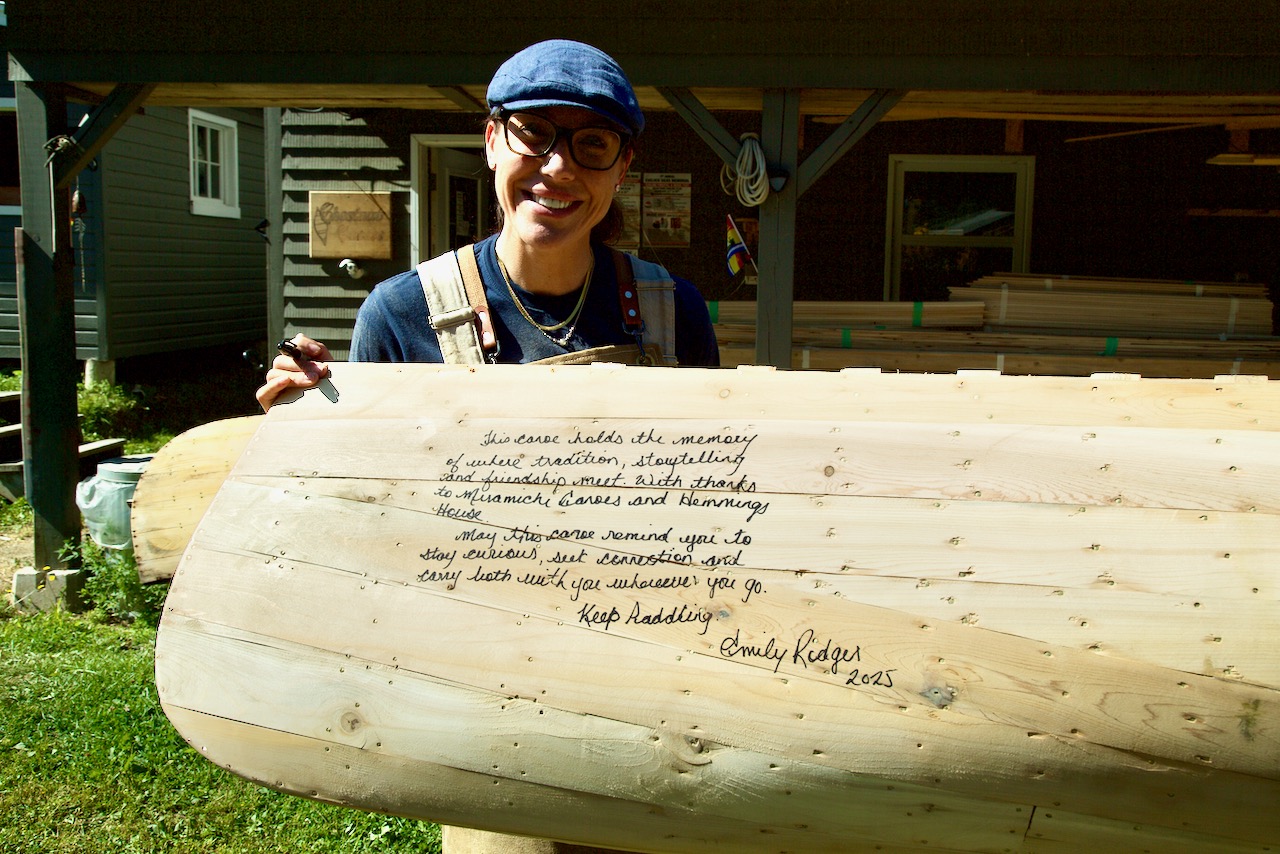 Now beneath canvas and paint, Emily left behind a heartfelt message
When the frame was complete, Norman and I fitted the thwarts and seats, then did more sanding. Before sealing it beneath the canvas, I wrote a small message on the cedar: “May this canoe remind you to stay curious, seek connection, and carry both with you wherever you go. Keep paddling, Emily.” It was a kind of time capsule, knowing the canoe will outlast me, and that one day, if someone restores it, they’ll find a trace of its maker.
The finishing process carried a quiet, steady satisfaction. Sanding each curve by hand, I could feel the canoe come fully alive beneath my fingertips—smooth, warm and breathing with grain. I didn’t want the work to end; there was something almost sacred about those final passes, each one revealing more of the cedar’s beauty. A strong part of me wanted to leave it uncovered, to let the wood speak for itself in all its natural grace. But some things are meant to be protected, sealed not to hide their beauty, but to preserve it, to carry it forward.
Advertisement
Together, Norman and I pulled the canvas tight, wrapping it evenly around the hull until it settled perfectly into place. Then came the coats of filler, a traditional blend of exterior paint, Varsol, boiled linseed oil, Japan drier and silica flour. Between each application, we polished the surface with a heavy mitt until it felt as soft as river-worn stone.
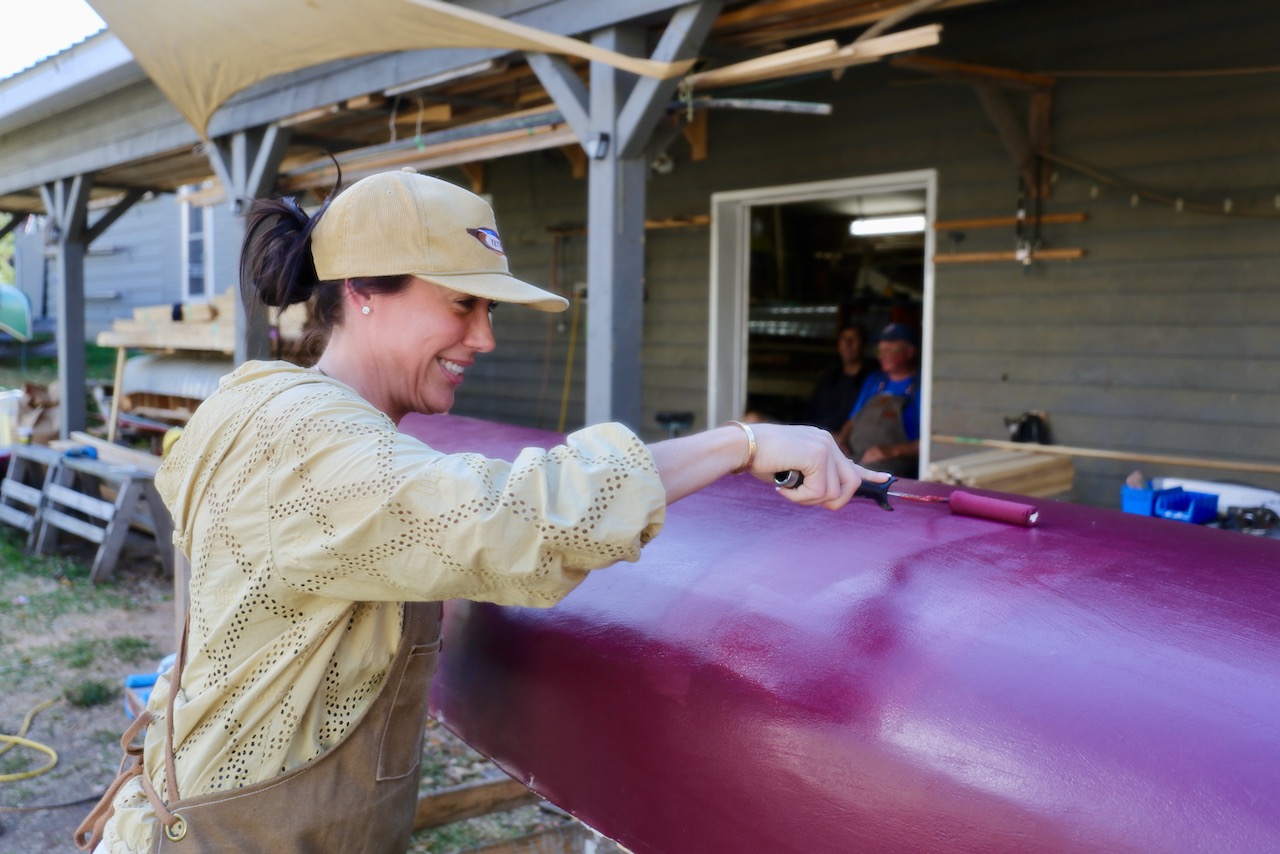 Applying the burgundy finish
I knew immediately what colour I wanted to paint the canoe, as though I had been envisioning it for years. There’s something timeless about burgundy, a colour that feels both grounded and elegant. It has depth, warmth and quiet confidence. In the right light, it shifts between red and brown, echoing the warmth of the cedar beneath and the reflection of the sunset on still water. It felt like the perfect balance between classic and bold, a colour that speaks softly but leaves an impression. Watching that first coat go on, deepening with each layer, it was exactly as I had pictured it: understated, classy and full of character.
Advertisement
When the final coat dried, I carried the canoe to the Miramichi. It was a beautiful fall evening—the air calm, the light golden and the shoreline scattered with leaves that mirrored the deep burgundy of the canoe. The whole scene felt intentional, as if the season itself had been waiting for this moment. As I stepped in and pushed off for the first time, the canoe moved with a grace that surprised me—steady, responsive, alive. The first few strokes felt ceremonial. Dip, dip and swing.