


THE IN-BETWEEN FLY
Emerger patterns split the difference between dries and nymphs
Advertisement
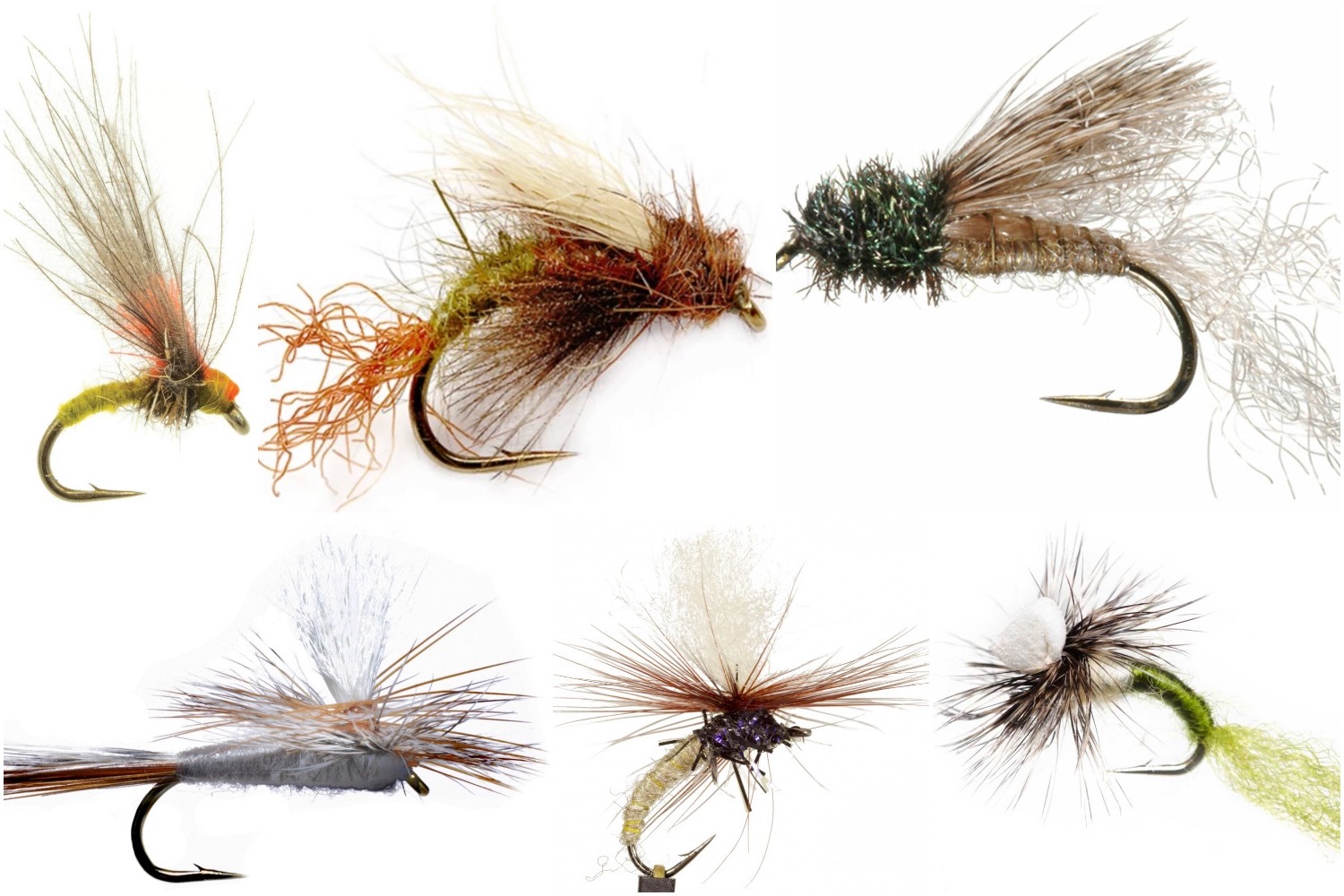
IMITATE THE EMERGER
A funny thing about emergers is that we often imitate them without realizing it. Classic wet flies are thought to mimic an insect moving to the surface, though they can’t simulate that crucial phase when the insect becomes trapped in the film. And because the world’s most popular dry fly, the Parachute Adams, sits very low in the water, it’s quite possible that fish also see it as an emerger.
Advertisement
Actual emerger flies tend to split the difference between dries and wets. They’re usually sparsely dressed, with a short or curved body made of fur, and a feature near the front to mimic a partly formed wing. To keep them near the surface, they often have just a touch of buoyant material, such as elk hair, cul de canard feathers or even foam. Many also have a wispy, scraggly tail to imitate a partially discarded nymphal form.
Perhaps because emergers are such attractive prey, fish rarely seem fussy about the colour—the size and shape and how the fly behaves in the water are the main factors. Just a couple of patterns in basic colours and sizes 16 to 10 will cover you almost anywhere in Canada.
FISHING THE EMERGER
Since emerging insects can either be floating to the surface, drifting or actively struggling, there are several effective ways to present an imitation. The simplest is to cast down and across, and swing the fly across the current, exactly as you would with a wet fly.
Advertisement
A more common (and usually more productive) approach is to cast across or slightly upstream, then follow the drift downstream with your rod tip. You need to mend as needed to extend the drift, while picking up any slack so your line will be tight if a fish hits. At the end of the drift, you can even let the line straighten out downstream, as you would with a wet fly. You can also try adding a little action to your fly with small strips during the drift. There’s no formula for choosing a tactic beyond trial and error, or what seems feasible from your casting position.
Strikes can range from hard and splashy to extremely subtle. Since there’s very little chance of hanging up an emerger fly, set the hook whenever you feel a bump or anything out of the ordinary. Sometimes, you’ll also see a flash as the fish strikes. This isn’t as exciting as a surface strike on a dry fly, but it’s still pretty cool, which sort of sums up fishing with emergers. Dry-fly fishing is fascinating and exciting because you see everything happening. Emergers can’t quite match that, but they will get the job done when dry flies fail.
Advertisement