

TIE THE KNOT
Six crucial knots every fly angler needs to know—and know well
Advertisement
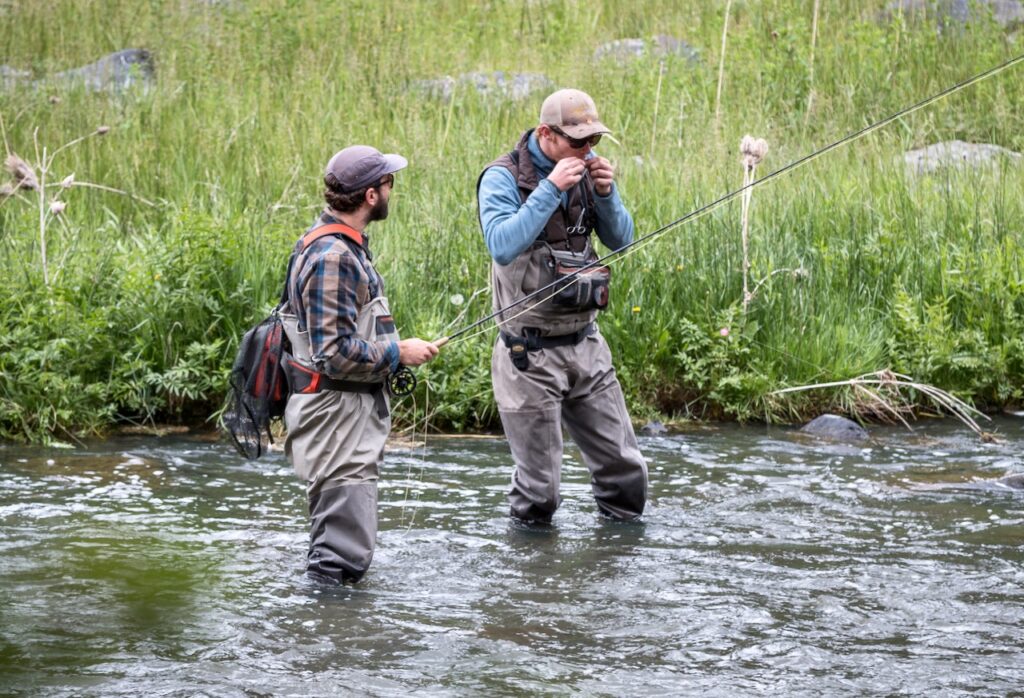 Photo: Bureau of Land Management/Flickr
When you’re fly fishing, there are 1,000 ways to lose a fish. Some of them aren’t your fault, such as when a fish does something completely unpredictable (I once had a trout jump into a low-hanging tree branch. It got off.) Some lost fish offer great learning experiences, providing unforgettable lessons about what not to do next time. But no fly-fishing mishap is more egregious or preventable than knot failure, which is a pretty weaselly term considering the knot didn’t tie itself. Knot failure is actually angler failure.
The solution is simple and cheap, costing only time: Learn just a handful of knots, and then practice them over and over. You can do this almost anywhere or anytime—except on the water. With these six knots you can fly fish almost anywhere in Canada, and for any species of fish. They are all time tested, relatively easy to learn and don’t require any extra special tools. But you need to be able to tie them in dim light, with cold or damp hands, and jittery with nerves, as you watch the fish of a lifetime feeding in front of you. Learn your knots well, and in the future you’ll only have 999 ways to lose a fish…
Advertisement
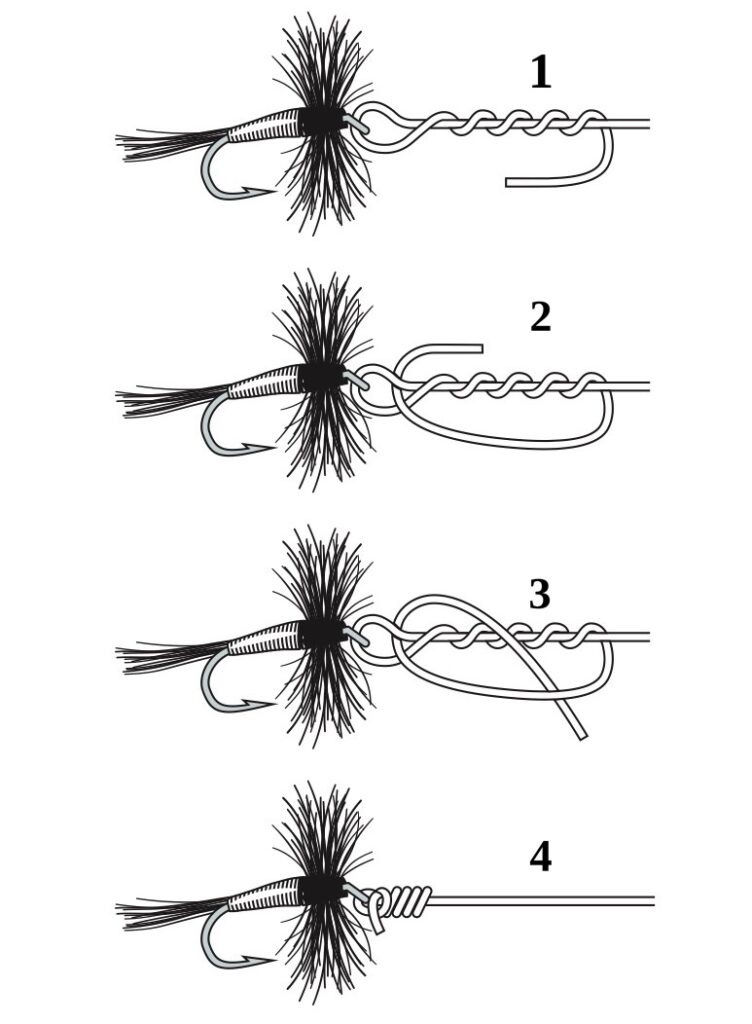
IMPROVED CLINCH KNOT
For connecting the fly to the leader
There are many knots for tying on a fly, including the Palomar, Trilene, uni-knot and a dozen or so obscure ones. Some of those test stronger than the improved clinch, but that’s not the only way to measure a knot’s worth. The improved clinch is easy to tie, and it works on any size of fly. Plus, you can tie it with mono up to 20-pound-test. I’ve experimented with numerous terminal knots, but when conditions are challenging and I really needed to be sure of my knot, I always turn to the one I learned when I was seven years old—the improved clinch.