

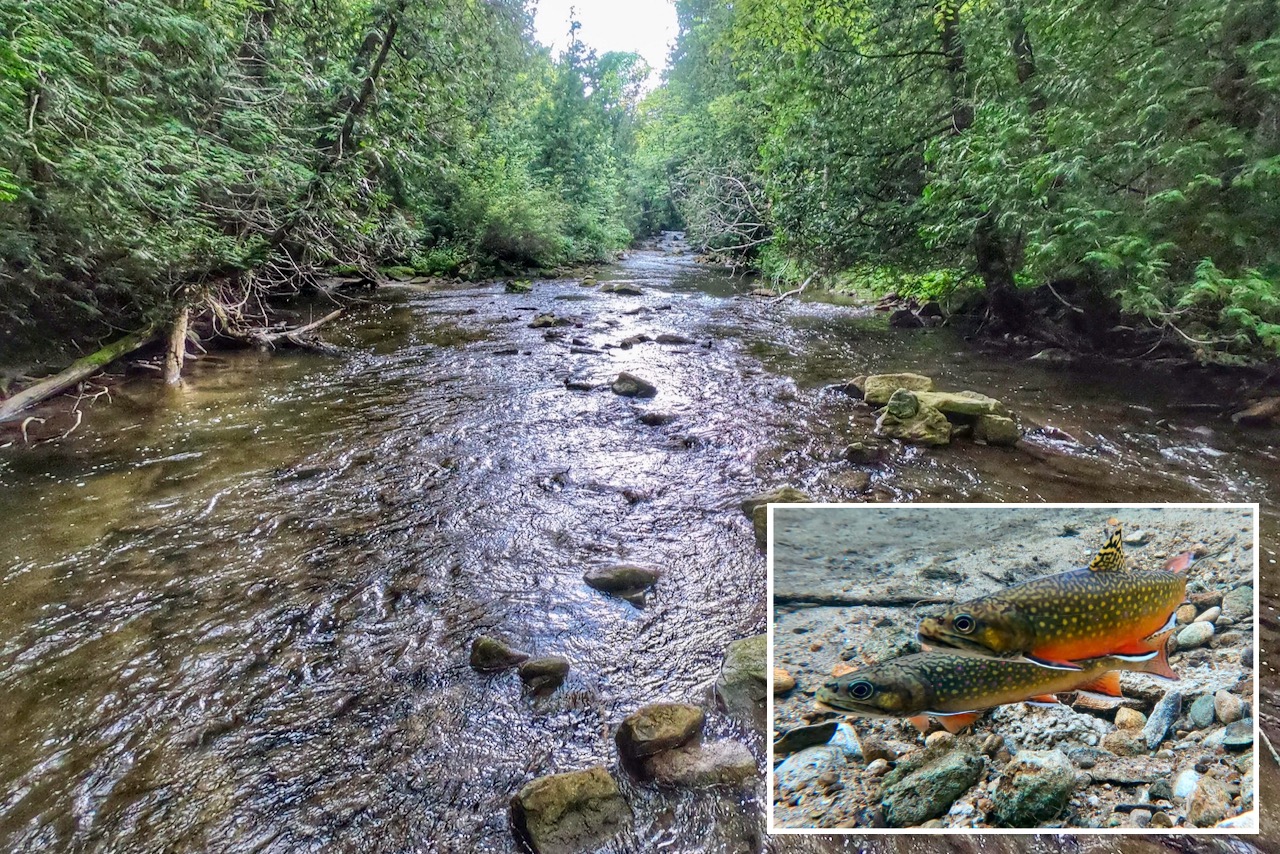

GOING WITH THE FLOW
A streamside look at Trout Unlimited Canada’s quiet rebranding as Freshwater Conservation Canada
Advertisement
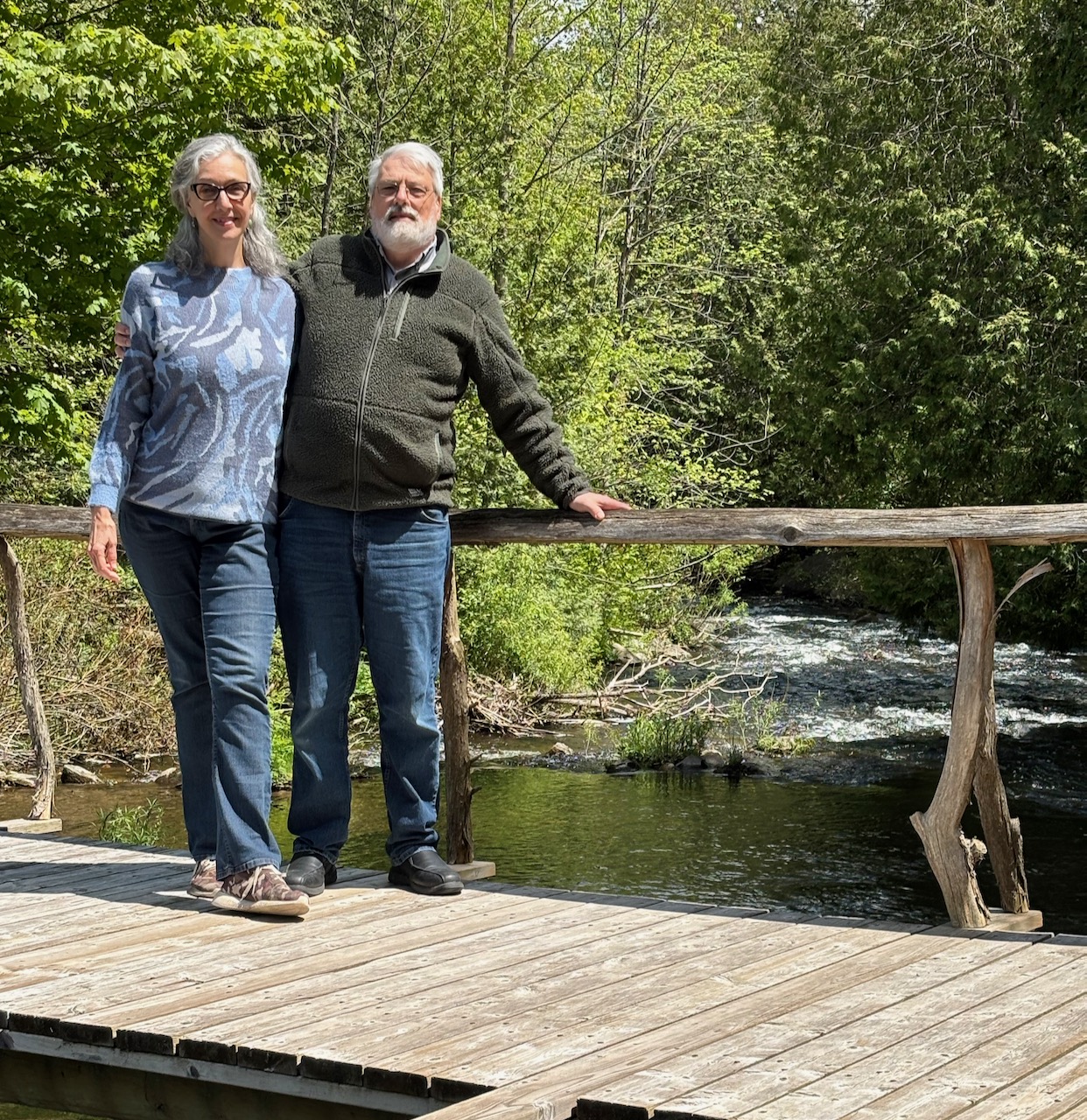 West Credit champions Ann Seymour and Steve Goyeche
Emblematic of those activities and goals was the spring event organized by the Greg Clark Chapter on the West Credit River property of conservation-minded landowners Steve Goyeche and Ann Seymour. It brought together stakeholders old and new to spotlight cold-water stewardship and advocacy—enduring mandates since the FCC’s inception as TUC in 1972.
For Goyeche and Seymour, the section of river that winds through their 20-acre property is more than a scenic feature—it’s a natural resource worth defending. “We are within a UNESCO World Biosphere Reserve. That really puts things in perspective, why this place needs protecting,” says Goyeche, referring to the UN designation that recognizes the surrounding landscape for its unique natural features, including waterfalls, cliffs and rich biodiversity. “It’s a full ecosystem right outside our window.” (Also see “An eye on development.”)
Advertisement
Determined to be part of the solution, the couple partnered with TUC in 2018, providing access to their land for stewardship, monitoring and educational opportunities. “We’ve opened our property to groups like Belfountain Public School. They’ve released Atlantic salmon here and have done fish counts,” says Seymour, a retired environmental educator. “We support green time for youth. Time in nature is critical.”
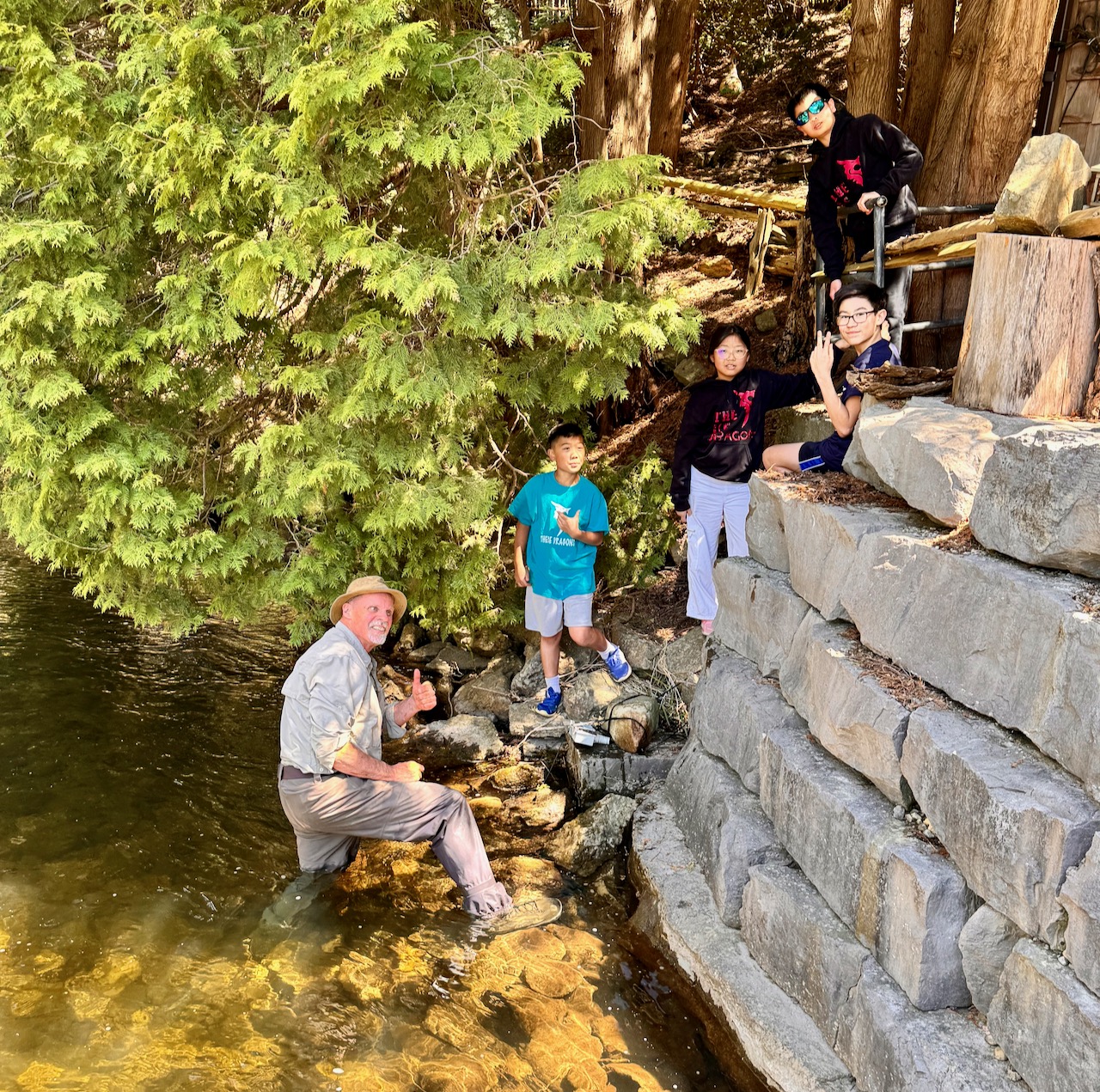 FCC’s John Monczka and the Ice Dragons
Fittingly, among their guests for the Greg Clark Chapter event were the Ice Dragons, a team of four York Region inventors aged nine to 14. They approach real-world environmental challenges not from an angler’s perspective, but through the disciplines of science, technology, engineering and math, referred to in educational circles as STEM.
They were invited to install a custom-built temperature monitor in the cold flows of the West Credit, part of their challenge project for an international competition. Held this past spring in Florida, the competition tasked all participating teams with developing an eco-solution to a water-related issue. Some of the young team member’s previous projects—centered on ways people can reduce the impacts of global warming—have not only earned them spots in top competitions, but also recognition from Richmond Hill, Ontario’s Climate Champions program.
Advertisement
By capturing real-time water temperatures, the Ice Dragons see potential for sharing the data via a phone app—codenamed Chill Tracker—to help anglers avoid rivers when the trout are especially vulnerable to stress from high temperatures. Though the young inventors didn’t bring home an award from the Florida competition, the judges were impressed by their thorough research, the fact their fully operational Chill Tracker sensor was already in place on the West Credit, and their plans with FCC to place more sensors in other key locations.
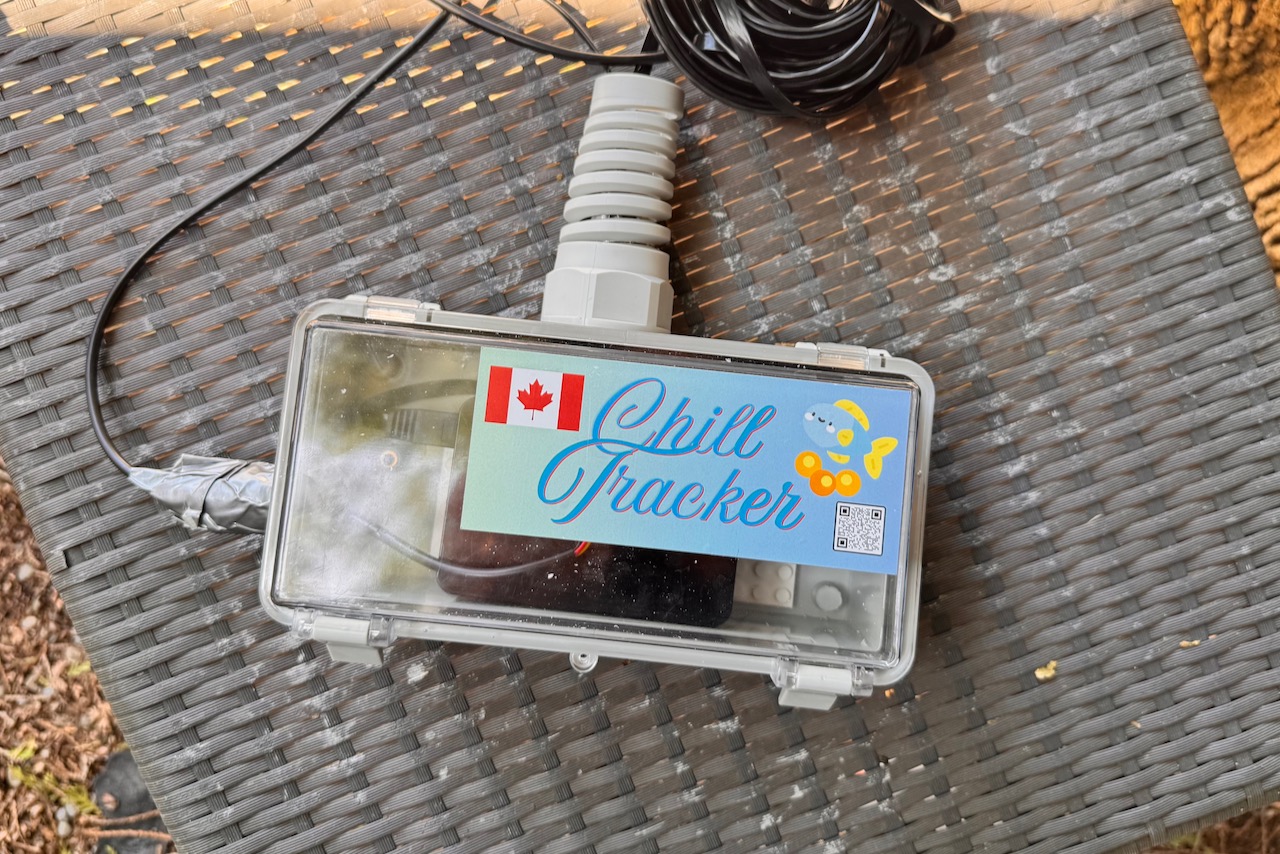 The students’ Chill Tracker sensor
According to the Greg Clark Chapter’s Monczka, the Ice Dragon project aligns well with the FCC’s advocacy work, while benefitting other people and groups who value conservation. “I was really interested when they talked about developing a water temperature monitoring device and a cell phone app that could alert anglers,” he says. “These kids recognized that temperature has an impact on when you shouldn’t be fishing for trout species.”
Noting the Credit River already benefits from temperature monitoring and ethical angling practices, there are other communities and river systems that don’t have access to devices such as the Chill Tracker. “If we can help these kids refine and perfect the sensor, it might be something that could be used elsewhere,” he says.
As the main event of the day unfolded, Monczka carefully fastened the Ice Dragons’ temperature monitor to a small boulder and, with the four young engineers alongside him, gently lowered it into the clear, swirling current.
“The kids were especially moved by actually seeing the fish and understanding the direct impacts of their work,” says Daniel Phalp, the team’s coach and father to one of the members. “You had anglers, landowners, conservationists, kids—all from different walks of life—coming together for a common cause,” he says. “It wasn’t just about fishing or robotics or land management. It was about caring for the environment.”