

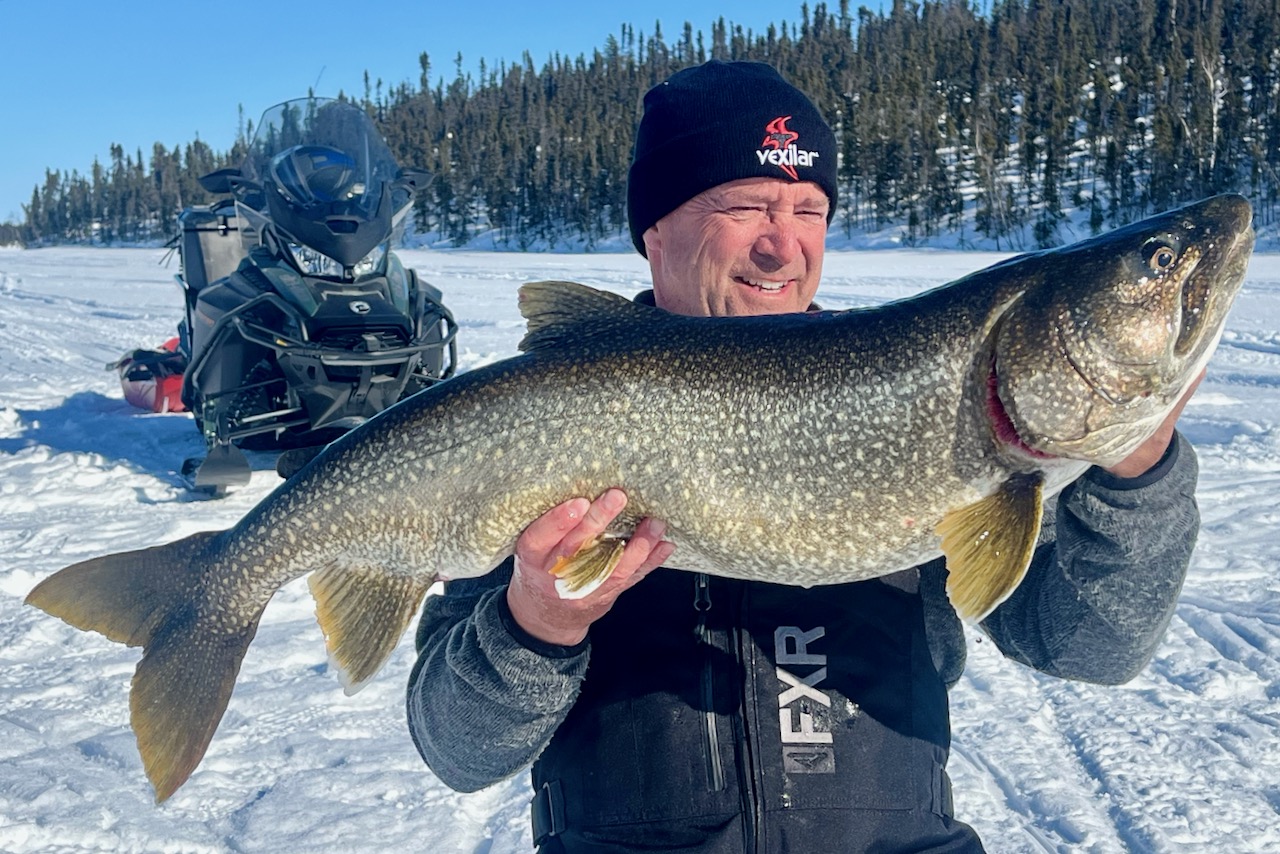

REDEMPTION PLAN
On the frozen waters of northern Saskatchewan’s Cree Lake, one angler’s quest to finally ice a lunker laker
Advertisement
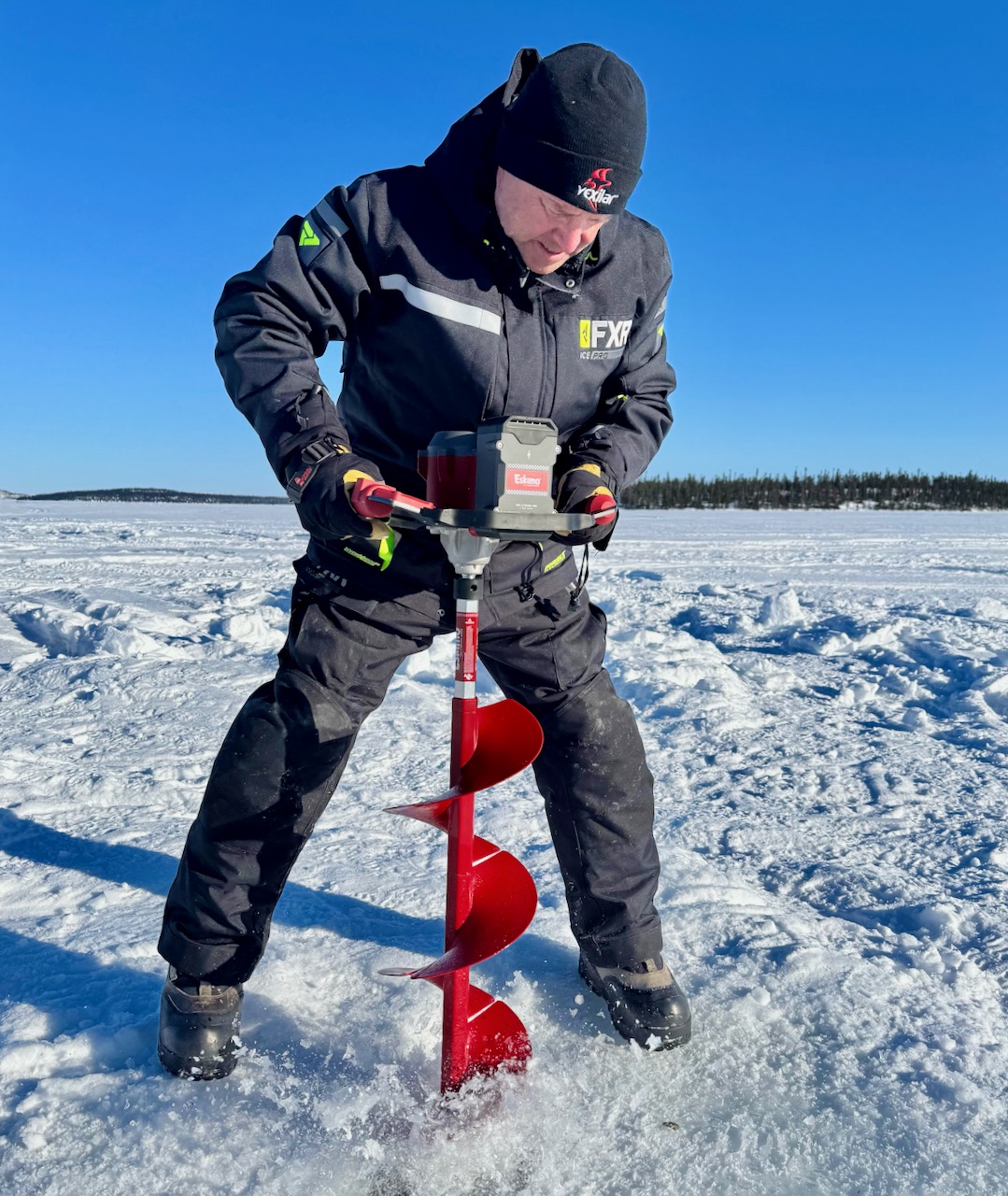 Punching holes in Cree Lake ice
When you first meet lodge owner Brian Garrett, it’s immediately clear he’s one of those people who is simply made for running a lodge. Friendly, knowledgeable and always willing to help, he thrives on seeing his guests succeed. He and his staff know many of the lake’s secrets, and they’re eager to offer a few suggestions on where and how to tie into the bigger fish.
Garrett says the biggest lake trout caught on Cree weighed in at a whopping 63 pounds, boated during the open-water season. He adds that a lot of 50-inch pike, typically weighing between 30 and 35 pounds, are also picked up, and that his guests have caught 34-inch walleye, as well. We don’t have time to target those other species, however, but that’s okay—I’m focused on redeeming myself with the lakers.
Advertisement
To ensure the fishery’s sustainability, the catch-and-release of trophy class trout is the rule here, although it’s okay to keep a smaller one for dinner while staying at the lodge. The strict conservation practices, combined with the immense size of the lake itself, help make Cree arguably Saskatchewan’s premier lake trout destination.
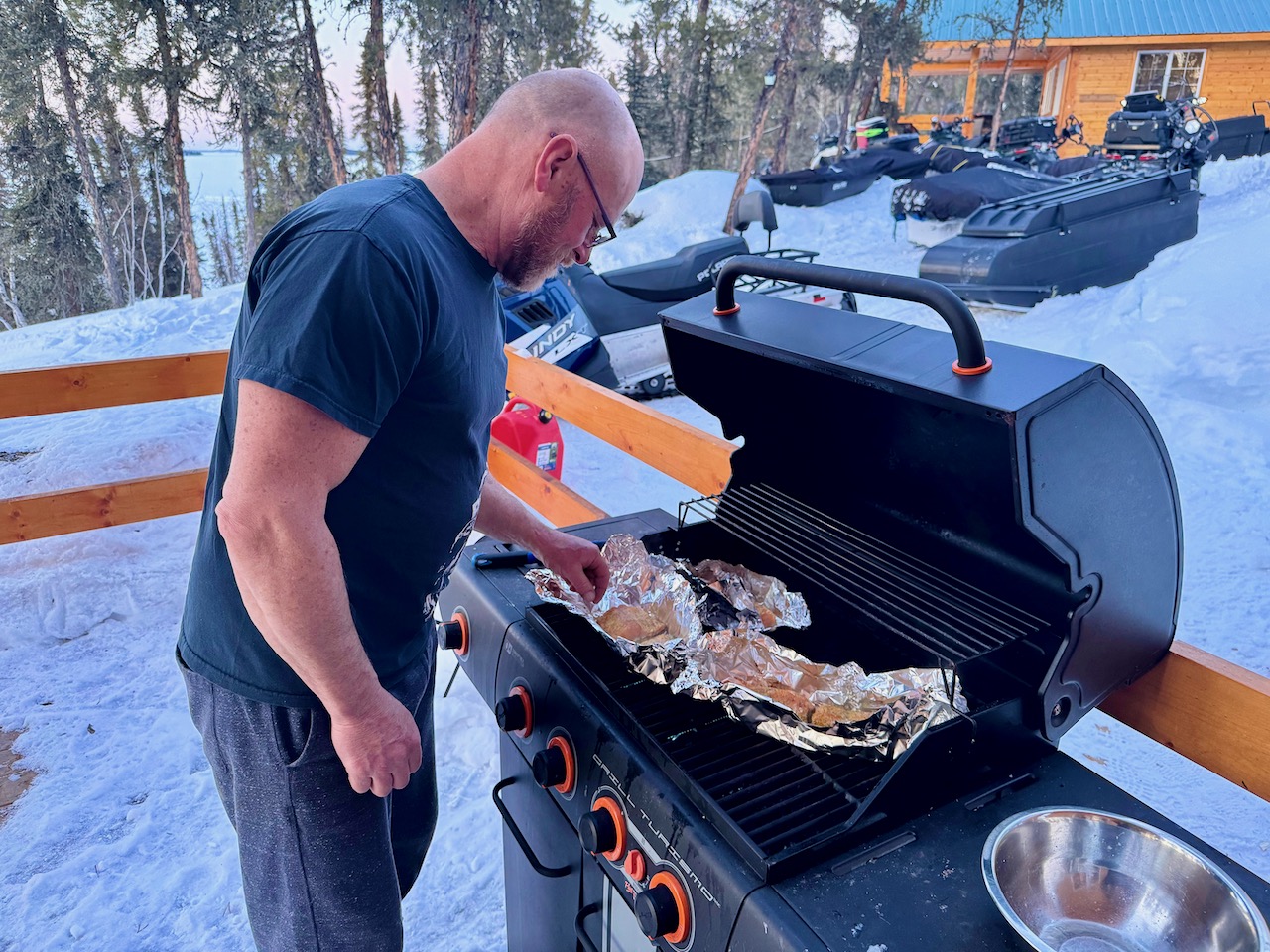 Cooking up fresh trout
Also key is the lack of fishing pressure due to the remote location. During summer, Cree is nearly impossible to access without a floatplane, and even on a snowmobile, getting there can be an ordeal in the winter, as we discovered.
If you fish for lake trout, you know they can be a mysterious species—one moment the bite is on, the next it’s off. With that in mind, Randy and I understand that finding fish will be half the battle. The next challenge will be getting them to bite. Dead bait is allowed for targeting Cree’s behemoth trout—they feed mostly on ciscoes, whitefish, burbot and suckers—so we packed plenty for our three and a half days of fishing.
Advertisement
Equipped with an electric auger and flashers, our initial plan had been to probe different locations of the lake. Unfortunately, our depleted fuel stash has now limited our ability to move around as much as we’d hoped. So instead, we follow Brian’s advice and begin our first day of fishing by focusing on a flat not too far from the lodge.
The temperature is a frosty -23°C at sunrise, and we quickly learn that drilling holes on Cree would be more difficult than usual thanks to excessive flood ice topped with a thick but fragile layer of snow. Our initial efforts pay off quickly, however, as we mark a few smaller fish and one bigger one on the sonar. Randy manages to bring up a couple from a depth of 27 feet, and we return to the lodge that evening with a keeper for the barbeque.
Advertisement