

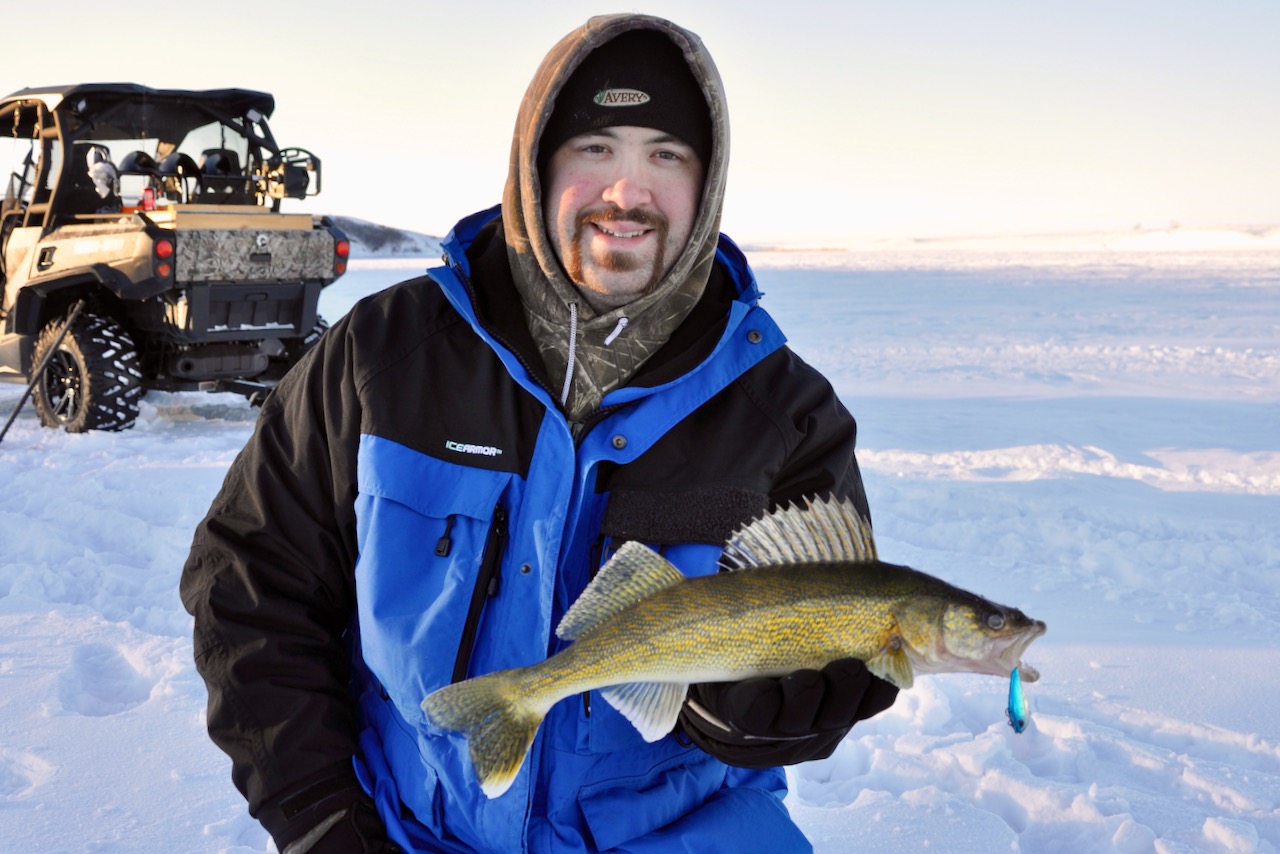

RATTLE AND HUM
Lipless crankbaits bring the noise, flash and action to wake up and attract wintertime fish
Advertisement
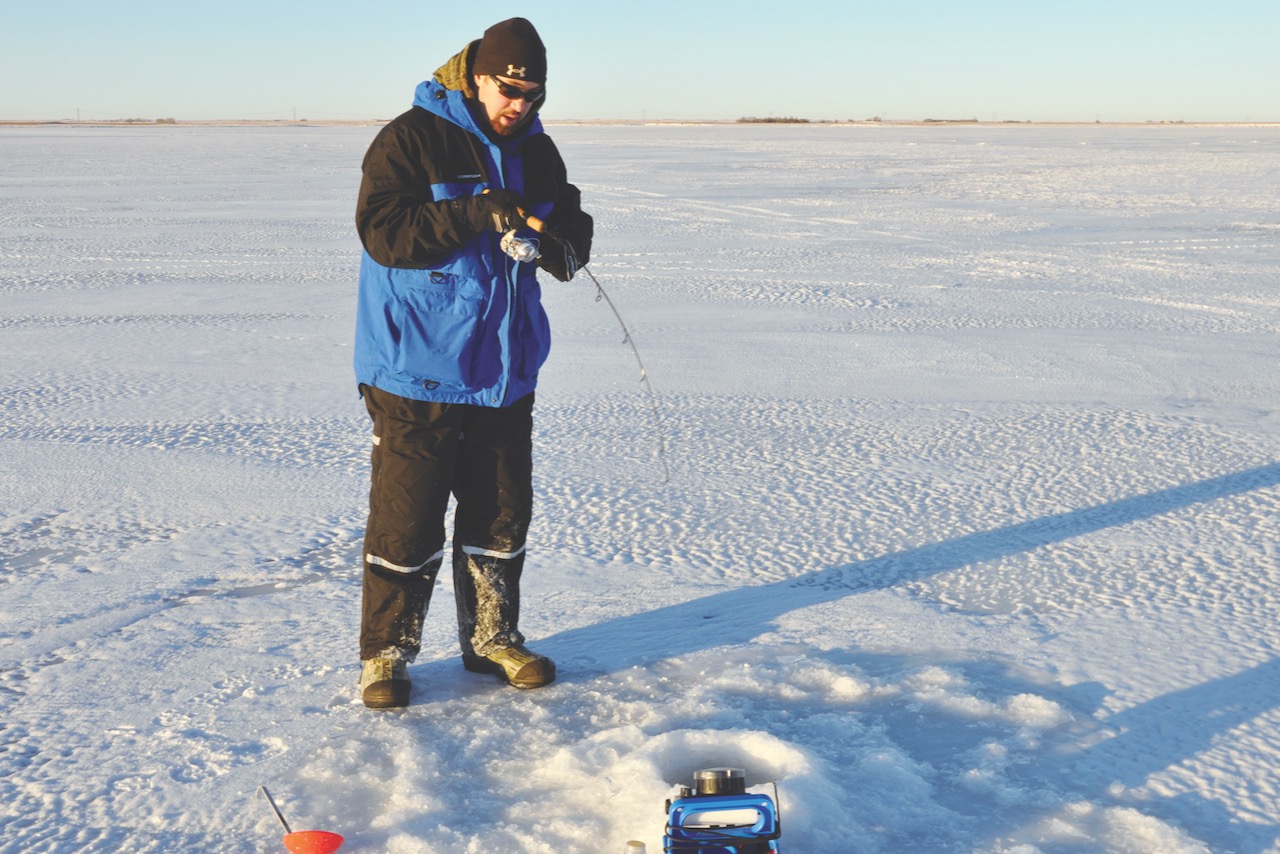 For tackling bigger fish, upsize to a heavier 36- to 40-inch rod
THE TACKLE
When targeting yellow perch, walleye, burbot and smaller trout with small to medium-sized lipless cranks, I like to use a 32- to 36-inch medium- to medium-heavy ice rod. When targeting bigger fish such as pike and lake trout, on the other hand, I upsize to 36- to 40-inch medium-heavy to heavy rods.
I prefer using spinning reels while ice fishing with lipless cranks since the open spool allows me to see the line, which helps prevent tangles. Plus, spinning reels are easy to operate while wearing gloves, and allow for quick and easy lure drops. I typically match the size of the reel to the size of my rod, making for a balanced set-up that’s not handle- or tip-heavy.
Advertisement
For smaller fish species, I spool my reel with six- to 10-pound-test fluorocarbon, which is extremely sensitive with just the right amount of stretch for solid hooksets. For bigger fish, I upgrade to 15- to 20-pound fluoro. If I’m fishing deep water for lake trout, meanwhile, I use braided line, which has less stretch for better hooksets down deep.
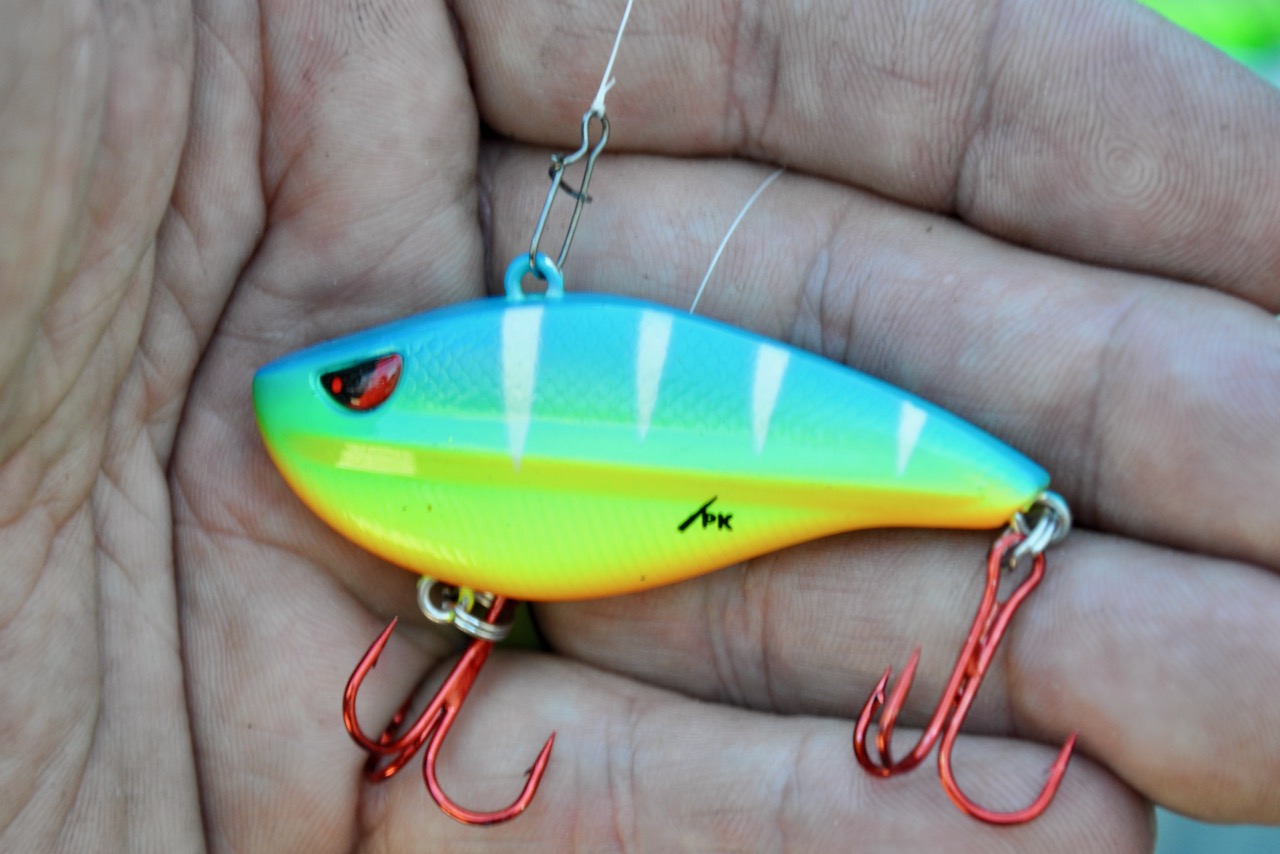 A snap allows you to quickly swap out different lures
While you can tie a lipless crank directly to your main line, I strongly recommend using a crankbait snap instead. That way, you can quickly and easily swap out lures of different sizes and colours, even with cold fingers. And don’t worry, the small snap won’t affect the lure’s action as it lifts and falls.
Given the aggressive jigging that is required to fish lipless crankbaits (see “The techniques”), I also like using an in-line swivel to help eliminate line twist. I position it on the main line, approximately 12 to 18 inches above the snap.
Advertisement
When targeting big pike, I suggest using a wire leader to avoid losing lures. If you’re targeting a less-toothy species in a spot where smaller, nuisance-sized pike might steal your lure, however, try using braided line for your leader. Braid doesn’t seem to impact fish strikes, and it’s more bite-resistant than monofilament when it comes to hammer-handle northerns.