


VOLUNTEERS
Quietly working to save our fisheries, one conservation project at a time
Advertisement
It’s simple: No habitat, no fish. Fortunately, small community-based conservation projects are spawning big outcomes, especially in lakes with fish populations that were almost lost forever. And it’s all thanks to those who put down their fishing rods and pick up a shovel. Volunteers are unsung habitat heroes, inspiring a conservation movement that refuses to see local fisheries slide in the wake of development, invasive species, climate change and other pressures.
While in-water habitat restoration work requires careful planning and government permits, it also takes elbow grease and homegrown ingenuity. Take, for example, the Bancroft, Ontario, volunteers who MacGyvered a work barge from busted dock pieces and old ratchet straps, pictured above. Using their brains and backs to float heavy silt-removal equipment and a tonne of washed river stone, they didn’t give up until a local walleye spawning creek received a major makeover.
Advertisement
Grassroots ambitions such as that have resulted in the immediate return of numerous fish species, all through a wide range of habitat restoration projects involving conservation charities, non-profits, volunteers and local businesses. They show you don’t need a science or engineering degree to get involved in freshwater stewardship. In fact, fish and wildlife professionals count on those community go-getters to take on conservation work their government budgets could never afford. More than 45,000 volunteer hours a year, for example, support community fish hatcheries in Ontario alone.
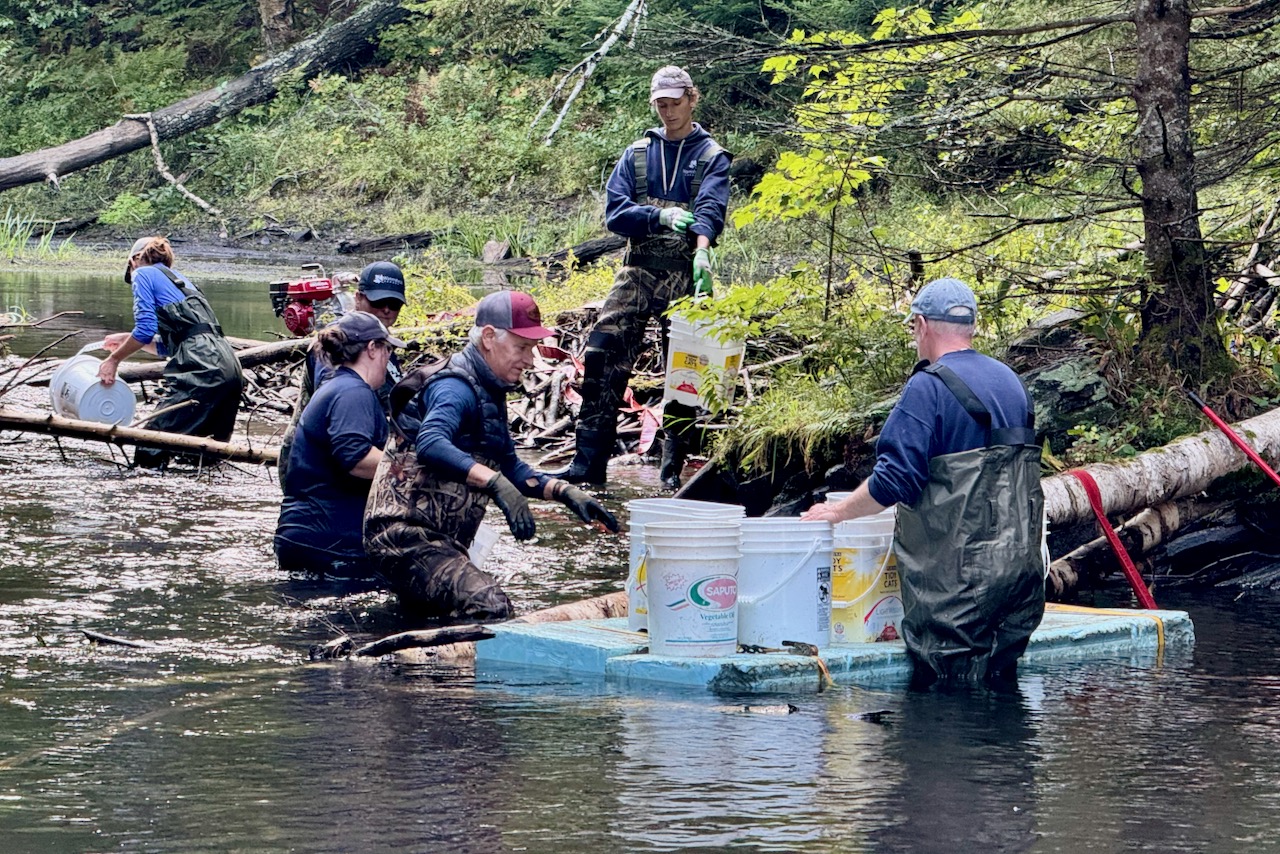 Community volunteers restore a local creek
Restoring habitat also restores community spirit, as witnessed last February when First Nations and lake association volunteers braved blizzard conditions on a frozen eastern Ontario lake to spread 17 tonnes of new substrate over a historic spawning bed. The local Legion opened its doors to warm and feed the volunteers, forever bonded by the humble act of giving back to nature. All heroes don’t wear capes. Some wear waders and work gloves, and they carry their conservation pledge like a badge of honour.