


MULIES BY ANY MEANS
For taking a trophy mule deer, follow these tactics for heading afield with either a bow or a rifle
Advertisement
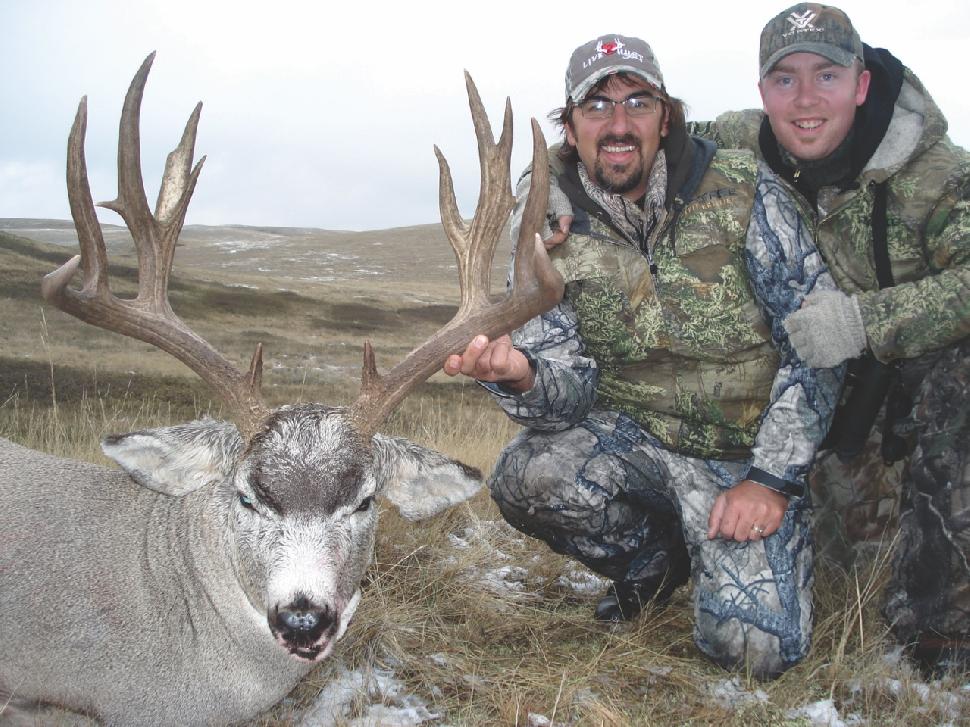 Jeff Schlacter
RIFLE HUNTING
As with shooting a bow, spend as much time at the range as you can to build confidence before the season begins. And practise those long-distance shots. In open country, you may be able to use the terrain to close the distance for a shot. But if your only chance at the buck of your dreams is a long shot, there’s nothing more reassuring than having the confidence in not only your firearm, but also your ability. While long-range shooting isn’t a must, you want to be at the ready if it’s your only option.
LOCATION
Advertisement
Rifle seasons generally start in November when mule deer are getting into the early stages of the rut, making for one of the most exciting times to hunt them. When the does start to bunch up, bucks will appear out of the nastiest country you can find, from the deepest coulees to the darkest draws. Watch for spots tucked away far from traffic—places a big buck would feel comfortable in—and glass those areas at dusk and dawn.
The bonus of hunting in November is that the deer will start to congregate in larger groups, making them easier to spot. If you do find a group, but don’t spot a big buck right away, don’t throw in the towel. Instead, scour the surrounding terrain—your dream buck could be lying in a patch of brush taking a little break. And if you find a doe, pay close attention, as bucks likely won’t be too far away.
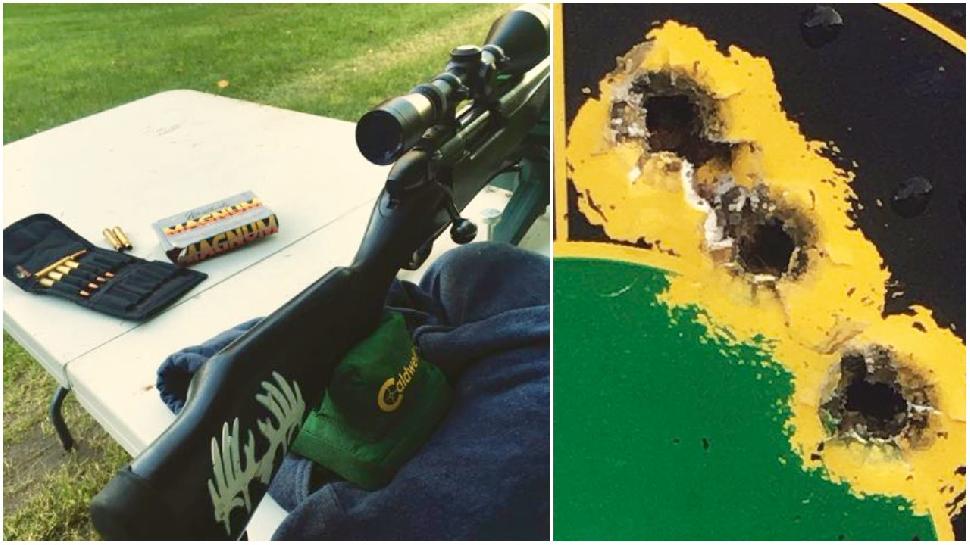 Prepare for the season by spending time at the range (photo: Jeff Schlacter)
GEAR
Advertisement
Choose a flat-shooting rifle—the next time I draw a rifle tag, for example, I’m looking forward to using my new Weatherby Mark V, chambered in the incredibly fast and flat-shooting 6.5-300 Wby. Mag. I prefer to load my own ammunition, always playing with grains and bullets to create that perfect load. My favourite combination is a Berger 115-grain VLD bullet backed by 69 grains of IMR 7828 powder, making for a deadly load.
When you’re deep in mulie country, always pack water, food and warm clothing. You can encounter some nasty weather during rifle season, and there’s nothing worse than freezing your behind off and trying to glass with the shakes. If you plan to hunt in an area that’s only accessible by foot, also be sure to bring a large backpack and everything you need to cape your buck and bone out the meat.
STRATEGY
Regardless if I’m hunting with a bow or a rifle, I like spotting-and-stalking the most. For me, it’s the most exciting and rewarding way to hunt. Once I spot a buck worth taking, I stay on him until he beds down, then stalk in close enough to make a great shot when he eventually stands up. Some hunters will shoot a bedded buck, but I like waiting for him to stand so I can get a better look at his vitals and make the perfect shot.
Some old-school hunters will tell you the secret to flushing out mulies is to push a big rock down the side of a bush-choked coulee. Although it can be an effective technique, it’s next to impossible to judge the size of a terrified buck fleeing at warp speed—they all look big from behind. Plus, it’s very difficult to make a clean shot at a bounding buck. My advice: Don’t try it. Instead, find the highest vantage point around and glass your heart out. Hunt hard and you will be rewarded.
Wadena, Saskatchewan’s Jeff Schlacter has harvested numerous trophy mule deer, with both bow and rifle.