

NO PLANE, NO PROBLEM
A backcountry fishing adventure doesn’t always need wings to take off
Advertisement
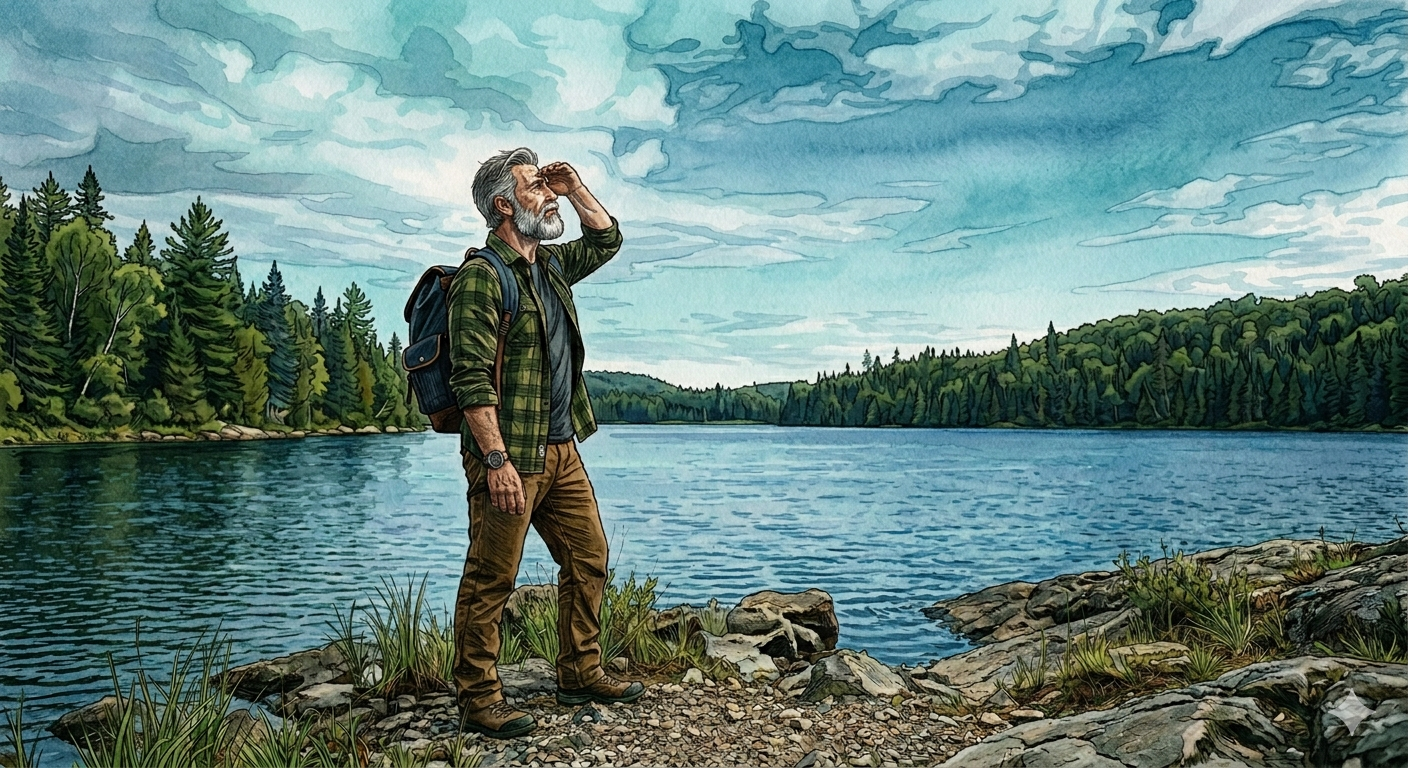 On this backcountry fishing adventure the floatplane never arrived—and that was the point (Image: Gemini)
A floatplane never came. Instead, the trip began at a rough boat launch deep in the bush outside of Chapleau, Ontario, with a growing pile of gear—coolers, food bins, duffle bags, fishing rods, tackleboxes and kayaks—the predictable outcome of removing weight limits from the planning process. From there, it was a run across Vezina Lake, a short portage, then another boat ride on Northwind Lake, where a single outpost cabin would serve as base camp for the week. No flight schedule. No baggage scale. No last-minute reshuffling of gear on a dock. For anglers accustomed to equating remote adventure with wings and pontoons, it’s an adjustment.
When it comes to value, few options in the Canadian outdoors match a backcountry outpost trip. The concept is simple enough. Drive north for eight, 10, 14 or even 24 hours. Board a floatplane. Get dropped off at a cabin on a remote lake or river. Fish hard. Then get picked up a week later.
Advertisement
The cost of such a trip—including the cabin, use of a boat and motor, and the flight—is typically a fraction of what you’d pay at a full-service fishing lodge. The trade-off is you pack in your own food, cook and clean for yourself, and fish unfamiliar waters without a guide. It’s a deal I’ve been happy to make many times. What I hadn’t fully appreciated until recently, though, is that fly-in quality fishing doesn’t always require a fly-in…
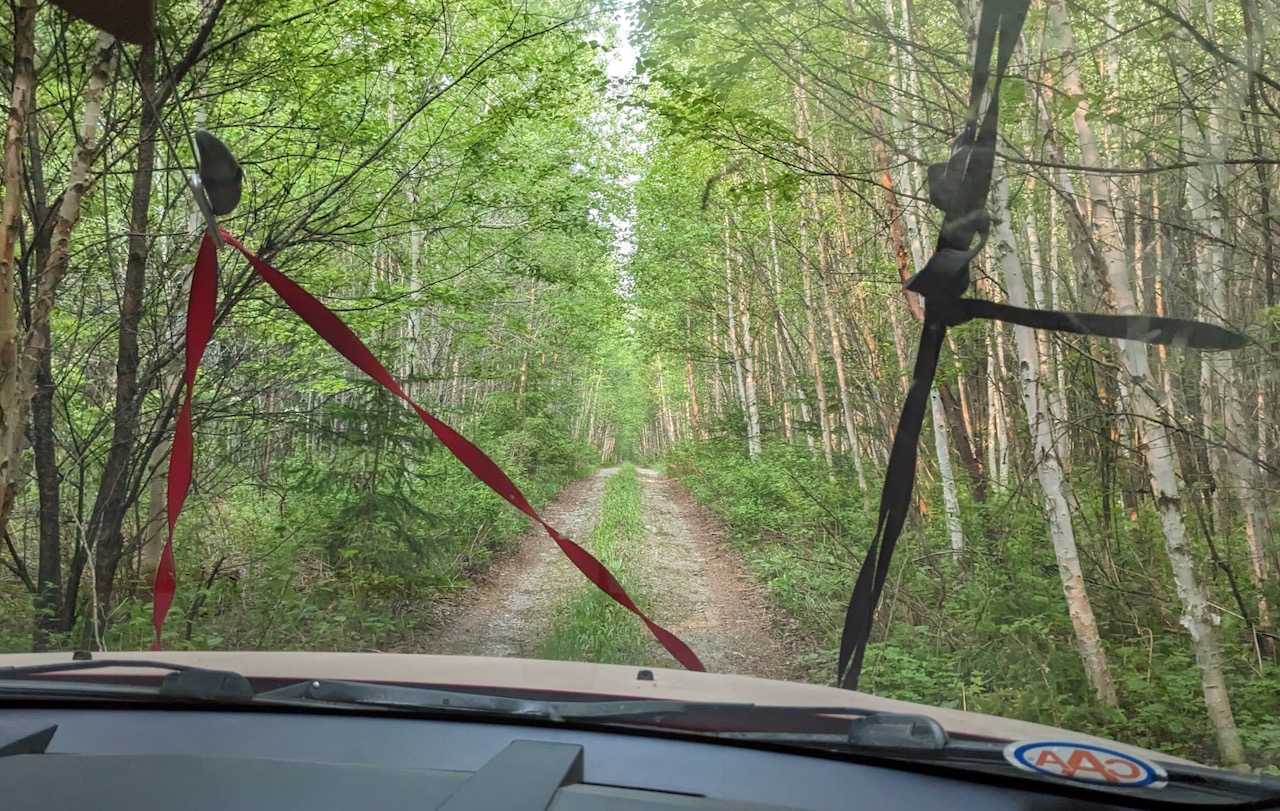 Approaching the launch, the road got smaller and smaller
BOAT-IN ADVANTAGES
Always on the hunt for new experiences, my fishing friends and I landed on a fresh spin three years ago: a boat-in outpost trip with Kanipahow Wilderness Resort & Outposts. We chose this particular outpost for a few reasons. Its location near Chapleau made for a manageable 10-hour drive from southern Ontario. We’d have the only cabin on the entire lake. And the owners, Jamie Thibault and Josée Robitaille, were patient with my many questions.
More importantly, however, Jamie and Josée are clearly invested in conserving their fishery. That part matters more than some anglers realize. Not every operator is particularly concerned with stewardship, and it doesn’t take long to notice. (A bit of side advice: If the outfitter’s website prominently features stringer shots or guests holding obviously dead trophy fish, don’t go.)
Advertisement
On the appointed first morning of our early-June trip, my crew and I met Jamie and another staff member outside Chapleau, then followed them down a series of ever-narrowing industrial roads to a rough-and-ready launch. From there, we loaded our gear, ran the length of Vezina, completed a short portage using an ATV and trailer, then continued on to Northwind Lake. No plane, but still plenty of separation from the rest of the world.
One of the first differences between fly-in and boat-in trips shows up before you even leave home. Floatplanes have strict weight limits. Go over the limit, and you must either leave gear behind or pay extra (sometimes a lot extra), to fly it in. I’ve been known to weigh all my gear at home—and insist everyone else in my group does the same—then enter weights into a spreadsheet to see how we’re doing.
Advertisement
Boats do, of course, also have weight limits. But if you show up with a large stack of tackle, food and accessories—especially heavy items such as, say, liquid refreshments—you simply make more trips. And removing the scale from the equation takes a lot of the stress out of packing.
On the Northwind adventure, the four of us were all dedicated kayak anglers. We planned to fish from our own boats—highly customized rigs with sonar, rod holders and comfortable seats—as much as possible. I’ve flown kayaks into outposts before. It’s doable, but it’s also a headache for everyone involved, especially the aircrew. This time, we just towed them in. That freedom, of course, does have a few consequences.
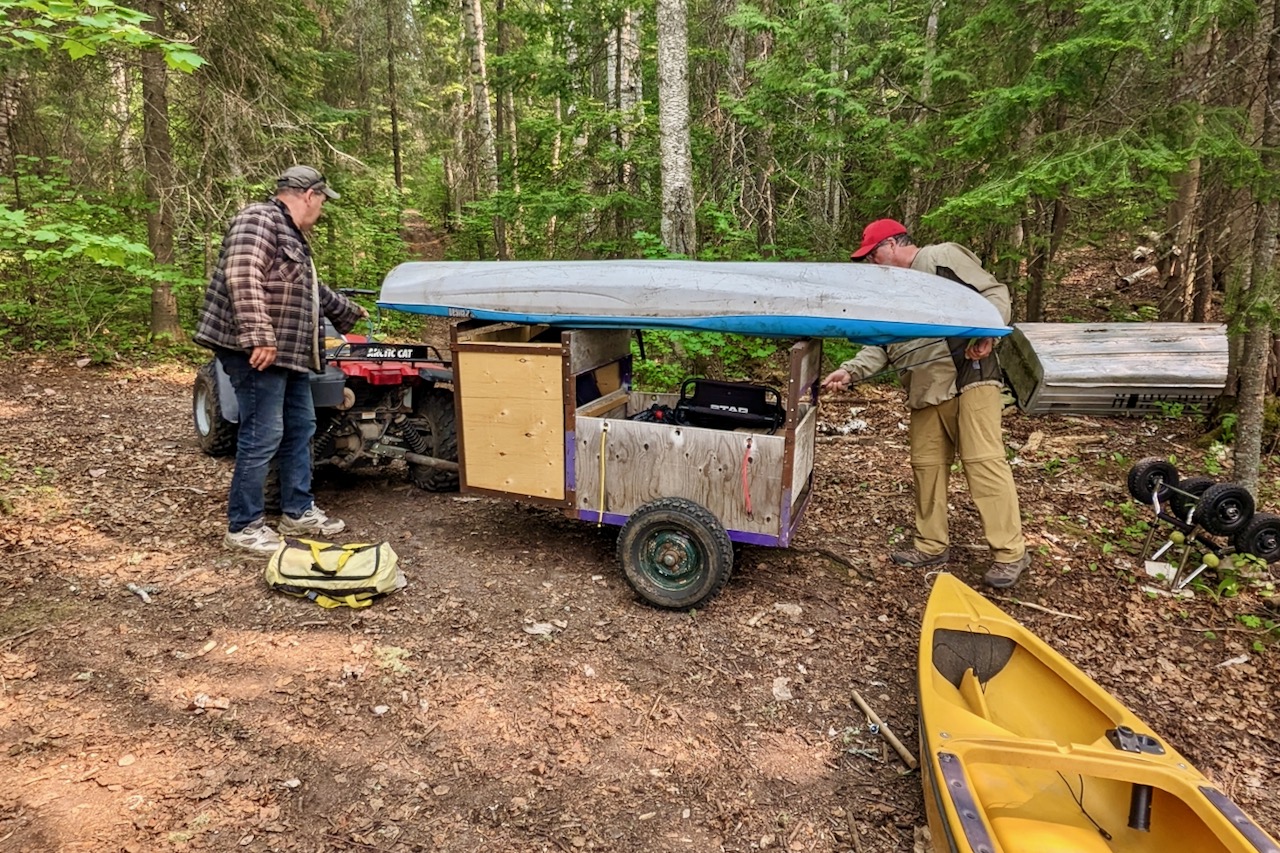 Reaching the outpost camp meant traversing one lake followed by a short ATV portage
SWEAT EQUITY
While boat-in trips cost considerably less than fly-ins, the trade-off is you may have to work a little harder. The Kanipahow team are pros at moving their guests into the Northwind outpost, though naturally we helped with the hauling. There was more lugging of gear than on a fly-in, where everything gets unloaded directly from the plane onto the dock.
Standing at the launch, looking at our impressive mound of stuff, I briefly wondered if we’d taken our packing freedom a little too far. I apologized to Jamie for the volume. He shrugged and grinned.
“If you show up with a Sherman tank, we’ll get it in here,” he said. “We want to make sure you’ve got what you need to enjoy your trip.” (A few days later, while hiking into a portage lake through dense bush and enthusiastic mosquitoes, I started to think a tank might not be such a bad idea.)
At least our group knew the trip would involve some effort, so we came prepared with work clothes, bug nets and sturdy boots. It’s a reminder that part of the savings comes from doing some of the work yourself. Still, there were moments—lugging gear up to the cabin, swatting bugs—when I thought, This better be worth it. A couple of days later, I had my answer.