

BEYOND TROUT
Venture into an exciting new world of fly fishing with these must-have patterns for largemouth and smallmouth bass
Advertisement
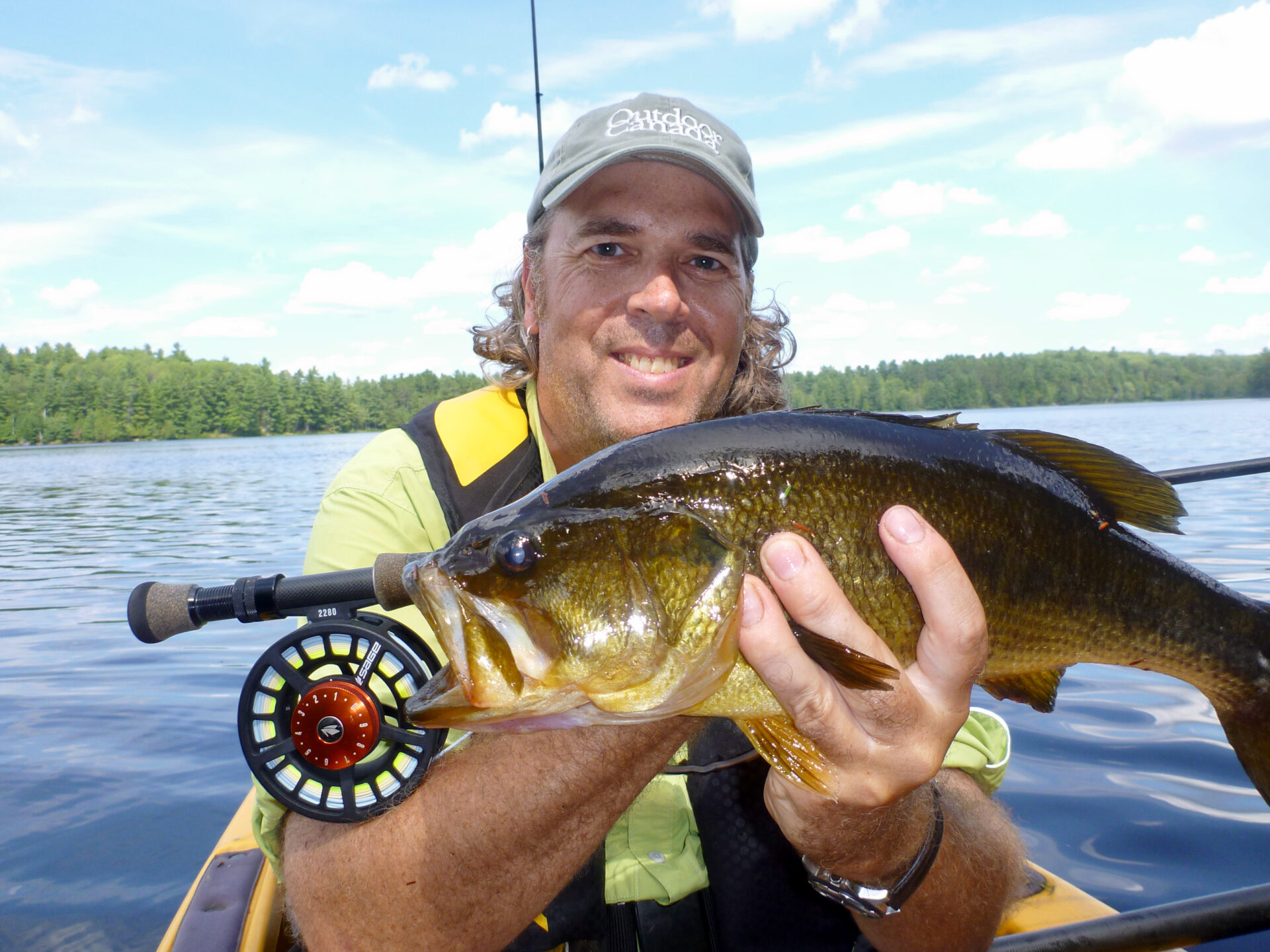 Bass fight hard and take flies readily
Trout have long been the most popular fish targeted by fly anglers in this country. But for my money, the most fun, exciting and satisfying Canadian fish you can catch on the fly are smallmouth and largemouth bass. They’re prolific, strong fighters and aggressive feeders—but not quite so aggressive that catching them is too easy. For pure fly-fishing enjoyment, few experiences compare to a smallmouth tail-walking across a pool, or a largemouth obliterating your topwater fly.
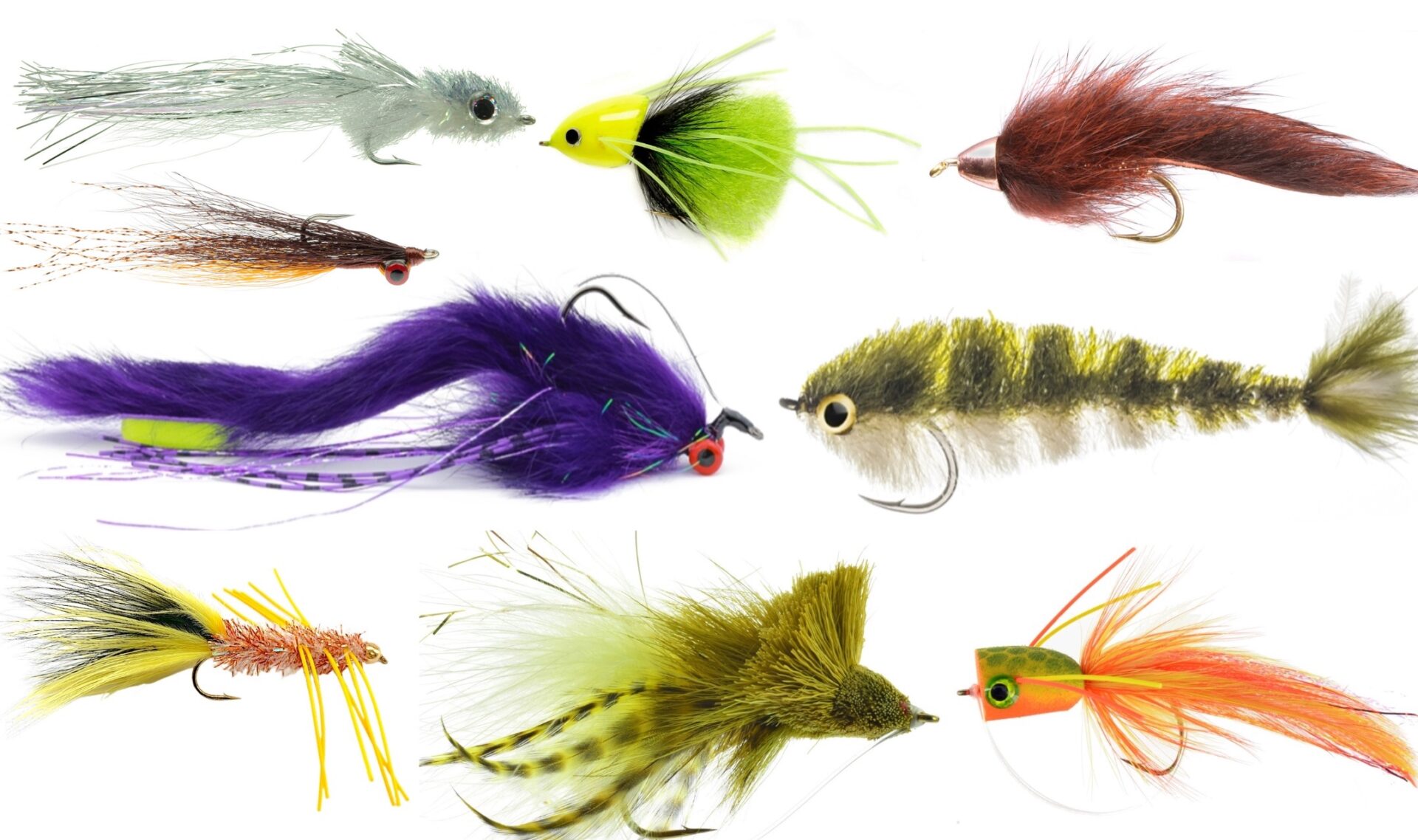 Clockwise from top left: Murdich Minnow, Sneaky Pete, Slumpbuster, Game Changer, Bass Popper, Dahlberg Diver, TeQueely, Ehlers’ Foam Tail Superworm, Clouser Deep Minnow
Fly fishing for bass is also relatively uncomplicated, perfect for honing your skills and building confidence. Even better, bass thrive in almost any kind of waterbody, including places both near, and in, cities and suburbs, arguably making them more available to fly anglers than any other gamefish in Canada.
Advertisement
You can absolutely catch bass with trout flies, but if you specialize a little, you’ll catch even more, and bigger fish. My favourite bass flies include both classics and less-conventional patterns. Each one fills a niche that serious bass anglers should be prepared for, and they all catch fish. Both bronzebacks and bucketmouths will hit any of these flies, although the smaller, buggier patterns lean toward smallmouths, while the bigger offerings lean largemouth. Finally, most of these are a style rather than an exact pattern. They’re not precise recipes you must follow like you’re trying to get a soufflé to rise. Feel free to experiment with the colours, sizes and materials—after all, that’s where new ideas come from…
Looking for even more new fly patterns? Check out our running list of the all-time best flies for Canadian anglers at www.outdoorcanada.ca/musthaveflies. And you can see all of Outdoor Canada’s expert fly tying tips at www.outdoorcanada.ca/flytyingtips.
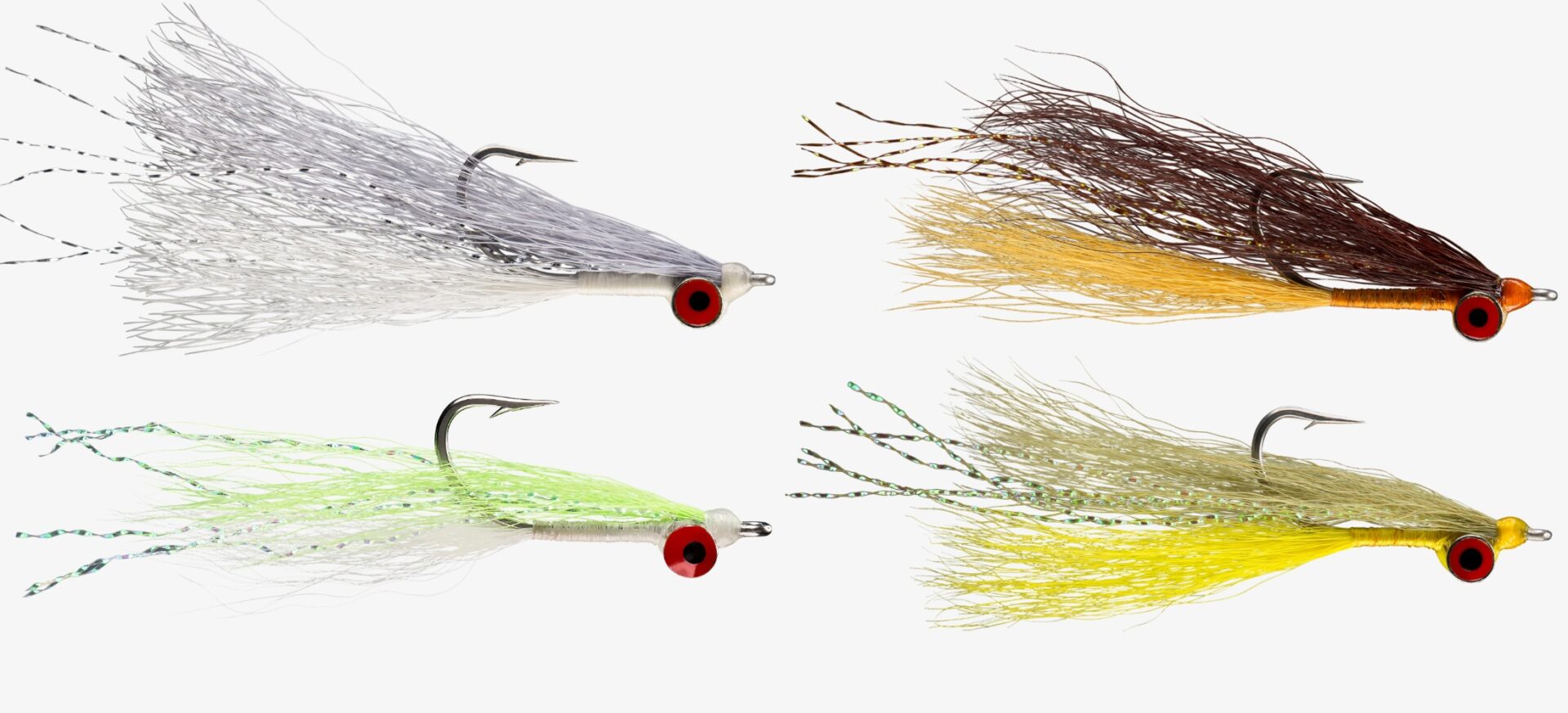 Photos: Rio Products
CLOUSER DEEP MINNOW
Known all over the world as simply a “Clouser,“ this pattern shows up in almost every list of must-have flies for a good reason: it’s a must-have fly, and the first truly effective one for fishing deeper water. When drifted or swung in current or retrieved in still water, the dumbbell weight sinks the Clouser quickly, and creates a unique darting, jigging motion. Meanwhile, the bucktail flows and breathes, while still maintaining its profile.
The Clouser will catch dozens of fresh- and saltwater species, but it was specifically created to catch smallmouth bass in Pennsylvania’s Susquehanna River. Four decades later, it’s still a hall-of-fame bass pattern. I have Clousers in colours ranging from pink to black, but for northern bass, especially smallmouths, I love the brownish crayfish-goby-sculpin colour scheme (pictured in the top right). The pictured flies are also tied bushy for use in rivers, where the flowing water animates the bucktail. For still water, I tie mine 50 per cent sparser, so the fibres move more. If I had to pick just one bass pattern, I’d take a handful of two-inch brown Clousers, plus some bigger ones, in chartreuse/white or grey/white, and be confident of catching fish anywhere in Canada.
Advertisement
- Hook: Straight-eyed wet fly or saltwater, sizes 2/0 to 8
- Eyes: Lead dumbbell
- Belly: Yellow bucktail
- Wing: Natural brown or dyed bucktail, over 6 to 8 strands of Krystal Flash
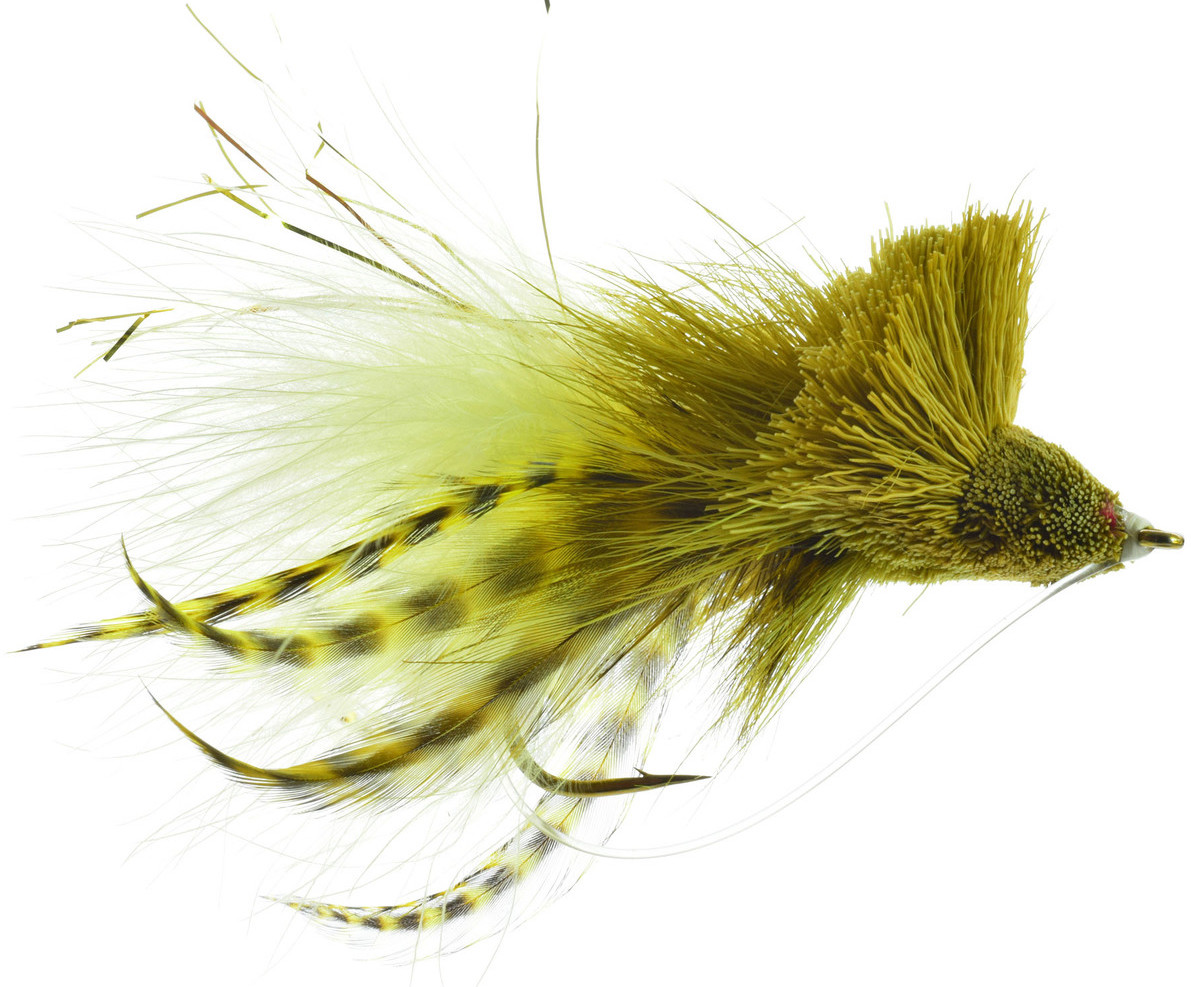 Photo: Umpqua
DAHLBERG DIVER
Traditional trout flies don’t do much other than drift like an insect caught in the current. In slow water, most look about as edible as a paper clip. Invented in the 1970s, the Dahlberg Diver was designed to actually move. More than that, it’s the first—and arguably still the best—diving fly. At rest, it floats. When it’s tugged sharply, however, the flared collar of deer hair drives it underwater, where it wiggles crazily as the buoyant body fights against the downward thrust. Then between tugs, it floats back up. Basically, it’s a diving jerkbait for the fly rod, as lethal and versatile as a plastic-lipped hard bait. The Diver is excellent in both lakes and slower rivers, including deeper water over structure or weeds.
There’s a lot going on with this fly, but if you take it step by step, none of the individual parts are difficult to tie. You can also leave out some of the tail elements to slim it down, or substitute in synthetic materials to make it slinkier or flashier. Just be mindful when trimming the spun deer hair into the collar shape, since it’s easy to take off too much.
Advertisement
- Hook: Wide-gap, sizes 2 to 6
- Tail: 4 saddle hackles, around a large tuft of marabou
- Flash (optional): Flashabou over tail
- Skirt: Palmered saddle or hen hackle
- Head: Spun deer hair, trimmed to shape
- Weedguard (optional): 20-pound mono