


CARVING A NICHE
Who are the big names in waterfowl decoys, and what makes their blocks so valuable? An insider’s guide for collectors and the curious alike
Advertisement
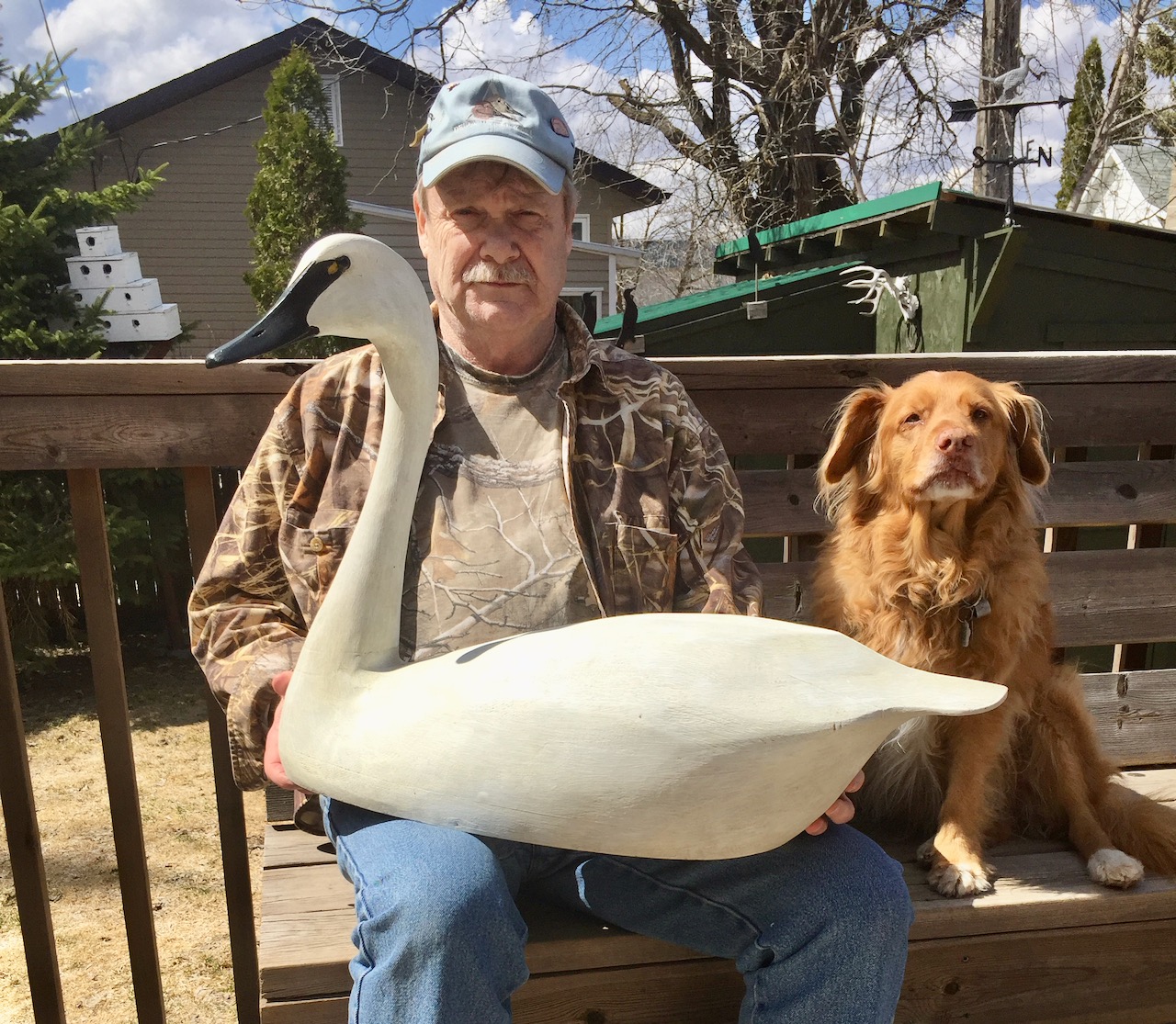 Collector Brian Short with a swan decoy carved by Torry Ward of Portage La Prairie
COLLECTIBLE CRITERIA
There are three primary categories of collectible waterfowl decoys: shorebirds, ducks and geese. Shorebird hunting was outlawed in the early 20th century, and with it went the production of shorebird decoys; stories abound of hunters leaving their decoys behind to rot in the sun and wind, no longer of any practical value. As a result, shorebirds are now the scarcest of the decoy types and, often, the priciest. That’s led most collectors to focus on duck and goose decoys instead.
To learn more about collectible waterfowl decoys, I reached out to Brian Short for some answers. He’s a hardcore decoy collector from Stonewall, Manitoba, now retired from a career in the machinists union. A lifelong hunter and angler, he’s been a serious collector for 30 years. While he’s amassed some 1,200 decoys during that time, Short still remembers his first, a standard-grade, glass-eye mallard drake made by legendary carver William J. Mason (see “Factory blocks”).
Advertisement
Several factors influence the value of any particular decoy, says Short, foremost being the carver. As with paintings, it’s often the artist’s name that drives demand and, hence, prices. Certain carvers are simply more in demand than others, and the value of their decoys reflects that.
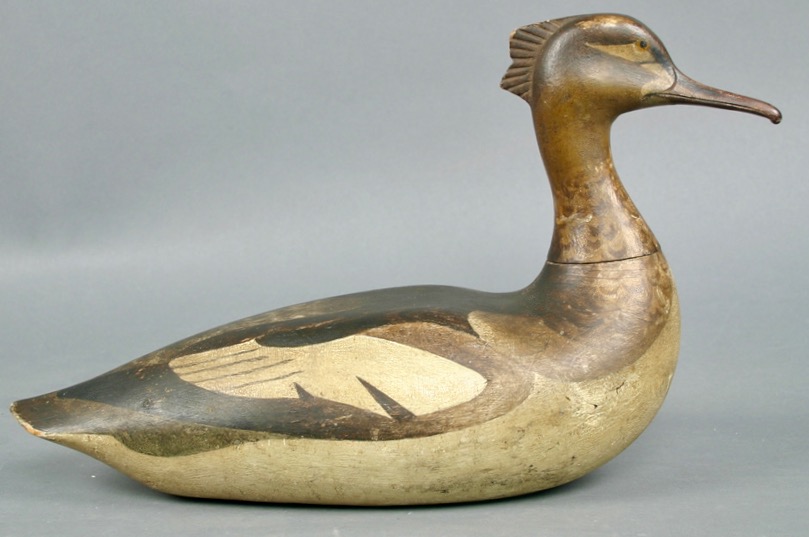 This merganser hen fetched a whopping US$856,000 (photo: Guyette & Deeter)
As with most collectibles, a decoy’s condition also contributes significantly to its value; those with their original paint are the most desirable, while decoys that have been restored generally don’t command the same price. That said, Short notes there’s an ongoing debate in the collecting community as to whether a really trashed decoy should be restored or left as is. For his part, Short is from the school that prefers decoys to remain unrestored.
The region a decoy comes from also influences its value. Namely, decoys from places with a longer and deeper history of waterfowling tend to attract greater collector interest. Jon Deeter, owner of the renowned decoy auction house Guyette & Deeter, says decoys from Canada automatically garner a great deal of collector interest, particularly if they’re from southern Ontario, the Pacific coast or Manitoba’s Delta Marsh.
Advertisement
Of course, as with anything collectible, rarity also contributes to the value. And in the decoy world, scarcity often reflects the carver’s interests. If a well-known carver made a lot of mallard decoys but only a handful of teal blocks, for example, the latter would generate considerably more collector interest.
One of Short’s collecting interests is accumulating multiple decoys from the same hunting rig, another factor that helps increase their value. Among his collection are seven decoys that were part of a rig owned by Harry Dynes, an avid waterfowler and owner of the Dynes Hotel on the Burlington/Hamilton Beach Strip. He also has several decoys from the rig used by James Ford Bell of Delta Marsh fame, created by the renowned Ducharme family of carvers (see “The Delta decoys”).
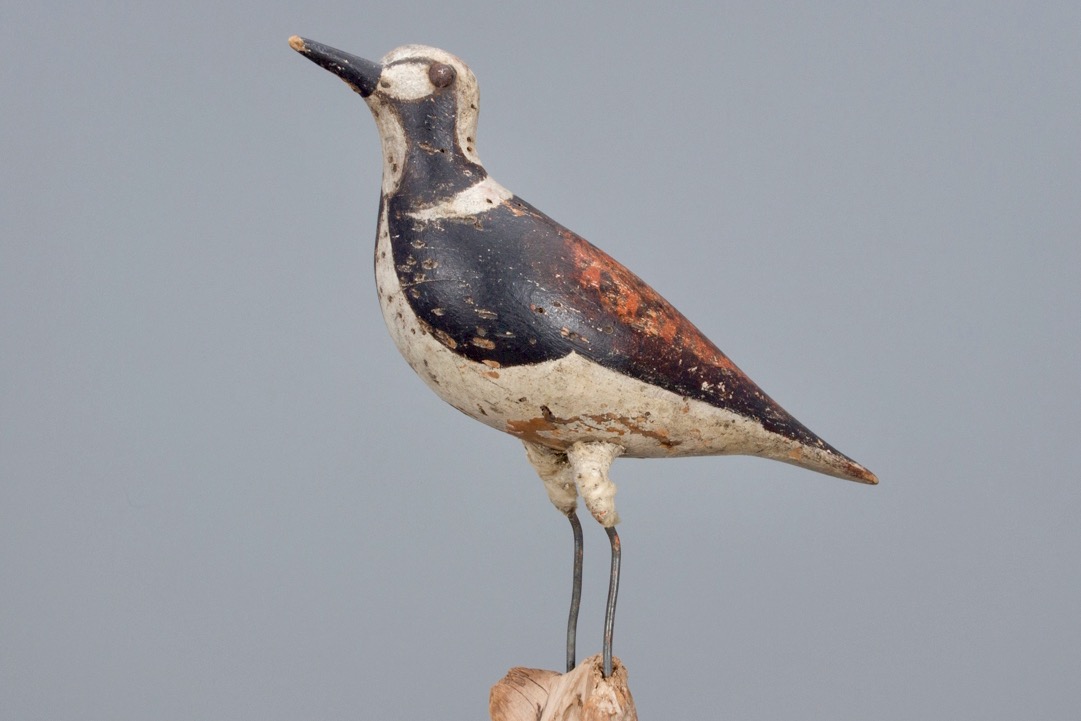 Shorebird decoys are the rarest on the market (photo: Copley Fine Art Auctions)
So, what are the most sought-after waterfowl decoys? There’s no one answer, says Short, noting beauty is in the eye of the beholder. The cream of his collection, he says, is a goose decoy carved by Jack Miner, one of the pioneers of North American conservation, best known for his goose-banding program. Short came across the decoy at an auction, accompanied by a letter of authenticity from Miner’s grandson, and decided he just had to have it. He says it’s the only Jack Miner decoy he’s ever seen, and it stands as his personal Holy Grail of waterfowl blocks.
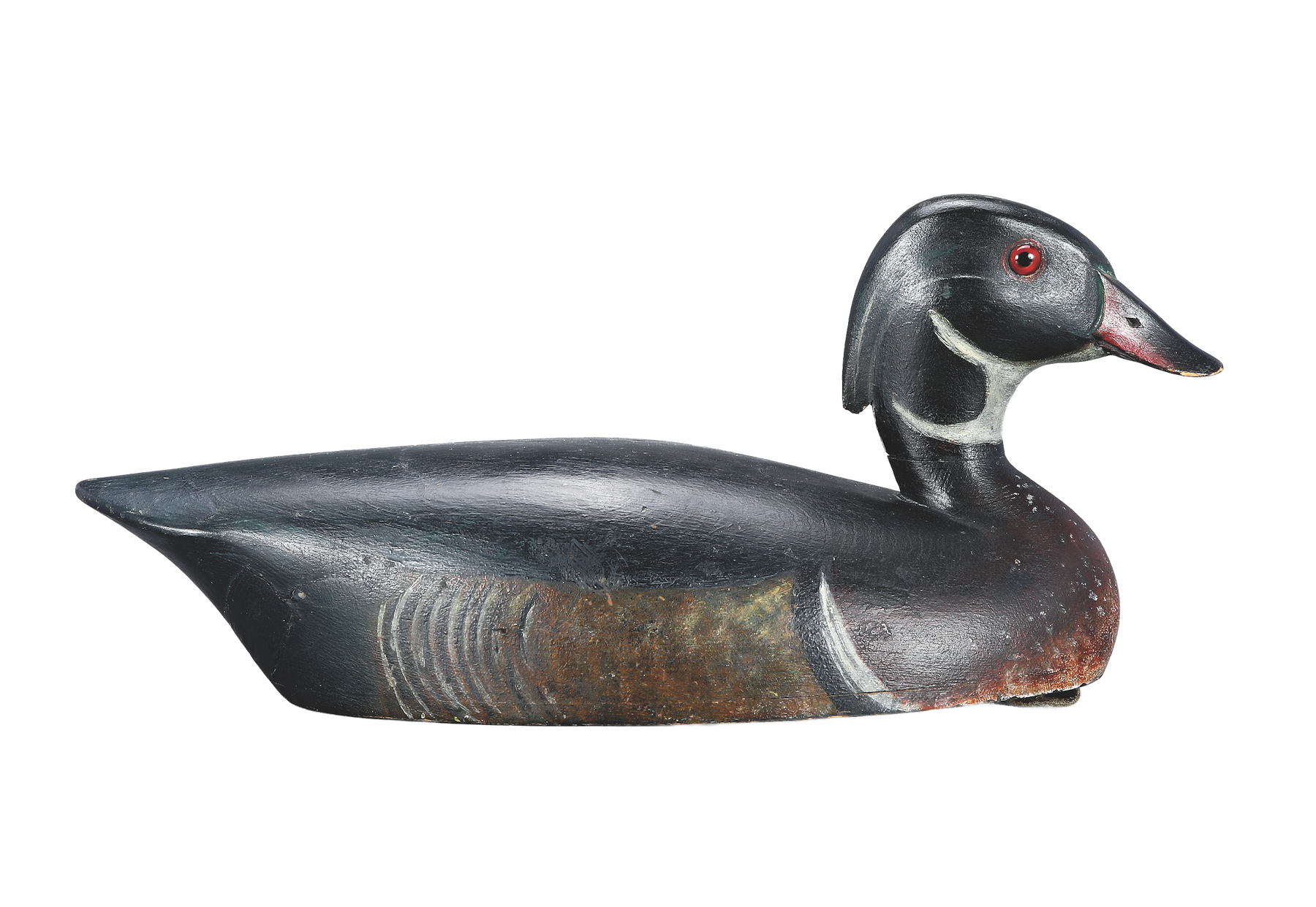
If you subscribe to the notion that market value determines what makes a decoy the most sought after, consider these fairly recent results for Canadian decoys on the open market. In 2017, a wood duck drake from Toronto carver Tom Chambers sold for US$270,000, while a pair of pintails carved by Hamilton’s Ivor Fernlund commanded US$210,250 at an auction. And in 2005, a hooded merganser drake by William Hart of Belleville, Ontario, sold for US$203,000. Looking beyond Canadian-carved blocks, a merganser hen decoy by Massachusetts carver Lothrop Holmes once sold for a staggering $856,000 at a Guyette & Deeter auction.