

GO SHORT
To catch more fish, rein in your casts and keep things simple
Advertisement
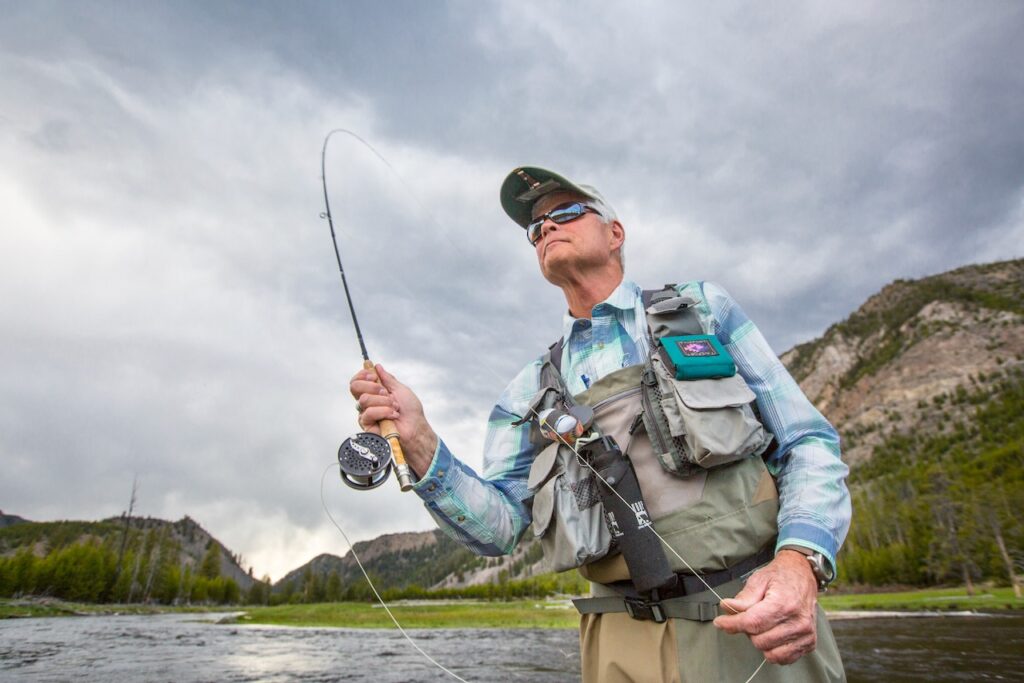 Photo: NPS/Neal Herbert
There are few more impressive sights in fly fishing than an angler lofting out a 60-foot cast, the graceful loops unfurling with fleeting beauty. There are also few fly-fishing tactics as pointless and counterproductive as excessively long casts. That goes for both for the individual angler trying to land a few fish, and for the whole sport of fly fishing in general.
For 95 per cent of freshwater fly fishing in Canada, the truth is you can catch plenty of fish if you can cast 30 feet with a modest degree of accuracy. That applies to rivers, creeks, ponds and lakes all across the country, for pretty much every species of gamefish fly anglers target. In the majority of cases, in fact, you’ll catch more fish on a 25- or 30-foot cast than some show-off shooting line to the horizon, especially in moving water. That’s because accuracy and efficiency almost always trump distance when you’re fly fishing. Here’s why.
Advertisement
THE CASE AGAINST LONG CASTS
Once a fly angler masters the sport’s basics and gains confidence, there’s a trap waiting. While casting is now fun, practising 30-footers on the lawn quickly gets boring. So, there’s a natural tendency to push yourself to see how much farther you can cast. That’s fine when you’re goofing around at home, but that’s where you need to leave your long-cast aspirations—if you want to catch fish, that is.
For starters, longer distances reduce your accuracy, making it harder to put your fly in the fishiest spots. Long casts also take more time to execute as you let out and manage line, meaning your fly spends less time in the water. Then after the cast, you’re left with reams of line on the water that need to be dealt with. And, of course, what goes out front must also go behind, so you need just as much clear space behind you for your backcast. Believe me, there’s a special humiliation when you get snagged in a tree 60 feet from the bank.
Since fish are hyper-sensitive to aerial threats in shallow water, keeping a long line in the air is also more likely to spook your quarry. And even if you accurately land a long cast, there will be more drag on the line, increasing the chances your fly will behave unnaturally. As well, the more line you have out, the harder it is to feel bites and set the hook. Perhaps worst of all, the long-cast mentality leads to a grievous and all-too-common mistake—casting over, or actually standing in, water you should be fishing.
Advertisement
Philosophically, there’s another problem with the culture of long casts in that it gives the mistaken impression you need elite skills to catch fish on the fly. This keeps people from trying fly fishing in the first place. It also discourages anglers who can manage short casts, but think they’ve got to make 50-footers to catch fish on their local river or pond.
THE CASE FOR SHORT CASTS
The advantages of making shorter casts cover the flip side of everything that’s wrong with long casts. To begin with, you can put a fly in high-percentage spots more often and more accurately, and keep it there longer. Fishing a short line also reduces drag, and improves your ability to detect bites and set the hook.
Advertisement
When you’re deciding how to fish a piece of water, in fact, your goal should be to position yourself to make the shortest cast possible. Moving in closer allows you to better spot fish-holding lies, patterns in the current and other important subtleties. All of this leads to more high-quality casts, which almost always equal more fish on the line. So, the next time you see someone lofting those elegant 60-footers, remember this: being a good caster is not the same as being a good angler.
BONUS TIP: EXCESSIVE FORCE
The long-cast problem is compounded by fly tackle companies, which don’t do anglers any favours by promoting new rods and lines as being more powerful than ever. Power and distance are sexy, and pretty helpful with a tarpon or Atlantic salmon rod, but they serve little purpose with most trout or bass gear.