

FIGHTING FORM
Follow these tips on fighting big ones, and next time you’ll land it
Advertisement
Stories of the “one that got away” seem especially common in fly-fishing circles, perhaps because our long, whippy rods and single-action reels, though simple in design, are less forgiving of mistakes than spinning gear. As a result, playing and landing a fish on the fly requires some crucial skills not found in the world of conventional tackle. Here are some of the common fish-losing mistakes I’ve witnessed over the years, and the techniques you need to avoid them.
Advertisement
Before the strike
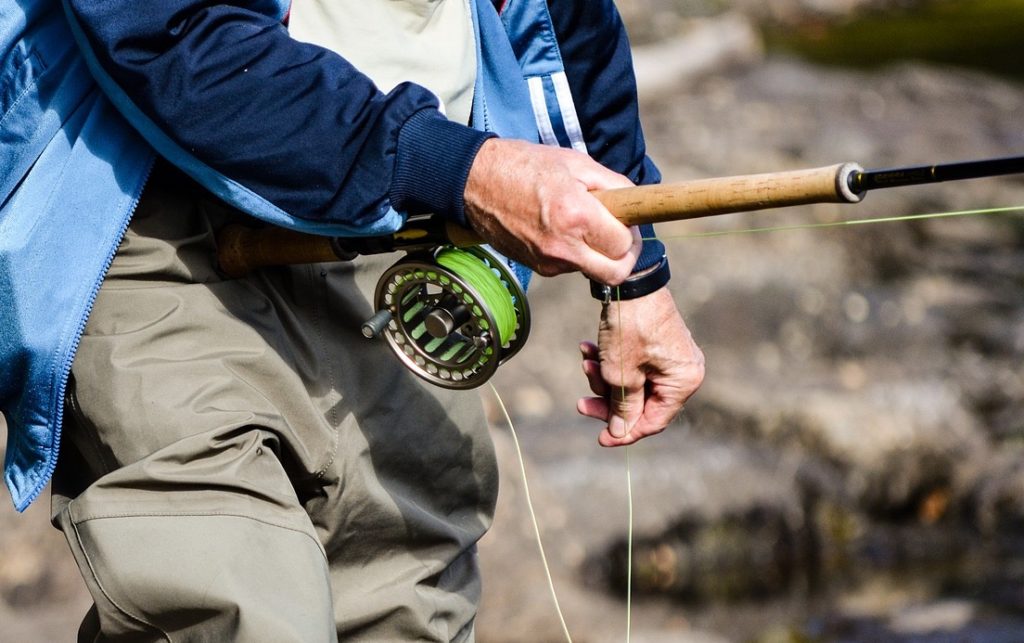
After the fly lands and you begin your retrieve, the recovered line has to go somewhere. If you’re wading, try holding it in coils in your line hand. If you’re on shore or on a boat, you can drop the line neatly at your feet or into a shallow bucket known as a stripping basket.
So why bother managing the line like this? If a big fish takes off right after getting hooked, you need to smoothly let the line out until the slack is gone and the fish is on the reel, where the drag system takes over. If the line snags an obstruction and suddenly stops feeding out, however, the fish is likely to break off.
This mishap is so common that, in the last five years alone, I’ve seen fish lost due to line tangled in a vest zipper, looped around an oarlock, and in one especially sorry situation, stuck under an angler’s foot and wrapped around the buckle of his sandal.
Advertisement
After the strike
Suppose a big fish hits halfway into your retrieve, you set the hook and it’s on. The sooner you crank up the excess line and get the fish on the reel, the fewer problems you’ll have while fighting that steelhead or pike or bonefish. But don’t fixate on the excess line and start wildly reeling in, forgetting you’ve got a live fish on. If it jumps, runs or comes in fast while you’re distracted by the reel, you’ll be slow to respond. And a split-second of slack line is all the fish needs to shake the hook.
So while it’s good practice to get a big fish on the reel, it shouldn’t be your first objective. Instead, reel up slack during those moments when the fish has settled down a bit, never losing focus on your quarry.
Advertisement