

WORM WISDOM
Simple but effective, wiggler imitations deserve a place in your fly box
Advertisement
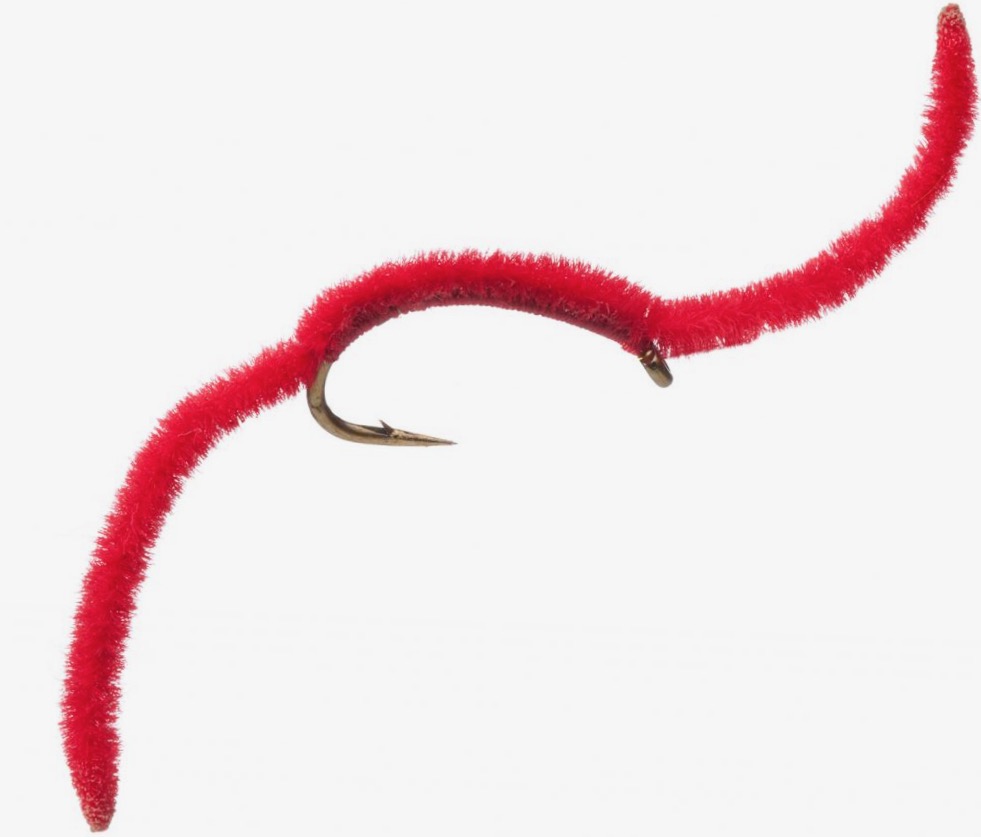 The San Juan Worm
FLIES
Developed in the U.S. southwest in the 1970s, the San Juan Worm (above) was the first fly of its type to gain wide popularity. Featuring just an inch of red chenille (a type of fuzzy yarn) lashed to a small hook, with loose ends extending past the bend and the eye, it’s brilliant in its simplicity. A more recent version is the Squirmy Wormy (below), which replaces the chenille with gummy soft-plastic material.
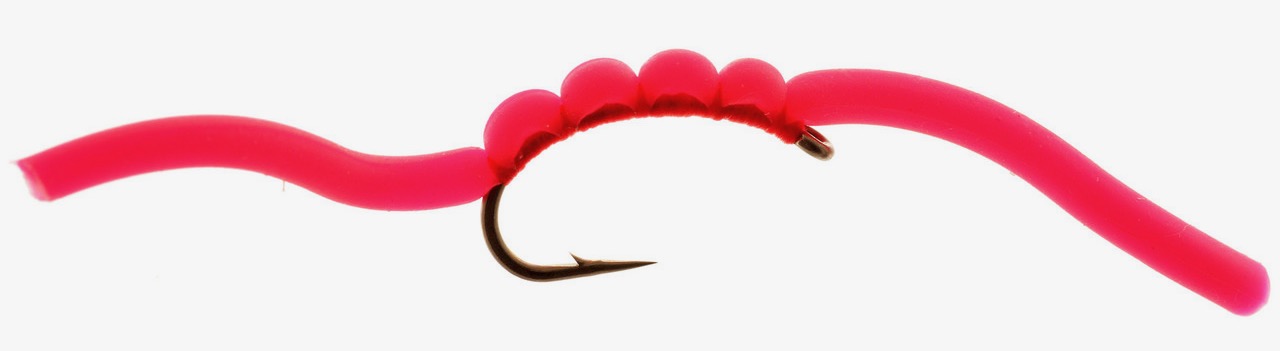 The Squirmy Wormy
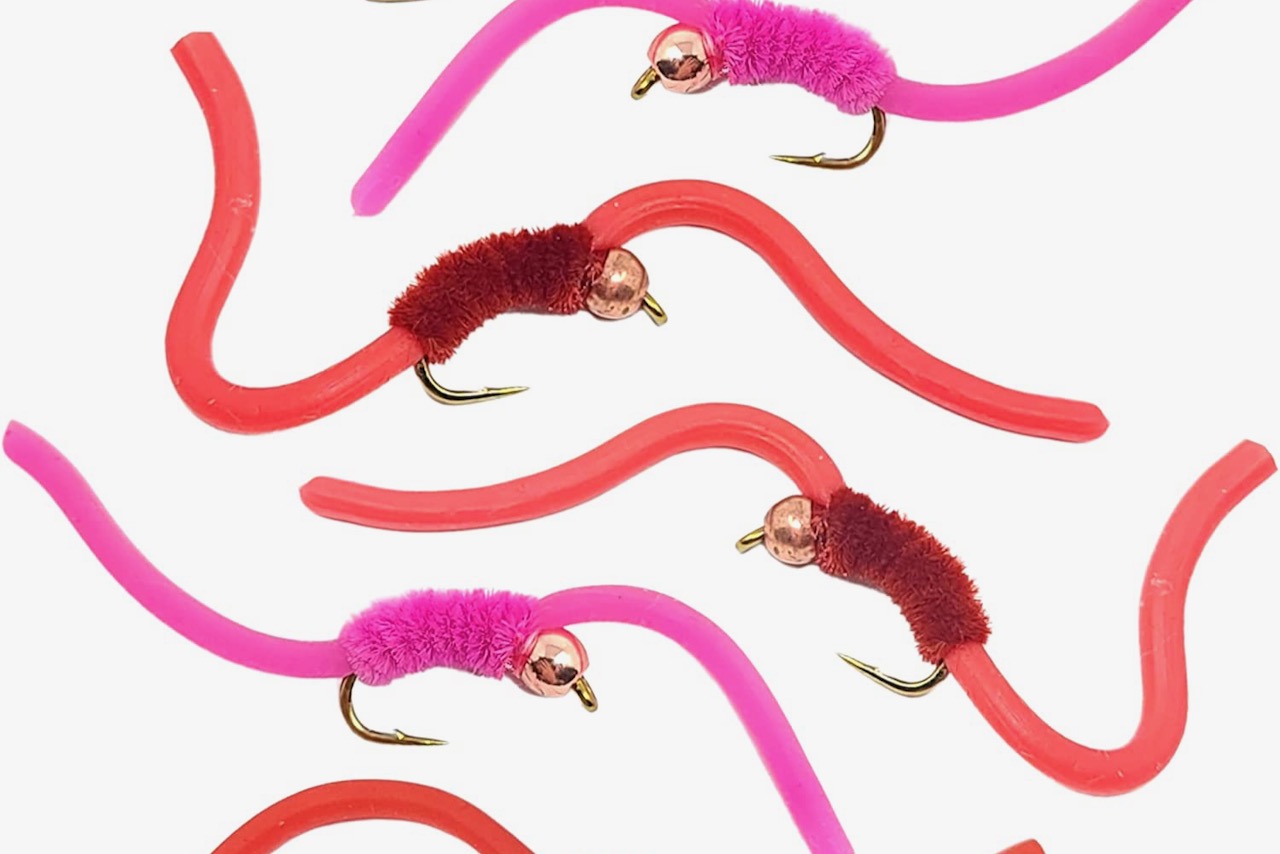
Both patterns can also be tied with a bead for extra weight, and the colour palette has expanded to include pink, brown, tan, yellow and lime. You’ll see worm flies ranging in size from one to three inches in length, tied on hooks from size 16 up to 4. Just match the size of the fly and hook to the size of the fish you’re targeting, and you’ll be in the game. I do happen to think the soft-plastic Squirmy looks more lifelike in the water, especially in large sizes, but I’ve never observed any preference from the fish.
Advertisement
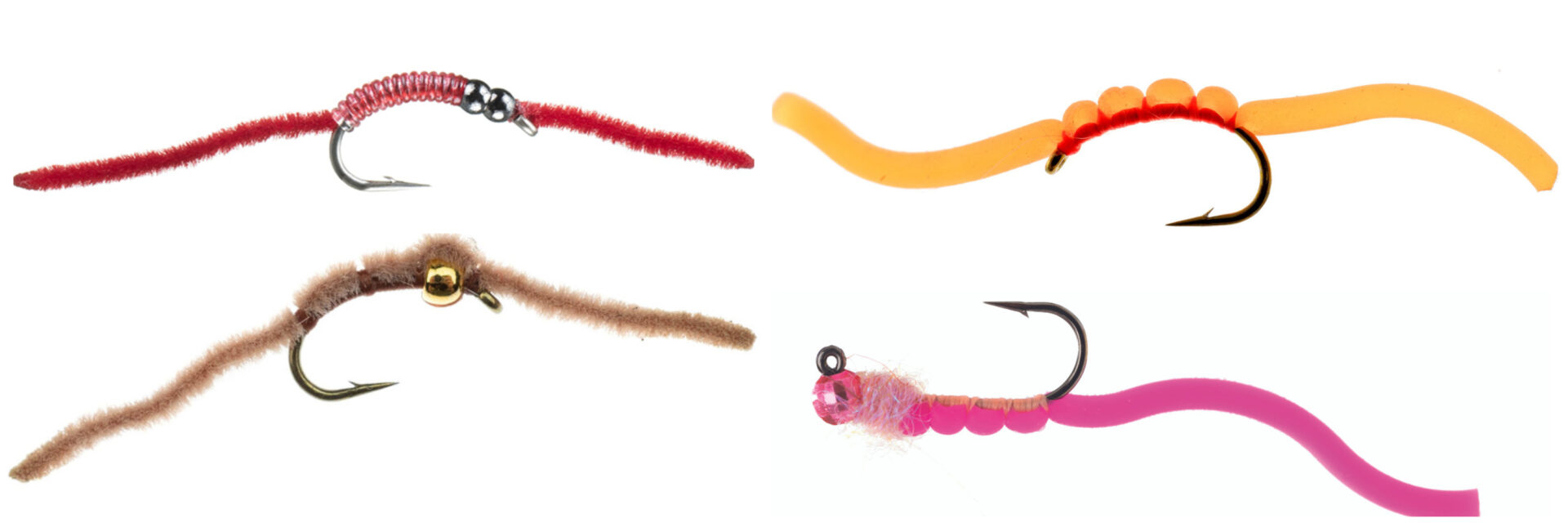 Worm flies come in a variety of colours, weights and styles
FISHING
A worm fly looks so unlike typical insect or baitfish imitations that it can leave you scratching your head about how to fish it. To simplify things, think of it as a nymph. Similar to an immature aquatic insect, a worm drifts helplessly with the current, perhaps wiggling a little in a tragic and ineffectual way. So, dead drift a worm fly naturally at the speed of the current, typically close to the bottom, either with or without an indicator. You can also use a worm as the deep fly in a hopper-dropper double-fly rig. And they’re a solid choice for high-sticking, where you drift the fly on a short, tight line close to the bank.
Finally, if you’re new to the whole idea of worm flies, and not deeply immersed in fly lore, it might come as a surprise to you to learn there are anglers who view these patterns as distasteful. Their criticism seems to be that imitating a worm, rather than a delicate and sparkling mayfly, is somehow debased or impure.
There’s plenty of room in fly-fishing for many different viewpoints, and I try to be tolerant of them all, no matter how ridiculous or snooty. But as renowned fly-fishing writer Tom Rosenbauer has sensibly pointed out, you can’t blame worms for being born into the wrong order of invertebrates. I’d also note that the fish are choosing to eat worms, and it’s not my job to police their diet—any more than I want some nosey brown trout giving me the stink eye if I take a second slice of pie.
Advertisement