

THREE RODS AND A CANE
For these backcountry anglers, navigating challenges on and off the water was the biggest reward of all
Advertisement
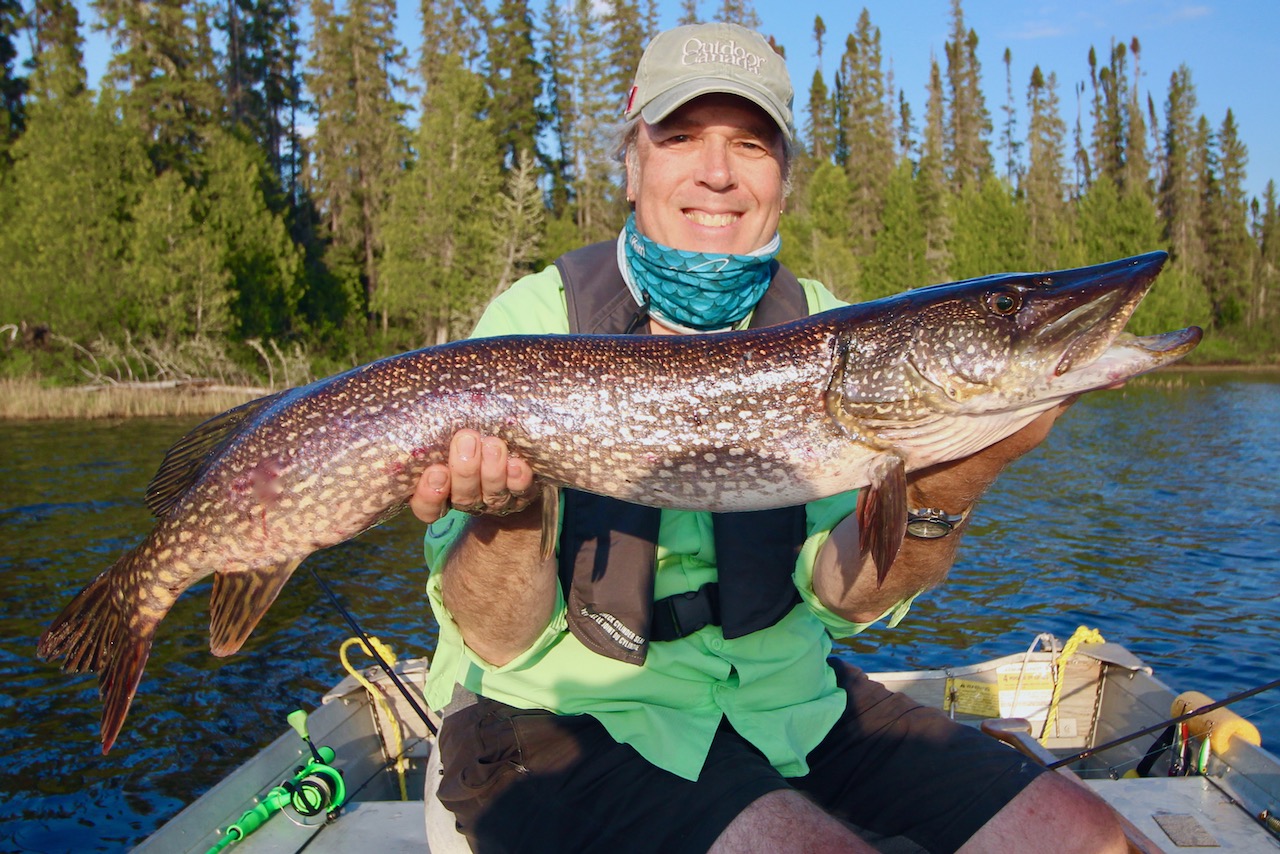 Scott hoists his 38-inch northern
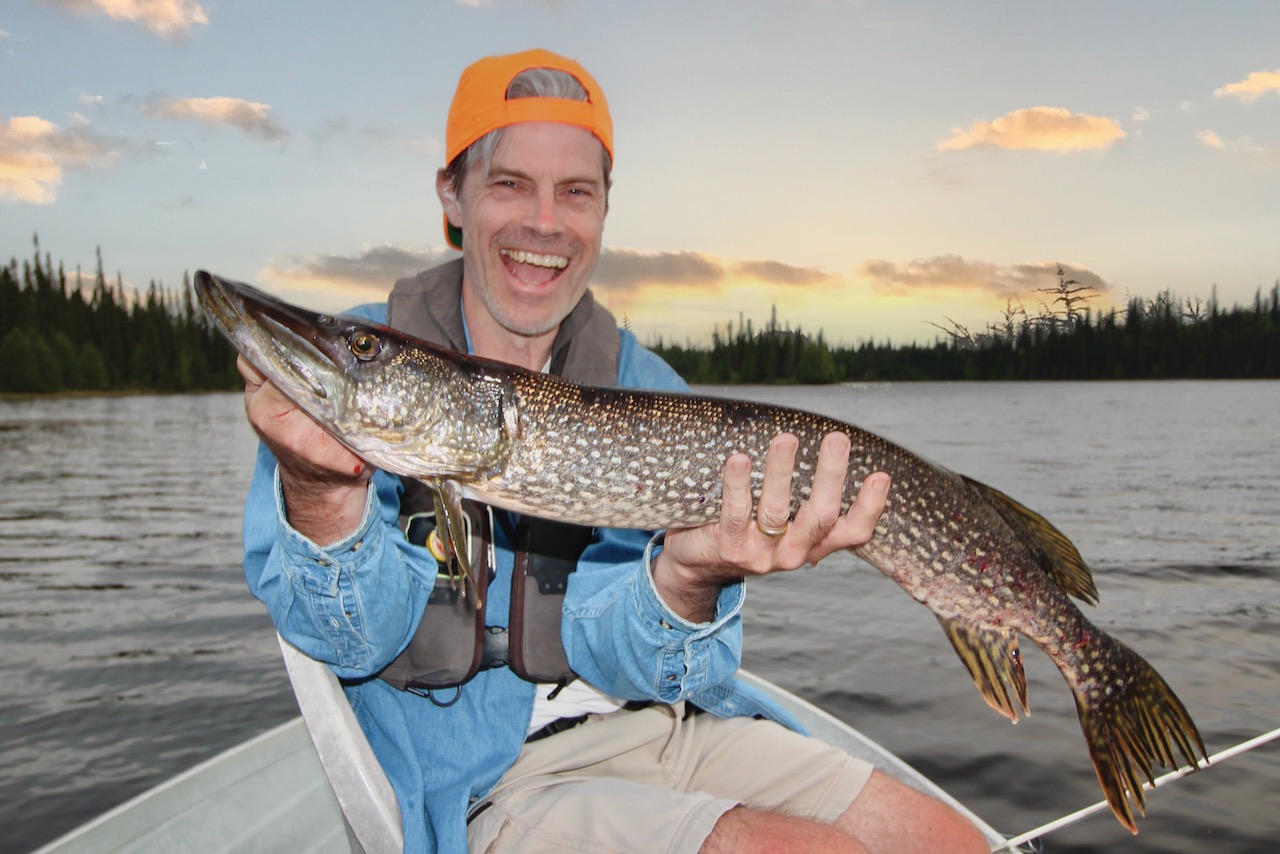
The following evening, we returned to the same outflow. I was using a big Mepps Syclops spoon—the closest thing in my tacklebox to Pete’s Bully—and lightning struck again. As soon as I set the hook, I knew I had a serious fish on the line
“Need any advice?” Pete said from his seat in the bow. “Keep your rod tip up!” he called, guffawing at his own wit. “Set the hook!”
Advertisement
It was a memorable fight, as the fish stayed deep, rolling and shaking its head. Then it came up, and Wes, as brilliant a net man as you could hope for, lifted it into the boat. It was a well-fed 38-inch northern, and just the kind of catch you hope for on an outpost trip.
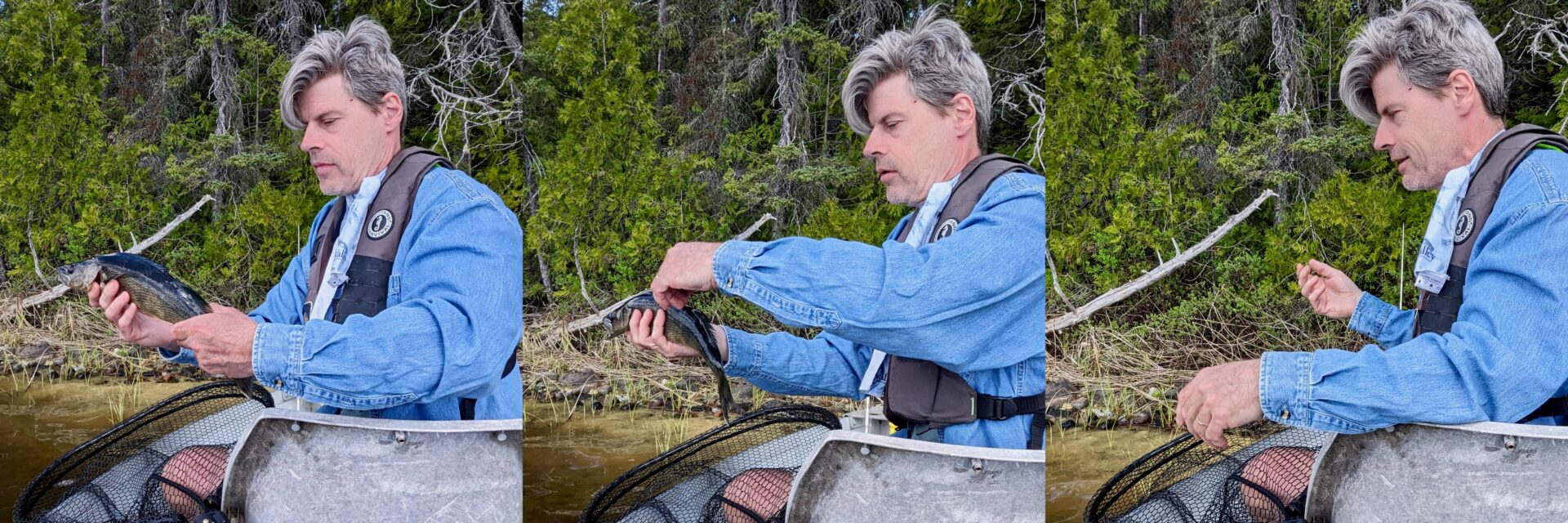 Pete experiences a key rite of passage for all new anglers: Dropping a fish while attempting to pose for a photo with it
STILL WATER
On our last evening, we enjoyed a glass of the good stuff as the sun dipped below the trees, painting the water in shades of orange and pink. The conversation drifted, as it often does among old friends, through topics trivial and sometimes serious. Pete described, in that thoughtful way he has, one of the realities of living with a degenerative illness. It often feels like your world is getting smaller, he told us, while the list of things you can’t do keeps getting bigger.
“But this week? My world got bigger again,” he said. “I didn’t know if I could do this, but I did. We did. And next time, I’m bringing my own tackle.” There it was—there would be a next time.
Advertisement
That night, I woke in the wee hours. While Pete and Wes slept, I slipped out of the cabin, and walked down to the water for a last look at the stars glinting off the lake. Coming back from the dock, I was struck by a remarkable sight. Leaning together against the cabin in the moonlight were three fishing rods and Pete’s cane—four simple tools that had quietly made our whole adventure possible.
For me, the trip was also a profound reset. It was a reminder that outdoor adventure doesn’t have to be hard-edged or high-risk to be meaningful. The best journeys aren’t about the fish you catch. They’re about the connections you make with nature and with each other, and pushing back against limits—not by pretending they aren’t there, but by finding ways to navigate around them.
Advertisement
Scott Gardner is Outdoor Canada‘s longtime associate editor.
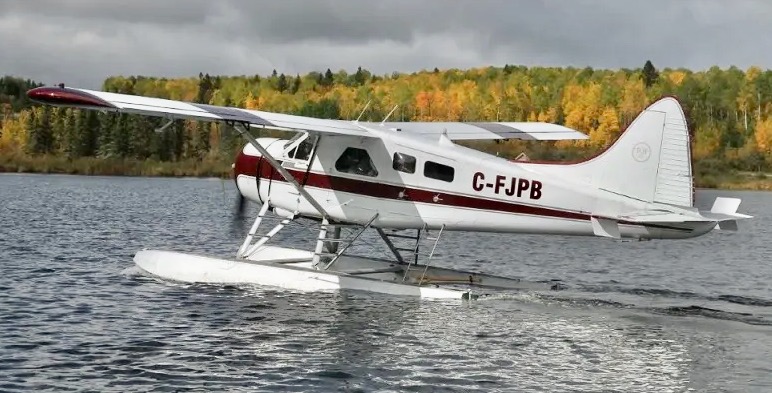
Cochrane Air Services has been operating remote fishing and hunting for over 60 years, with pike, walleye and brook trout fishing, as well as moose hunting. Find out more at www.aircochrane.com

Multiple sclerosis (MS) is a chronic autoimmune disease in which the body’s immune system mistakenly attacks the protective covering of nerve fibres, disrupting communication between the brain and body. The resulting damage can lead to a wide range of symptoms, including fatigue, numbness, difficulty walking, vision problems and cognitive changes. MS often appears when people are between the ages of 20 and 40, just as they’re building careers and raising families. Canada has one of the highest rates of MS in the world, with approximately 90,000 people living with the condition. The challenges of MS remain significant, but treatments continue to advance, offering hope for the future. You can help by supporting the MS Society of Canada through donations or volunteering, as well as by advocating for better healthcare policies and helping to reduce stigma through education. At a personal level, small gestures—offering a ride to an appointment, for example, or lending a hand with daily tasks—can have a lasting positive impact. Learn more at www.mscanada.ca.