


FALL FRENZY
How to make autumn’s topsy-turvy conditions work in your favour to tackle more trophy fish
Advertisement
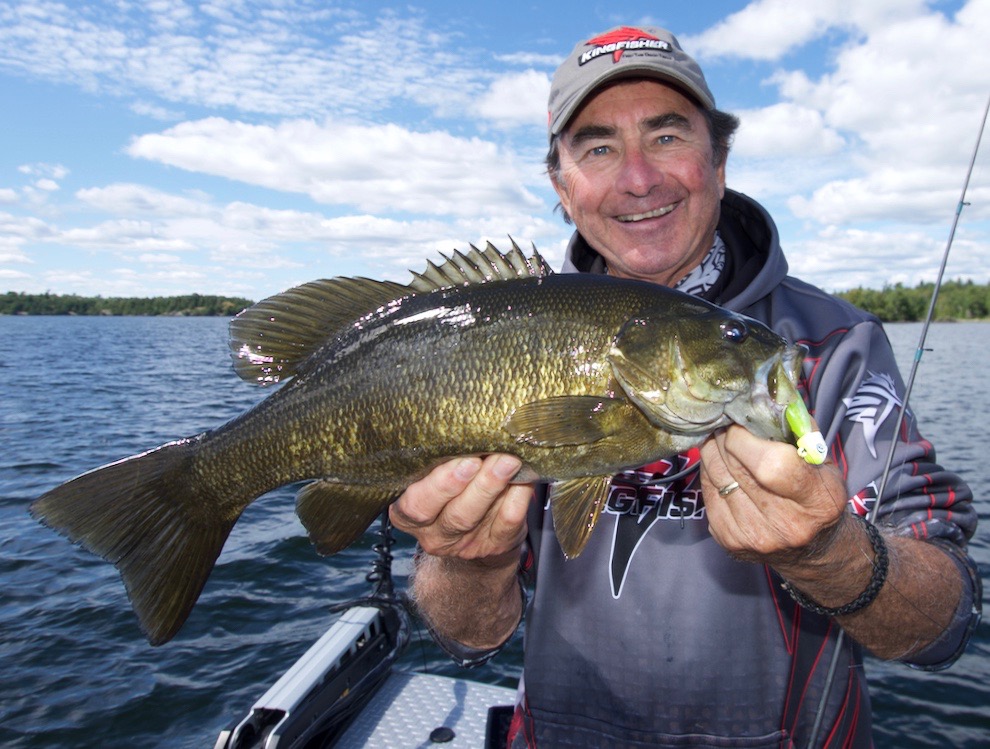
Fall is trophy fish time, but it can also be the most challenging and perplexing season of the year for most anglers. Why? Because so many factors are changing so fast and so dramatically. Think about it: We enter the fall wearing T-shirts while we fish in glorious weather conditions, catching walleye, bass, muskies, pike, perch and crappies; then a few short weeks later, we’re bundled up in parkas as we head out onto the ice. If you understand how environmental factors influence fish behaviours at this time of the year, however, you can use that knowledge to your advantage to catch more and bigger fish.
Advertisement
#1 WATCH SEASONAL CHANGES
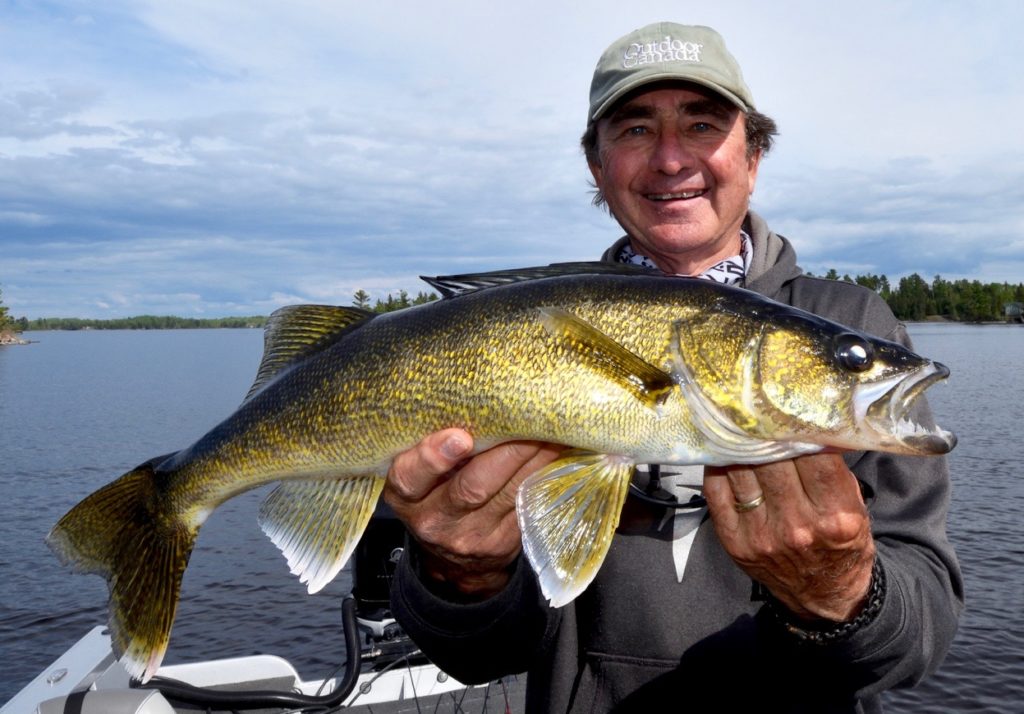
Imagine the profound effect fall’s same extreme weather changes have on the fish. After all, fish are poikilothermous, meaning they are cold-blooded in nature, and therefore their internal body temperature stays the same as the temperature of the water in which they swim. As a result, they enter harvest time feeding and socializing in near optimal conditions, then leave it in many cases in a semi-comatose state of hibernation. How’s that for a change? It’s as though they have to deal with a sudden Ice Age every year.
Fall is also the time of turnover, when the lake flips upside down—literally. At the beginning of the season, we find the warmest water in the shallows along shore and on the surface, and the coldest water at the bottom of the lake. At the end of the season, however, the conditions are completely reversed. Just as profound is the fact that the oxygen levels in the deepest parts of the lake are suddenly rejuvenated and fully restored, after steadily decreasing since the spring, often precipitously and to dangerously low levels.
Advertisement
In the wake of this massive upheaval, warm- and cool-water species of fish—including walleye, sauger, bass, northern pike, black crappies and yellow perch—will follow their preferred living conditions and head progressively deeper as water temperatures grow colder in the shallows. And just as predictably, cold-water fish such as lake trout, whitefish and ciscoes will ascend from the abyss.
BONUS TIP: SCOUT FOR WINTER
Advertisement
When I head out in my boat during late fall, I always carry a handheld GPS unit or the same Helix Ice chartplotter I use for ice fishing. Then when I come across a great walleye, crappie, yellow perch, black crappie or pike spot, I punch in the precise waypoint so I can easily find the fish again at first ice.
#2 TRACK FISH MOVEMENTS
I like to think of the fish adapting to autumn’s shifting conditions as though they were riding an escalator in a big store—early in autumn, warm-water fish ride the escalator down one level from the top floor, while cold-water species hop on in the basement and head up a level. By mid-fall, you’ll typically find all of the fish crowded together on the same middle floor. When that happens, you can be certain the water temperature has become consistent from top to bottom, and that the fish—predators and prey alike—have found the zone of maximum stability, food and comfort.
I remember one trip last autumn when I hit this peak perfectly. It was a gorgeous blue-sky afternoon with the sun shining brightly and the wind subdued. I was fishing in my boat in about 30 feet of water, wending my way along the edge of a large shelf that extended out from shore. At the outer perimeter, the shelf suddenly broke steeply, like a toboggan run down to the main lake basin. There was also a scattering of isolated boulders and wheelbarrow-sized rocks near the rim that the fish were nuzzling up against.
I fired it out a 5½-inch swimbait attached to a 3/4-ounce bullet-head jig, let it sink, then started a relatively aggressive retrieve, lifting the bait and making brief pauses while keeping it close to the bottom. You can only do that when you tie on a much heavier jig than normal—I’ll routinely use a full ounce—so you’re not forced to slow down and feel for bottom.
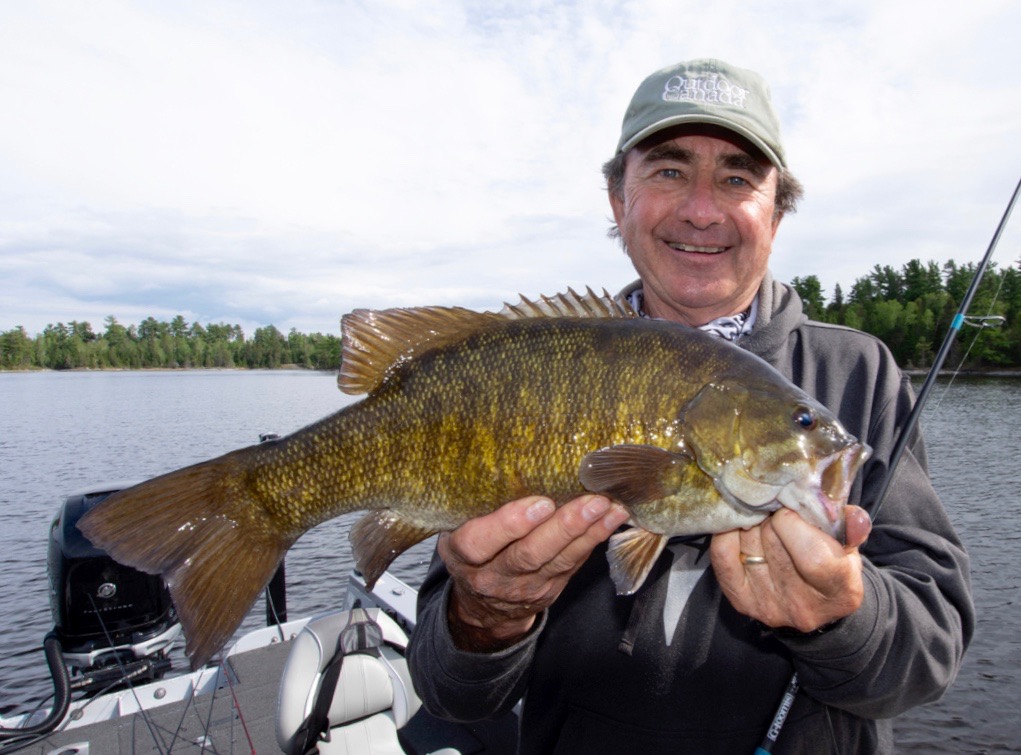
As I reeled the thumping paddletail back to the boat, I felt a sharp tug and set the hook smartly into the mouth of a thick-bodied, 24-inch walleye. After releasing the fish, I fired the lure back to the isolated rocks on the edge of the structure, let it plummet again on slack line and started the same retrieve. Only this time, I hadn’t made three turns of the reel handle before I felt another fish, this time a beautiful four-pound smallmouth, take the bait.
Now, are you ready for this? As I prepared to make my third cast, I happened to glance down at the sonar screen and spot a fish suspended a foot or two off the bottom, directly under the transducer. I reckoned it was another smallmouth that had followed in the one I’d just released, so I quickly opened up my bail and dropped the jig over the side of the boat. It was no bass. Instead, a 25-pound lake trout tried to rip the rod from my hands. In three casts, I’d caught a warm-water, cool-water and cold-water fish using the same bait on the same spot.