

THREE RODS AND A CANE
For these backcountry anglers, navigating challenges on and off the water was the biggest reward of all
Advertisement
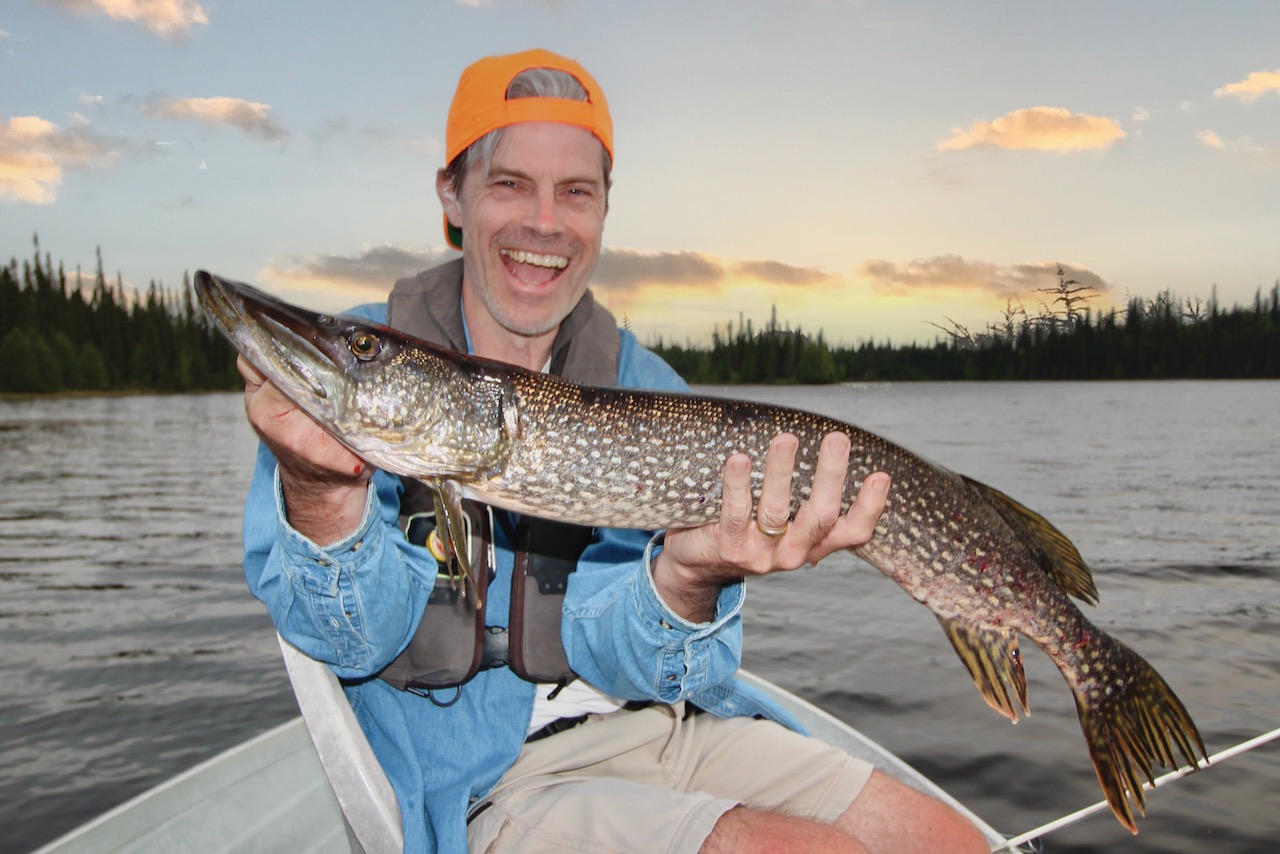 Pete Kloppenburg shows off his first northern pike
“Um, guys, I think I’ve hooked something,” said Pete Kloppenburg, sitting at the bow of our boat.
“Cool. Good job,” I replied, still staring intently over the stern, with my hand on the tiller. We were in a tricky spot by the main outflow of a small wilderness lake, and I was trying to keep us out of the fast current so we could cast into the deep water in front.
Advertisement
Then Wes Nelson, the other member of our trio and an experienced angler, barked, “Set the hook! Set the hook!” A second later, he banged me on the knee and said, “Heads up, Scotty. He’s definitely got a fish—and it’s a pretty good one.”
I looked up to see Pete’s rod arced dangerously over, then exchanged glances with Wes. Whatever was on the other end of the line was about to deliver a moment none of us would forget.
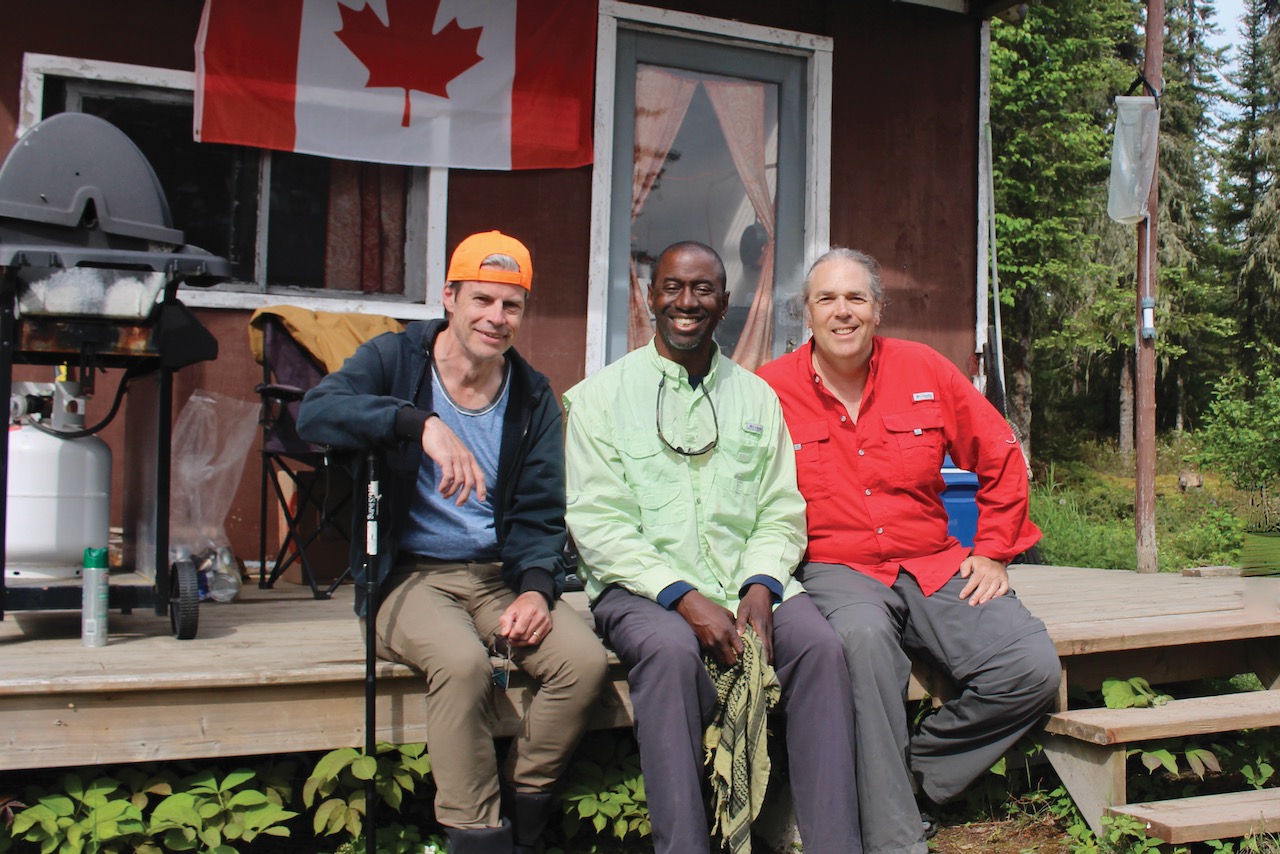 (Left to right) Pete Kloppenburg, Wes Nelson & Scott Gardner in front of their outpost cabin
SETTING THE HOOK
Three days earlier, our floatplane had touched down on the glassy surface of French Lake, about 30 minutes by air from Cochrane, Ontario. In many ways, this wasn’t my typical fishing adventure, but that was by design. Usually when I plan outpost trips, I assemble a group of serious fishing types, often including my close friend Wes Nelson.
Advertisement
But this time, Wes and I had decided on something different. Instead of adding another hardcore angler, we invited Pete Kloppenburg. The three of us have been close friends since university in the early 1990s, but Pete had virtually zero fishing experience. He’s a long-time cottage owner in Ontario’s Muskoka region, and loves spending time outside, but he hadn’t picked up a rod in many years.
“Are you guys sure about this?” he asked more than once as we planned our adventure. “I know you love these trips, and I really don’t want to slow you down.”
Advertisement
There was more to that question than his fishing inexperience. Pete has multiple sclerosis, an autoimmune disease that significantly affects his mobility and stamina. It’s a quiet, stubborn disability, the kind that people don’t always see right away. But it’s there, with every step. Almost 15 years after his diagnosis, Pete now uses a cane or walker to get around, and he tires easily. None of that mattered to us.
“That’s the whole point of an outpost. We make our own schedule. The fish will be there when we’re ready,” I assured him.
“Think about it,” Wes added. “No cell service. No neighbours. Just three old friends, a cabin in the wilderness, and more pike and walleye than you’ve ever caught.”
Pete’s expression turned pensive. “Will there be beer?”
ON THE DOCK
Before we knew it, early June had arrived and we were piling our gear onto the dock at Cochrane Air Services, which has been flying anglers and hunters into northern Ontario outpost cabins for more than 60 years. When I contacted the company to ask about the accessibility of the dock, paths and cabin layout, they had all the info at hand. Clearly, Pete was not the first mobility challenged sport they’d welcomed, and the crew knew exactly how to help him climb up into the plane.
As our de Havilland Beaver lifted off the water, the vast northern wilderness unfolded beneath us, with lakes, rivers and boreal forest stretching to the horizon. Pete pressed his nose against the window like a kid, taking it all in. And when we landed on French Lake—a two-kilometre stretch of Canadian Shield pike and walleye water—Pete’s delight was unmistakable. Aside from our cabin and dock, there wasn’t a single man-made structure—just lake, forest and sky.
“I knew it would be like this,” Pete said, leaning on his cane, “But actually seeing it is something else”
“Welcome to nowhere,” Wes said, slapping him on the back.