


THE NEXT BIG THING
The growing popularity of fuzzy dice and urchin baits is taking the bass-fishing world by storm. But will it last?
Advertisement
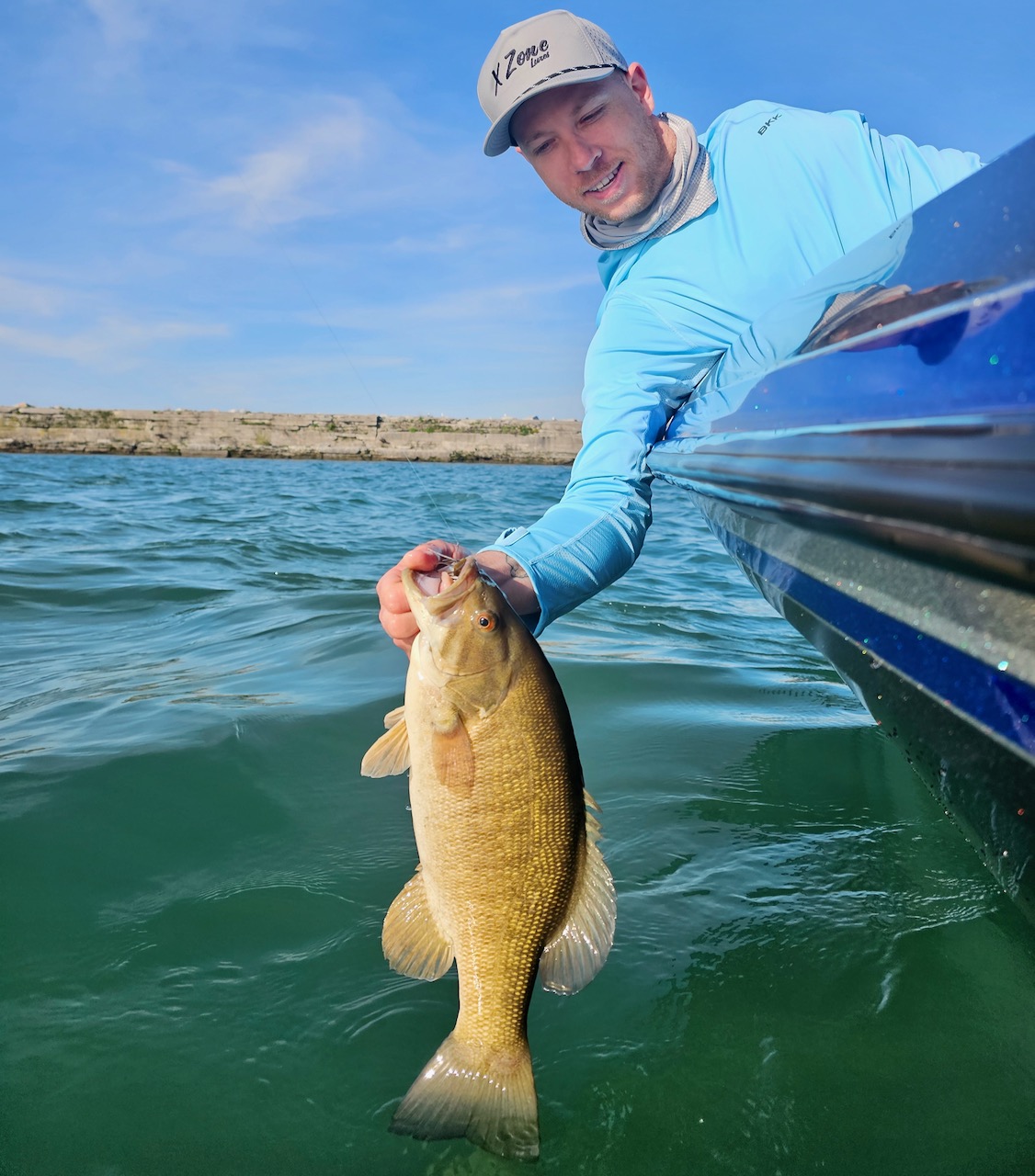 Canadian Joey DiCienzo nabs a nice smallmouth on a fuzzy dice (photo: Joey DiCienzo)
The hottest new bait craze in North American bass fishing right now does not have a settled name, or even rigging. Yet tournament wins are stacking up north and south of the border with this new presentation, and manufacturers are racing to enter the category. And even the pros who are catching fish on these new baits are still working out how best to fish them.
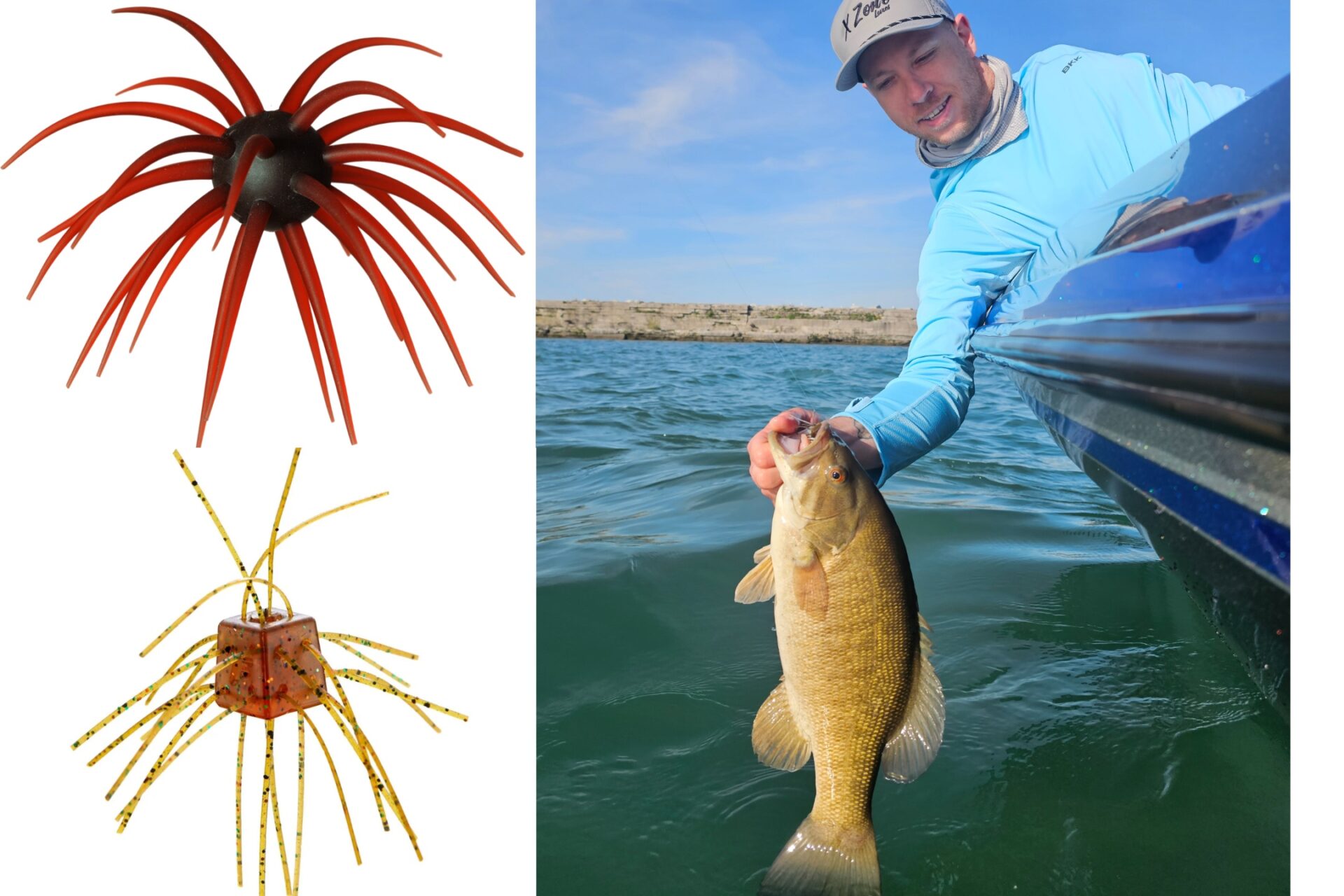
So, what exactly are these magic baits, which have been a fixture in Japanese tournament fishing for nearly a decade? Whether anglers call them urchins, fuzzy dice or coikes, as they’re known in Japan, their common characteristic is a solid core with multiple soft tentacles, or fingers, radiating out in every direction. They look less like anything a bass would eat and more like a strange marine creature that has wandered into the wrong watershed. There are two broad sub-categories of these baits, and they fish differently enough to be treated as separate presentations.
Advertisement
The first is the urchin-style bait, a rigid elastomer ball covered in stiff tentacles (elastomer is a synthetic, rubber-like material that’s denser, firmer and more durable than standard soft plastics). It comes in sizes based on the diameter of the central ball: 13 mm and 17 mm are popular smaller sizes, while one of the most popular larger size is 23 mm. Larger urchins are mostly fished for largemouth bass, simply because smallmouths have a harder time getting them in their mouths. The urchin fishes like a finesse jerkbait, hovering and pulsing in the water column. It’s designed to catch fish you can see on forward-facing sonar, in water not much deeper than 10 feet.
They look less like anything a bass would eat and more like a strange marine creature that has wandered into the wrong watershed
The second sub-category is the fuzzy dice. The name stems from the original designs of these baits, which featured a cube-shaped centre (many newer fuzzy dice have moved away from a strict cube). The centre material varies—some are softer elastomer, some are PVC-based—but nearly all of the tentacles are silicone, which gives the fuzzy dice noticeably more flow and movement than the stiffer urchin. These baits behave more like the finesse plastics anglers already know—and often get fished on the same rigs we’ve been throwing here for years—but with extra movement.
To get a handle on these new baits, we spoke with three Canadian pro anglers who are, in their own way, leading the charge to figure it all out. Chris Johnston is one of the hottest tournament bass anglers in North America right now, and the first Canadian to capture a Bassmaster Elite title and back-to-back Bassmaster Elite Series Angler of the Year honours.
Advertisement
Joey Teofilo and Joey DiCienzo, meanwhile, are tournament partners with multiple wins at the highest levels of competition this country has to offer. They hold the all-time Canadian record for a single-day, five-fish smallmouth bag, at 32.02 pounds. One of the baits responsible for that record? A prototype of the X Zone GBO, a fuzzy dice bait they helped design.
While all three anglers are at the vanguard of this latest bass craze, they’re not in total agreement about where it’s going, and how it’s getting there—revealing just how new and uncertain this trend is.
Advertisement