

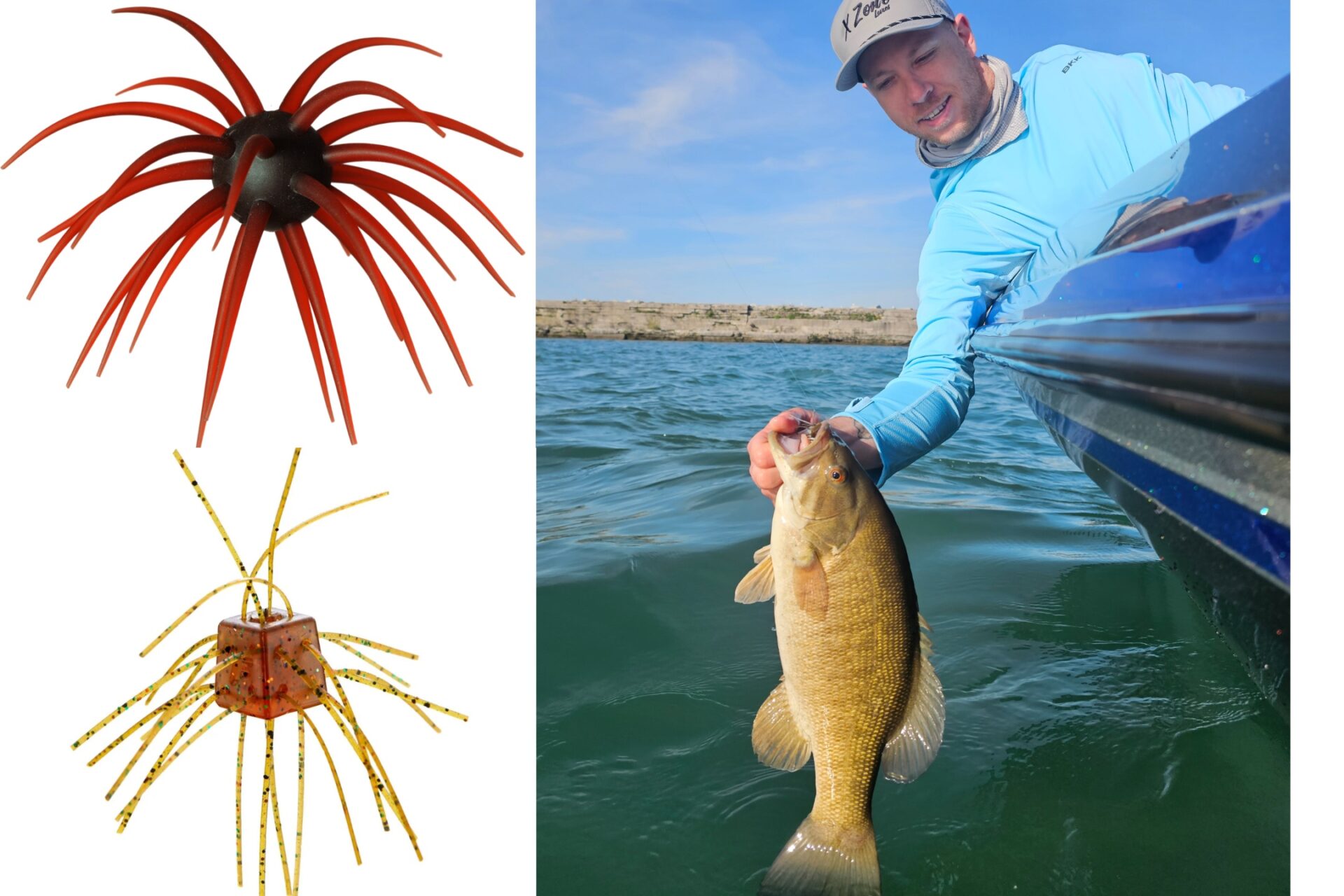

THE NEXT BIG THING
The growing popularity of fuzzy dice and urchin baits is taking the bass-fishing world by storm. But will it last?
Advertisement
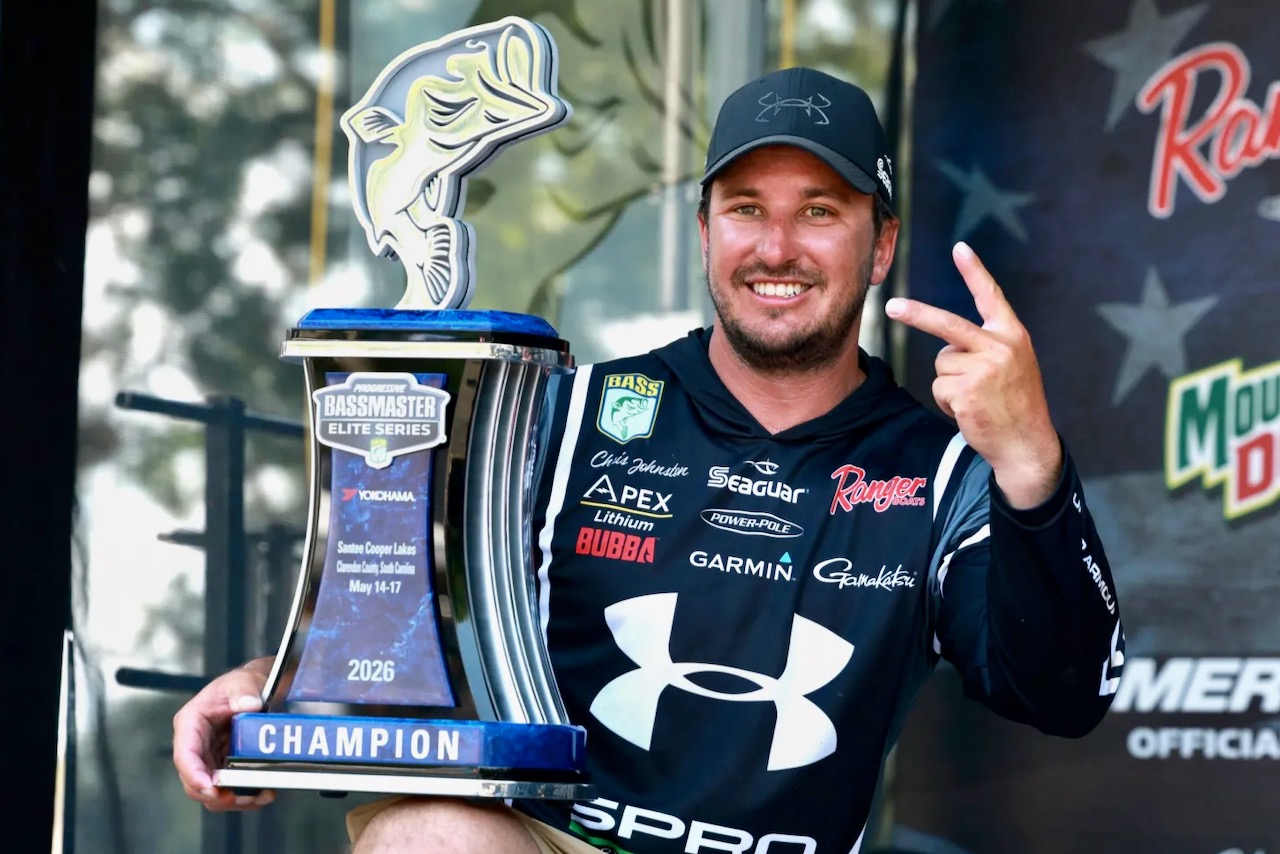 Chris Johnston won his second Elite title thanks to urchins (photo: B.A.S.S.)
THE EMERGING TACTICS
The technique is so new there are no definitive answers on how best to rig these baits, and what gear handles them best. Patterns are emerging and success is showing, but fixed rules do not yet exist.
The single biggest concern among anglers who’ve fished them is the low hook-up percentage on the urchin-style baits, with their large and firm bodies—fish often come up to investigate without committing the way they would with conventional plastics. So, while anglers are losing fish, they’re not sure which variable is to blame. That’s the engine driving most of the rigging experimentation right now. It’s not about action. It’s about the suspicion that whatever each angler is doing (or not doing) might be costing them fish.
Advertisement
Johnston favours the heaviest set-up. On the 23-mm urchin, he opts for baitcasting gear with 20-pound straight fluorocarbon, giving him the brute force to drive the hook home on a fish that often eats the bait more out of curiosity than commitment. That makes sense when he competes in the southern fisheries, where double-digit fish are a reality.
These baits are so new that rigging techniques are emerging, but there aren’t yet fixed rules
To rig the bait, Johnston uses a treblehook with an internal Neko-style nail weight pushed into the elastomer core, skin-hooking one of the three points through the top of the ball so the other two ride exposed for the hookset. He then fishes the urchin like a jerkbait, getting it to almost suspend in the water column, while watching fish on forward-facing sonar and triggering reaction strikes.
For the smaller versions, Johnston downsizes to spinning gear with a 12- to 17-pound fluorocarbon leader on thin-diameter braid. His choice of hook size scales with the ball size: size 5 or 6 treble for the 13 mm; size 4 for the 17 mm; and size 2 for the 23 mm. He says that gives him heavy enough line and aggressive enough hooks to convert bites, when other anglers in this category are otherwise leaving fish on the table.
Advertisement
Teofilo and DiCienzo both use a 7’6” medium-action spinning rod, chosen specifically for its casting distance—they’re insistent on getting the bait away from the boat before the fish sees the hull. Teofilo runs eight-pound braid with an eight-pound fluorocarbon leader on the smaller fuzzy dice-style baits, bumping to a 15-pound leader on an urchin. DiCienzo runs lighter six-pound braid. They both prefer a single wide-gap hook with a small clip on the back end that holds an external drop-shot weight, although they’ll shift to a treblehook if conditions demand.
Confidence and feel are doing more of the work than any specific piece of hardware
The philosophies of both Johnston and the Joeys catch fish. Confidence and feel are doing more of the work than any specific piece of hardware. Light line means a looser drag and a delicate hookset, favouring casting distance. Heavier line lets the angler drive the hook home without concern, favouring hook-up percentages. With the urchin, the fall rate matters most: too heavy and the bait sinks like a stone and the bites disappear; too light and you can’t fish it efficiently. Slower is almost always better. Experimenting is the name of the game.
Advertisement
For fish relating tighter to the bottom, meanwhile, all three pros shift to standard techniques on the fuzzy dice. Johnston goes to a drop shot. The Joeys do the same, though they’ll quickly switch to a jig if conditions call for it. “There are not many days when it’s flat calm,” DiCienzo says. “So, being able to get that bait down there quickly and put it in front of the fish is critical, because you just want to make them see it before they start swimming away.”
Another option for bottom fish is a small fuzzy dice on a Ned-style mushroom jighead, which is quietly emerging as a popular go-to technique for savvy pros. It all comes down to simplicity. No odd rigs, no specialized hardware—just a jig and a plastic. Simple, effective and deadly.