

DOUBLE DUTY
Up your odds of figuring out the fish by tying on a two-fly rig
Advertisement
When it’s not obvious what fish are eating, how do you decide what fly to tie on? When I can’t make up my mind—or if I’m just feeling saucy—I go with a double-fly rig. Where legal, fishing two flies lets you cover more water with a single cast, while also testing flies of different colours, shapes or actions. Multi-fly rigs have been used for more than two centuries, and there are dozens of versions, but I like to keep mine as basic as possible. Here are a couple of my most reliable rigs. They’re simple to make, and designed for easy casting in rivers, lakes, ponds or anywhere else you’re inclined to fling a fly.
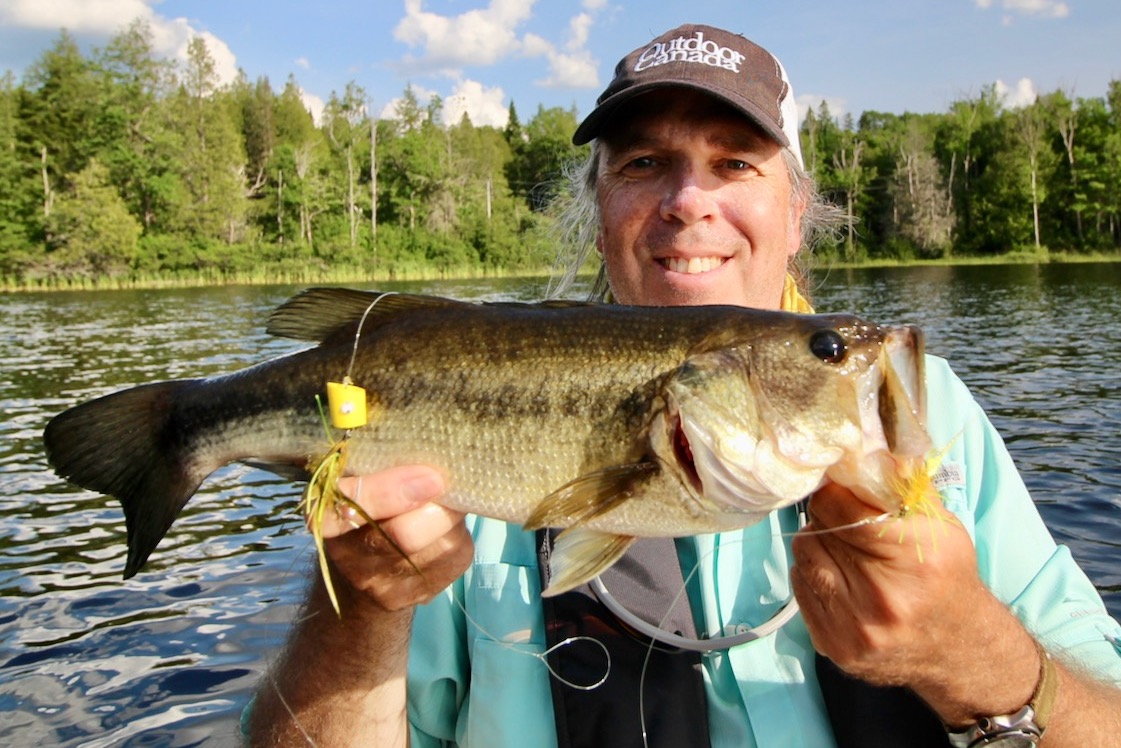
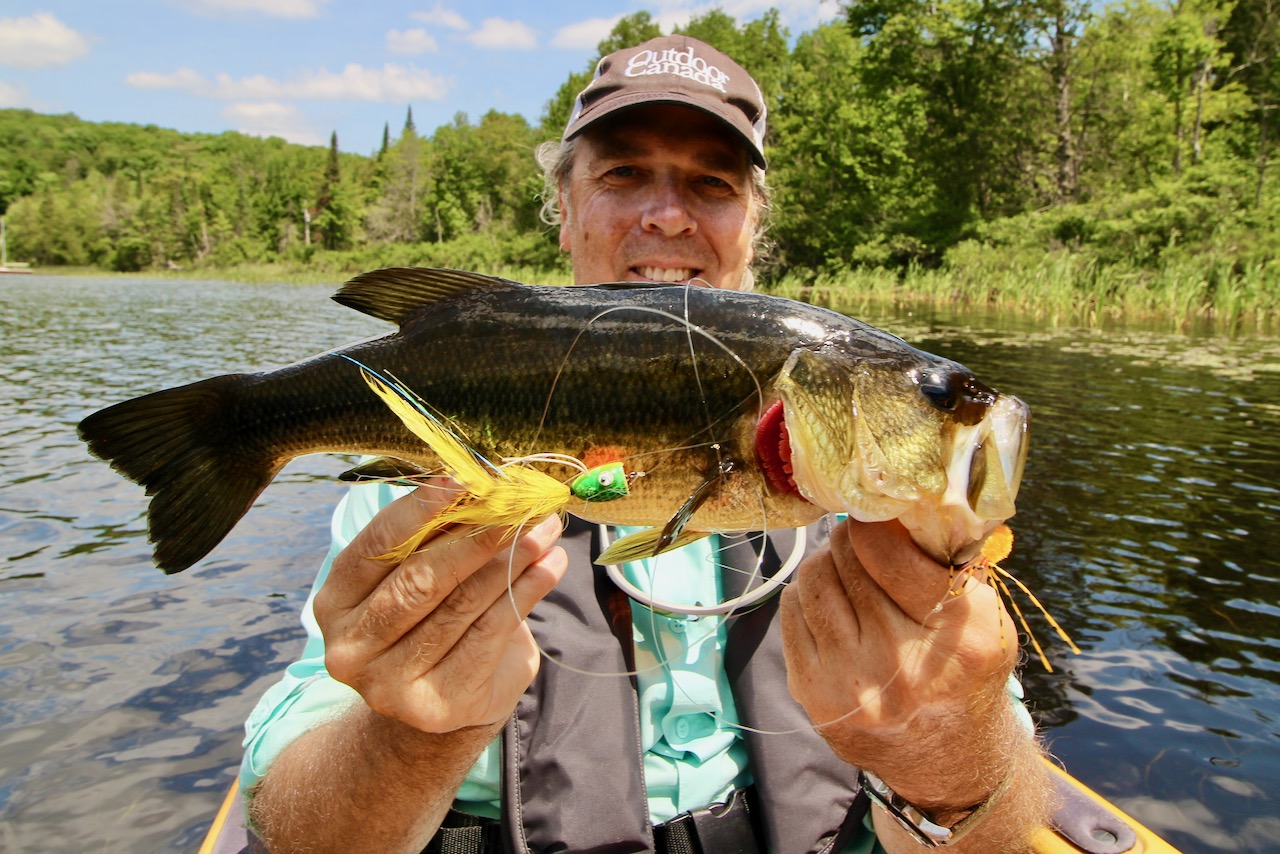 The author favours the simplest way to rig two flies
THE SET-UP
Two-fly rigs often involve complex knots with loops and protrusions that require a plumber’s licence or advanced macramé skills to create. I’ve tried many of these set-ups, and my experience is that they work a lot better on paper than in practice. They’re often fiddly to tie, unwieldy to cast and prone to tangling. So, after much strife and experimentation, I now make all my double-fly rigs in the same, straightforward way.
Advertisement
I tie the main fly to a shortish leader of eight- or 10-pound mono that’s rarely longer than seven feet. Then I tie a two- to four-foot length of lighter mono to the bend of the first hook using an improved clinch knot; this extra section of mono is known as a “dropper.” Finally, I tie the second fly to the dropper using a loop knot so it swims with a little more action. This straight-line set-up is less prone to tangles, and it’s easier to cast than the macramé ones. And yes, you can hook fish on either fly.