

DOUBLE DUTY
Up your odds of figuring out the fish by tying on a two-fly rig
Advertisement
 Hopper-dropper rigs are so popular, Rio Products offers a curated assortment for the technique
HOPPER-DROPPER
One of the best-known double-fly rigs consists of a high-floating dry fly with a wet fly or nymph trailing behind and below it on a dropper. Bushy grasshopper flies are a common choice for the dry fly, hence the name “hopper-dropper.” It’s a clever and versatile rig. The dry fly is a legitimate target in its own right, but it also serves as a visual cue to help you get a drag-free drift on your nymph, and as an indicator for subsurface strikes. You can use it pretty much anywhere you’d fish a dry fly, but I like it as a searching rig on relatively featureless water, where fish could be holding anywhere.
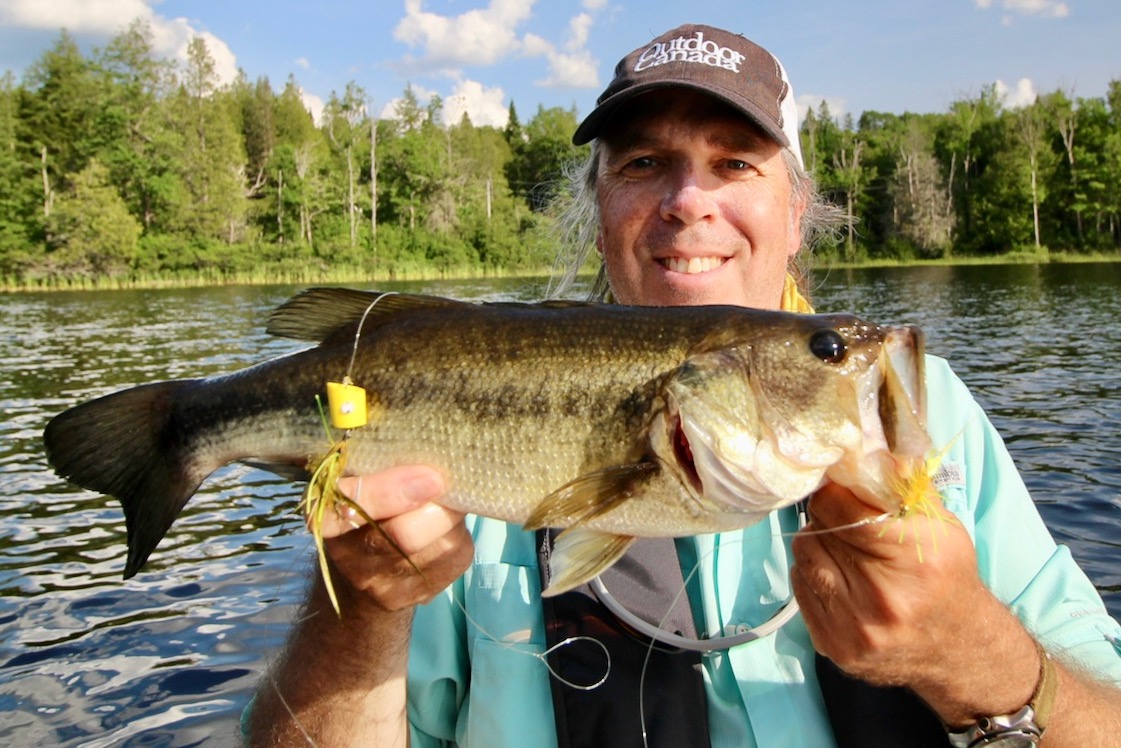
The hopper-dropper is typically considered a trout rig, but it’s also one of my favourites for bass and panfish in both rivers and lakes. In those cases, I use a foam or deer-hair bass bug (sized for the species), usually with a wiggly and seductive subsurface fly behind it. With trout, double hook-ups on the hopper-dropper are rare, but not so with bass, especially smallmouths. They are such competitive feeders that when one eats, the others also get fired up, making for a sporty few minutes when you get two fish on the line at once.
Advertisement
TANDEM STREAMERS
Big trout tend to target big meals, but when the nights get cool and the leaves turn colour, they really go on a meat hunt. Fall is an excellent time to fish with streamers, and an even better time to throw two of them. My favourite rig for this features a beefy, garish and often weighted streamer as the front fly, followed by a smaller streamer. I typically put a big Sculpzilla, Conehead Muddler or Autumn Splendour fly on first, then slap on a Woolly Bugger behind it.
There are some dubious theories about the way this big-fly/small-fly arrangement affects trout psychology, but my reason for using it is purely practical. Simply, it casts better than a leader with two big flies or a small fly followed by a big one, which cast like wet socks and are prone to godawful tangles. I can’t verify the Newtonian physics behind this, but I’ve cut off enough wind-knotted leaders to know it happens.
The other key to chucking two streamers is to go with a stiffer 10-, 12- or even 15-pound leader. It’s more castable, and since the rig prompts reaction strikes, the fish won’t be leader shy. You can drift or swing a two-streamer rig, but it’s especially fun for banging the banks. I plonk it tight to the bank, give it a few big strips, then try the next spot—if I don’t get bit first.
Advertisement