

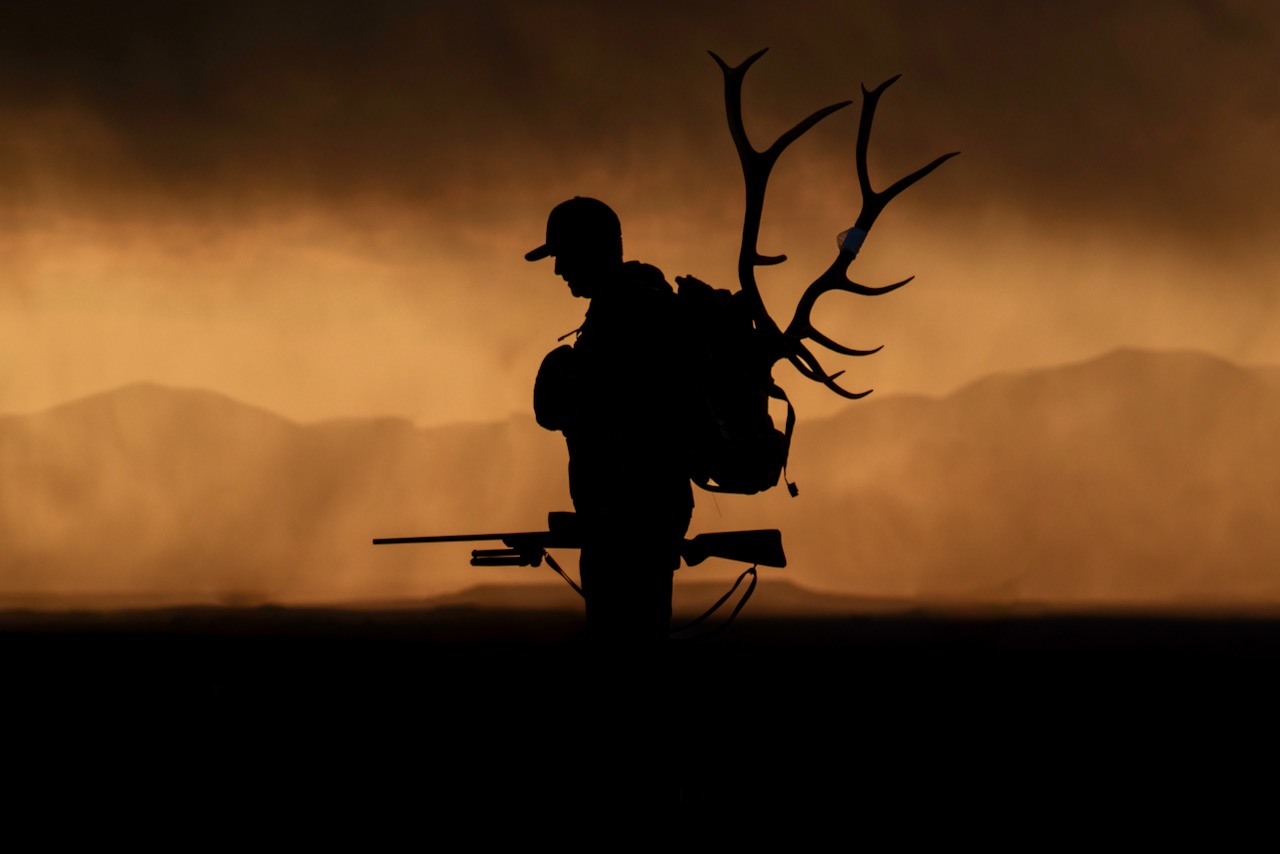

A RIFLE TO REMEMBER
A seasoned hunter’s primer on what to look for in your very first big-game gun set-up
Advertisement
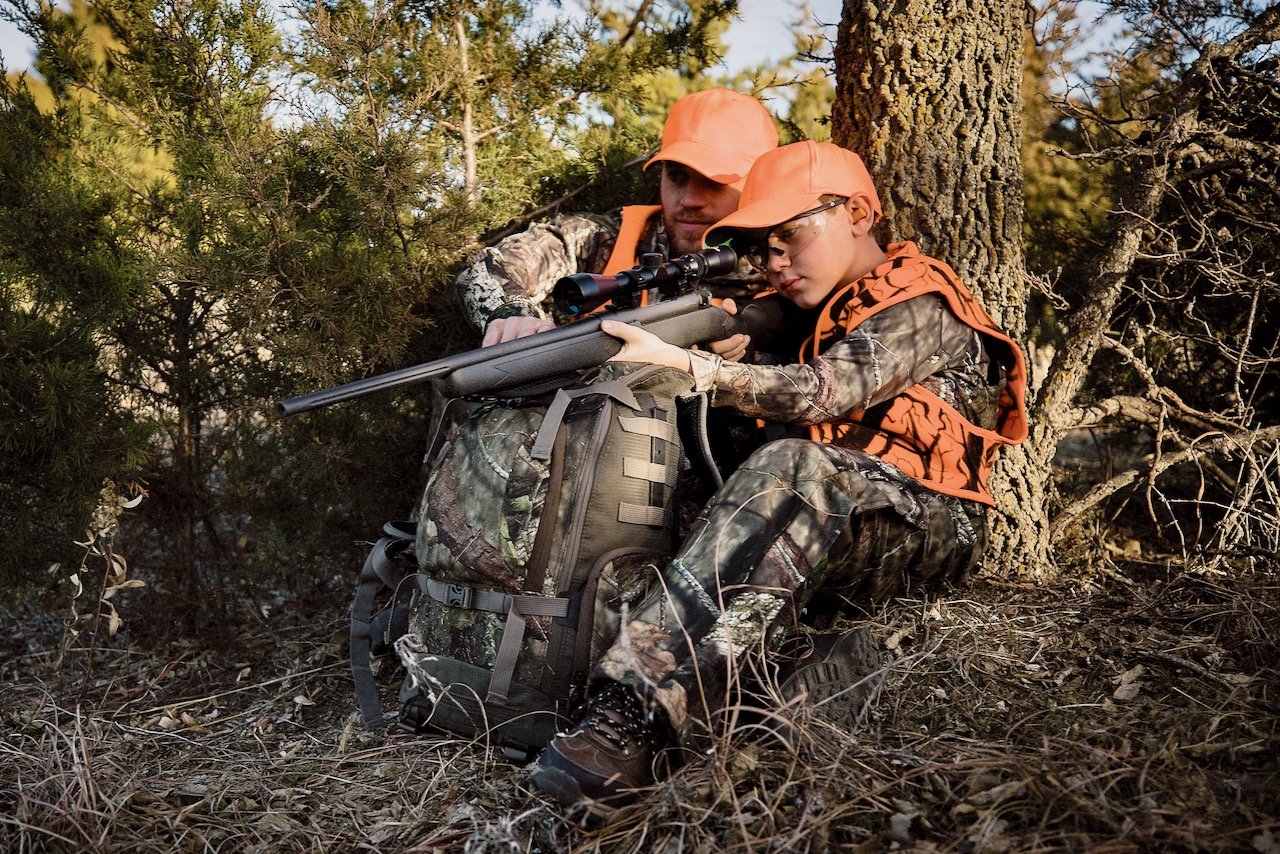 A youngster’s first rifle should have low recoil and a proper fit (photo: Mossberg)
THE RIFLE
From the heart-pounding adrenalin rush of your first buck to the fine table fare, hunting big game will captivate and challenge you for a lifetime. And Canada is blessed with a rich array of game offering unparalleled opportunities, making it the envy of the hunting world. But what rifle should you choose to get in on the action? The right answer all depends on the following wide range of factors you need to consider.
ACTION: There are six action options to choose from, including semi-automatic, pump, lever, straight-pull bolt, bolt action and break action. While actions such as the semi-automatic, lever, pump and even straight-pull offer quicker follow up shots, I would highly recommend a bolt action rifle. They are simple to use, safe and reliable, and they typically shoot better than the other action options. Depending on the chambering, most bolt actions come in two lengths, short and long, and in various throws. The short version in calibres such as 6.5 Creedmoor weighs less and offers a slightly faster cycle—a plus, especially when combined with a short bolt throw, or lift, of 60 degrees. It can be cycled as quickly as any new hunter would require.
Advertisement
 Bolt-action rifles are simple, safe and reliable
STOCK: The wood stocks of my youth are systematically being replaced by synthetic versions. While I love the shape, precision checkering and general overall aesthetic appeal of a high-end wood stock, quality synthetic models are the way to go. Most are tough as nails and impervious to the weather, and some offer a semi-custom fit with their adjustability for length of pull and comb height. There are also some great camo patterns out there to choose from.
BARREL: There are several factors to consider regarding barrels. First up is the construction material. There are essentially three options: steel (chromoly), stainless steel and carbon fibre wrapped barrels with, preferably ,a stainless-steel liner. Stainless steel provides weather protection and enhanced durability over chromoly steel, but it generally makes for a more expensive rifle. Chromoly steel barrels with coatings such as Cerakote also now provide weather and corrosion protection. Meanwhile, a carbon fibre wrapped steel barrel offers improved heat dissipation, rigidity and the potential accuracy of a bull or heavy steel barrel, but with significantly less weight. They are considerably more expensive, however.
There are some advantages to fluted steel barrels, which have an aesthetic appeal. They disperse heat more quickly, and they’re lighter without sacrificing rigidity. Many firearms manufacturers now include a muzzle brake on their barrels, or thread the barrels to accept one. As for barrel length, 22 to 24 inches is about ideal for most situations, offering reasonable manoeuvrability while retaining much of the cartridge’s advertised velocity.
Advertisement
CHAMBERING: Selecting a particular chambering can be daunting, as there are so many variables to take into account. Most importantly, you need to consider the game you are seeking, the availability of ammunition, and the recoil. So, let’s break this down into three classes of game.
For deer-sized game, a calibre such as .243 Winchester is fine in the right hands, but I would recommend one of the 6.5 calibres at a minimum. I have grown to love their performance for this class of game, although for many years I used an expansive array of chamberings, from .243 Win. to .300 Win. Mag. For your first rifle, stick to calibres such as a 6.5 Creedmoor, .30-06 Springfield or .308 Winchester for two primary reasons: the availability of ammo and their performance based on the wide variety of bullet and brand choices.
As for larger elk- and moose-sized game, you need to up the ante. While I shot my largest moose—a behemoth 68-inch Yukon bull—with a .280 Remington, it would not be my choice again for a moose or bull elk hunt. This is where the .30 calibres shine, particularly the .300 Win. Mag., which outdoes its competitors thanks to its performance and expansive variety of bullet choices.
Finally, for bison and large bears, a 30-calibre magnum with the right ammo and shot placement can do the job, but I would suggest a larger calibre such as .375 H&H. Remember, a bull bison can push the scales to more than a tonne. I have also used a .416 Rem. Mag. with great success.
TRIGGER: While often overlooked when selecting a rifle, a heavy trigger pull weight or inconsistent pull can greatly affect your ability to accurately shoot the rifle. Look for a trigger that is constant, with a pull weight of about three pounds. Many manufacturers now include an adjustable trigger. That’s a definite plus, as it can be adjusted as you gain more experience. To get started, though, have a gunsmith set the pull at three pounds.
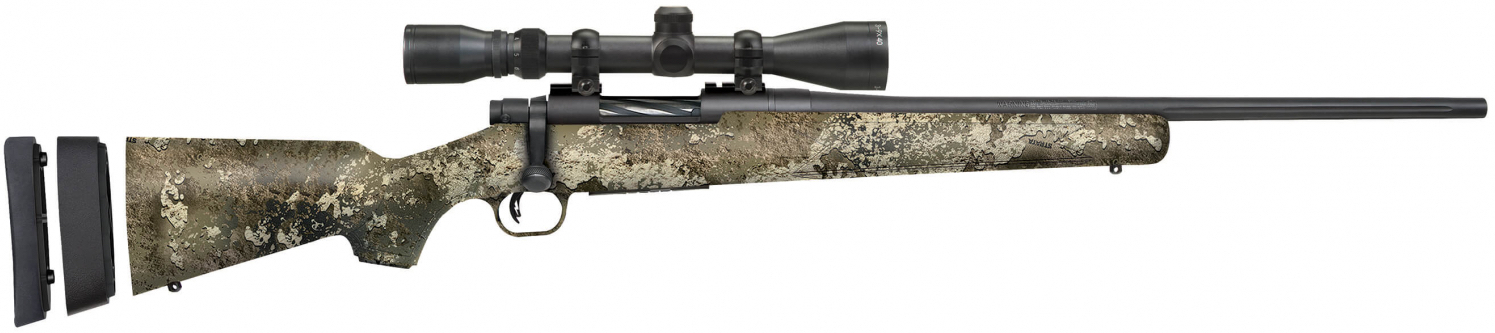 An adjustable stock helps ensure a proper fit
FIT, BALANCE & WEIGHT: These important factors can be influenced by your specific stature, as well as your hunting requirements. The rifle should shoulder comfortably and provide a quick line of sight; it should also balance well and become an extension of your arms. Adjustable stocks are ideal for ensuring proper fit. As for weight, a six- or seven-pound rifle is about right for most hunts. If a rifle is too light, it becomes increasing difficult to shoot accurately, with recoil increasing in step. If it’s too heavy, on the other hand, it can be cumbersome to lug around.
RECOIL: It’s imperative to select a rifle you can shoot accurately and comfortably. Large magnums can generate mind-numbing recoil, which can lead to bad habits such as flinching when taking a shot. That no-no is frequently exacerbated when shooting lightweight, big-bore magnum rifles. I always like to remind myself that shot placement from a rifle you can shoot accurately will always trumps magnum velocities.
If choosing a magnum is a must, you may want to consider a heavier rifle with a muzzle brake to reduce the felt recoil (some are said to reduce felt recoil by as much as 76 per cent). If you’re looking to outfit a youth or small person with a big-game rifle, I highly recommend a light recoil cartridge. Even better, combine it with reduced recoil ammo from manufacturers such as Hornady.
SAFETY: I prefer a three-position safety that allows you to remove a live round from the chamber when the safety is still on. Alternatively, I recommend a bolt unlock button that, when engaged, also permits the removal of a live round from the chamber with the safety still on.
MAGAZINE: While many bolt-action rifles still use a top feed floor plate design, I much prefer a flush-mounted detachable magazine, which is simple to load, install and later remove.
ACCURACY: Because of the complexity and variables that determine accuracy, I will keep this simple: A rifle that will deliver M.O.A. accuracy is considered a winner. The rest is up to you and your ammo, as that will provide accurate shots out to ranges that push the skill level of most hunters.