



WATER THERAPY
Having an off-day of fishing? Here’s how to put your mind at ease
Advertisement
Psychologists have long touted the mental-health benefits of fly fishing. Some see the repetitive back-and-forth motion of casting as a way to induce a transcendent, near-meditative state. Others say our intense focus on presenting and fishing the fly reduces stress by breaking the train of our everyday thoughts and worries. If you’ve spent any time fly fishing, you know all of this is very true—except when it’s not.
Fly fishing has a higher level of difficulty than other angling styles, and when everything is clicking, the highs are pretty high. The flipside is that when you’re fishing poorly, the lows are painfully low. And they come for all of us. We’ve all had those miserable days when we’re blowing casts and spooking fish, and everything we do seems to create an ever-worsening muddle.
Advertisement
When you get the fly-fishing yips, instead of despairing—or, heaven forbid, taking up golf—remember the eternal sporting wisdom of Yogi Berra. As with baseball, fly fishing is 90 per cent mental; the other half is physical. When you’re having a rough day, here are a few tips to get your mental game back on track…
For more on fly fishing and mental health, visit www.outdoorcanada.ca/flytherapy.
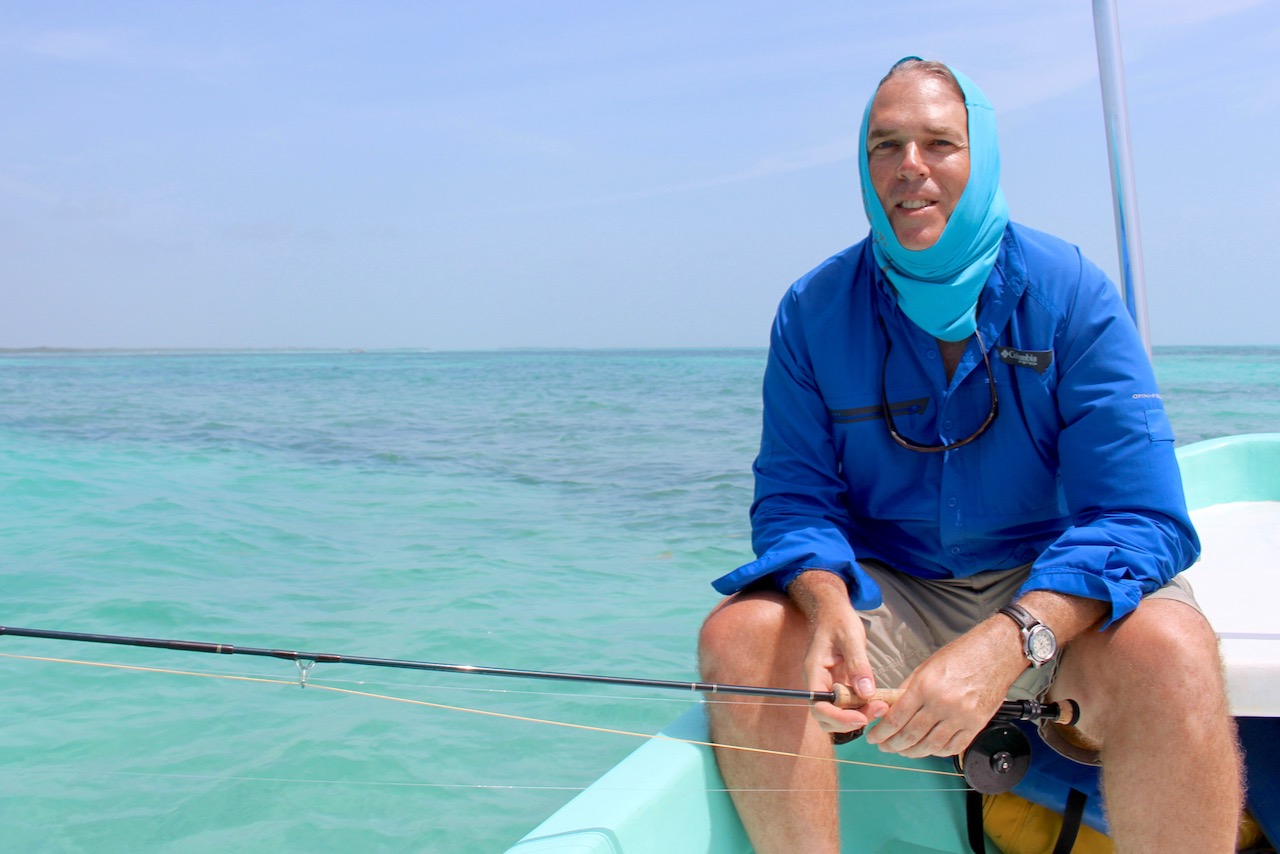
#1 TAKE A BREAK
I’ve found myself unable to execute basic fly-fishing skills—ones I knew I possessed—on rivers, lakes and ocean flats all over North and Central America. It’s sort of impressive, in an embarrassing way. In the past, I responded with a ride-or-die mentality, pushing myself to fish even harder. It never worked. Now when I feel things going sideways, I reel up my line and simply sit down on the bank or in the boat. A 10-, 20- or even 30-minute break is good for your shoulder, but even better for your mind.
Advertisement
With fly casts, keep in mind that quality is usually better than quantity. So, rest up, then make better ones. While you’re at it, have a snack and a drink. My better half is a mental-health professional, and one of her mantras for clients is, “Food controls mood.” Denying your physical needs doesn’t just make you tired and shaky, it can also make you cranky and depressed.
#2 CHANGE YOUR TACTICS
Sometimes when you’re fly fishing, only one specific technique will catch fish, but those times are very rare. If you’re trying—and failing—to do something complicated such as dead-drift nymphing or casting into a stiff wind, just stop. While you’re taking a break, rethink the situation and find a different, preferably easier approach. Maybe forget about matching the hatch, and just tie on one of your confidence flies. Or bust out a tried-and-true Fly Fishing 101 technique. Mine is the wet fly swing, a simple tactic that’s been catching fish all over the world for 200 years. It’s not glamourous, but it works, and it’s hard to screw up.
Advertisement