

THE TRIPLE CROWN OF THE FAR NORTH
To catch trophy lake trout, northern pike and Arctic grayling in just one trip, head for the N.W.T.’s remote and wild Kasba Lake
Advertisement
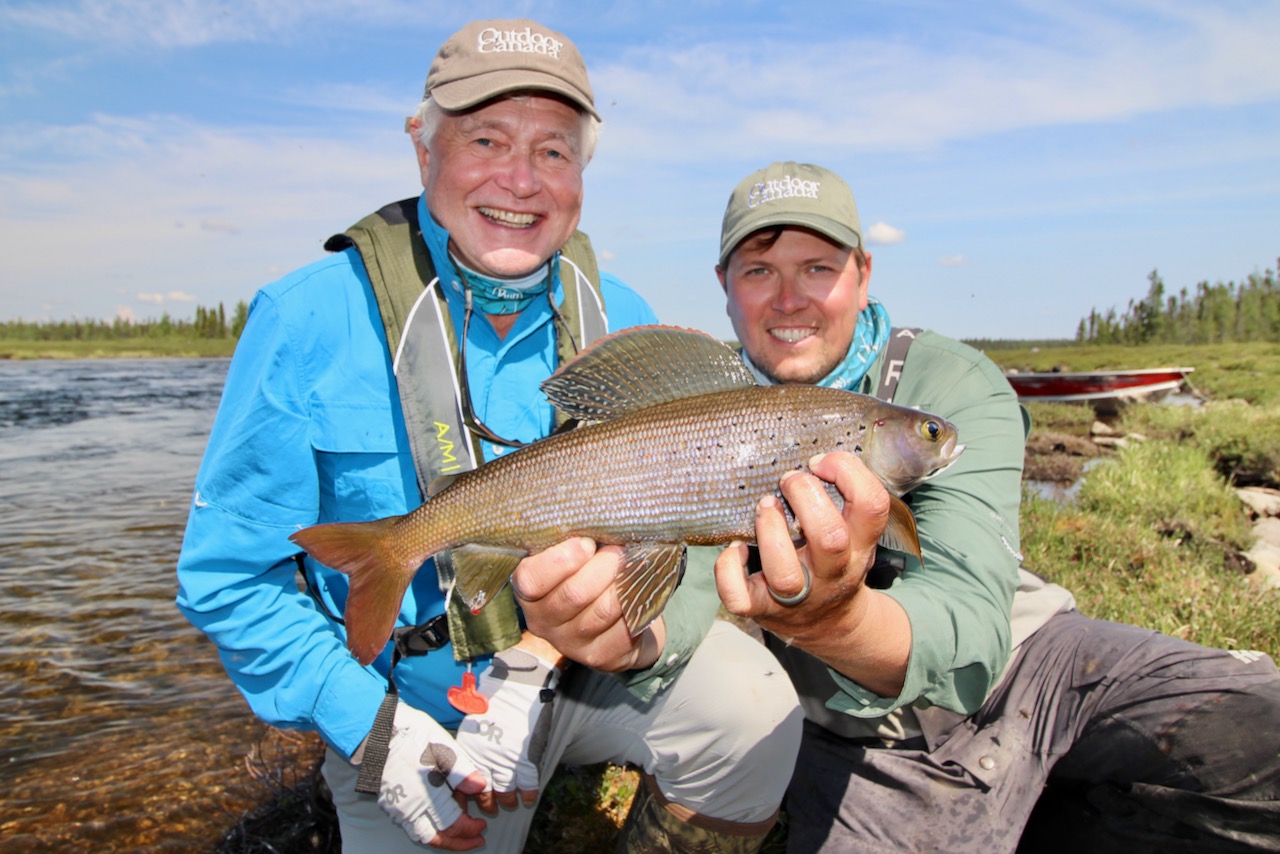 Henning and Jones with a hefty Kazan River grayling
THE KAZAN RIVER
Flowing out of Kasba’s north end, and over a daunting set of rapids, the Kazan River is a short flight from the lodge, and Kasba’s most popular fly-out destination. In 1990, the Kazan was designated a Canadian Heritage River in recognition of its unique natural, cultural and recreational values, including the sportfishing. It’s home to large pike and trout, but the abundant, football-sized Arctic grayling are the real draw.
Cigar-shaped with a sail-like dorsal fin, grayling range in colour from a shimmering silver to iridescent pink or mauve. And they’re not just pretty. To avoid predators, grayling spend most of their lives in the current, making them very strong for their size. On some days, they gorge indiscriminately, but other times, catching them on a rushing, boulder-strewn river requires some finesse.
Advertisement
That’s how our second day began, as we anchored below the rapids known as the First Set. With light spin tackle, Lynn tapped tiny panfish jigs along the bottom of the plunge pool, while I fruitlessly tried to tempt the fish with dry flies before switching to a subsurface pattern. The action was sporadic, but within an hour, we’d both landed a few fish well over two pounds, giving us the second point of our triple crowns.
We were also fascinated by the huge lake trout that would ghost up in twos and threes from deeper in the pool, ominously following our hooked grayling. They were clearly attracted to the distressed fish, and the chance of an easy, two-pound meal.
As the day progressed, we continued landing hefty grayling here and there along the river, on both jigs and flies. That included a magnificent specimen Lynn caught from shore, weighing in at 3½ pounds. Then in the early afternoon, we returned to the First Set. Now showing a real touch with the tiny jigs, Lynn cheerfully picked off even more grayling.
Advertisement
Meanwhile, I swung a large, heavily weighted fly through the deep water below the rapids, hoping for one of the trout we’d spotted earlier. Kazan River trout rarely bite artificials, presumably since their bellies are so full of actual grayling, but amazingly, I got one on. Deeply flexing the same 9-weight rod I use for tarpon, I slowly cranked it into view. In the waist-deep water behind the boat, we saw it was easily three feet long, with my bright white fly clearly visible in its mouth.
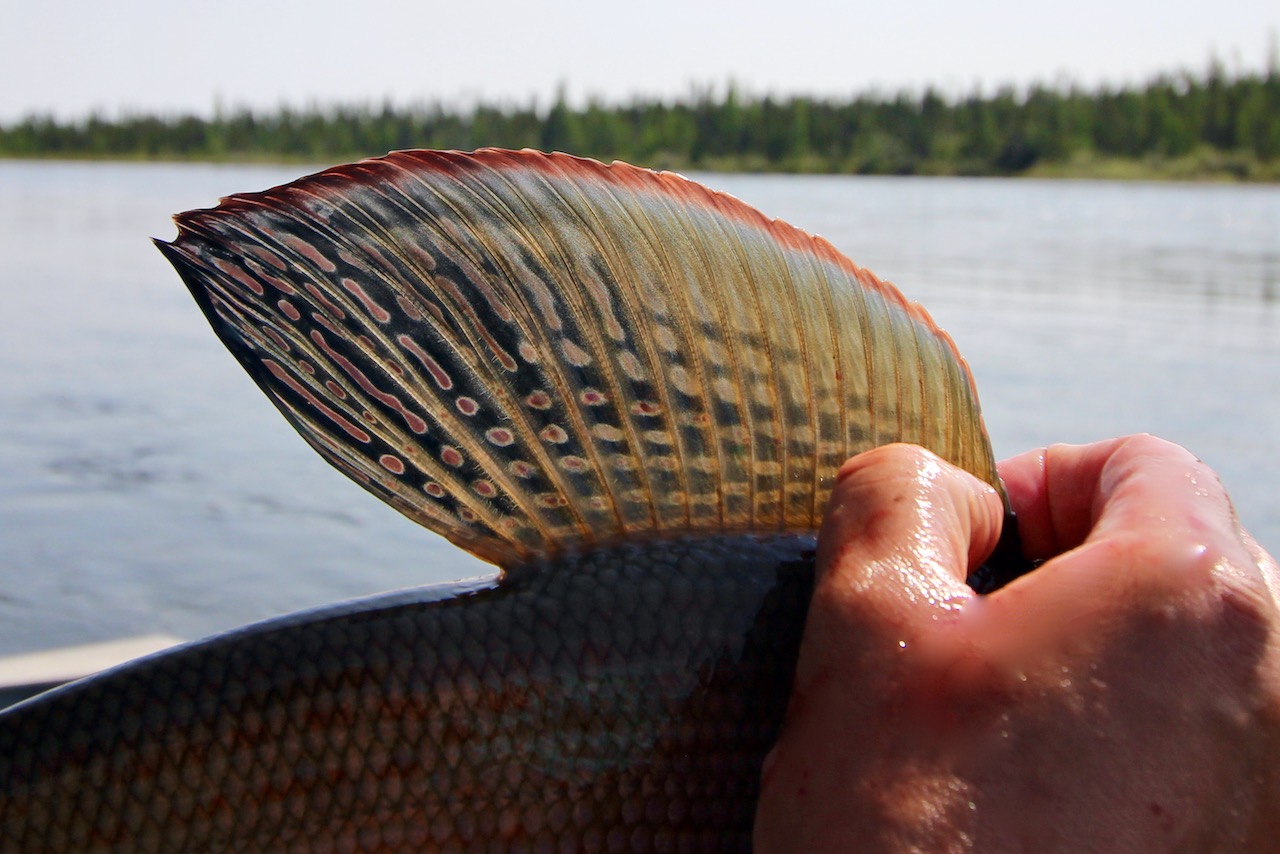 Arctic grayling have a sail-like dorsal fin and vivid colouring
Then another trout emerged, half again as big as my hooked one and following it almost nose to tail. Tyler and I gawked as seven feet of lake trout sliced back and forth across the current. Moments later, the bigger trout shot forward and rammed my fish in the jaw, dislodging the fly. Stunned, I stood there with a slack fly line, and an even slacker jaw. I should have been disappointed, but I just marvelled at the display of aggressive and competitive behaviour.
Advertisement
We finished the day downstream at the Fourth Set of rapids, where we lucked into one of those times when grayling feed heavily. With his spin tackle, Lynn had been catching twice as many as me all day, but these fish were near the surface, devouring bugs. It was perfect for my 6-weight fly outfit, and they greedily pounced on both wet and dry flies. By day’s end, we’d caught and released 60 fish. A two-pound Arctic grayling is considered a trophy, yet on this remarkable water, we only landed a handful of fish under two pounds.
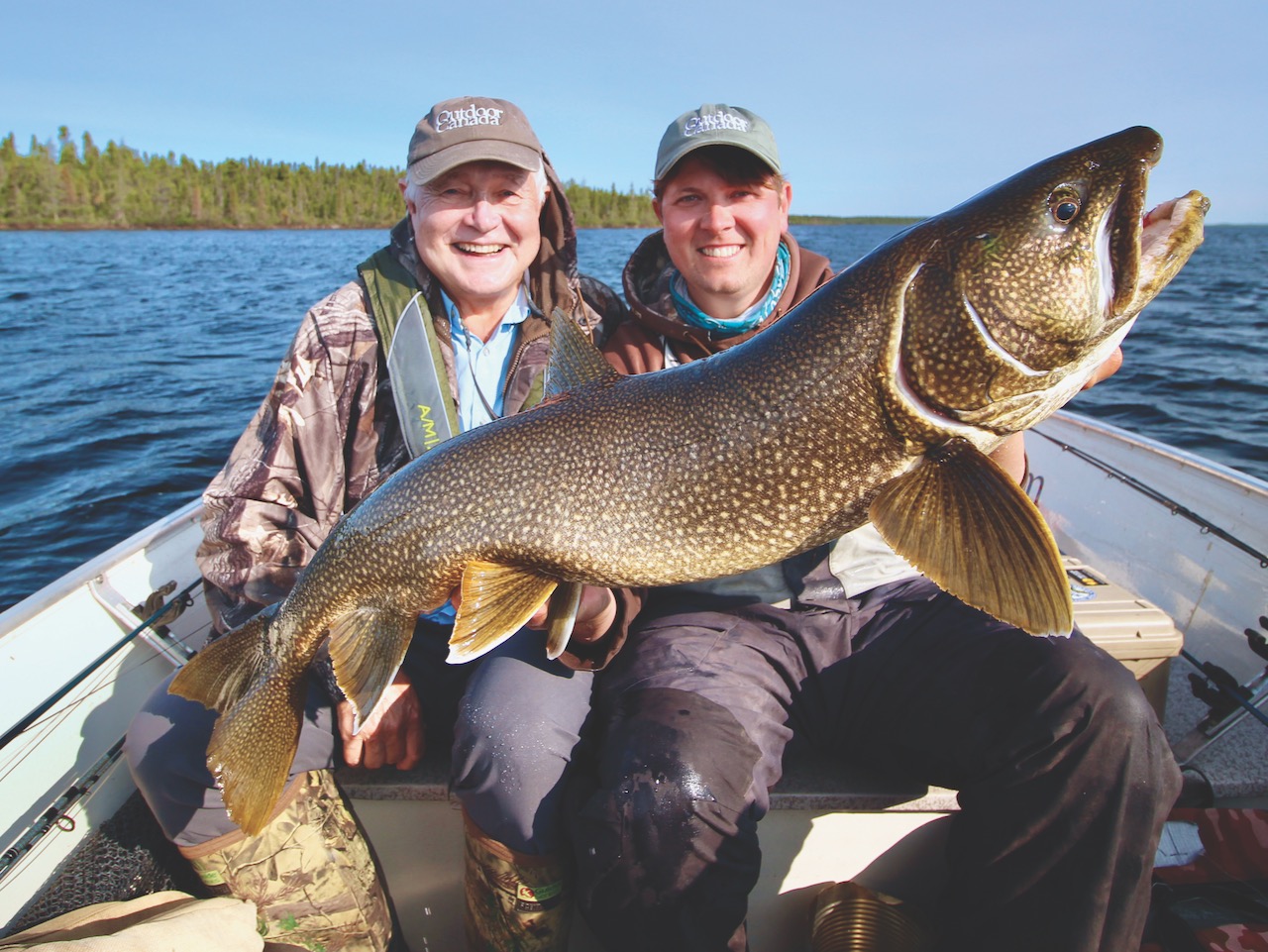
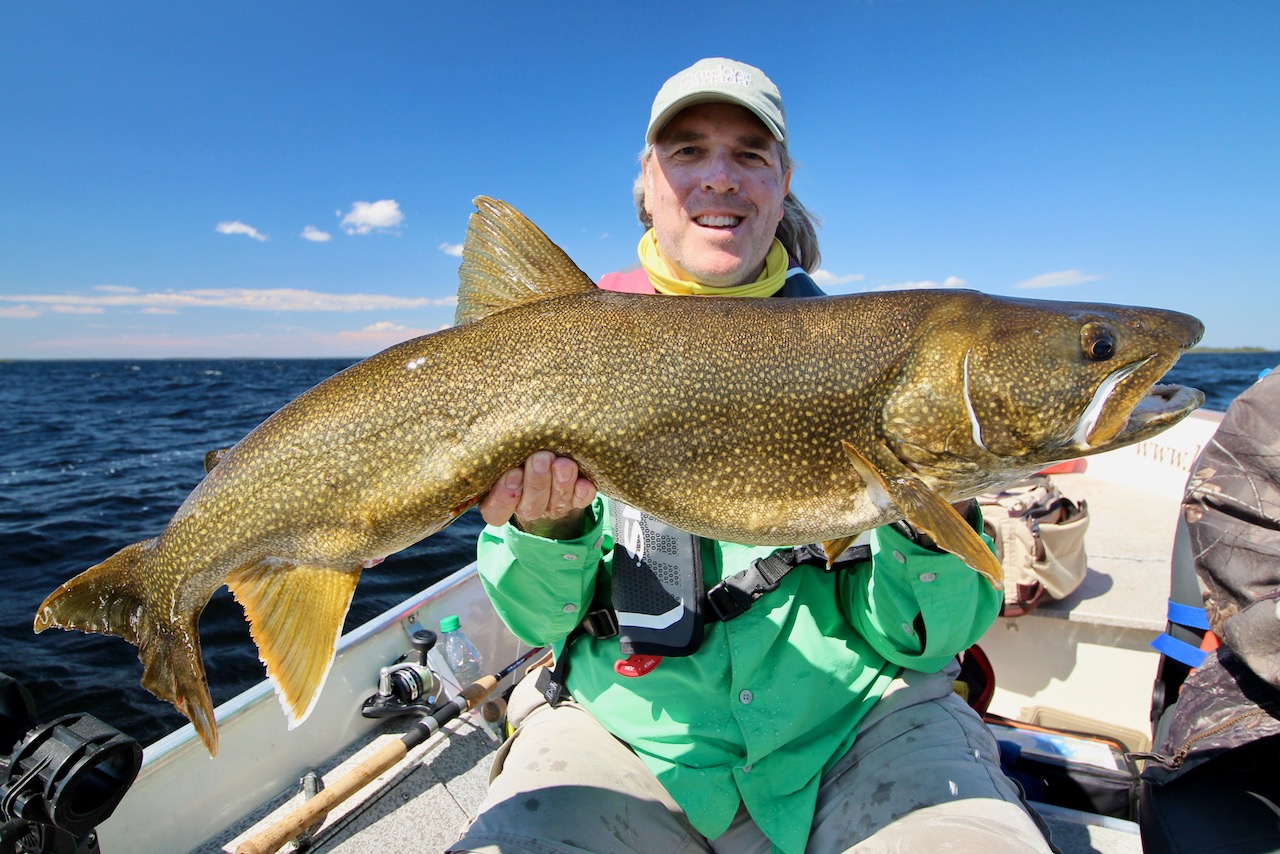 The author’s “donkey” lake trout
THE DONKEY
After such sterling pike and grayling fishing, we focussed on the final point of our triple crowns. Lakers weighing more than 20 pounds come out of Kasba almost every day of the season, but the lake is not known for colossal fish, such as those caught on Great Bear, for example. It does, however, boast a dizzying abundance of trout in the five- to 10-pound class. The 358 days of the year I’m not in the Territories, I’ll do a happy dance over catching a five-pound trout. But Lynn and I were after bruisers, so we trolled heavy spoons the size of a man’s hand. Doing this you will still catch some smaller fish, but big lakers enjoy a big meal, so it ups your odds.
Just after lunchtime on our third day, I got a wrenching hit on my orange-and-copper Huskie Devle. My heavy spinning rod nearly doubled over as the fish headed deep and began peeling line off my saltwater-class reel. We knew right away it was big. For 10 minutes I could not move that fish. By the 15-minute mark, though, it finally started coming in, and Tyler—who’s guided anglers to hundreds of trophy-class trout—cautiously speculated about the size of such a brawler. Could it be 30, even 40 pounds? With immense relief, I led the fish (above) into the net.
At 40 inches in length, and weighing 22 pounds, it was certainly a trophy lake trout, but not record-book big. It was just a donkey of a fish, one of those specimens you encounter from time to time, possessed of way more power or fighting spirit than others in its class. As with the Kazan trout I lost the day before, I just felt lucky for the experience.
It was almost exactly 24 hours later when Lynn landed his big trout of the trip, and I boated another 20-pounder (of normal strength, this time). Throw in a shorelunch of grilled laker tacos, and we’d more than completed our Kasba goals. With one day left, we decided to roll the dice on a unique final adventure.