

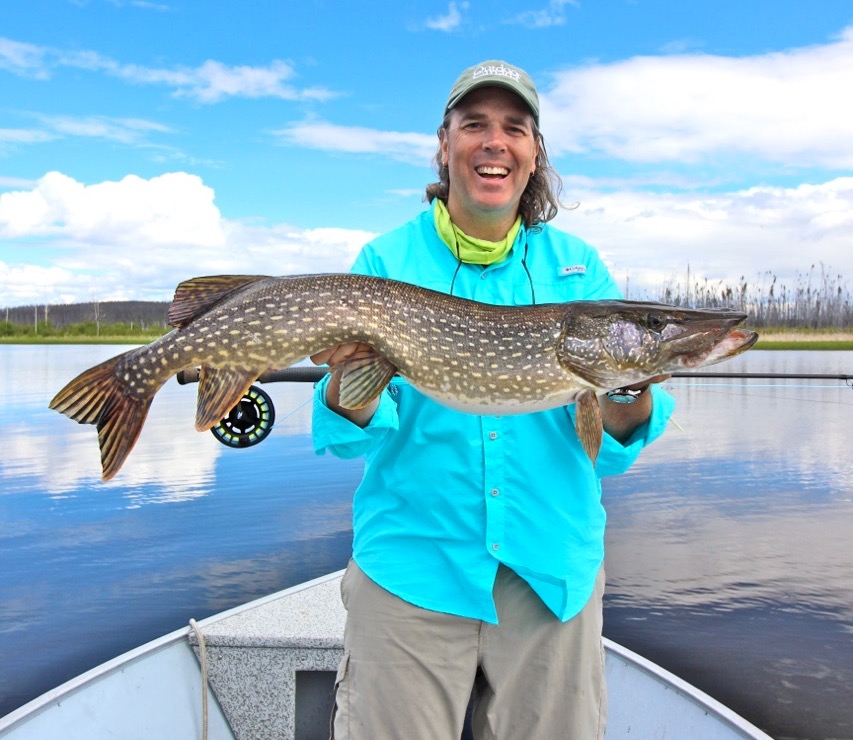
PIKE PERFECTION
For tackling giant spring northerns, nothing beats fly fishing
Advertisement
#2 THE PRESENTATION
Honestly, fly casting will never be more efficient at covering water than spinning or baitcasting. But it’s certainly just as efficient, provided you fish smart and you’re moderately skilled. If you can throw a fly 30 to 40 feet with a single false cast, you’re ready to rumble.
Spin anglers have to retrieve a lure all the way back before they can cast it again. But once a fly is out of the strike zone, you can lift it up and recast into the next spot, even if most of your line is still on the water. Floating lines are the default choice, but I always carry some sinking leaders or a spare outfit with an intermediate-sinking line. Either option lets you precisely suspend a fly two to four feet deep—an incredibly effective tactic a bit later in the season when the fish are just outside the shallows.
Advertisement
Once you cast into the sweet spot, the fly advantage continues. Since flies are retrieved by hand, the angler has tremendous control over the action. You can try a variety of fast, slow or darting retrieves, all with the same fly. And once the fish hits, you’ve got the line right there in your hand, so you can pull back hard to strip-set the hook.
#3 THE FIGHT
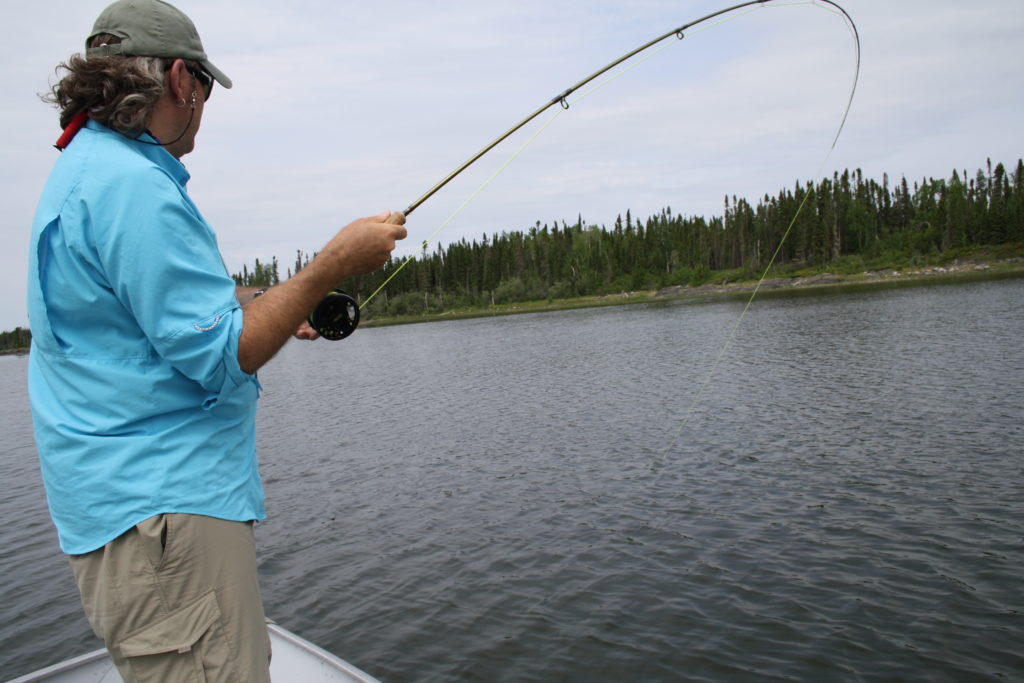
Once that big pike is hooked, you’re in for a thrilling, if ultimately one-sided fight. I’m no Lefty Kreh, but I’ve landed every single 30-inch-plus pike I’ve ever hooked on the fly. I’ve never had a fly thrown, or a reel jam or one of my homemade wire leaders break—not even when I was a total tenderfoot. That’s because fly gear is simple and reliable, with the perfect characteristics to break the spirit of even the most pugnacious northern.
After the strike, with the line in your hand and directly connected to the fish, you can judge the amount of pressure to apply, and whether to pull in line or let the fish run. Once the fish runs enough to take up the slack (as the big ones usually do), you can crank it in on the single-action reel, which has virtually no chance of mechanical failure. If your drag is too weak when the fish runs, you can simply apply extra pressure to the spool with your hand.
Advertisement
Used skilfully, an 8- or 9-weight fly outfit is a formidable pike-fighting instrument. It’s also surprisingly forgiving of operator error or rookie mistakes. If you fumble with the line and reel, for example, there’s never any slack in the line. That’s because the soft tip of the nine-foot rod maintains at least some tension to keep the sharp hook stuck tight in the pike’s mouth.
When it’s time to bear down, holding the rod low and to the side engages the powerful butt section. That applies tremendous pressure, while the soft tip continues to cushion those infamous last-minute pike antics as you direct the bruiser’s head right into the net.
Advertisement
For more tips on fly fishing for northerns, including leaders, knots and casting big flies, click www.outdoorcanada.ca/pikeonthefly.