

GO DEEP
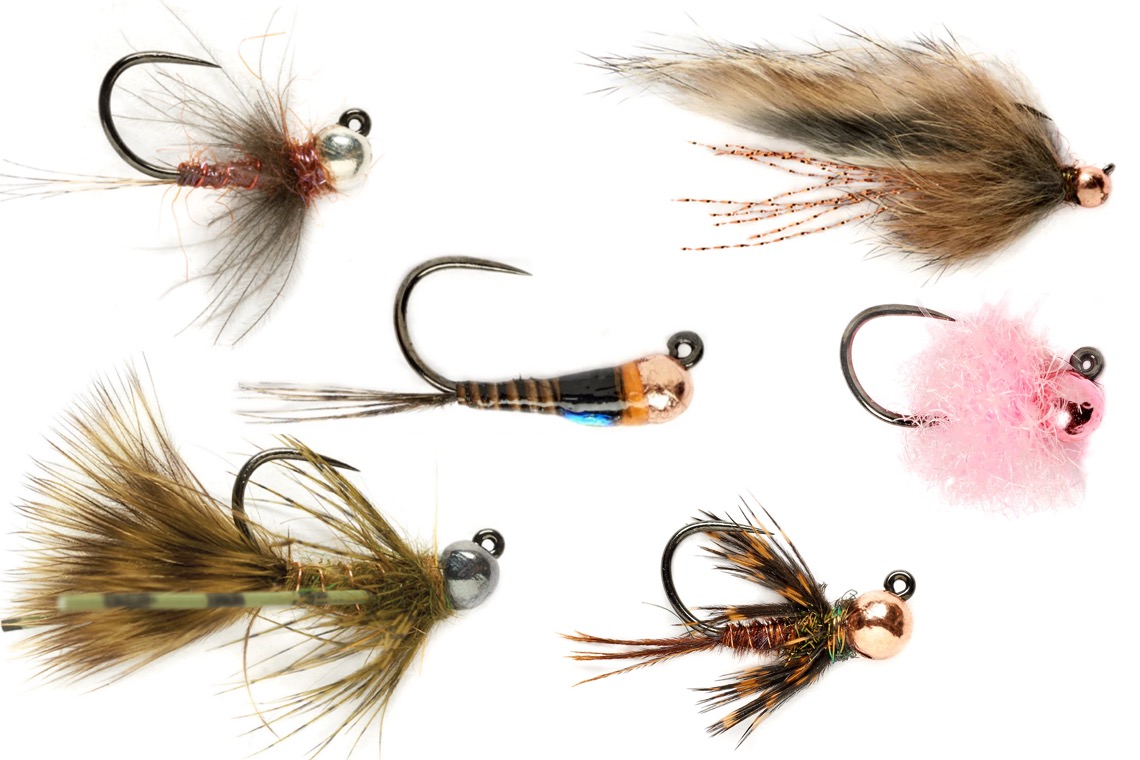
To catch bottom-dwelling fish, tie on a jig-like tactical fly
Advertisement
 Bottom hugging fish will eat tactical flies when little else will tempt them
STILLWATER SOLUTIONS
A key lesson we can learn from spin anglers is that bottom-contact finesse presentations—such as drop-shotting and tube jigs—often catch fish when nothing else will, especially on pressured water. However, lakes and ponds present a vertical problem that traditional nymphs and streamers struggle to solve. Sure, sinking lines can get traditional flies deeper, but unless you’re meticulous about counting down, depth control is guesswork. Then some 30 years ago, the Clouser Deep Minnow pioneered the jig-fly concept of getting down deep, while excelling at aggressive, darting retrieves. Tactical flies have built on that foundation, but add “slow” and “subtle” to the tool box.
Tactical patterns with soft feathers or fur strips create a fluid, breathing, undulating movement that appears alive, even with minimal manipulation. Add rubbery legs or tinsel, and you’re approaching—and maybe even exceeding—what’s possible with the best hand-poured soft-plastic baits. And the predictable sink rate of tactical flies means you can count them down precisely to any depth, and not worry too much about snags.
Advertisement
As in rivers, the jigging action can be lethal. So can suspend-and-strip retrieves that mimic subtle prey movement. Purists may want to avert their eyes, but my favourite trick is to simply drag a seductive tactical fly along the bottom, adding the occasional hop. I’ve even had fish slurp stationary flies off bottom. Of course, the flies weren’t completely still, since fur, feathers and Flashabou keep moving even when the fly stops.
Overall, traditional flies are still the right tool for most classic fly-fishing situations. But when fish are holding deep or hugging structure, tactical patterns offer options we simply didn’t have before. By rethinking how a fly’s weight and hook interact, they’ve expanded what’s possible with a fly rod. If that makes tactical flies feel uncomfortably close to jigs, so be it. Sometimes, fly fishing advances not by inventing something new, but by borrowing an idea that already works, and adapting it.