


CARVING A NICHE
Who are the big names in waterfowl decoys, and what makes their blocks so valuable? An insider’s guide for collectors and the curious alike
Advertisement
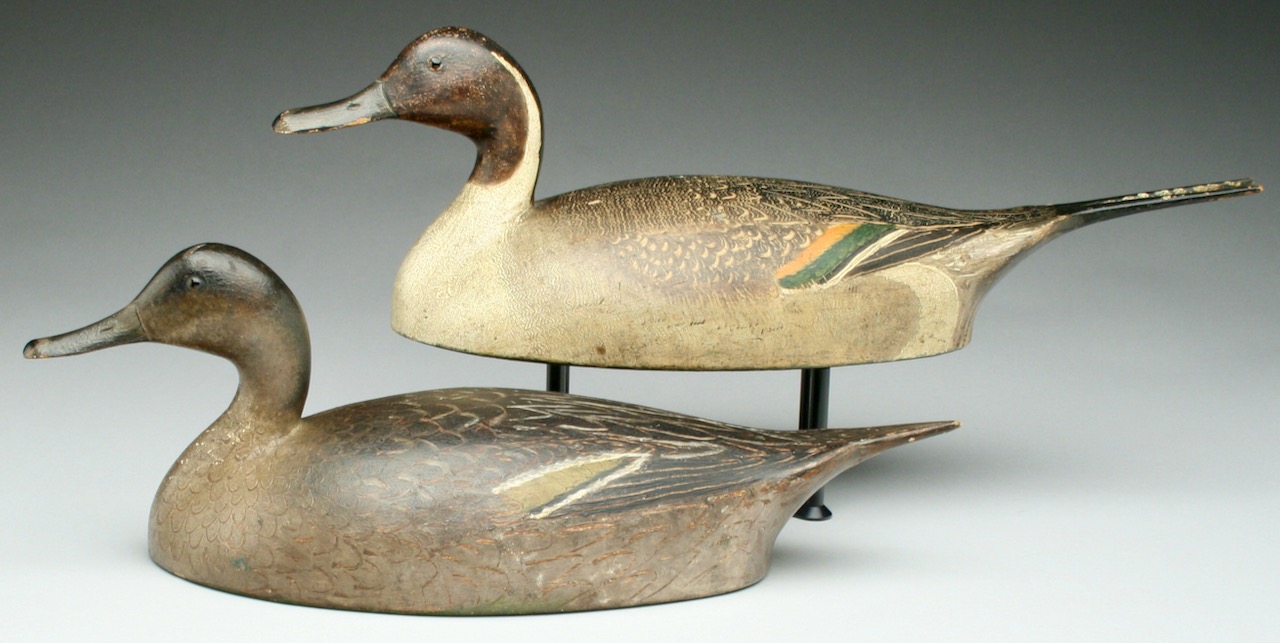 These pintails sold for US$210,250 at auction
Centuries before Europeans arrived in what is now Canada, indigenous hunters were using decoys made of mud and feathers, woven roots and rushes, or stuffed hides to lure waterfowl to within range. Those same decoying tactics were then adopted by colonists as they settled across Canada. Later, with the growth of market hunting in the 1800s and early 1900s, hunters wanting more durable options began carving decoys from wood, or turned to local artisans to do it for them. As demand grew, the commercial production of waterfowl decoys became a flourishing industry.
When the international Migratory Bird Treaty Act brought an end to market hunting in 1918, however, it served as the death knell for many decoy manufacturers. By the mid-1930s, virtually every company had closed its doors. With the commercial hunt now banned, recreational hunting began to blossom instead, eventually leading to the return of decoy carving as both a hobby and a cottage industry. Inevitably, as new materials and manufacturing processes emerged, decoys carved from wood became less popular, relegated to a handful of diehard carvers and clients who appreciated both the functionality and artistic appeal of carved blocks.
Advertisement
Then a funny thing happened. With the arrival of baby boomers and the thriving post-war economy, collecting became increasingly popular, whether it was for coins, stamps or any number of other nostalgia-inducing items. Among those collectibles were waterfowl decoys, attracting a growing legion of fans who saw a certain beauty in them.
For several decades, most of the decoy collectors were hunters, but as demand grew and the supply declined, prices surged, catching the interest of the broader public. Today, a decoy collector is just as likely to be a non-hunter as a hunter. Whatever the case, they all recognize and appreciate the beauty and craftsmanship of this traditional folk art—and its value as an investment.