


CARVING A NICHE
Who are the big names in waterfowl decoys, and what makes their blocks so valuable? An insider’s guide for collectors and the curious alike
Advertisement
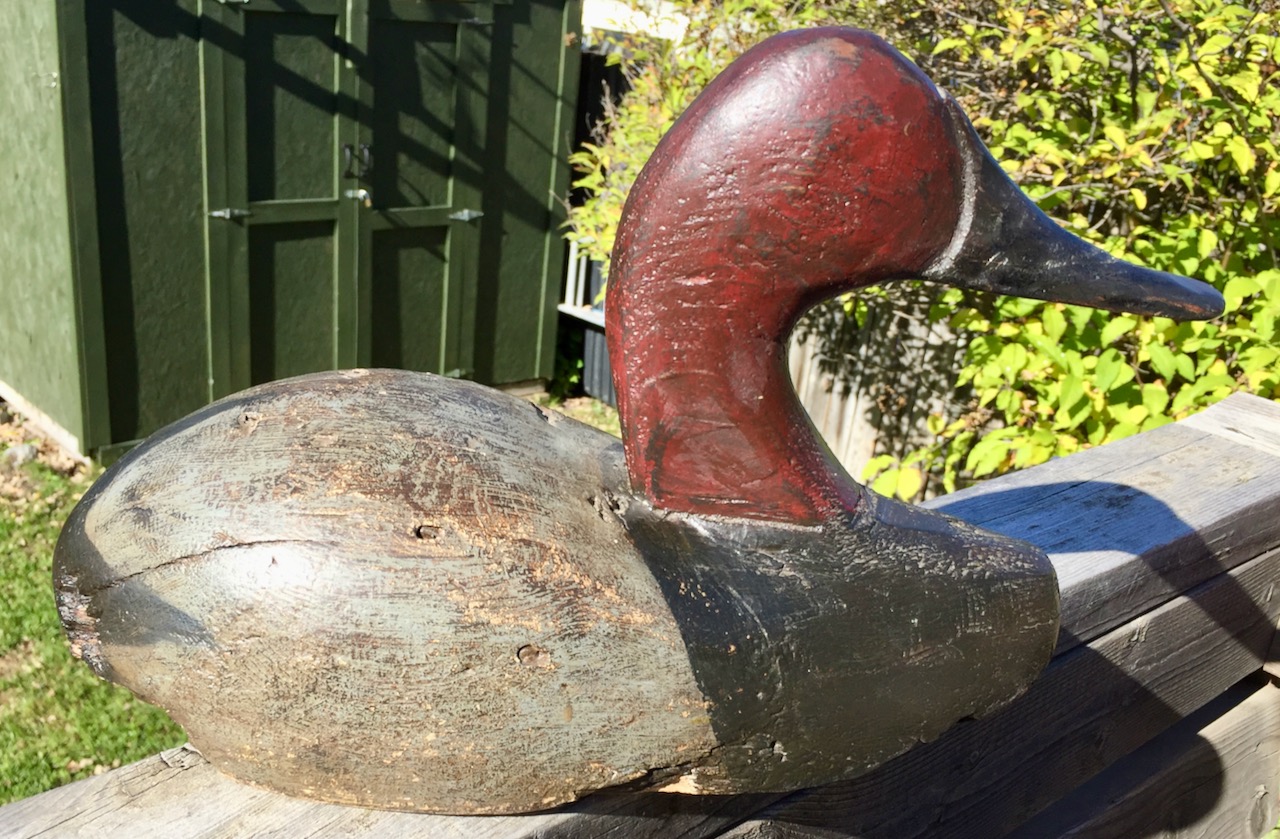 Photo: Brian Short
THE DELTA DECOYS
Any discussion of Delta Marsh’s legacy of waterfowl decoys needs to start with General Mills founder James Ford Bell, who also established the renowned Delta Waterfowl Research Station. An avid waterfowler, Bell was lured to Delta Marsh on the south end of Lake Manitoba in the early 1920s by the promise of canvasbacks. That was after the canvasback population on his home water, Heron Lake in southwestern Minnesota, declined due to overhunting and habitat change.
Bell enjoyed the gunning at Delta so much he bought land there and built a hunting lodge. Over time, the decoy rig he’d brought from Heron Lake began to show its age and needed replacements, so he turned to his lodge manager, Ed Ward, for help. For that, Ward commissioned two locals, “Little Joe” Ducharme and his brother, Dan. Little Joe made several modifications to improve on the horsehead style of the Heron Lake decoys, adding the rounded cheeky head, long thin bill and sharply sloped neckline—changes that define what’s known today as the “Delta style” of decoys.
Advertisement
Over time, the Ducharme brothers proved too slow for Bell’s liking, however, so he began building the body blanks at his mill in Minneapolis. He’d then send those to Ward, who in turn commissioned Little Joe, Dan and Little Joe’s son, Duncan, to carve the heads and do the painting. Duncan was a gifted craftsman in his own right, and at some point in the 1930s, Ward had him take over from his father to make most of the replacement decoys.
With solid bodies carved from white cedar and heads from white pine, Duncan’s sturdy decoys were able to withstand the rigours of regular hunting use; they featured the steeply angled, pointed breasts and large keels that now help define a Ducharme decoy. Interestingly, many of Duncan’s decoys were actually painted by Peter Ward, Ed’s son, over the years. Peter was a noted waterfowl artist in his own right, and served at one time as a director of the Delta Waterfowl and Wetland Research Station.
Today, Duncan Ducharme is recognized as the most prolific of the Delta Marsh decoy carvers. He made thousands up into the 1960s, with his customers extending beyond Bell. In the 1950s, for example, he carved a rig of redheads for Robert Gaylord, an American industrialist and lodge owner on Manitoba’s Lake Winnipegosis. Today, the classic lines of Ducharme’s Delta Marsh decoys are a favourite among modern collectors. Many are identifiable by the stamp on the bottom, reading “Duncan Ducharme, Decoy Maker, St. Ambroise, Manitoba.”
Advertisement
Dan Ducharme, meanwhile, made comparatively few decoys, but developed his own style, featuring a deeper body than those of his Delta Marsh counterparts, complete with bob-tails and large heads. Many informed collectors consider his decoys to be the finest of the Ducharme blocks.