


CARVING A NICHE
Who are the big names in waterfowl decoys, and what makes their blocks so valuable? An insider’s guide for collectors and the curious alike
Advertisement
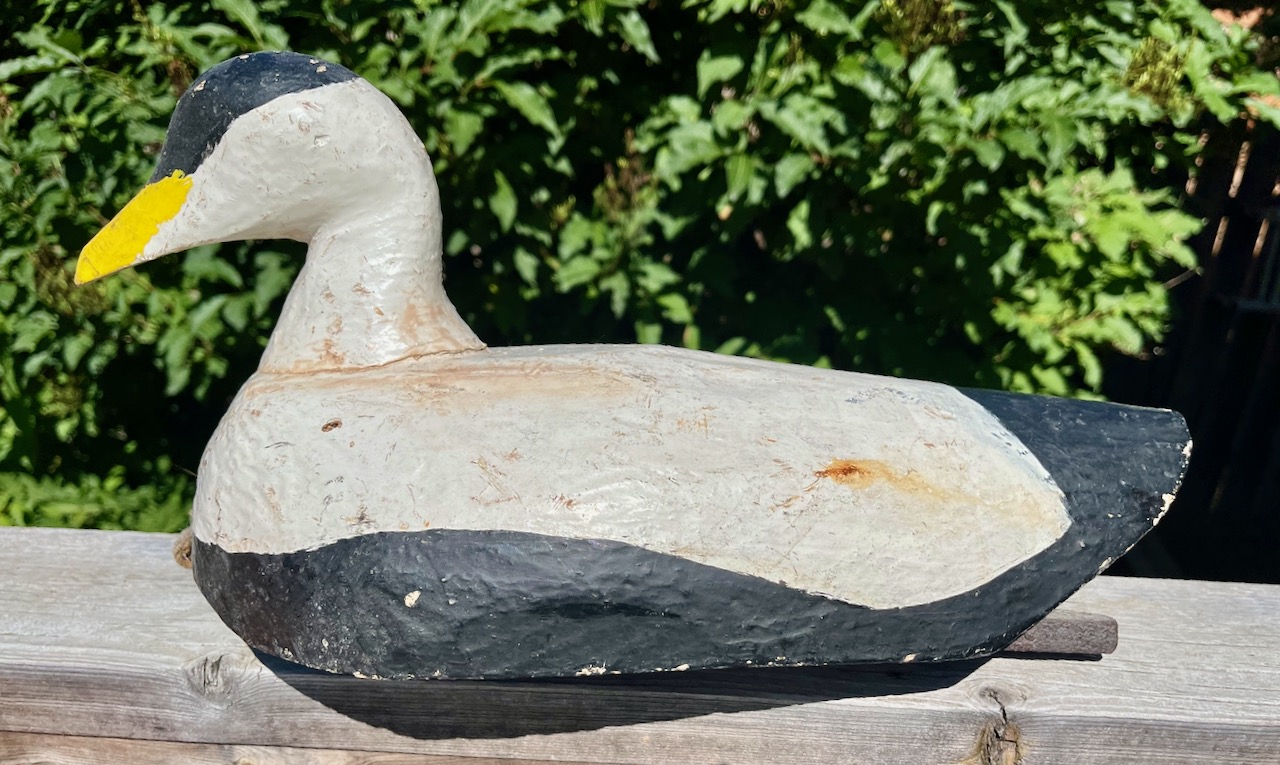 An eider drake decoy from Newfoundland (photo: Brian Short)
REGIONAL STYLES
If you come across a decoy at your local antique dealer or a garage sale, it’s natural to want to know where it came from and, even more importantly, who might have carved it. However, identifying the place of origin or the individual carver of any particular decoy can pose challenges for the uninitiated.
The fact is, carving styles are highly varied, influenced by several factors: the type of hunting the decoy was designed for (field or water set-ups); the type of water being hunted (open lakes, rivers, marshes or salt water); the species being hunted; the traditional decoy style of the region it came from; and the preferred style of the carver.
Advertisement
Considering those influences, knowledgeable collectors can usually identify a decoy’s region of origin, Short says. Here are the various styles he’s identified from different regions of Canada.
THE MARITIMES
Carvers here mostly created decoys for their own use, rather than for sale. Typically, the blocks are oversized and somewhat crude, with few details. And in order to stand up to the constant exposure to harsh salt water, the use of house paint is the norm. Commonly carved species include mergansers, loons, goldeneyes, eiders, scoters, long-tailed ducks and both Canada and Brant geese.
Advertisement
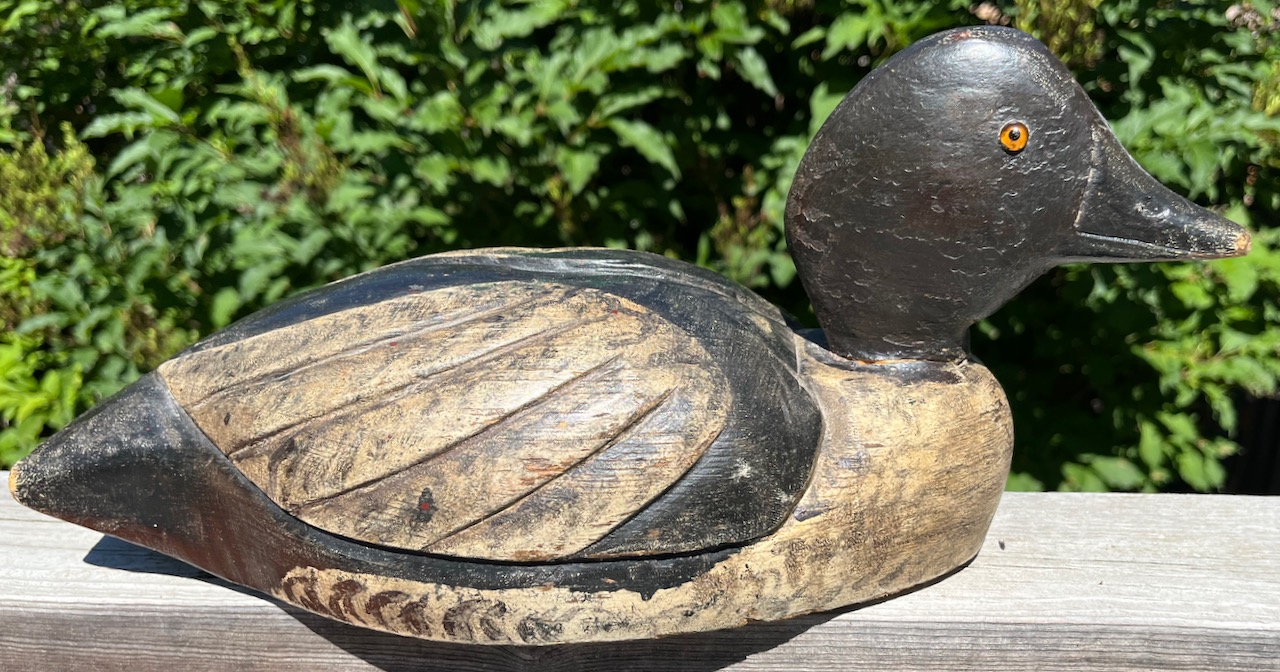 Detailed carving typifies decoys from Quebec (photo: Brian Short)
QUEBEC
There are several radically different carving styles in Quebec, particularly along the length of the St. Lawrence River. A frequently common trait of decoys from here, however, is the rather intricate and detailed carving on the wings and back. Among the most commonly carved species are goldeneye, bluebills, canvasbacks and black ducks.
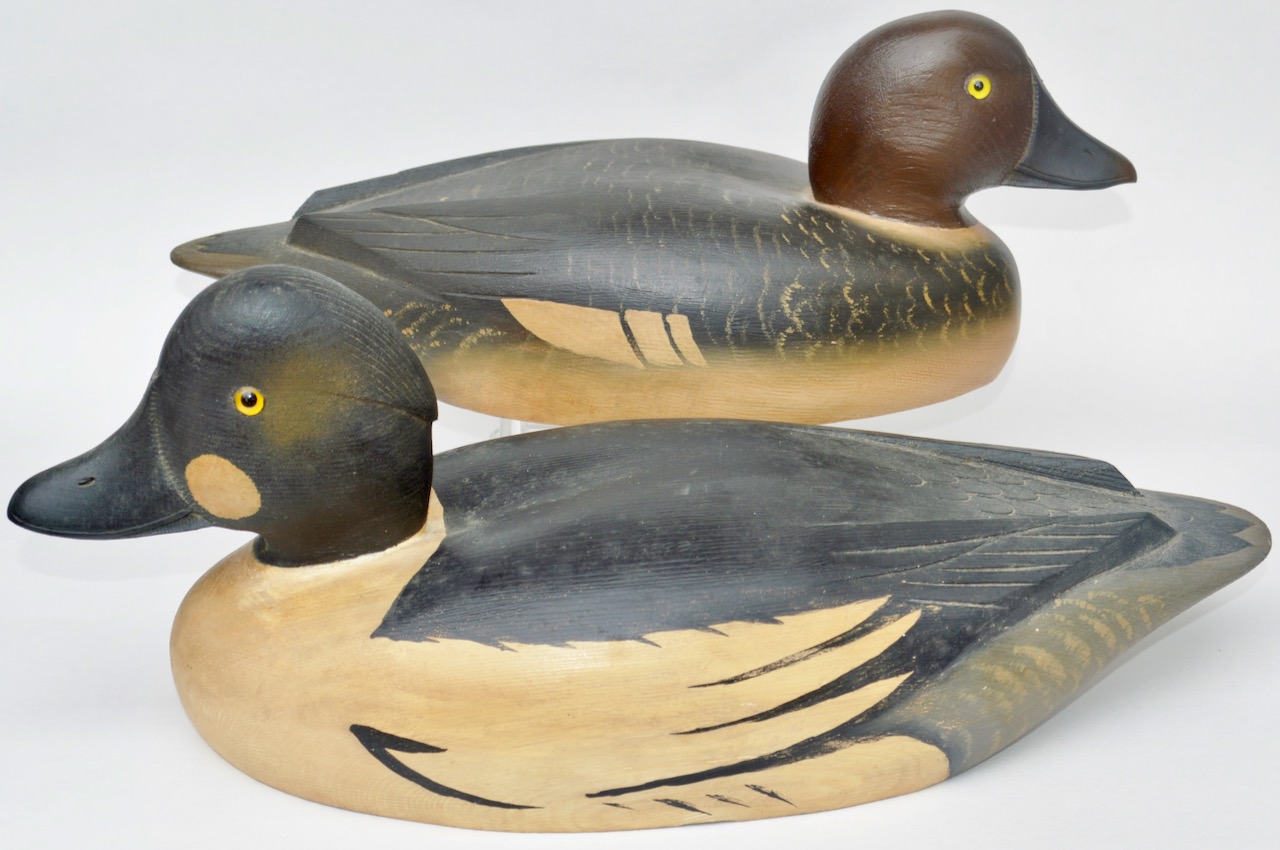 Sleek goldeneye decoys from Eastern Ontario (photo: Copley Fine Art Auctions)
ONTARIO
Ontario is undoubtedly home to the most carvers and decoys, with many collectors breaking the province into three distinct regions: Kingston and east; the Greater Toronto Area; and southwestern Ontario. While there are subtle variations in each region’s decoys, Short says, they aren’t completely different. Commonly carved waterfowl include mallards, black ducks, goldeneye, canvasbacks and bluebills, although decoys of virtually every huntable species can be found.
When compared with their counterparts down East, Short says, decoys from Ontario tend to have sleeker, smoother, more gentle profiles, with few back or wing details. That’s because Ontario’s typically sheltered hunting waters didn’t demand the same chunky decoys needed for the rough waters of the Maritimes or along the St. Lawrence. The exception, perhaps, are Lake St. Clair region decoys, which are usually more substantial for better visibility at a distance.
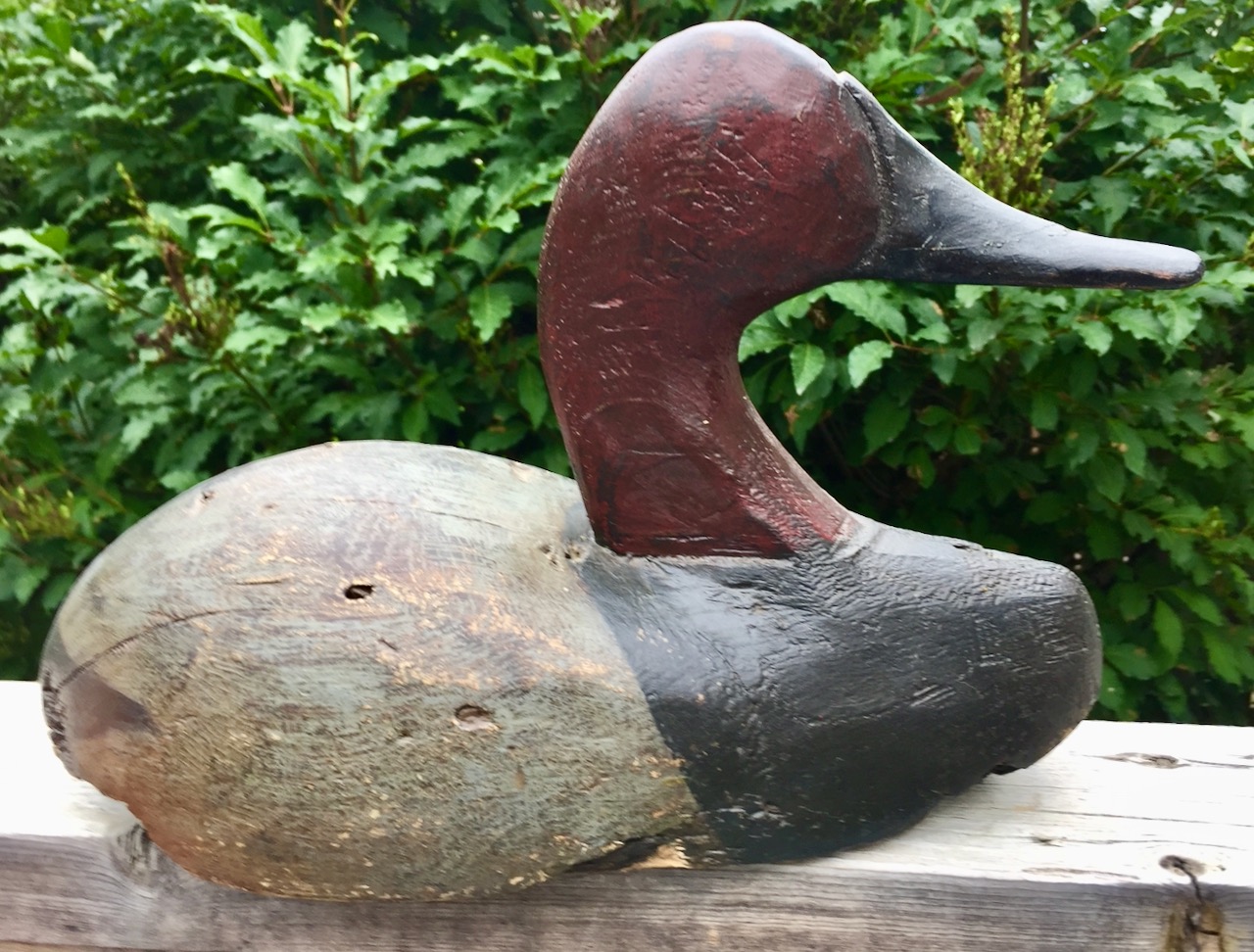 A Ducharme decoy from Manitoba (photo: Brian Short)
THE PRAIRIES
Not many decoys have originated from Saskatchewan or Alberta, despite the region being the breadbasket of North American waterfowl production. That’s because waterfowl hunting wasn’t particularly popular among the few people who lived in the region back in the day. Instead, much of the duck hunting was practised by visiting hunters, most of whom brought their own blocks. Even as duck and goose hunting grew in popularity among local residents, it generally took place on small potholes or in fields, neither of which required large numbers of decoys. As one noted collector observes, “The better the hunting, the worse the decoys.”
Manitoba, on the other hand, spawned several carvers of note, thanks in large measure to the waterfowl-rich marshes associated with Lakes Winnipeg, Manitoba and Winnipegosis. Of particular renown are the decoys from Lake Winnipeg’s Delta Marsh (see “The Delta decoys”).
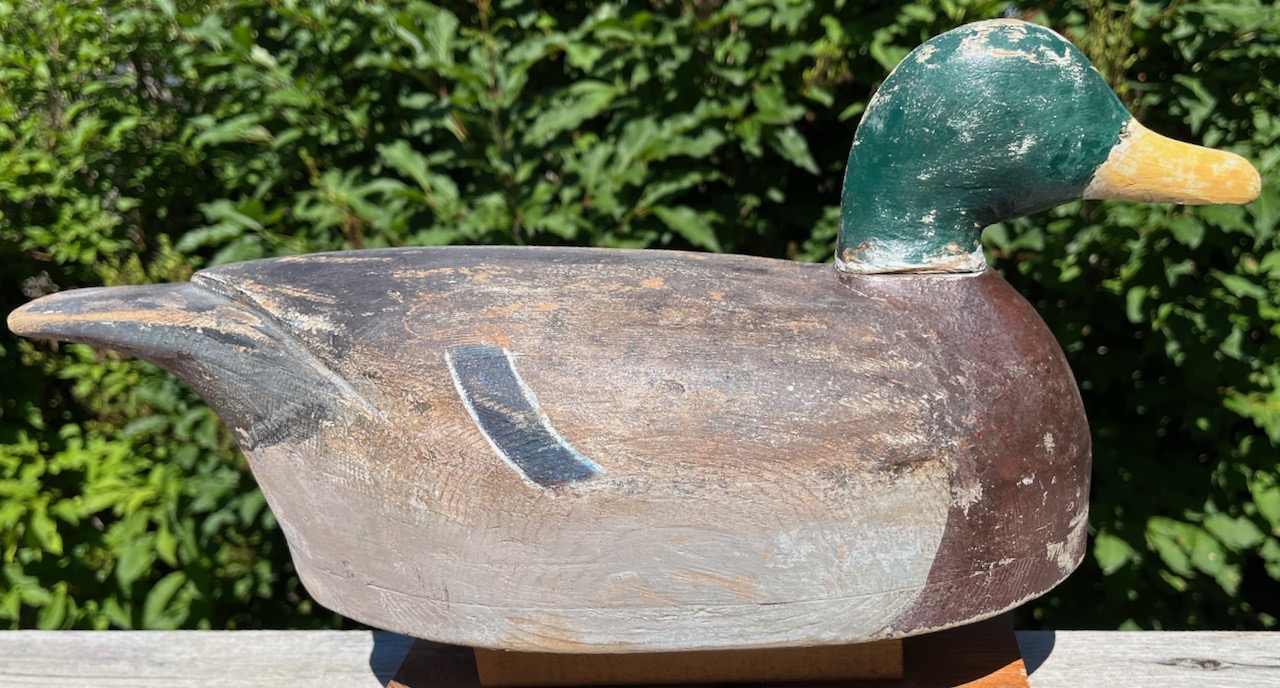 BC’s decoys were made to ride high on the water (photo: Brian Short)
B.C.
Relatively isolated from the influence of eastern Canadian carvers, B.C.’s decoy carvers developed a style to meet their own unique needs. Most waterfowling there took place on big water, either on or adjacent to the ocean, so the decoys were designed to ride high on the water, remaining visible as they rose and fell with the swells. The conditions also required the decoys to be rigged with substantial anchors, as well as heavy ballast weights so they’d self-right if tipped over. To help offset their large size, the decoys were also commonly hollow-bodied.
Despite the plethora of waterfowl species found along the West Coast, many were considered undesirable by hunters. As a result, most of the province’s decoys were made to replicate snow geese, brant, mallards, pintails and wigeon.