

DO-IT-ALL DRIES
Three fly patterns that promise results from coast to coast to coast
Advertisement
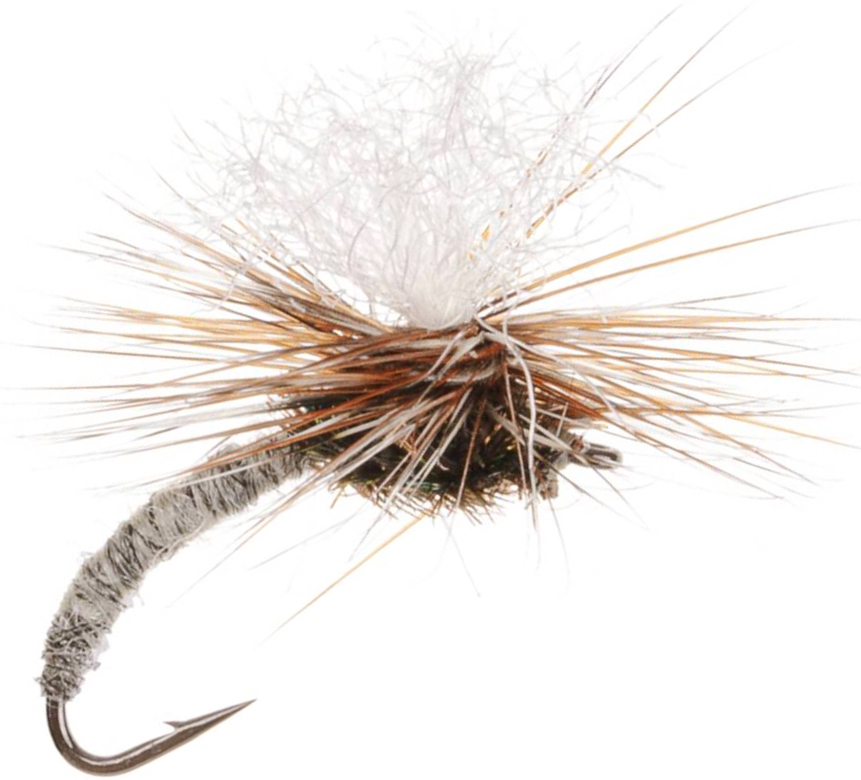 Image: Troutcatchers
KLINKHÅMER SPECIAL
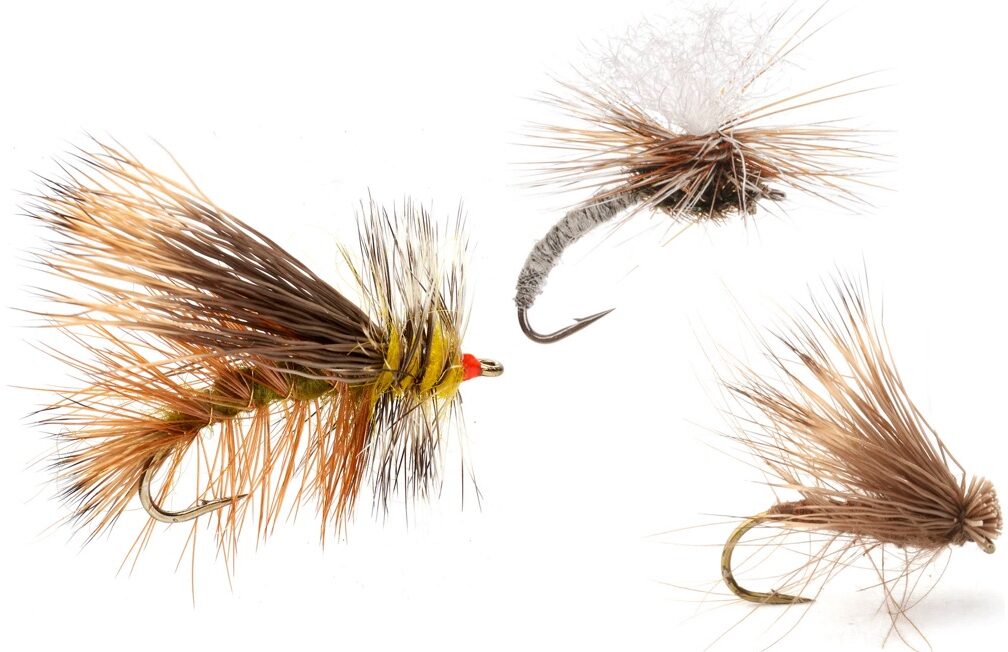
The Klinkhåmer is another emerger-dry hybrid originating in Europe. Dutch angler Hans van Klinken devised it in the 1980s to ride the surface film of strong, fast rivers that overwhelm more delicate patterns. The design is intricate, odd and brilliant. It’s a parachute fly, but tied on a curved or bent hook. This hangs the tapered body below the surface, seemingly trapped in the film like an insect that can’t quite take wing. This posture looks lifelike and typically yields better hook-ups than traditional high-floating dries. A final lovely, organic touch is the buggy, iridescent thorax of peacock herl.
When tying the Special, the geometry is crucial, which is perhaps not surprising given van Klinken’s 35-year career as a Dutch artillery officer. Expect some misfires as you’re learning, but it’ll be worth it. Incredibly, the result is a fly that catches river fish almost anywhere they feed on or near the surface. It’s an excellent choice during hatches when you’re not sure what’s on the menu, or as a reliable searching fly. Its name, by the way, is pronounced “KLINK-hah-mer.” In North America, it’s often spelled as “Klinkhammer,” which feels more natural to English speakers. That version also has a certain logic, since fish really do hammer it.
Advertisement
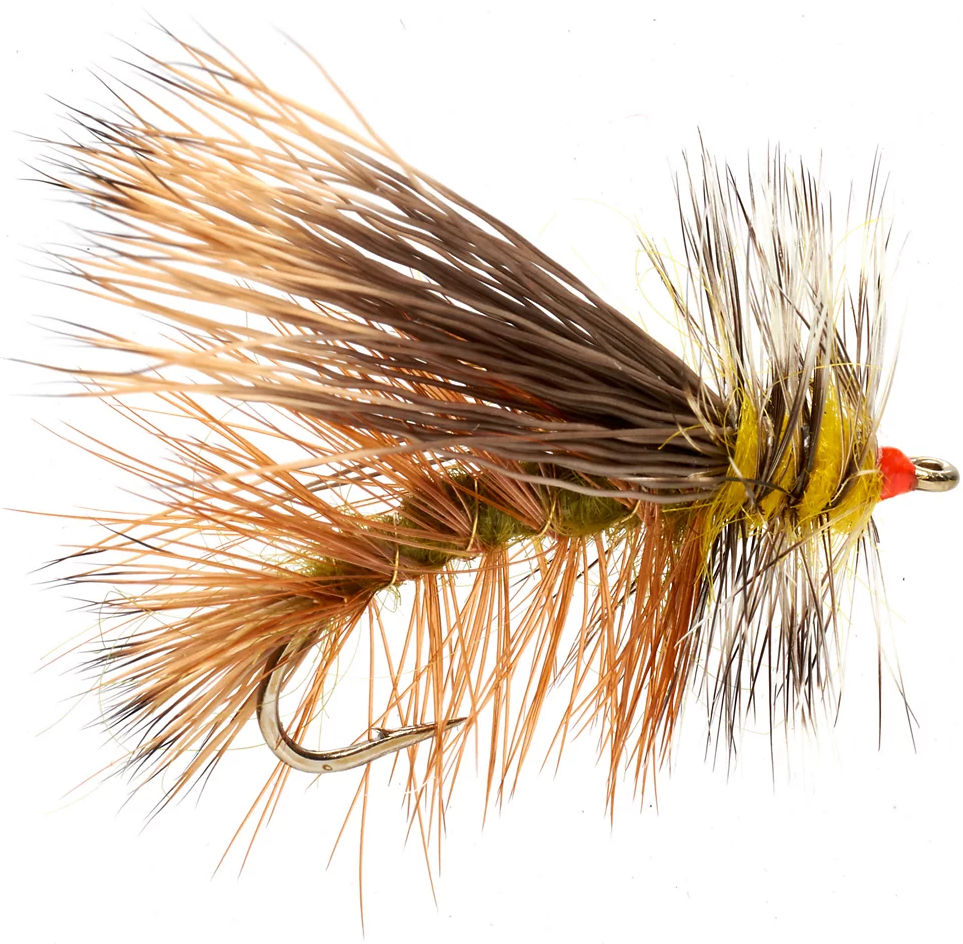 Image: Orvis
STIMULATOR
Unlike the naturalism or engineering of both the Klinkhåmer and CDC & Ek, the Stimulator is all about “more is more”—it’s unapologetically big, unruly and visible. With a bushy deer-hair wing and long, heavily hackled body, it’s built to ride high in rough water. For more than 30 years, it’s been a must-have for Western hatches of large stoneflies.
While you rarely see anglers fishing Stimulators east of Alberta, it excels anywhere with swift currents or pocket water. It can pass for a stonefly, caddis or grasshopper, and its beachball buoyancy makes it a great indicator fly on a dry-dropper rig. With six materials, the Stimulator isn’t a quick tie, but it’s also durable, so your time is well spent.
Anglers who will happily fish generic subsurface flies often stress about matching the hatch with dries, but these patterns let you fish instead of fret. The Stimulator, like the CDC & Elk and Klinkhåmer, just plain looks buggy. Tie a few this winter, and you’ll have a core of dry flies that travels well, and fishes confidently wherever the coming season takes you.
Advertisement