

KAYAK FISHING IN PANAMA
Experience is the best teacher, but these tips will get you up to speed
Advertisement
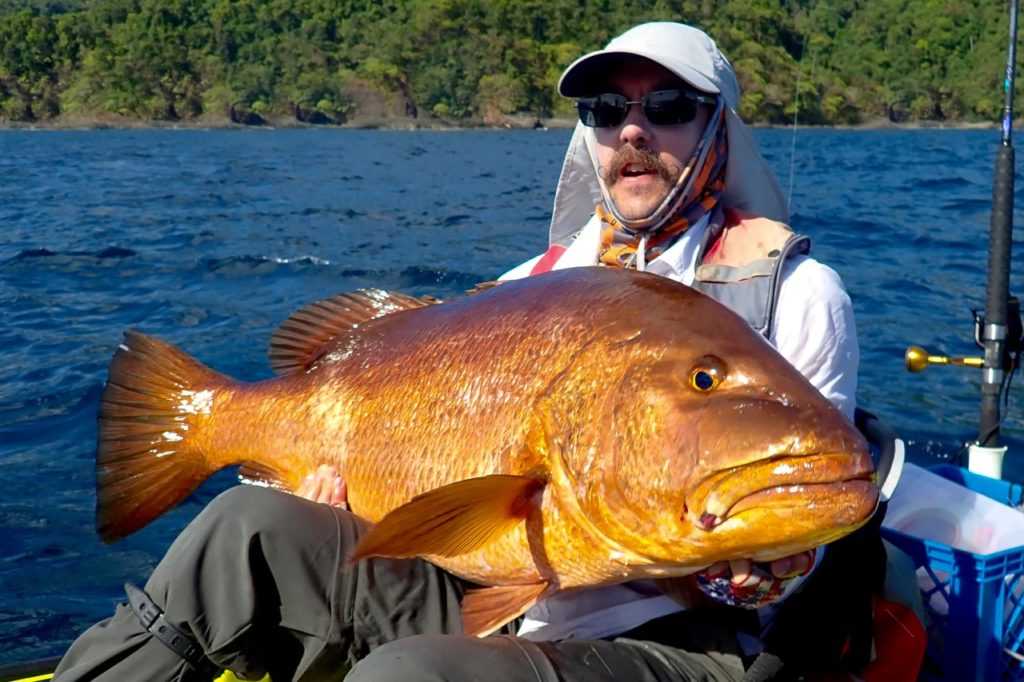 Fred Simeons with a colossal, 75-pound cubera snapper, caught on a live bonito
#7 Live bait is the best way to hook trophy fish
Big roosters and cuberas are sometimes caught on lures, but live bait is the most consistently productive presentation for trophy fish—by far. The most common baits are 12- to 18-inch bonitos, which are typically caught by lodge staff, fishing from the panga with rod and reel. The guides quickly bridle the unlucky bonito onto a 12/0 circle hook, already rigged to a stout rod with a level-wind reel, and deliver the whole outfit to your kayak, ready to fish. Bait isn’t always available, so every single bonito is precious. And the moment you get a live bait in the water, you need to be ready for anything.
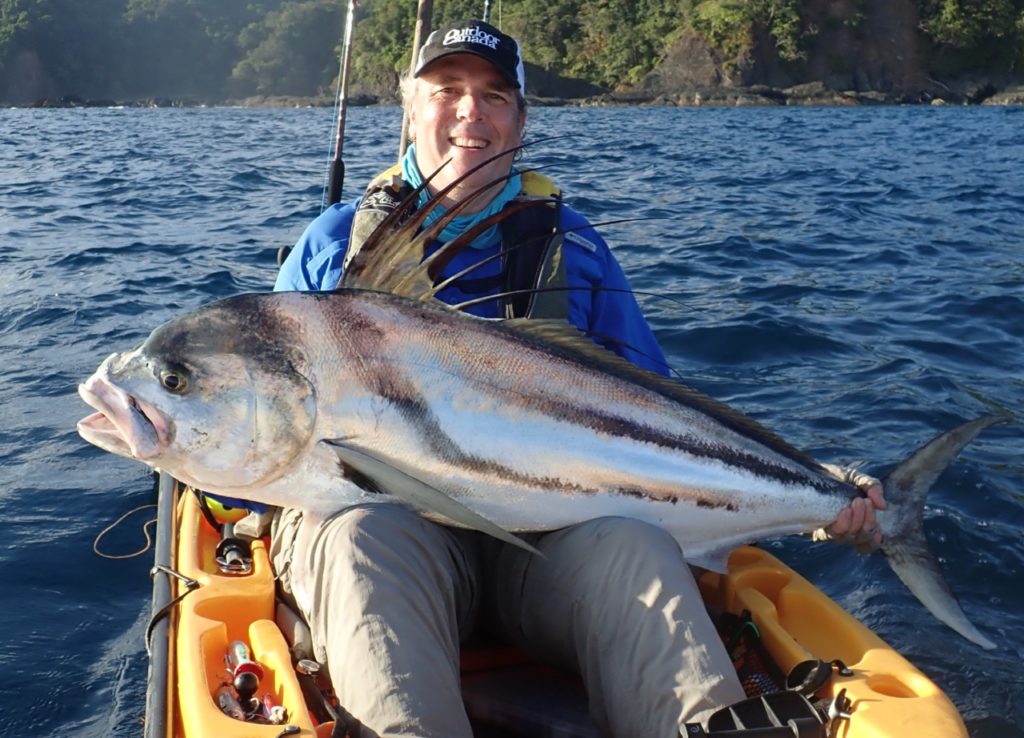 The author with a 50-pound roosterfish, caught on live bait.
Slowly trolling live bait is less straightforward than it sounds. There’s no room for error, and you need to stay sharp. As you troll the bonito, the drag on the level-wind reel is set lightly, and you can feel the bait tugging. You might even feel the bait become agitated as a predator closes in.
Advertisement
This is very exciting, but you need to stay cool. When a fish takes your offering you have to let it run, while spinning the kayak to face the bait. Then, after waiting 10 or 15 agonizing seconds, you flick the drag into high gear. If it’s all gone perfectly, you lift your rod and the line goes tight to the most powerful fish you’ve ever felt.
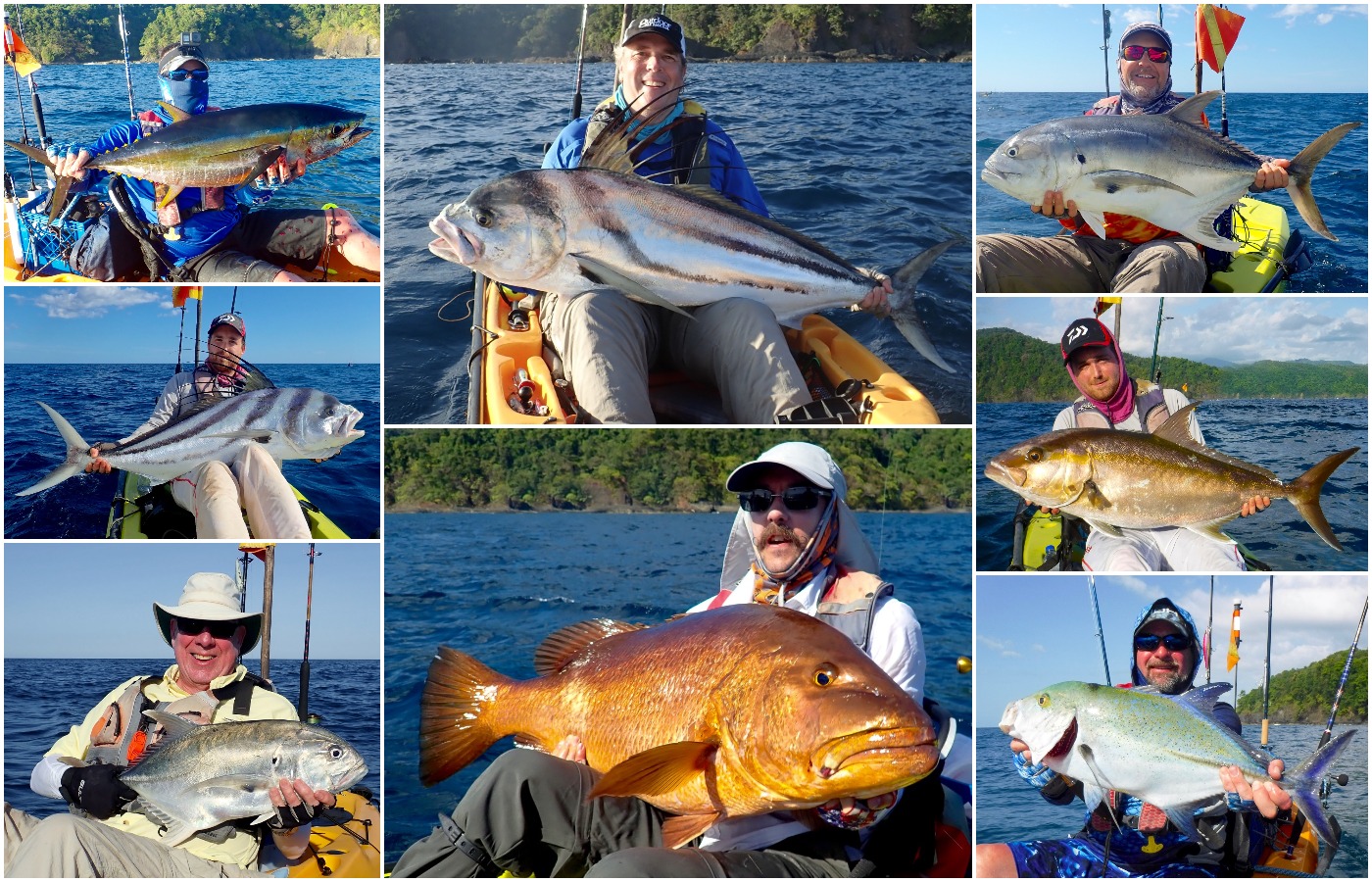
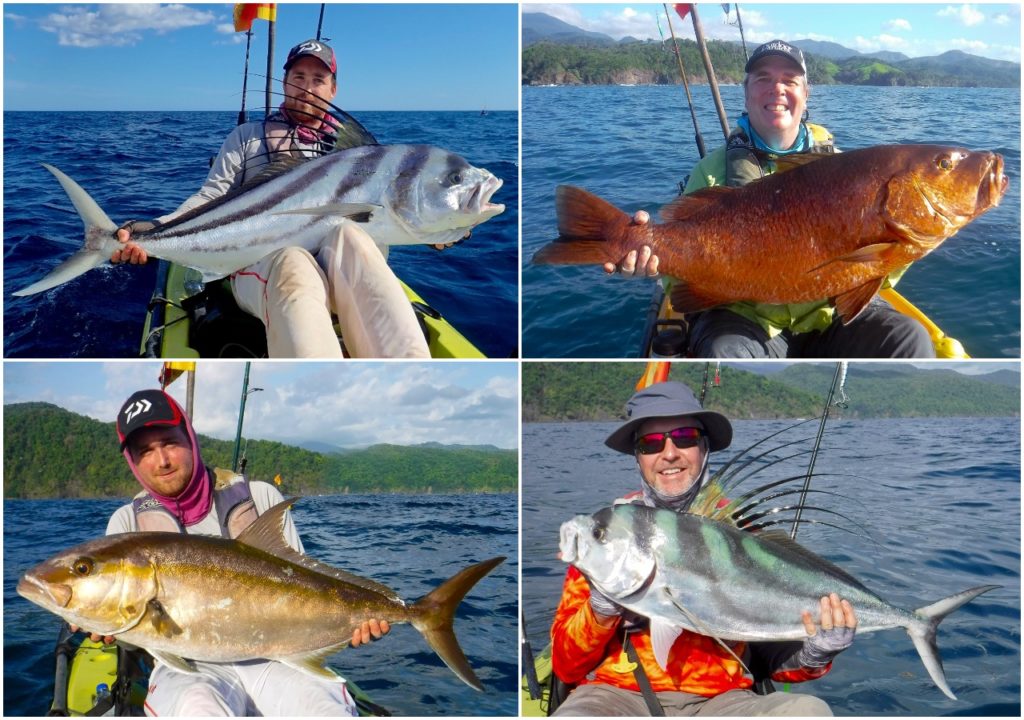 Trophy fish caught on bait (clockwise from top left): Dan Teage with a roosterfish, the author’s cubera snapper, Mike Dodds with a roosterfish, Teage with an almaco jack
Because you’re using circle hooks, most fish are lip hooked, avoiding the often-deadly deep hooking that can happen when using bait. This greatly reduces fish mortality since fish are barely injured, and can quickly be unhooked and released.
Lodge policy is to release all roosterfish, cuberas and other trophy-class fish. And believe me, watching a big rooster swim away is just as satisfying as catching it in the first place.
Advertisement
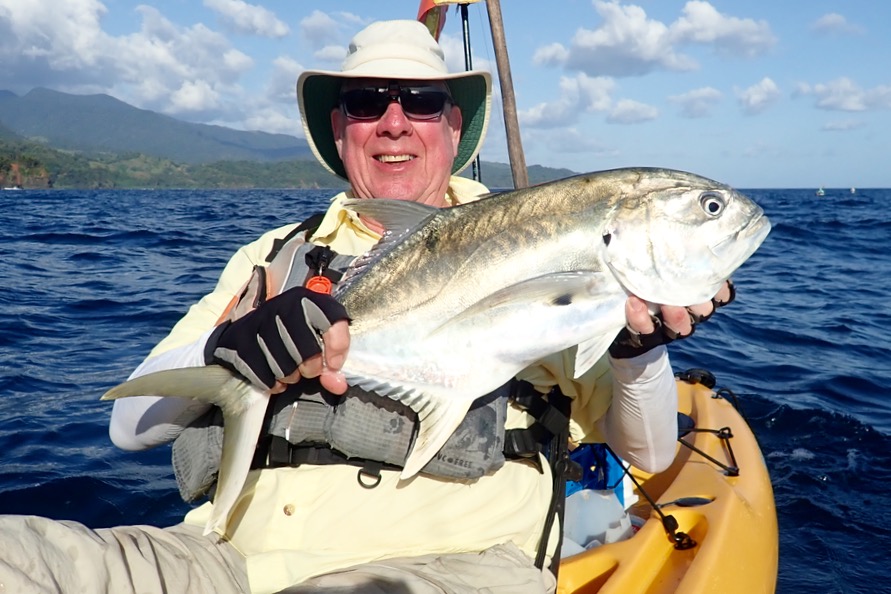 Newmarket, Ontario’s Don Willoughby with a sporty jack crevalle
#8 Jack crevalle are just the BEST
The jack crevalle is a very common catch in subtropical and tropical waters, and not great eating, so the species hold little appeal for many experienced saltwater anglers. To someone like me, who lives a long way from the ocean, this is madness, because jacks are nothing but fun. They’re fairly plentiful, and enthusiastically slam jigs, poppers and jerkbaits. When you’re lucky enough to find a school of ’em, it can be a jack-splosion, as they suddenly materialize, and just about jerk the rod out of your hand.
And boy howdy, do jacks fight.
Advertisement
Jacks are disproportionately powerful in a way that doesn’t even seem to make sense. The first time freshwater anglers hook a small jack, they invariably think it’s a 25-pound fish, and are utterly astonished to pull up something the size of a hubcap. It’s almost a rite of passage.
Jacks roam the open ocean, swimming down their prey from great distances, which makes this predator hard, fast and strong. So when a jack turns that deep body sideways, and starts pounding its huge forked tail, you are in for a fight.