


BUCKET-LIST BIRDS
From blue grouse to sandhill cranes to woodcock, these 10 species are more than worthy of any wingshooter’s attention
Advertisement
I learned about Canadian geography through osmosis. Growing up as the son of an air force pilot, moving across the country became second nature to me. And later, as a young wildlife professional, I took jobs wherever I could find them across the country, biding my time until a permanent position presented itself. As a result, I’ve lived in five provinces over the years, from Nova Scotia to B.C., as well as in the N.W.T. That inherent wanderlust and an eagerness to see around the next corner has also permeated my hunting career. As an avid wingshooter, I’m always up for the next destination and the next species.
Advertisement
As Canadians, we’re blessed to live in a country with a diversity of landscapes and habitats, which translates into an astounding array of hunting opportunities for game birds. I’ve pursued as many different species as has been practical, though there are a few that still remain a mystery to me. I suppose that’s only right—folks shouldn’t have everything they crave, no matter how hard they try. Before I hang up my shotgun, though, I hope to cross a few more off my list. Here are just some of the bird species and hunts I think are unique, interesting or just plain fun—and definitely worth pursuing…
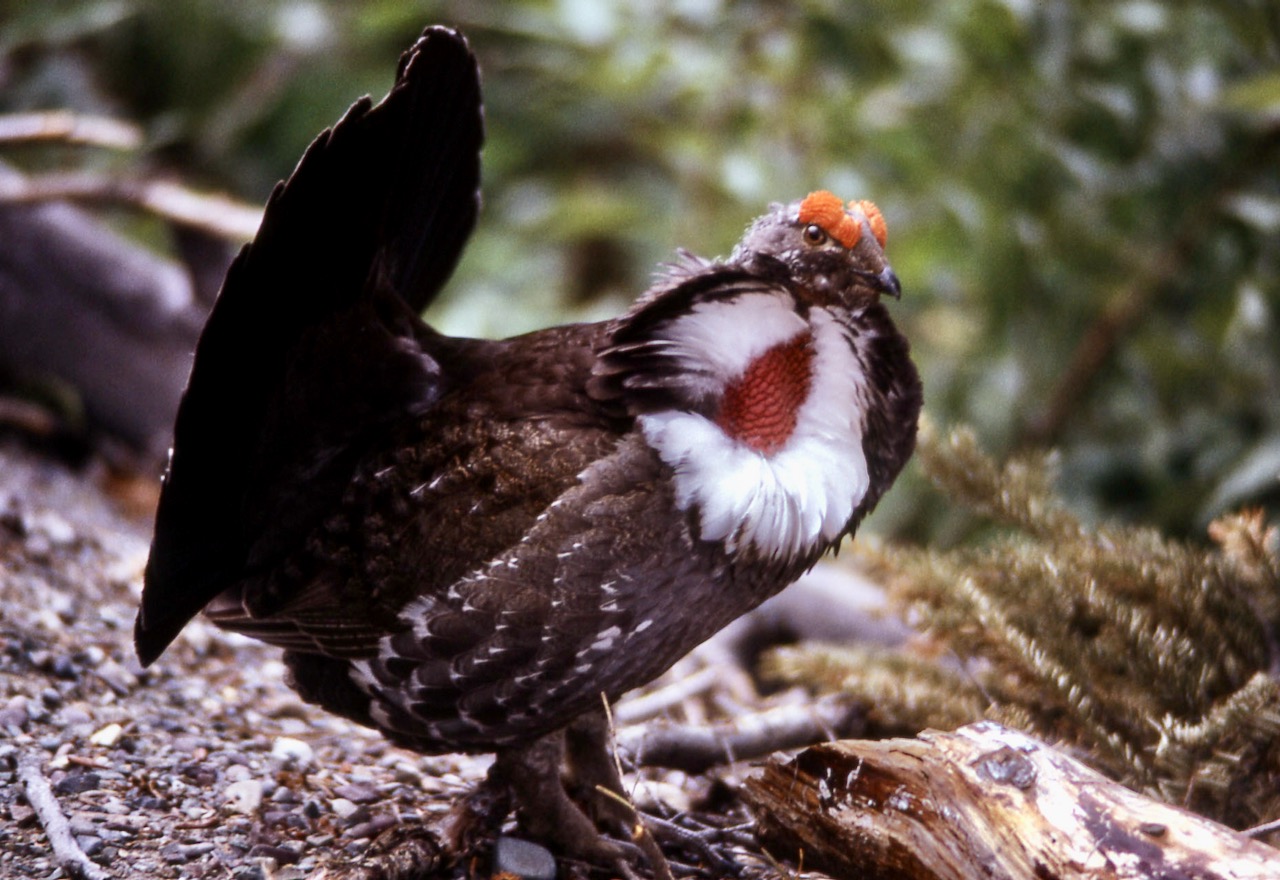 High-country hunts for blue grouse can be challenging (photo: Schullery/US NPS)
#1 BLUE GROUSE
Admittedly, I’m showing my age here. Up until 2006, we had an upland game bird of the mountains called the blue grouse. That year, however, the American Ornithological Society split the blue into two distinct species—the dusky grouse, largely found on the drier eastern side of the Rocky Mountains, and the sooty grouse of the moist, western side of the Pacific Coast Ranges. Although the two species are similar in appearance—the hens are nearly identical, while the males have minor physical differences—DNA analysis was the determining factor in the split. Greater sage grouse and reintroduced wild turkeys aside, they are the largest of Canada’s native upland birds.
Irrespective of whether you’re a lumper or a splitter, not many of us have successfully hunted these birds, given their preference for high-altitude mountainous habitat (often higher than 8,500 feet above sea level), and their limited distribution. I know I haven’t. The challenge is exacerbated as autumn progresses and the birds migrate to increasingly higher elevations. Experienced blue grouse hunters tell me there’s no great mystery to the endeavour; you just have to be tougher than the birds. Of course, that’s easier said than done in their home of steep slopes, dense cover and shin-shattering deadfall.
Advertisement
I have a horseback hunt into the high country planned for this fall, and our primary objective is dusky grouse. I’m eagerly anticipating the opportunity to cross this most unique of Canada’s upland game birds off my bucket list.
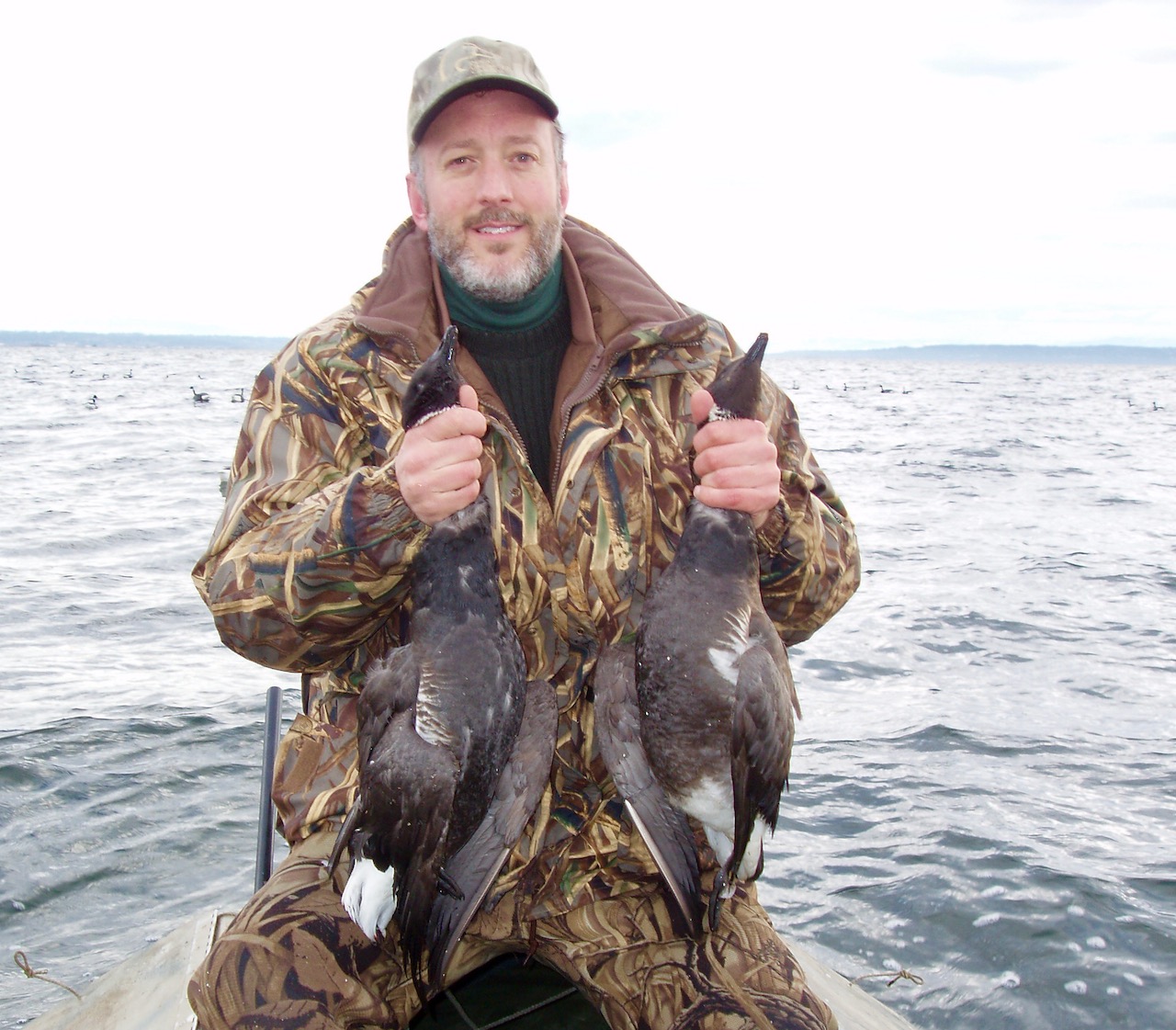 A limit of two brant is always hard earned (photo: Ken Thompson)
#2 BRANT
The longest and coldest winter hunt I’ve ever experienced was a morning going after brant on B.C.’s Boundary Bay, within sight of Vancouver. I might as well have been naked for all the good my clothes did to protect me from the ocean spray, constant sleet and frigid winds. But man, was it worth it.
This is a specialized hunt, practised largely by a small but dedicated, almost cult-like group of southern mainland hunters who await the annual 10-day season as though it were Christmas. There are limited places to launch their boats, so these hunters typically don’t compete. Instead, there’s underlying unity around safety, and they readily share information on where the birds are feeding, what effect the tides and winds are having, and where they plan to hunt the following day.
Then it’s all about the boats, motors and decoys as you bob on the ocean searching for the telltale strings of brant in the thick, gray skies, moving low across the water. It’s a hit-and-miss affair. As often as not, you’ll strike out, but on the best days, you’ll tumble your limit of two birds into the surf. Even seasoned brant hunters celebrate the days they’re successful. I only managed to shoot a single brant during my hunt, but it remains the most treasured bird I’ve ever taken.
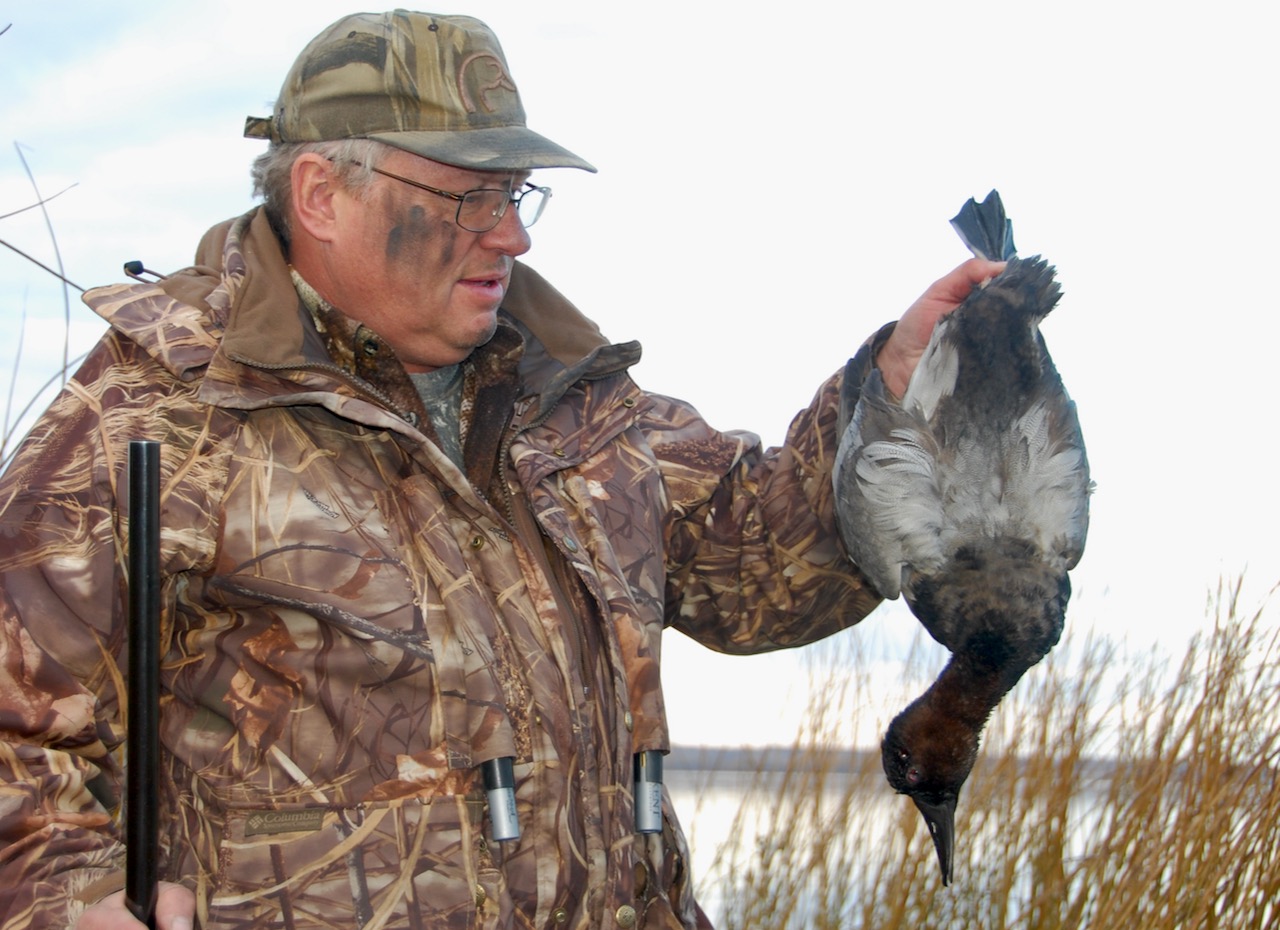 Canvasback hunts are a big-water affair (photo: Ken Bailey)
#3 CANVASBACKS
If a species were required to submit a resumé to be included on this list, the canvasback’s CV would be impressive indeed. It’s the fastest of our ducks, after all, with flight speeds exceeding 120 kph. It’s also the largest and heaviest of Canada’s duck species, with the exception of the common eider. On top of that, canvasbacks are regal and understated in appearance. The males in particular have a gorgeous, chestnut-coloured head, distinctive sloped forehead, striking black breast, shimmering silver back and piercing red eyes. These birds are tasty, too—in the days of market hunting, a single canvasback commanded more than a pair of mallards. No wonder they’re nicknamed the “King of Ducks.”
Though their breeding territory is largely confined to western Canada, these handsome birds migrate through the Great Lakes, making them available to hunters as far east as southern Quebec. They’re the least populous of Canada’s familiar duck species, so wherever they’re found, they’re considered a prize for waterfowlers. Adding to their allure is the fact you’ll seldom collect a bull canvasback by sheer happenstance. Hunting them effectively requires planning, significant gear in the form of boats, motors and decoys, and a willingness to venture onto big water, often in windy, cold conditions. A canvasback won is a canvasback earned.
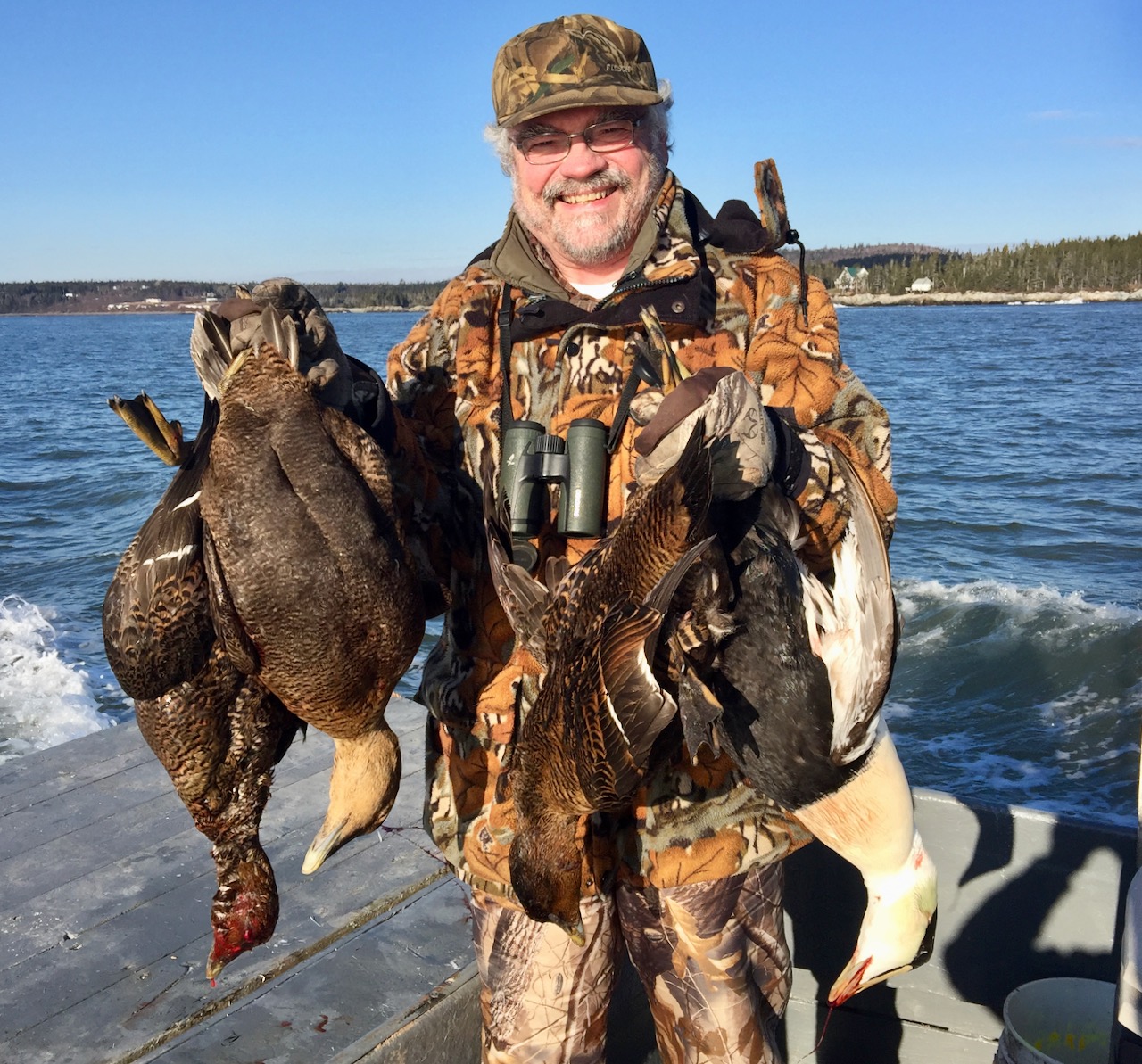 Head down east for a chance to hunt eiders (photo: Mark Boyce)
#4 EIDERS
The common eider is the largest duck in Canada, while the king eider is arguably our most beautiful and distinctive. So, why don’t we hear more about hunting these birds? Mostly because they’re relatively uncommon, sticking pretty close to their coastal marine environments. As well, hunting them requires specialized gear and tactics.
Late last summer when I was in Nunavut, I saw my first king eiders, spectacularly coloured drakes flying low over the waves. Unfortunately, the season wouldn’t open for another few weeks, so I was left to only wish and wonder. Nunavut is undoubtedly the best place in Canada to find kings, but access is expensive and daunting. I’m also not aware of any established guiding operations that specialize in them.
The best opportunity would be on the East Coast, particularly in Newfoundland, New Brunswick and Nova Scotia, where hunting for common eiders is popular, and the occasional king is found among the flocks. I’ve yet to shoot either species, but rest assured they’ll remain on my must-do list until I do.