


DUPING DEER
Lure wary bucks into range by adding a decoy (or two) to your set-up
Advertisement
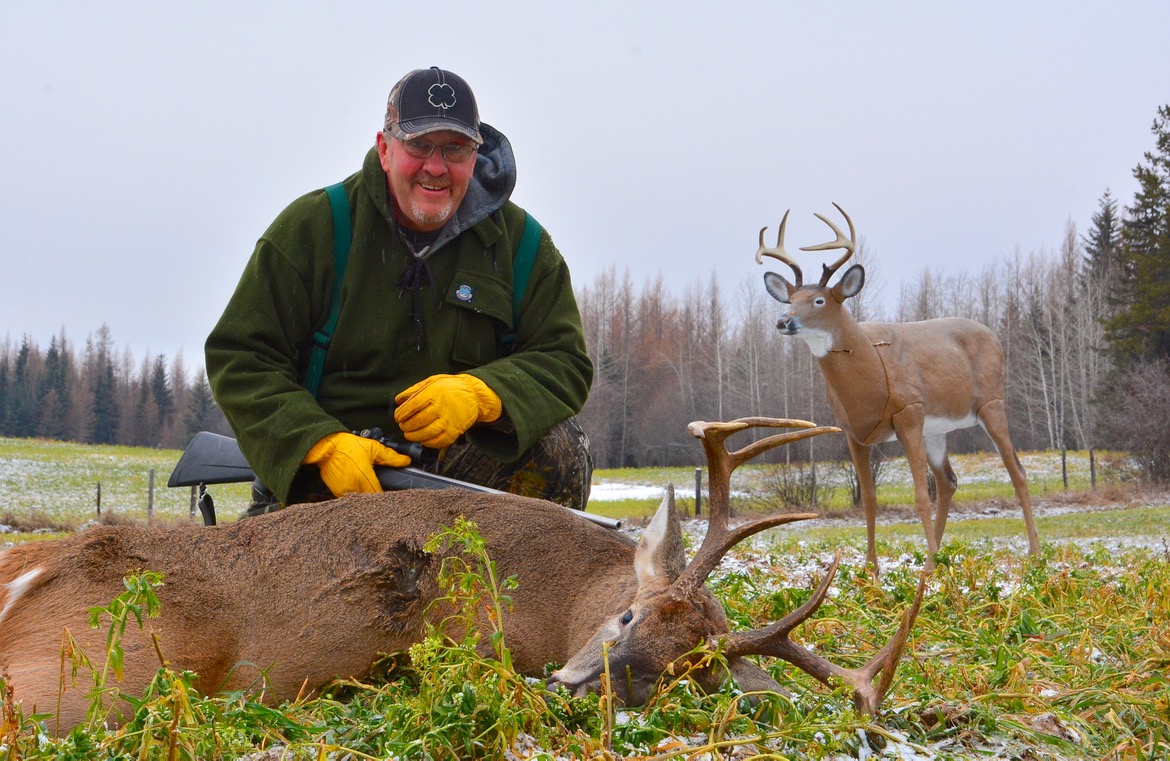
It was cold for an opener that first morning last season, as the first rays of the rising sun reflected off the snow, slowly overtaking the veil of darkness. Despite the frigid temperature, I was comfortable sitting in my chair all bundled up, the propane heater whispering warmth into the confines of the blind. I was prepared to sit all day if I had to. Thirty metres from the blind was my buck decoy, standing sentry and staring obediently into the bush as though a doe was tiptoeing his way.
Advertisement
It was 40 minutes after legal light when some movement 200 metres down the cutline caught my eye. A peek through my binoculars revealed it to be a buck, and a pretty decent one at first glance. I sat glued to my seat and watched as he strode slowly but purposefully straight to the decoy, his eyes fixed on the intruder, not once appearing to notice my blind. When he was about 80 metres away, I could easily count five points per side, with good mass and width, and reasonable height. I was going to have to make a decision. Quickly.
Mainly because it was still early in the season, I opted to not shoot and instead sit back and watch the spectacle unfold as the buck walked right up to the decoy. Snow flew as he pawed the ground, ready to fight for local supremacy. He began to walk in circles, then pawed the ground again, clearly confused his would-be competitor was showing no reaction. In all, he must have been at the decoy for a full five minutes, at times as close as 20 metres to me, before sauntering back into the cover of the forest.
Over the following days, I had four other bucks walk in to investigate the decoy, though none were as big as that opening morning buck. That’s just the way hunting luck goes, and I don’t regret not hitting the switch on that deer. The encounter did serve to reinforce, however, that I’d made the right decision to include deer decoys as an integral part of my annual whitetail strategy.
Advertisement
#1 BENEFITS
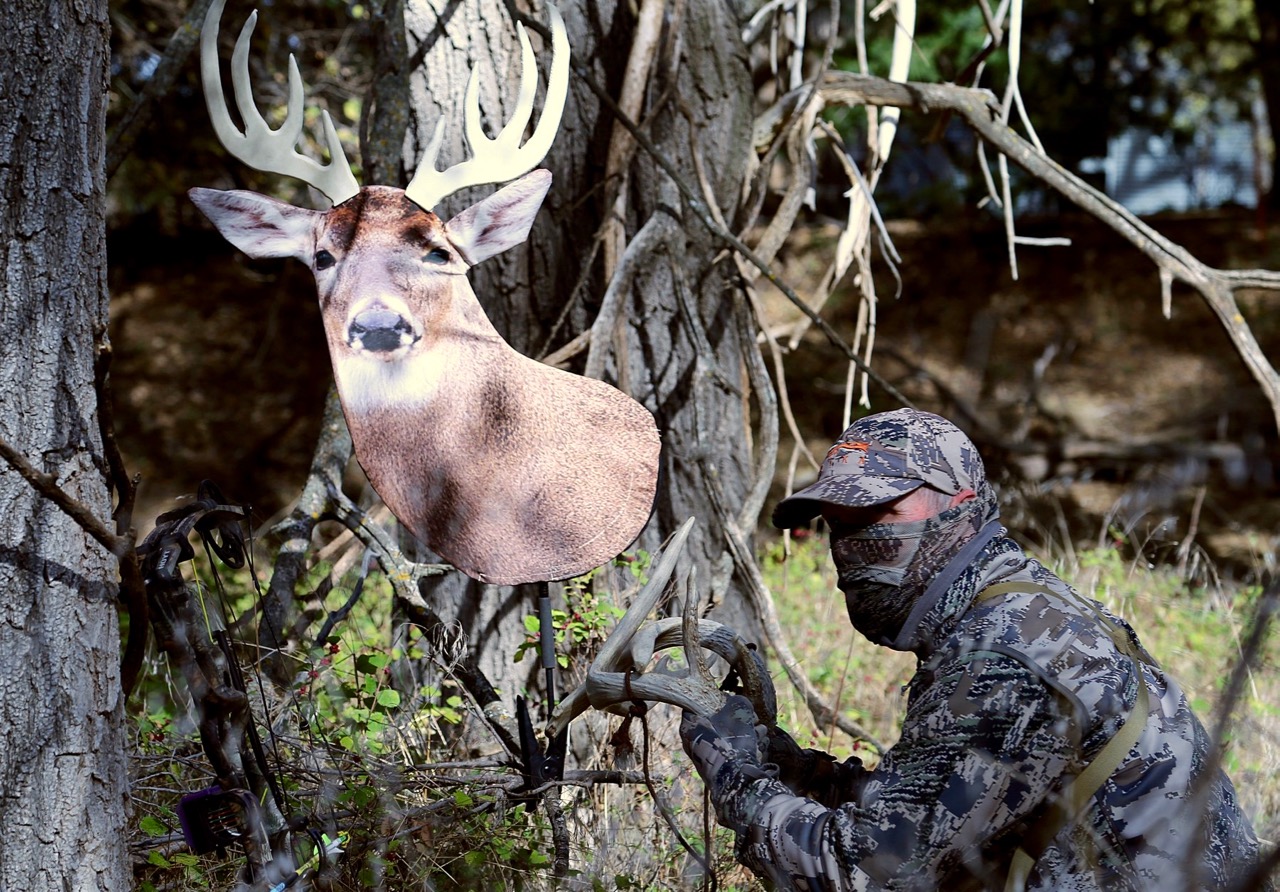
Like other game that respond to the visual cue of decoys, including waterfowl, turkeys, pronghorns and even moose, whitetails are social animals. They like to keep company with others of their own kind, though for different reasons between the sexes, and from season to season.
Despite their gregarious nature, white-tailed deer are also timid creatures that cling to the safety of dense cover. The weak link in this natural armour, however, is that their innate shyness disappears when they see others of their kind loitering in an exposed area. Decoys give deer confidence that all is well, overriding that fear.
During the rut, mature bucks are both aggressive breeders and competitive. If they see what looks to be a doe, they’ll investigate to see if she’s receptive. Alternatively, they’ll approach other bucks to assert their dominance in the breeding hierarchy.
Another advantage of decoys is they give you a better opportunity to make a good shot, whether you’re hunting with a rifle or bow, because the deer’s focus will be on the decoy, not you. Decoying also adds an enjoyable layer to your hunting; I’m often entertained by a deer’s antics as it tries to arouse a reaction from an inanimate object.
#2 TIMING
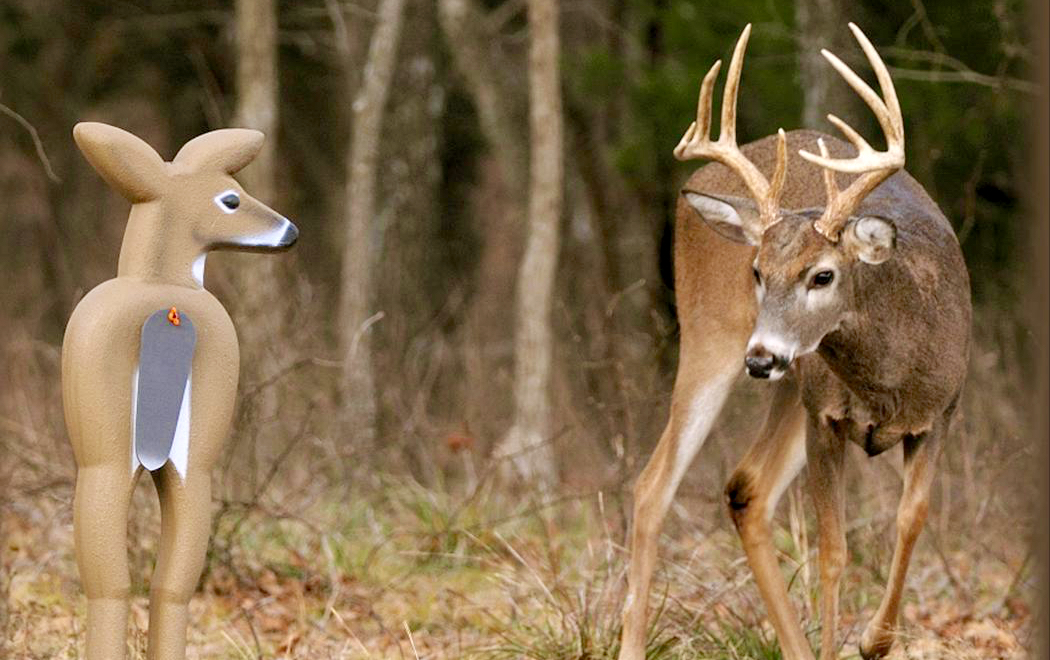
Decoys have their place throughout the season. In the early season, well before the onset of the rut, doe decoys are effective in encouraging otherwise reluctant deer to emerge from cover before legal light disappears. In the immediate pre-rut and during the rut, doe decoys continue to encourage deer—both does and bucks—to show themselves within legal shooting hours.
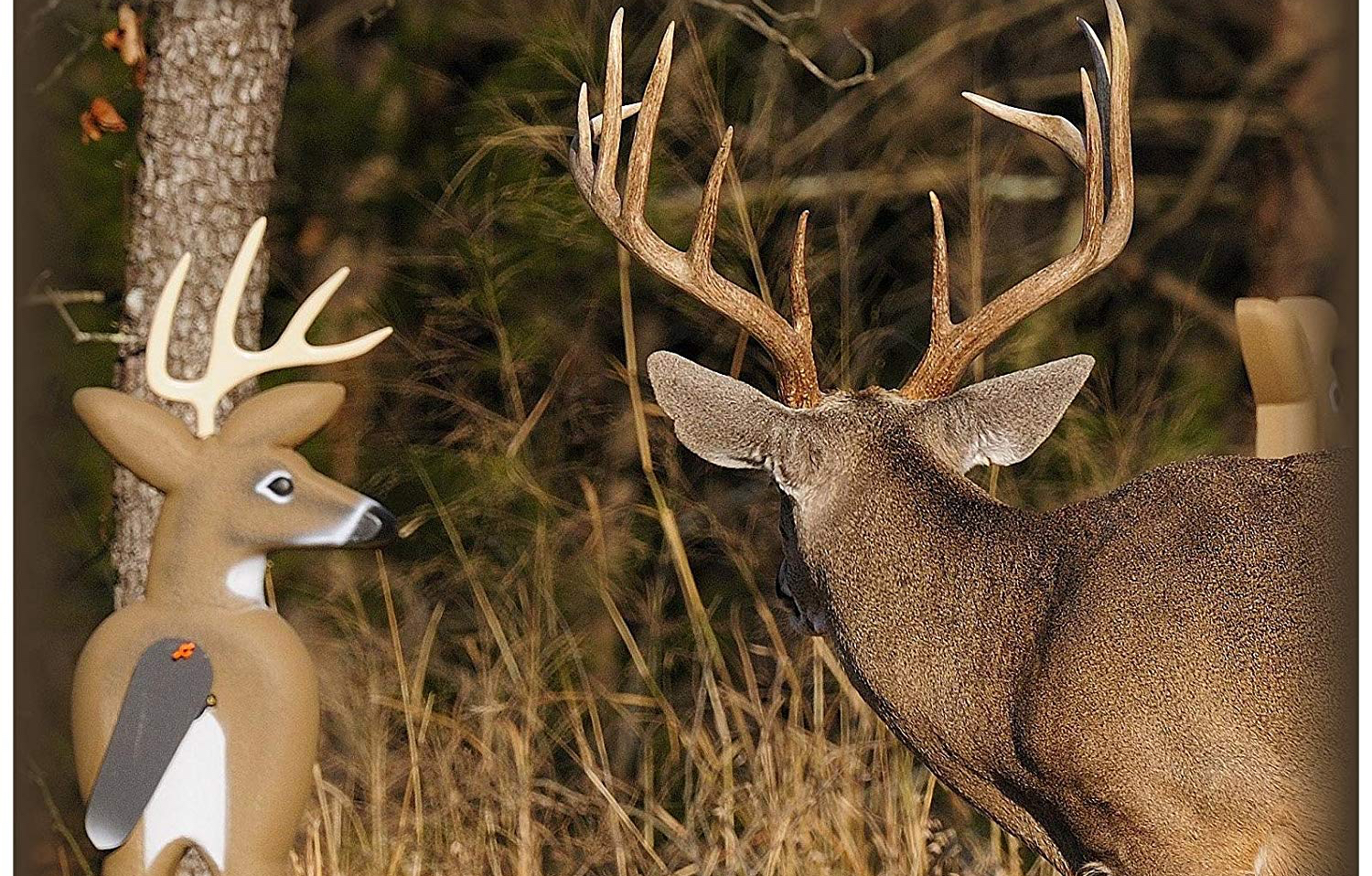
Buck decoys are most effective through the early rut and in the heart of the rut, when a buck’s naturally aggressive tendencies compel him to challenge any potential competitors for breeding rights. In my experience, this behaviour wanes in the late rut, when bucks are highly mobile in search of the last receptive does.
#3 STRATEGIES
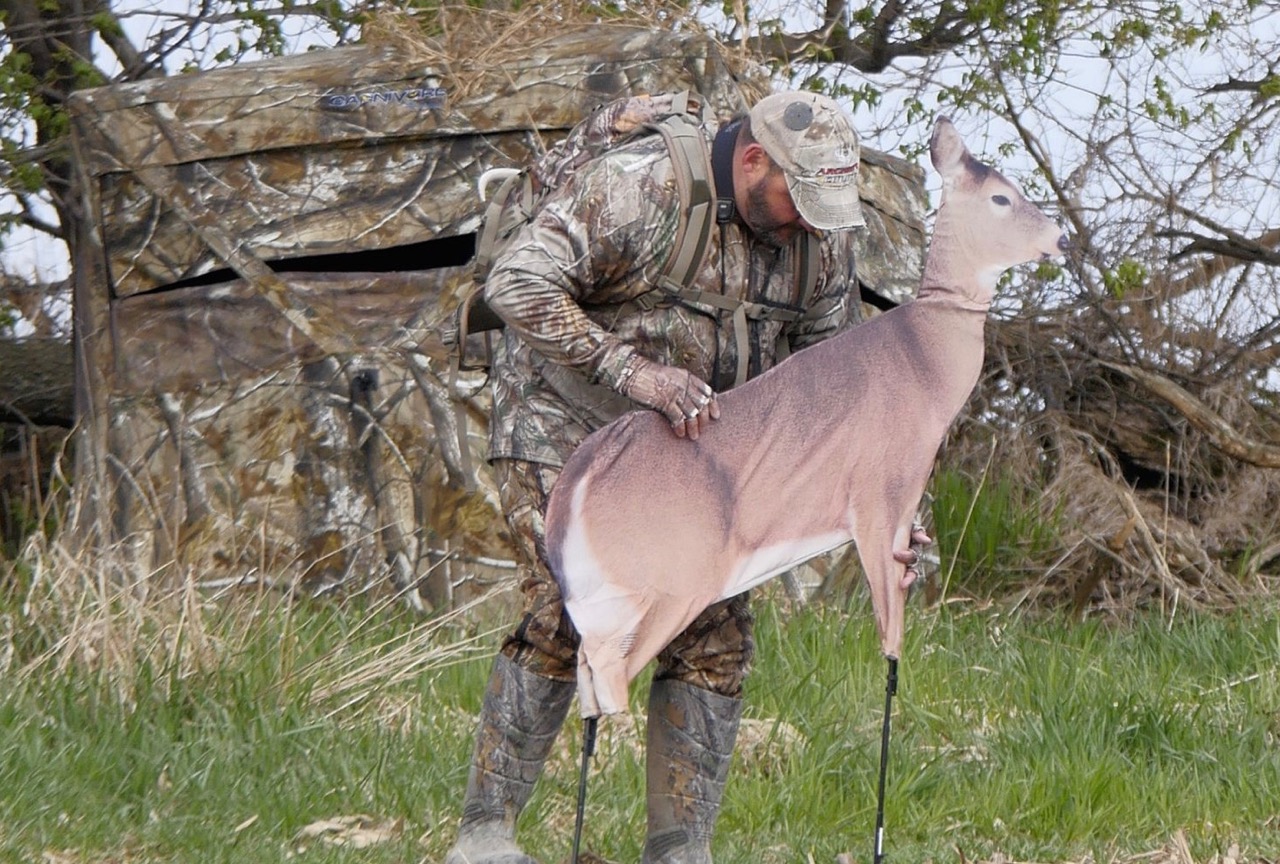
When hunting the rut, as is typical during most rifle seasons across Canada, the most common dilemma is whether to use a doe decoy, a buck decoy or both to attract the buck of your dreams. I’ve tried all combinations, and I’ve had some success with each of them. That said, I prefer using a single buck decoy—my hunting partners and I have had the greatest success using just one buck. It’s also easier to haul around a single decoy than two or more. Experience has taught me, however, to use the largest decoy I can find. The more imposing it is, the more likely it is competitive bucks will try to run it off. For my money, the Flambeau Boss Buck is tough to beat, though there may be others on the market as effective.
Other hunters prefer different strategies. Brent Watson, the past president of the Alberta Bowhunters Association, used to employ a single doe or a buck and doe combination. He now believes that tactic spooked more deer than it attracted, however, so he currently uses between three and eight doe decoys. Watson says he thinks the appearance of a small herd of does has a calming effect on deer, while leading bucks to believe that at least one of the does may be receptive.
Watson uses only doe decoys because he thinks a buck will be more likely to expose himself if he thinks he has the does all to himself. Since Watson’s often seen receptive does bedding down out in the open, he will occasionally remove the legs from one of his decoys to simulate a bedded doe. “Once bucks get a visual of the herd, they lose their senses a bit,” he says. “I’ve had bucks walk among the herd, sniffing every decoy.”
Clearly, as with decoying wild turkeys, there isn’t a single correct set-up. Experiment to find out which option gives you the best results—and the most confidence.